Artwork
Study for "The Return of King Friedrich II from Küstrin"
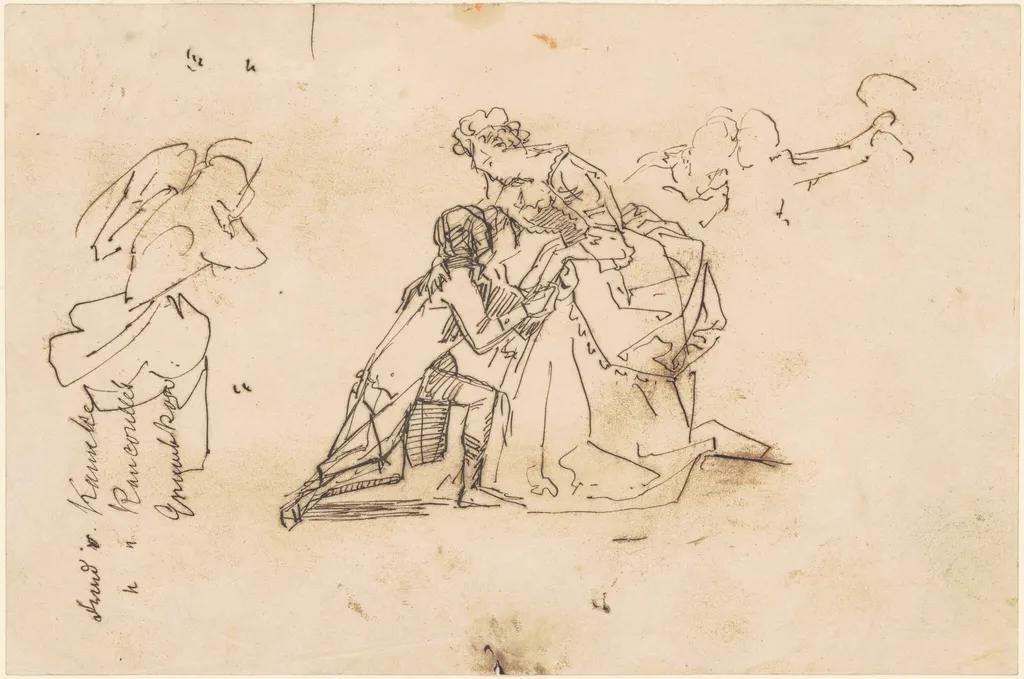
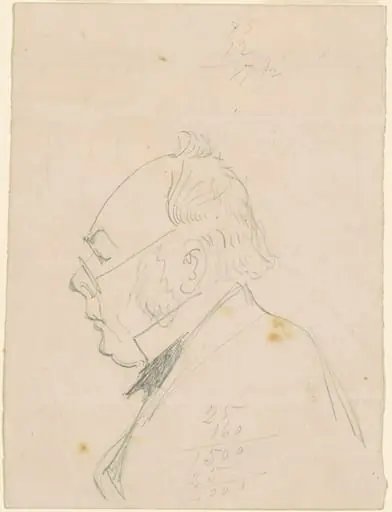
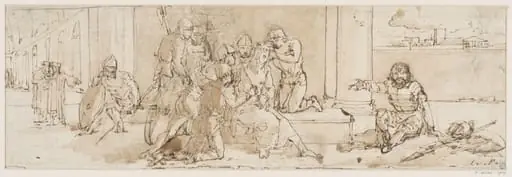
Study for "The Return of King Friedrich II from Küstrin" is an ink drawing by the Romanticist artist Emanuel Leutze. It dates from 1854 and is held in the collection of the National Gallery of Art.
About this work
Overview
Leutze, trained in Düsseldorf and active in both Germany and the United States, consistently prioritized detailed planning in his historical works.
Created around 1854, this ink drawing by Emanuel Gottlieb Leutze serves as a preparatory study for a larger historical composition depicting King Friedrich II’s return from Küstrin. Executed in pen and brown ink on wove paper, it reflects the artist’s disciplined method of refining complex scenes before committing them to oil. Leutze, trained in Düsseldorf and active in both Germany and the United States, consistently prioritized detailed planning in his historical works.
Subject & Meaning
The drawing anticipates a scene of Prussian monarch Friedrich II returning triumphantly after military campaign, a moment imbued with national pride and personal resolve. Leutze, drawn to figures of leadership and perseverance, used this subject to explore themes of duty and resilience. Though less known than his American revolutionary imagery, this study aligns with his broader interest in heroic historical narratives across European contexts.
Technique & Style
Leutze employed precise pen lines and controlled washes of brown ink to define figures, drapery, and architectural elements with clarity. The composition emphasizes dynamic movement and layered depth, typical of his preparatory drawings. His technique reflects Düsseldorf school training, where rigorous draftsmanship supported narrative intensity, blending observational detail with dramatic staging rooted in Romantic ideals.
History & Provenance
The drawing emerged during Leutze’s period of active production in the 1850s, following his success with 'Washington Crossing the Delaware.' While the final painting of Friedrich II’s return was never completed, this study survives as evidence of his ambitious, though unrealized, European-themed projects. Its preservation suggests it was valued by the artist or his circle as a significant step in his creative process.
Context
In mid-19th century Europe, historical painting remained a dominant genre, especially in German-speaking regions where national identity was being redefined. Leutze, living between Germany and America, engaged with both revolutionary and monarchical narratives. This study reflects his participation in a broader cultural moment that sought to legitimize political authority through visual storytelling rooted in historical precedent.
Legacy
Though the final painting was never realized, this study contributes to understanding Leutze’s working methods and his commitment to historical accuracy through research and sketching. It stands as a testament to his practice of refining complex compositions through iterative drawing, influencing later generations of artists who valued preparatory work as integral to narrative art.
Artist & collection

Artist
Emanuel Leutze grew up in America but moved to Germany as a teen, where he studied art in Düsseldorf.

![Study of Half-Length Figure with Pole [verso], by Emanuel Leutze](https://artifactworldgallery.com/img/emanuel-leutze--study-of-half-length-figure-with-pole-verso--13a43a492f70c459-w320.webp)
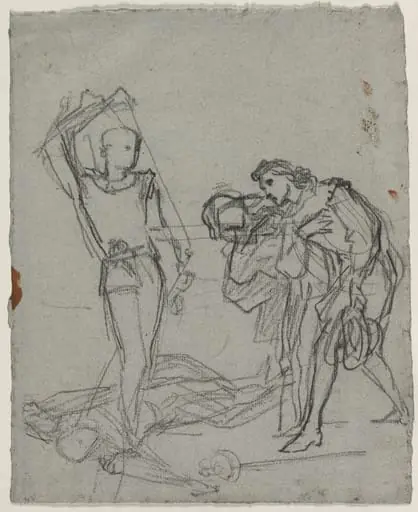 Duel after the Masked Ball (recto)
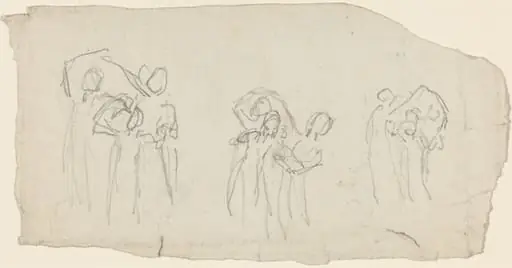 Three Groups of Dancers
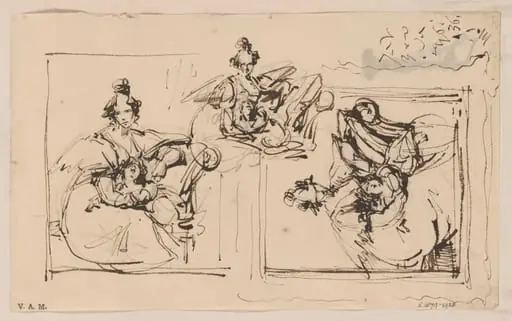 Three studies for a portrait of a Western woman and child
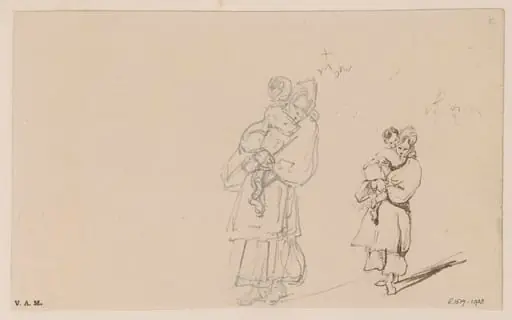 Two drawings of a boatwoman holding a child
 Two Seated Ladies
![Two Elegant Couples [verso], by Francesco Guardi](https://artifactworldgallery.com/img/francesco-guardi--two-elegant-couples-verso--0eab87c3f2698c75-w320.webp) Two Elegant Couples [verso]
Two Elegant Couples [verso] Drapery Study; Two Figures Pulling a Pole
![Woman and Smaller Male Figure on Grand Stairway [recto], by Hubert Robert](https://artifactworldgallery.com/img/hubert-robert--woman-and-smaller-male-figure-on-grand-stairway-recto--637e2104bb3633b6-w320.webp) Woman and Smaller Male Figure on Grand Stairway [recto]
Woman and Smaller Male Figure on Grand Stairway [recto] Untitled
 Study for "The Romancer" (Le Conteur)
 Duel after the Masked Ball (recto); Head of a Woman (verso)
 Christ mocked