Artwork
Study for "The Romancer" (Le Conteur)
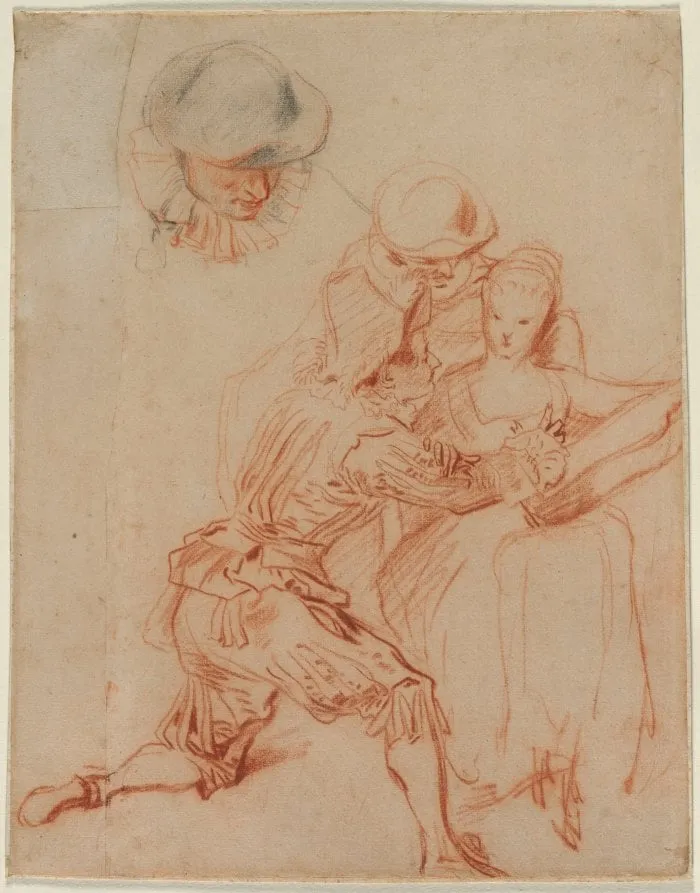
Study for "The Romancer" (Le Conteur) is a drawing by the Baroque artist Jean Antoine Watteau. It dates from 1716 and is held in the collection of the Cleveland Museum of Art.
About this work
You see a man in a striped suit leaning over a young musician, hand on his shoulder, while another man in a loose white outfit watches from behind.
You see a man in a striped suit leaning over a young musician, hand on his shoulder, while another man in a loose white outfit watches from behind.
This is a quick sketch Watteau made before painting the final scene. The characters come from Italian comedy plays that were all the rage in 1700s France—think slapstick, masks, and cheeky flirting. The loose lines let you feel the artist’s hand moving fast, almost like he’s acting out the scene himself.
For more of these playful theater sketches, look up *subject: france, 18th century*.
Overview
This drawing is a preparatory study for 'The Romancer', a painting by Jean Antoine Watteau. It showcases the artist's exploration of a scene featuring characters from the commedia dell’arte.
Subject & Meaning
The scene depicts an actor dressed as Mezzetin making a forward advance towards a young guitarist, while another actor, Pierrot, observes from behind with a lecherous gaze. The characters and their interactions are rooted in 18th-century French theatrical entertainment.
Technique & Style
The drawing is characterized by loose, expressive lines that convey a sense of spontaneity and movement. A detailed study of Pierrot's head in the upper left corner highlights Watteau's attention to capturing a specific emotional expression.
Artist & collection
Artist
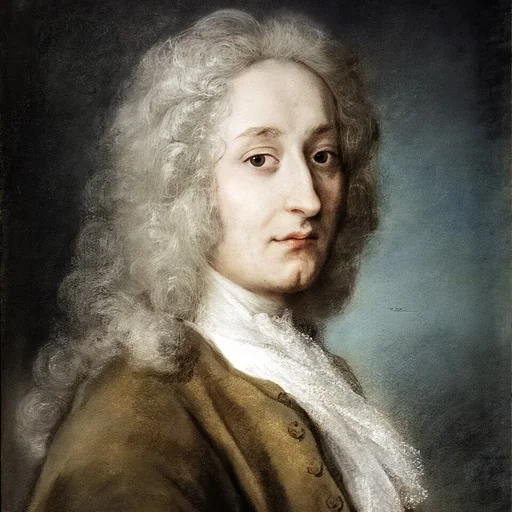
Jean-Antoine Watteau was a French painter and draughtsman whose brief career spurred the revival of interest in colour and movement, as seen in the tradition of Correggio and Rubens.

 Study for "The Rustic Dancers"
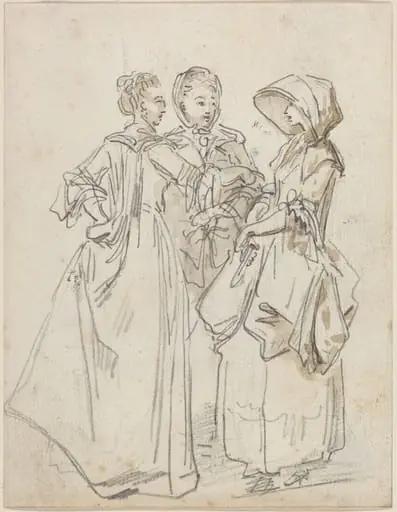 Three Ladies Chatting
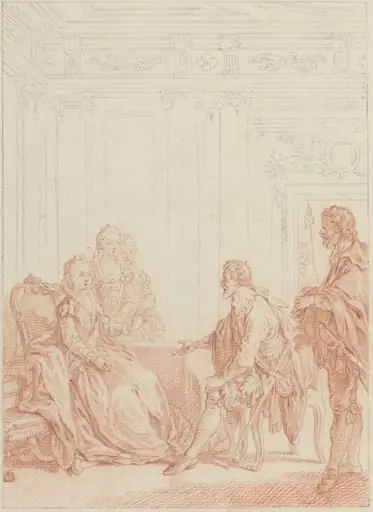 Quoi! Vous servez Valois...
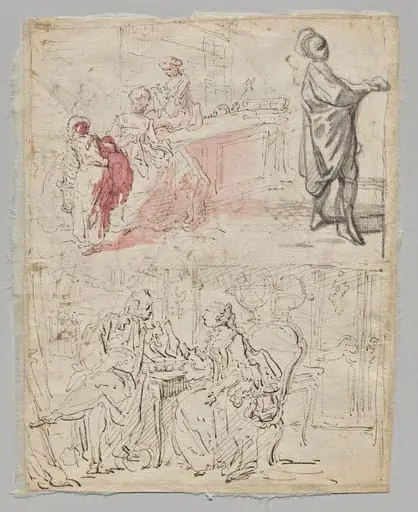 Theatre Scene (recto)
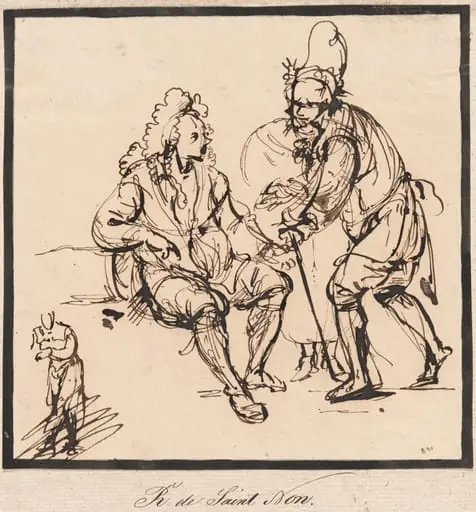 A Gardener and a Gentleman
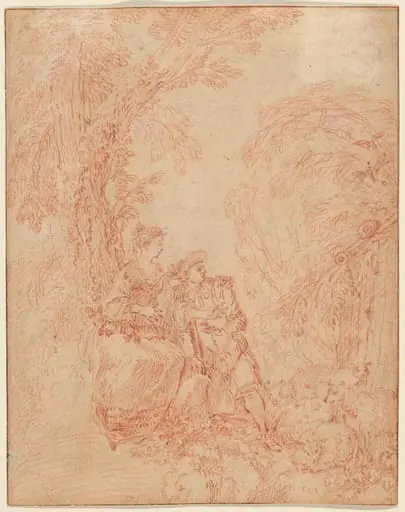 A Shepherd and Shepherdess Seated under a Tree
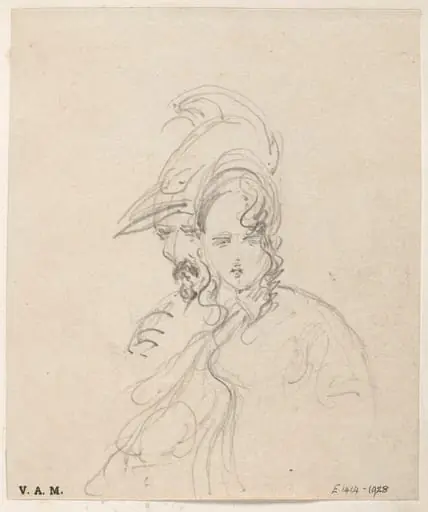 A Western woman and a bearded man in a helmet
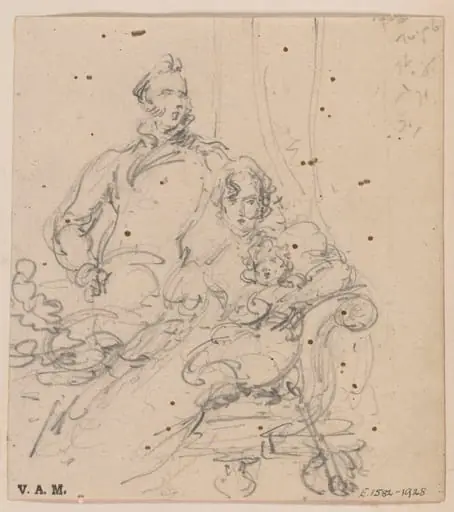 A family portrait
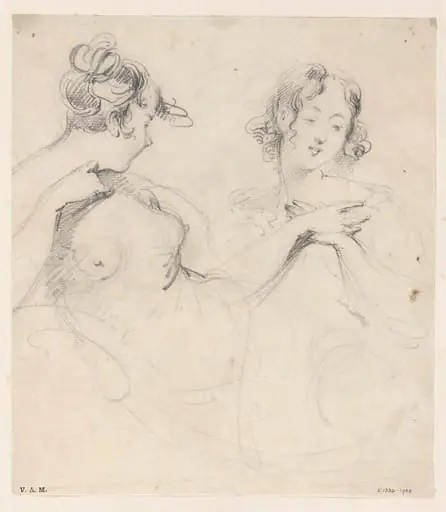 Two drawings of a Western woman
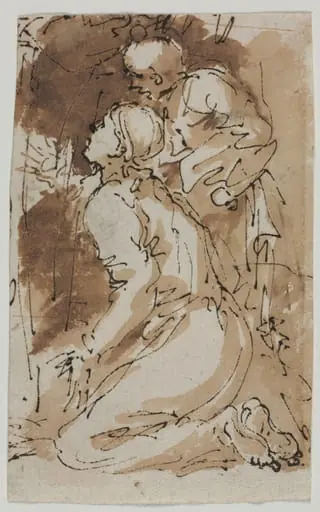 Figure Studies
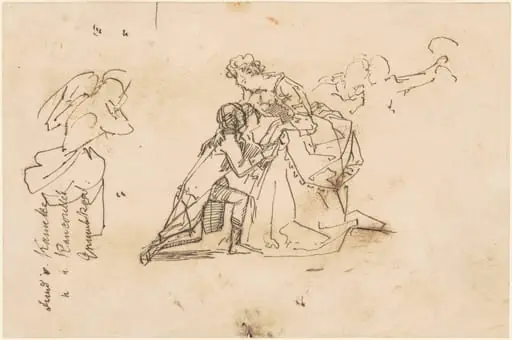 Study for "The Return of King Friedrich II from Küstrin"
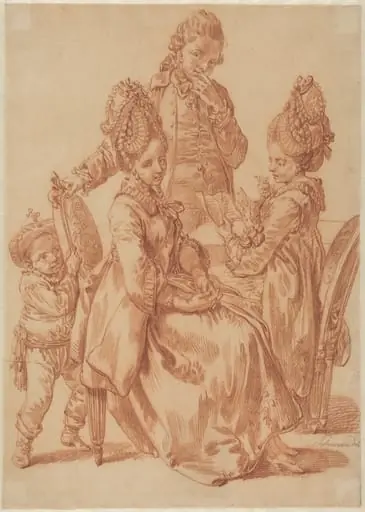 The Letter