Artwork
Cattleya Rex
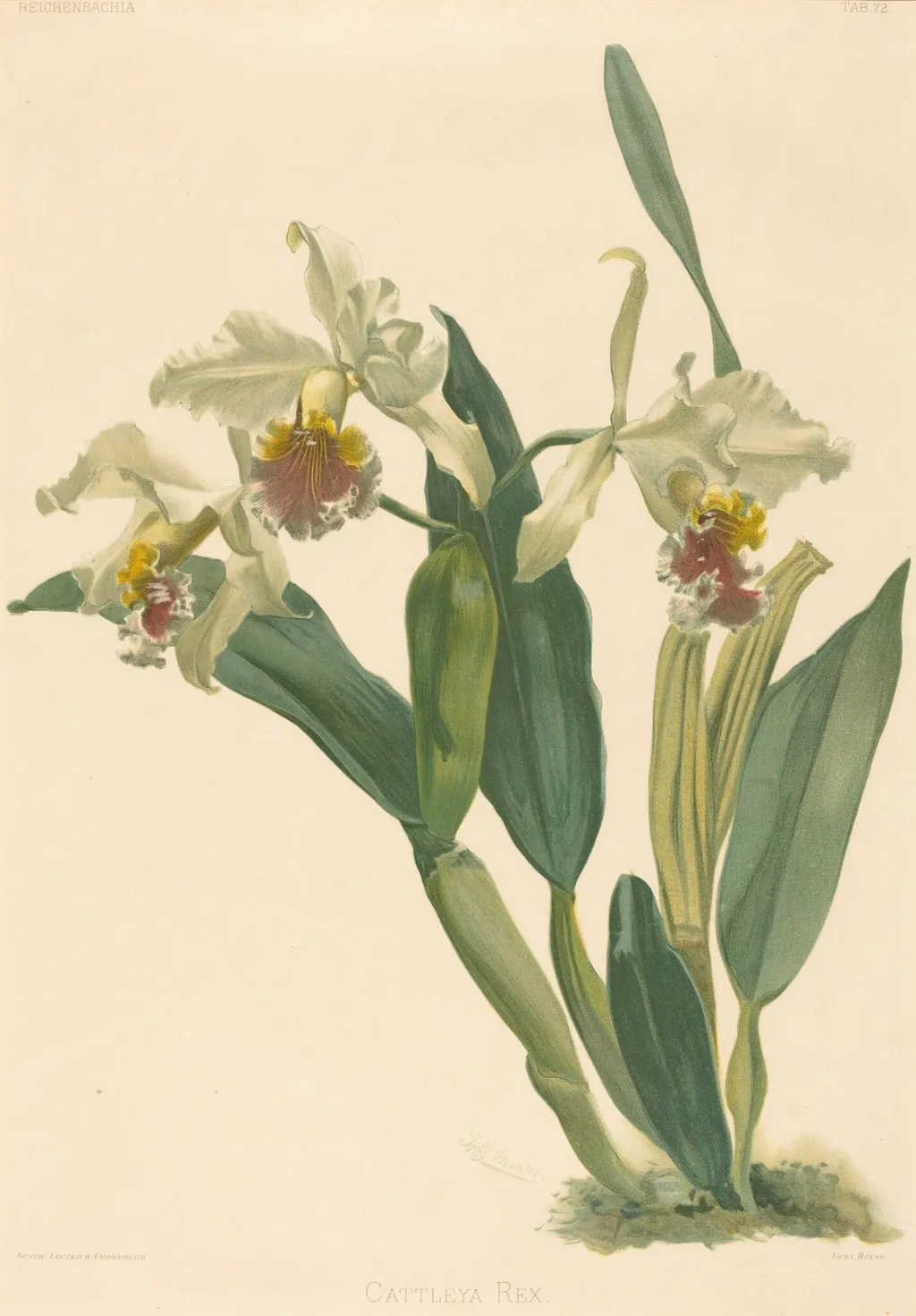
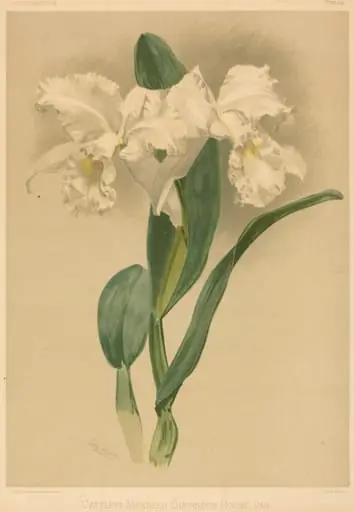
Cattleya Rex is an ink print by the Romanticist artist Gustav Leutzsch. It dates from 1840 and is held in the collection of the National Gallery of Art.
About this work
Overview
The work exemplifies the 19th‑century practice of producing prints to document and disseminate knowledge of exotic flora.
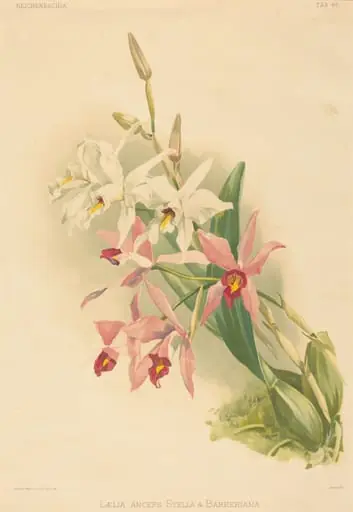
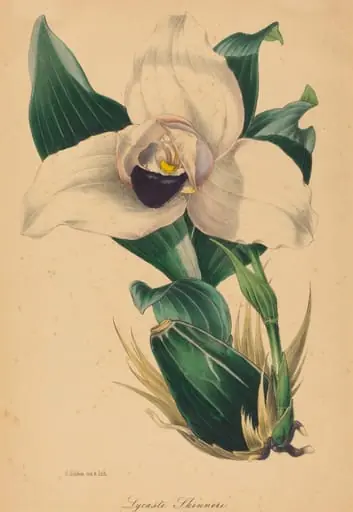
Gustav Leutzsch’s 1840 lithograph titled Cattleya Rex presents a meticulous botanical study of two orchid specimens. Rendered in black‑and‑white with subtle tonal variation, the image isolates the plants against an unadorned background, directing attention to their form and coloration. The work exemplifies the 19th‑century practice of producing prints to document and disseminate knowledge of exotic flora.
Subject & Meaning
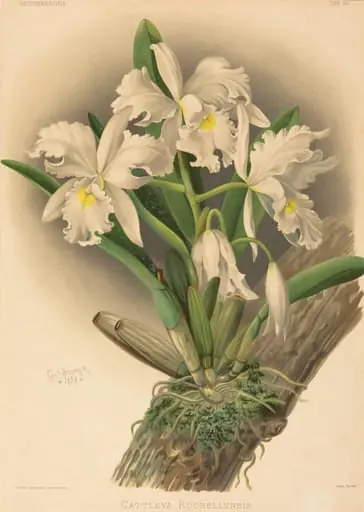
The print depicts a pair of Cattleya orchids, each bearing glossy white petals surrounding a vivid yellow column. Long, lance‑shaped leaves emerge from a single stem, while the inner surfaces of the blooms display delicate pink and white spotting. By labeling the illustration with the scientific name, Leutzsch emphasizes the work’s function as a reference tool rather than a decorative piece.
Technique & Style
Created through lithography, the image was drawn directly onto a flat limestone slab, treated chemically, and inked to transfer the design onto paper. This method allowed Leutzsch to achieve fine line work and nuanced shading, capturing the texture of waxy petals and the subtle gradations of the orchid’s interior. The restrained composition reflects the era’s preference for clarity in scientific illustration.
History & Provenance
Printed in the early 1840s, the lithograph was part of a broader series of botanical images circulated among European horticulturists and naturalists. Such prints served as visual records of newly introduced species from tropical regions, facilitating identification and cultivation. While specific ownership records are scarce, the work is representative of Leutzsch’s contributions to 19th‑century plant documentation.
Context
During the mid‑1800s, European interest in exotic orchids surged, driven by colonial exploration and the horticultural market. Artists like Leutzsch collaborated with botanists to produce accurate depictions that could be reproduced and shared widely. Lithographic prints offered a cost‑effective means to disseminate botanical knowledge before the advent of photographic reproduction.
Artist & collection