Artwork
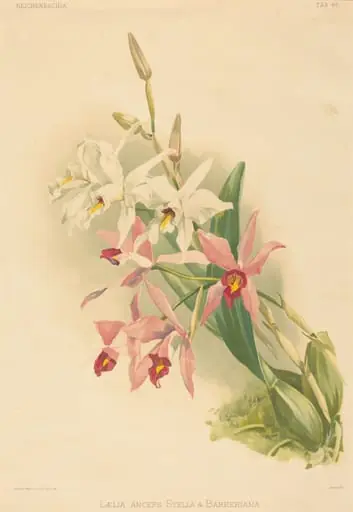
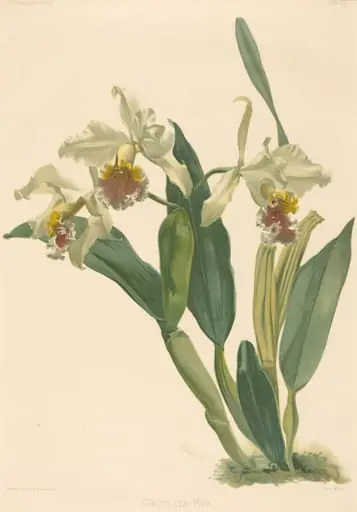
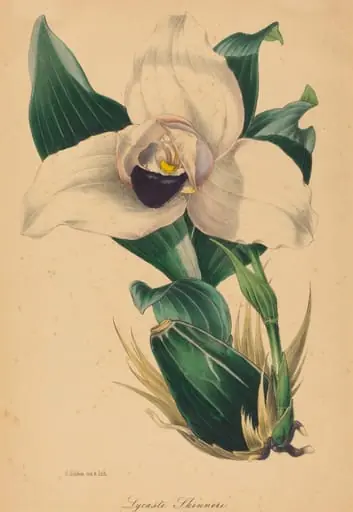
Laelia Elegans Schilleriana
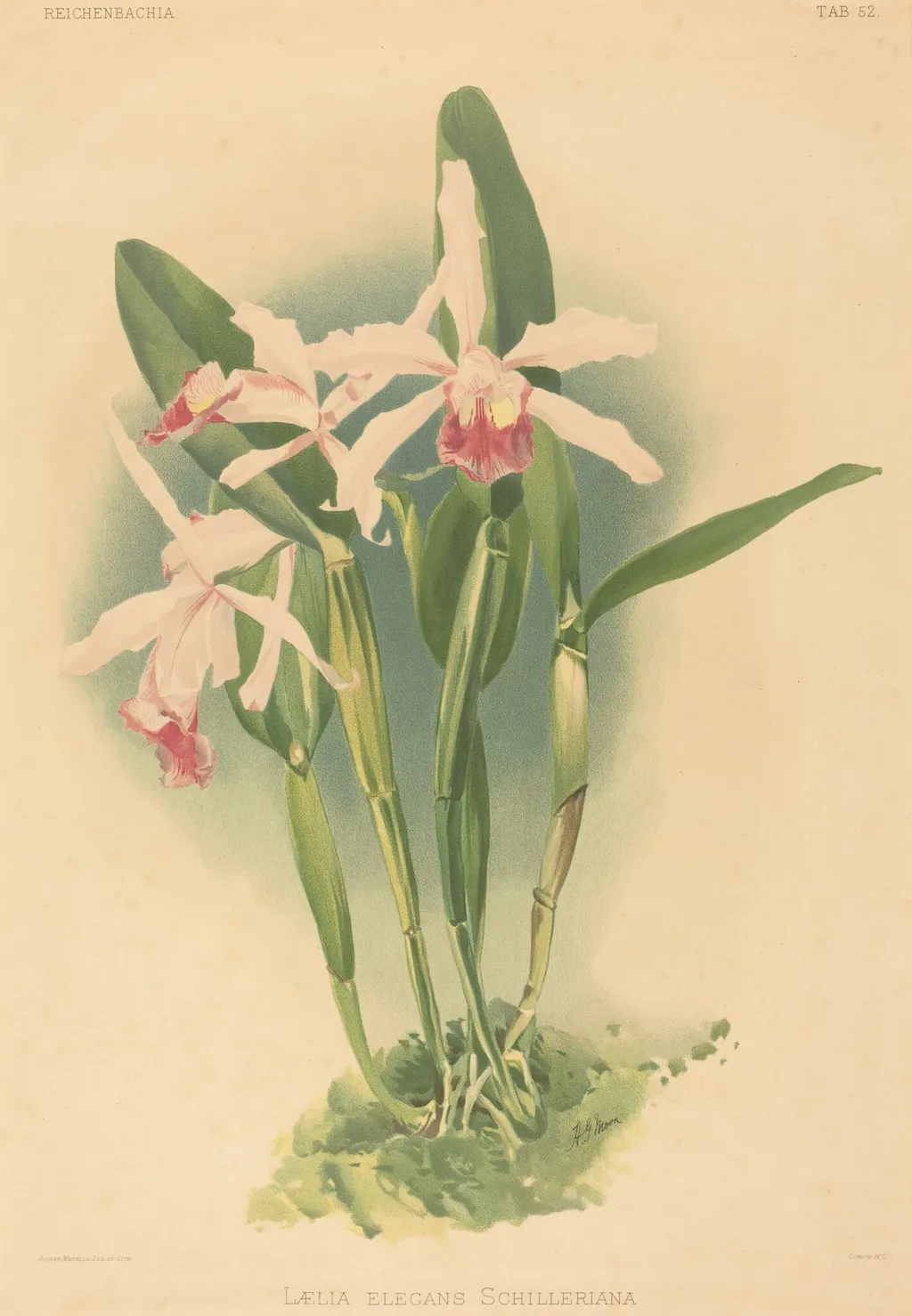
Laelia Elegans Schilleriana is an ink print by the Romanticist artist Joseph Mansell. It dates from 1840 and is held in the collection of the National Gallery of Art.
About this work
Overview
Laelia Elegans Schilleriana is a lithographic print produced by Joseph Mansell in 1840. It depicts a botanical study of an orchid species, rendered with precision and quiet refinement. The work belongs to a tradition of 19th-century scientific illustration, where aesthetic care was applied to document plant forms for both scholarly and public audiences.
Subject & Meaning
The composition emphasizes botanical accuracy, reflecting a period when orchids symbolized rarity and cultivated refinement in European horticulture.
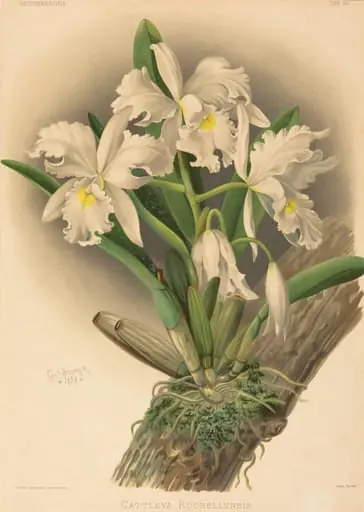
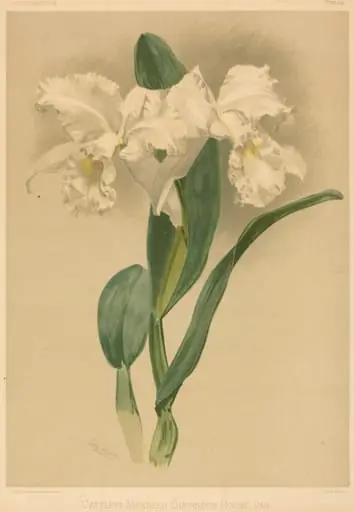
The subject is a cluster of orchid blooms with slender, arching petals in pale pink, deepening at the center and marked with subtle yellow flecks. Long, tapering leaves extend from sturdy green stems, suggesting natural growth rather than staged arrangement. The composition emphasizes botanical accuracy, reflecting a period when orchids symbolized rarity and cultivated refinement in European horticulture.
Technique & Style
Mansell employed lithography to achieve fine gradations of tone and delicate linework. The background transitions softly from muted green to beige, isolating the flora without distraction. Petals are rendered with light, fluid strokes, capturing their translucence and curvature. The absence of shadow or dramatic contrast aligns with the restrained, observational style typical of botanical prints of the era.
History & Provenance
Created in 1840, the print likely originated as part of a botanical publication or private collection of exotic plants. Mansell, active in London during the mid-19th century, specialized in horticultural illustrations for scientific and aristocratic patrons. The work’s survival suggests it was valued for its accuracy and craftsmanship, though its original context remains undocumented.
Context
During the 1830s and 1840s, orchids became objects of intense fascination in Europe, driven by colonial exploration and advances in greenhouse technology. Botanical illustration flourished as a discipline bridging science and art, with lithography offering a cost-effective means to reproduce detailed images for wider distribution. Mansell’s work reflects this cultural moment of natural history enthusiasm.
Legacy
Though not widely known today, the print exemplifies the quiet rigor of Victorian botanical art. It stands as a record of both horticultural interest and technical skill in printmaking. Its preservation contributes to the historical understanding of how plant species were visually cataloged before photography became commonplace.
Artist & collection