Artwork
Iris Swertii
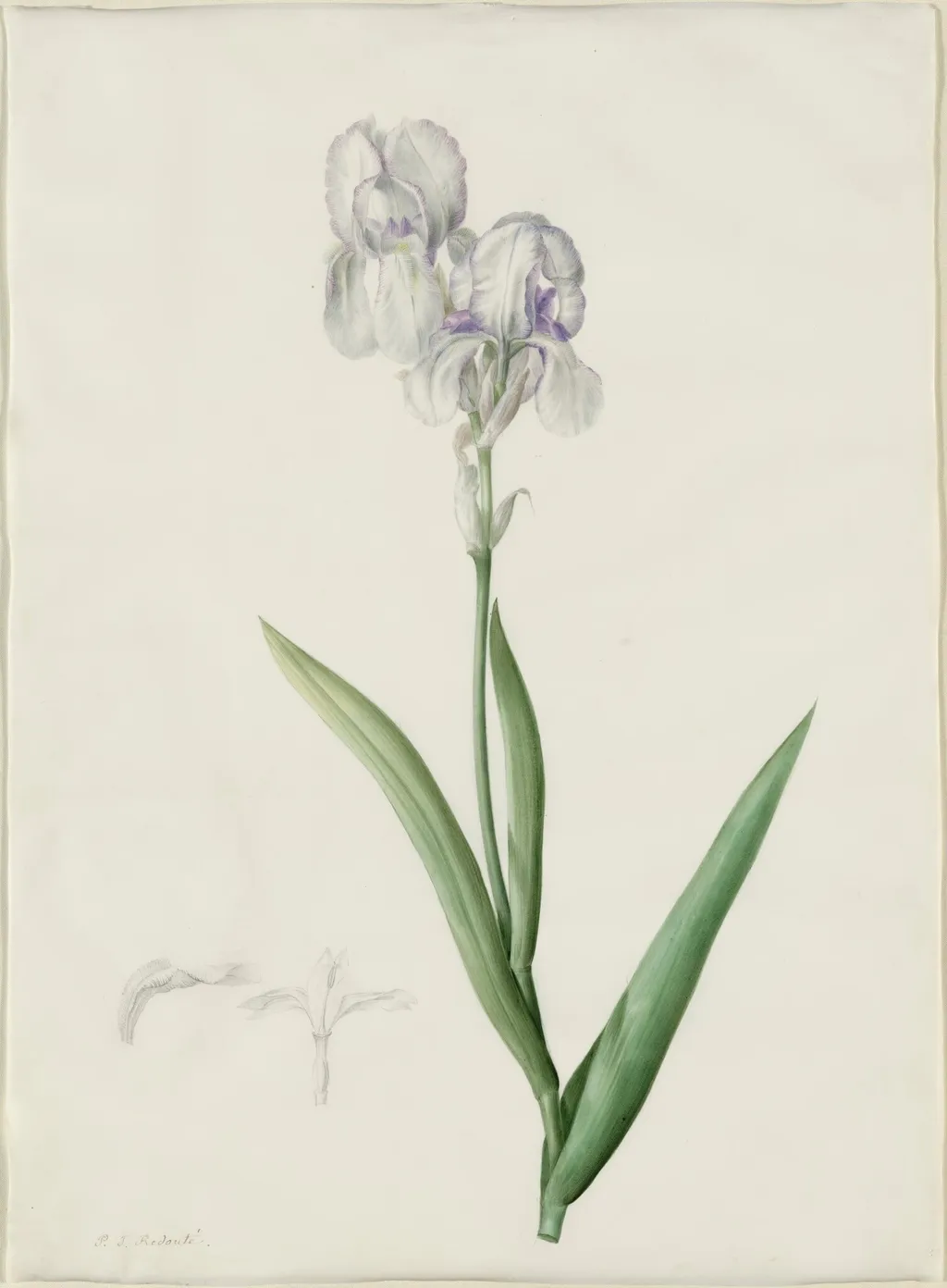
Iris Swertii is a watercolor drawing by the Romanticist artist Pierre Joseph Redouté. It dates from 1809 and is held in the collection of the National Gallery of Art.
About this work
Overview
Pierre-Joseph Redouté created *Iris Swertii* in 1809 as a detailed botanical study using watercolor and graphite on vellum.
Pierre-Joseph Redouté created *Iris Swertii* in 1809 as a detailed botanical study using watercolor and graphite on vellum. A native of the Austrian Netherlands, he became renowned for his meticulous floral illustrations. This work is one of many produced during his time at the Château de Malmaison, where he systematically recorded plant species for scientific and aesthetic documentation. The piece resides today in the National Gallery of Art in Washington, D.C.
Subject & Meaning
The drawing depicts a single iris bloom in soft purple and white, accompanied by two slender green leaves and a tall stem. In the corner, smaller sketches of buds and seed pods suggest a comprehensive study of the plant’s life cycle. Redouté’s focus on anatomical accuracy reflects the Enlightenment-era emphasis on empirical observation, transforming the iris from ornamental subject into a specimen of scientific interest.
Technique & Style
Redouté employed fine graphite lines to define structure, then layered translucent watercolor washes to capture subtle gradations of color and light. The use of vellum allowed for precise detail and reworking, while glazing techniques enhanced the petal’s luminosity. Tiny auxiliary sketches of reproductive parts reveal a methodical approach, characteristic of botanical illustration aimed at both scientific clarity and visual harmony.
History & Provenance
Created during Redouté’s tenure at Malmaison, the drawing emerged from a larger project commissioned by Empress Joséphine Bonaparte to document her extensive garden. Despite political upheavals, Redouté retained his position through successive French regimes. The work remained within private and institutional collections before entering the National Gallery of Art’s holdings, where it is preserved as part of a significant botanical archive.
Context
In the early 19th century, botanical illustration merged scientific rigor with artistic precision, driven by expanding botanical collections and global plant exploration. Redouté’s work aligned with this trend, serving institutions like the Jardin des Plantes and private collectors. His illustrations were not merely decorative but functioned as reference tools for horticulturists and naturalists across Europe.
Legacy
Redouté’s *Iris Swertii* exemplifies a tradition of botanical art that prioritized accuracy over ornamentation. His methods influenced generations of scientific illustrators and helped standardize visual documentation of plant species. Though his engravings are more widely known, his watercolors on vellum remain valued for their intimate detail and technical discipline, preserving a quiet but enduring contribution to natural history.
Own this work as a print
Artist & collection

Artist
Pierre-Joseph Redouté (French pronunciation: , 10 July 1759 – 19 June 1840), was a painter and botanist from the Austrian Netherlands, known for his watercolours of roses, lilies and other flowers at the Château de…

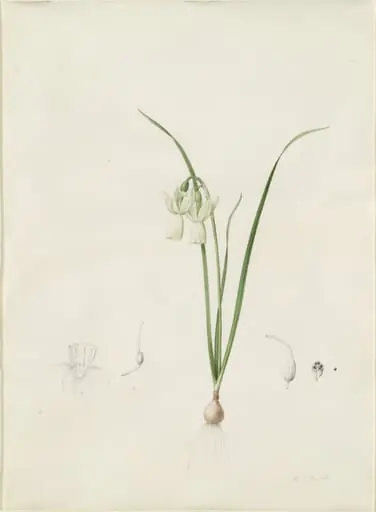
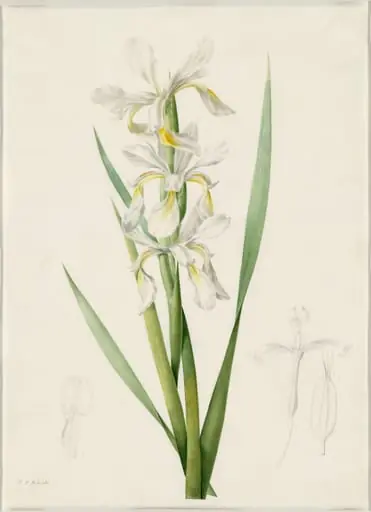 Iris ochroleuca
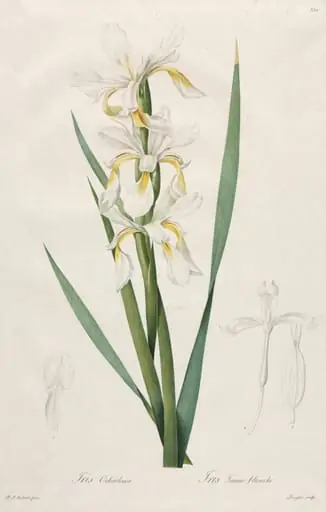 Gold-banded Iris
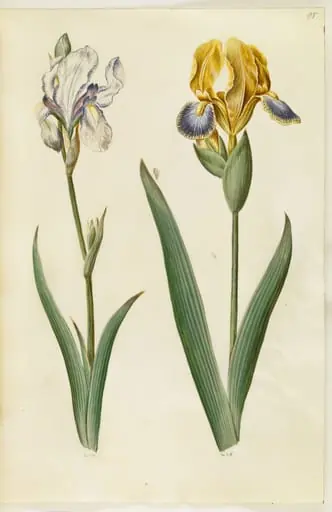 Iris pallida (bleg iris); Iris variegata (broget iris)
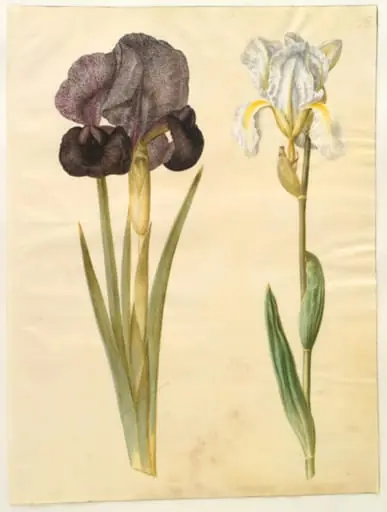 Iris susiana (sørge-iris); Iris ×florentina (violrod)
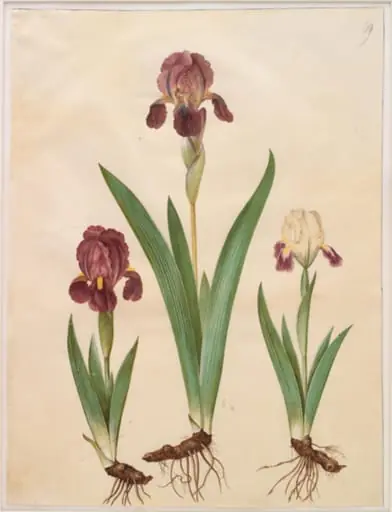 Iris ×lurida (iris-hybrid)
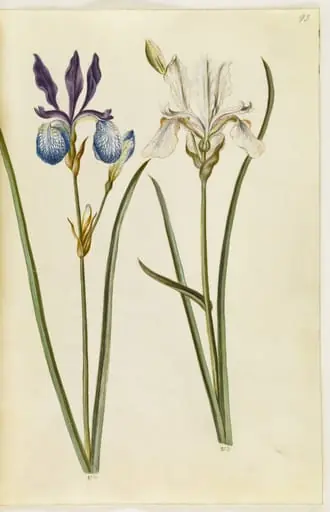 Iris sibirica (sibirisk iris)
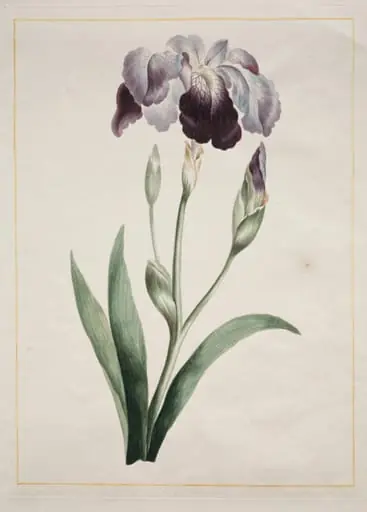 Japanese Iris (Large Blue Iris)
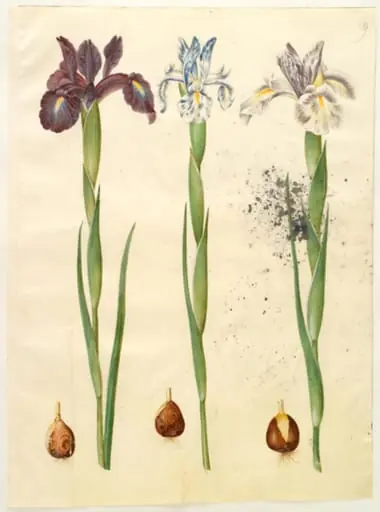 Iris latifolia (engelsk iris)
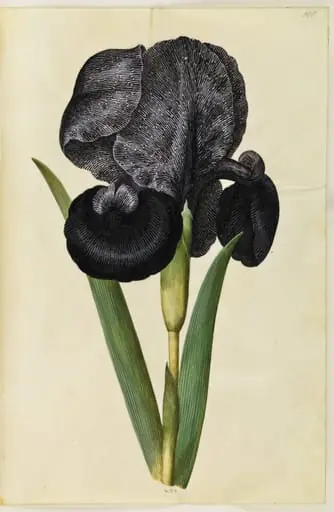 Iris susiana (sørge-iris)
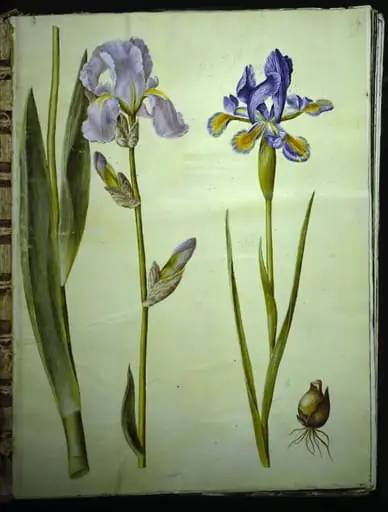 Iris ×germanica (have-iris); Iris xiphium (spansk iris)