Artwork
Oxford
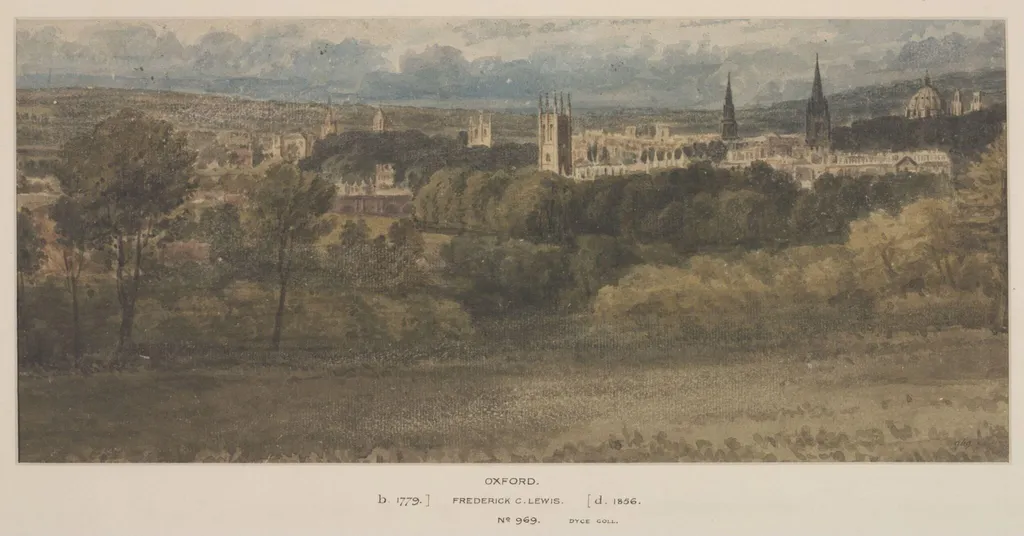
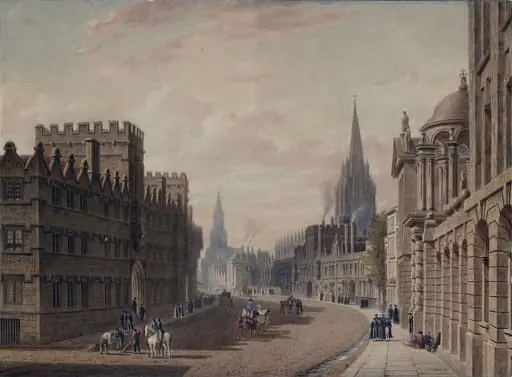
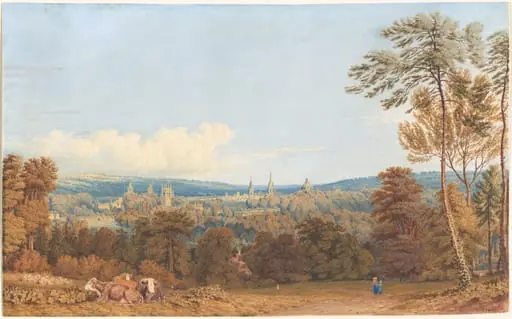
Oxford is a watercolor work on paper by Frederick Christian Lewis. It dates from 1850 and is held in the collection of the Victoria and Albert Museum.
About this work
Overview
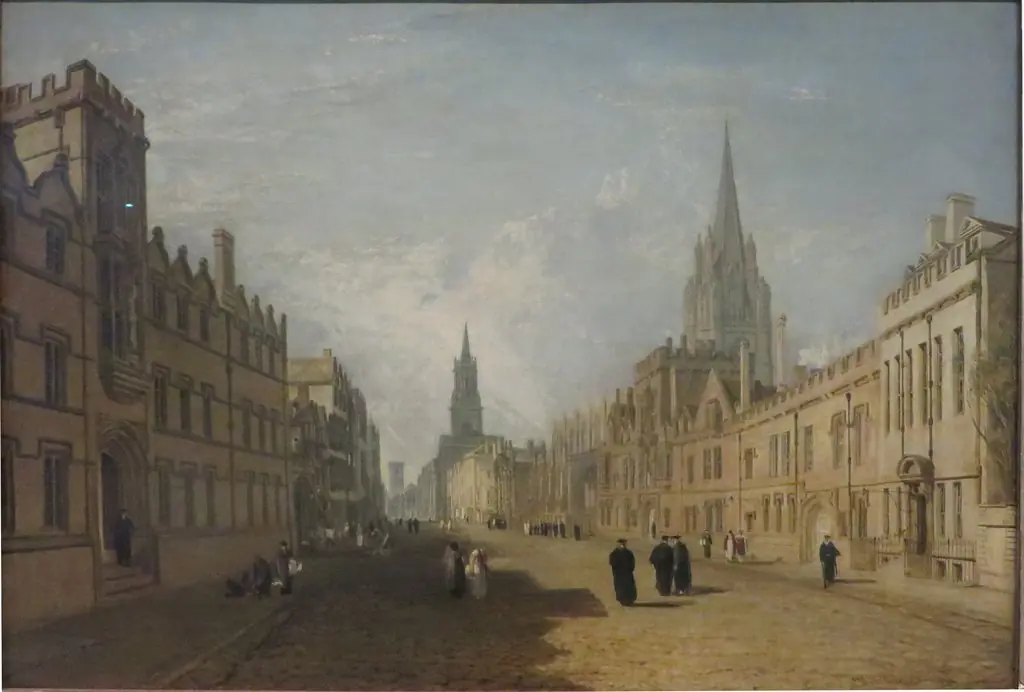
This watercolour by Frederick Christian Lewis the elder captures a tranquil suburban view of Oxford, rendered in delicate washes of transparent pigment. The composition frames the town within a natural setting, with trees anchoring the foreground and distant architecture receding into the horizon. Soft atmospheric effects suggest a quiet, overcast day, emphasizing stillness over action.
Subject & Meaning
The scene presents Oxford not as a bustling academic center but as a serene settlement nestled in the English countryside. Two prominent church spires rise above the rooftops, hinting at the city’s religious and institutional identity, while the winding river underscores its geographical character. The absence of figures or movement invites contemplation rather than narrative.
Technique & Style
Lewis employed loose, fluid brushwork and layered watercolour washes to model light and form without hard outlines. The sky and landscape blend subtly, with muted tones creating a hazy, atmospheric depth. The technique prioritizes mood over detail, using transparency to suggest distance and the gentle diffusion of daylight across the valley.
History & Provenance
Created in the early 19th century, the work reflects the period’s growing interest in topographical views of English towns. Lewis, known for his architectural watercolours, often documented landscapes with precision tempered by poetic restraint. The painting’s survival in private collections before institutional acquisition speaks to its quiet appeal among collectors of topographical art.
Context
During Lewis’s time, watercolour was increasingly valued for its ability to capture fleeting natural effects, especially in landscape studies. Artists like him contributed to a broader cultural movement that celebrated the English countryside and historic towns, often as a counterpoint to industrialization. Oxford, with its collegiate architecture, was a favored subject for such observations.
Legacy
Lewis’s work exemplifies the transition of watercolour from a preparatory medium to a finished artistic form. His restrained approach influenced later topographical artists who sought to balance accuracy with emotional tone. Though not widely celebrated today, his depictions remain valuable records of early 19th-century English landscapes and their quiet dignity.
Artist & collection
Artist
Frederick Christian Lewis painted detailed watercolours and prints in the late 18th to mid 19th century.