Artwork
Berry Pomeroy Castle
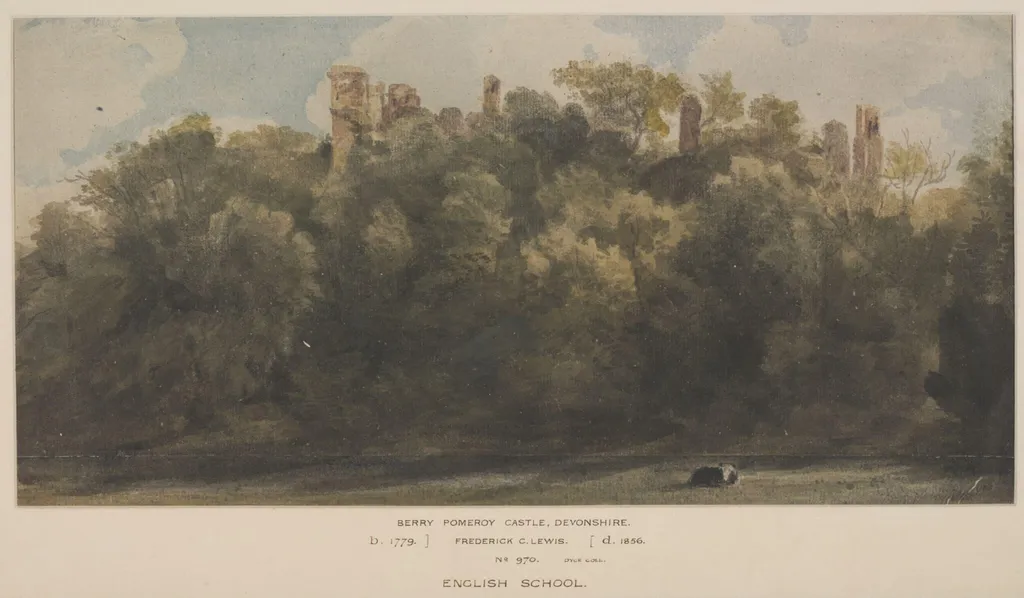
Berry Pomeroy Castle is a watercolor work on paper by Frederick Christian Lewis. It dates from 1850 and is held in the collection of the Victoria and Albert Museum.
About this work
Overview
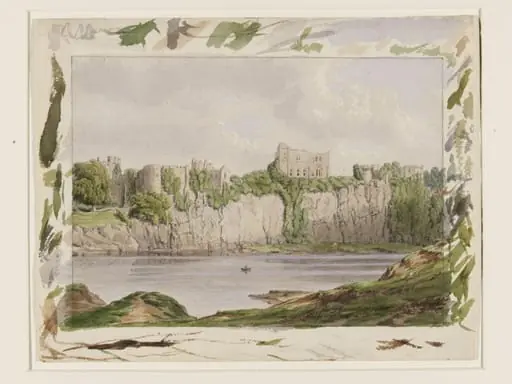
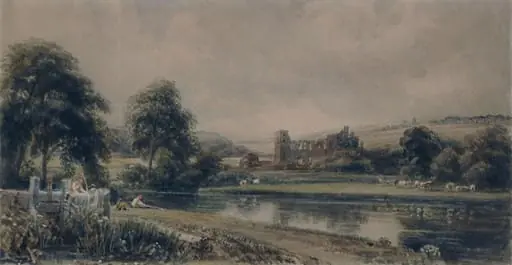
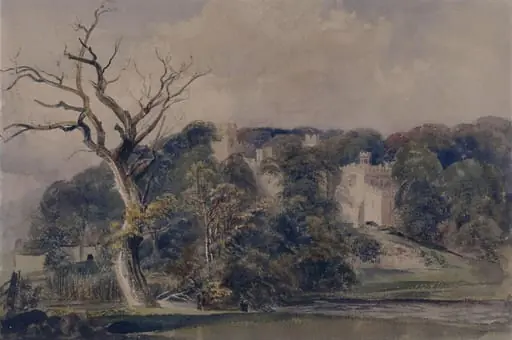
This watercolour depicts Berry Pomeroy Castle as a fragmented ruin emerging from thick woodland. The structure, partially obscured by foliage, conveys a sense of quiet decay. A single sheep grazes in the foreground grass, anchoring the composition in stillness. The medium’s transparency allows light to filter through the scene, enhancing its atmospheric calm.
Subject & Meaning
The castle, long abandoned, rises from the encroaching vegetation as a silent witness to time’s passage. Its crumbling walls and broken towers suggest neglect and the inevitability of natural reclamation. The solitary animal in the foreground underscores the absence of human presence, reinforcing a mood of solitude and quiet endurance.
Technique & Style
The artist employed watercolour to achieve a delicate, luminous effect. Washes of pale blue and soft greens blend seamlessly, mimicking the haze of a mild day. Fine brushwork defines the castle’s outlines while leaving areas intentionally translucent, allowing the paper’s whiteness to suggest light and distance.
History & Provenance
The painting captures Berry Pomeroy Castle in Devon, a medieval fortress abandoned since the 17th century. Though the artist’s identity is unrecorded, the work aligns with 19th-century topographical watercolours that documented historic sites. Its preservation suggests it was valued as a record of architectural ruin rather than a commercial piece.
Context
During the early 1800s, interest in romanticized ruins grew among British artists and collectors. Berry Pomeroy, with its overgrown walls and eerie silence, fit this aesthetic. Such works often reflected contemporary contemplations on time, memory, and the impermanence of human achievement.
Legacy
This watercolour contributes to a broader tradition of documenting England’s architectural remnants. While not widely exhibited, it remains a quiet example of how landscape painting served as both record and meditation. Its modest scale and restrained palette reflect a preference for subtlety over spectacle in regional art of the period.
Artist & collection
Artist
Frederick Christian Lewis painted detailed watercolours and prints in the late 18th to mid 19th century.