Artwork
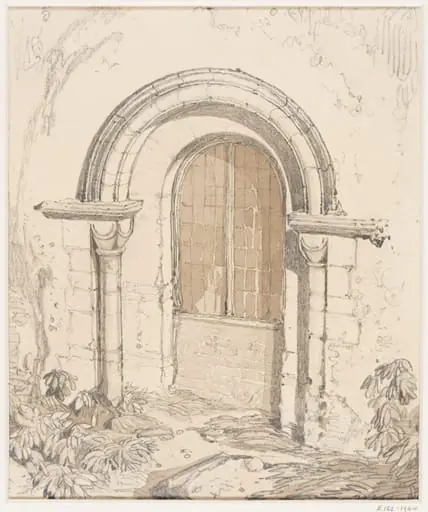
Door to the Church, Monastery of St. Catherine, Sinai
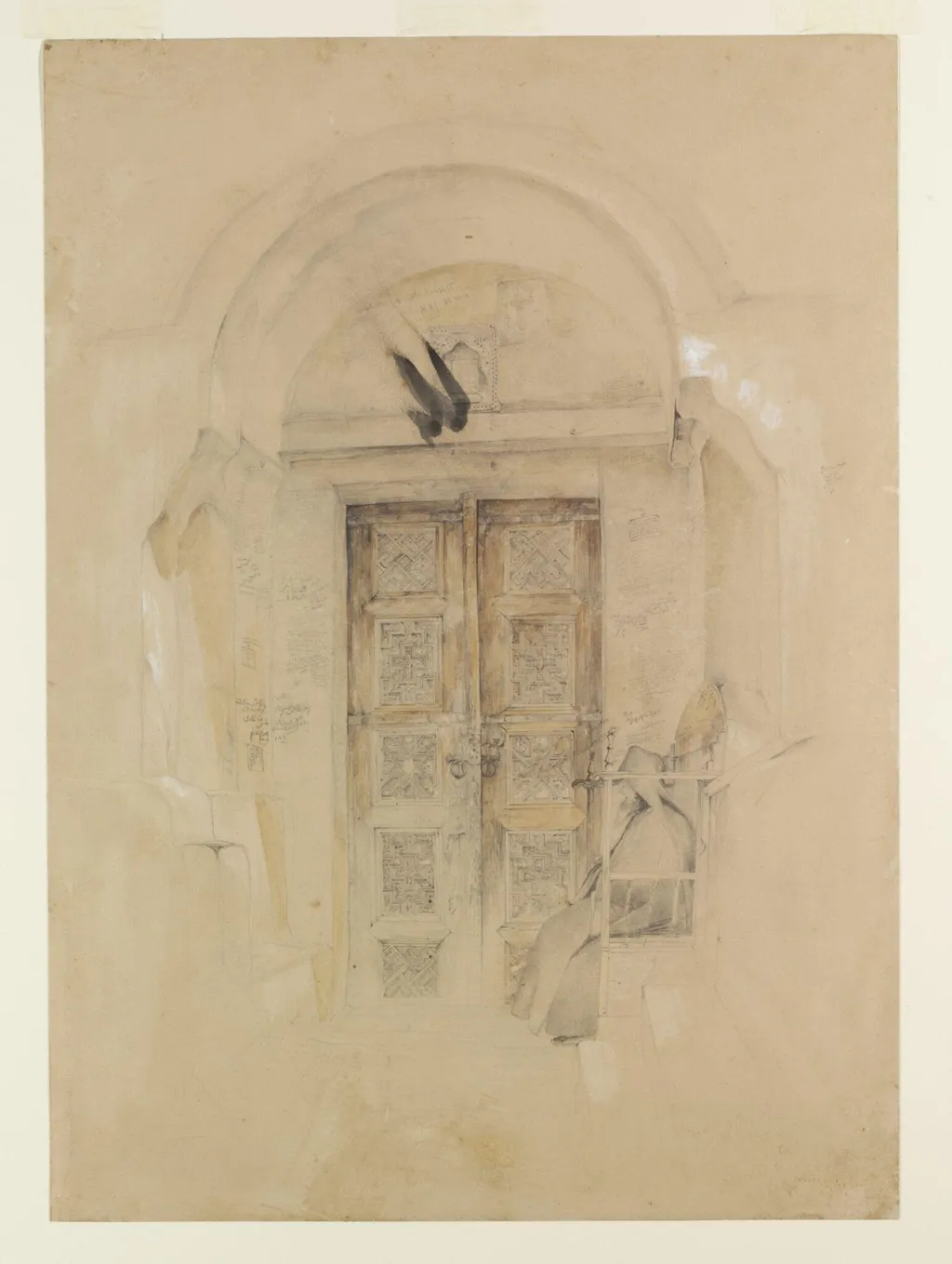
Door to the Church, Monastery of St. Catherine, Sinai is a watercolor work on paper by the British Romanticist artist John Frederick Lewis. It dates from 1843 and is held in the collection of the Victoria and Albert Museum.
About this work
You can learn more about the style and techniques used in this painting by looking into the movement of Romanticism.
This watercolour painting is called Door to the Church, Monastery of St. Catherine, Sinai. It was created by Lewis, John Frederick in 1843.
The painting is part of the Romanticism movement. Lewis visited Sinai in 1843, the same year he may have met Lady Louisa Tenison, who was also travelling there. He included graffiti from travellers and pilgrims on the church door in his work.
You can learn more about the style and techniques used in this painting by looking into the movement of Romanticism.
Overview
John Frederick Lewis created this watercolour in 1843 during a journey to the Sinai Peninsula. The work depicts the entrance to the Church of the Transfiguration at the Monastery of St. Catherine, a remote religious site preserved by its isolated mountain location. Lewis rendered the door with precise attention to surface detail, capturing centuries of inscriptions left by visitors.
Subject & Meaning
The door serves as a record of human devotion and pilgrimage, bearing layers of graffiti from travelers across centuries. Lewis’s focus on these markings transforms a simple architectural element into a testament of faith and memory. The work suggests reverence not only for the sacred space but for the cumulative presence of those who came before.
Technique & Style
Executed in watercolour, the painting employs fine brushwork and subtle tonal gradations to replicate the weathered stone and eroded inscriptions. Lewis’s approach aligns with Romanticism’s interest in authenticity and the passage of time, favoring observational detail over idealized composition. The medium’s transparency enhances the sense of age and fragility in the surface.
History & Provenance
Lewis traveled to Sinai in 1843, a rare expedition for European artists at the time. He likely encountered Lady Louisa Tenison, another traveler documenting the region. The painting reflects firsthand observation rather than studio reconstruction, grounding it in the physical reality of the site. Its survival as a record of the door’s condition in the mid-19th century is historically significant.
Context
In the 1840s, Western interest in the Holy Land intensified, driven by religious curiosity and archaeological exploration. The Monastery of St. Catherine, one of the oldest continuously operating Christian communities, attracted few visitors due to its isolation. Lewis’s depiction contributes to a growing visual archive of Eastern Christian sites during a period of increasing European engagement with the region.
Legacy
The painting remains a valuable document of the monastery’s physical state before modern conservation efforts. Its emphasis on vernacular markings—often overlooked in grander architectural studies—offers insight into the lived experience of pilgrimage. Lewis’s work helped shift attention from monumental forms to the traces of ordinary devotion.
Artist & collection
Artist
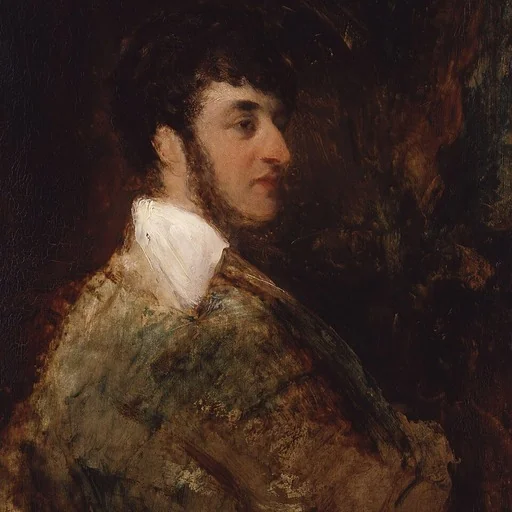
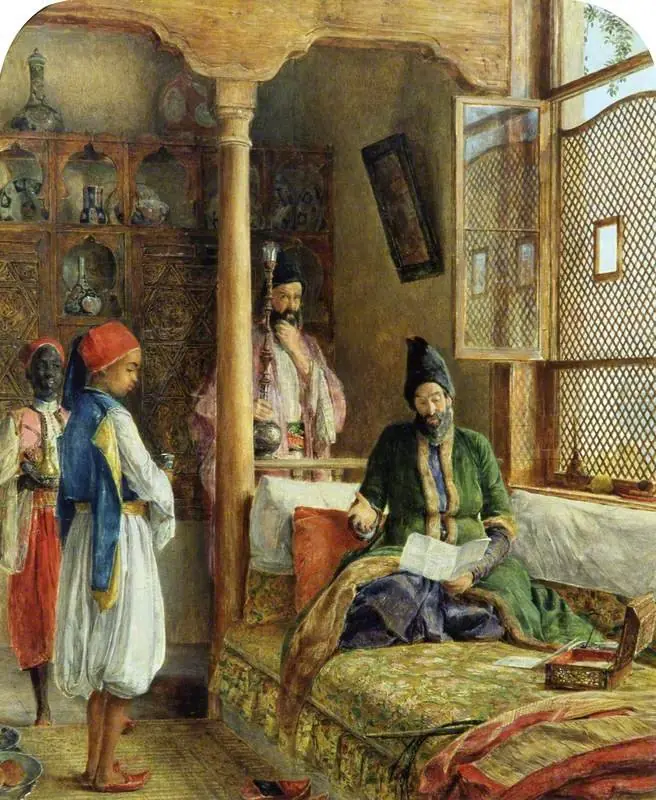
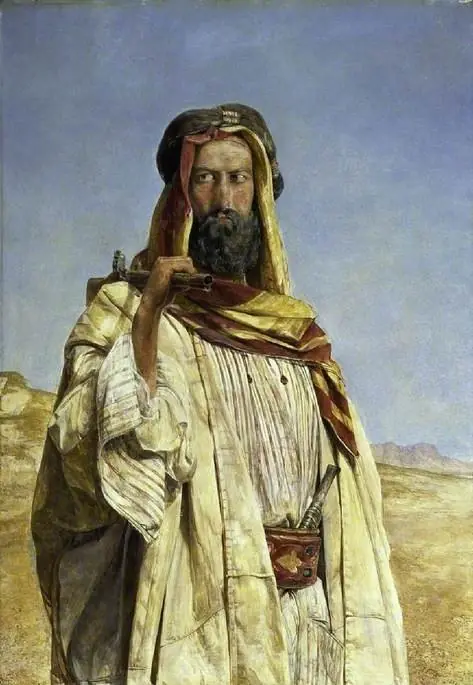
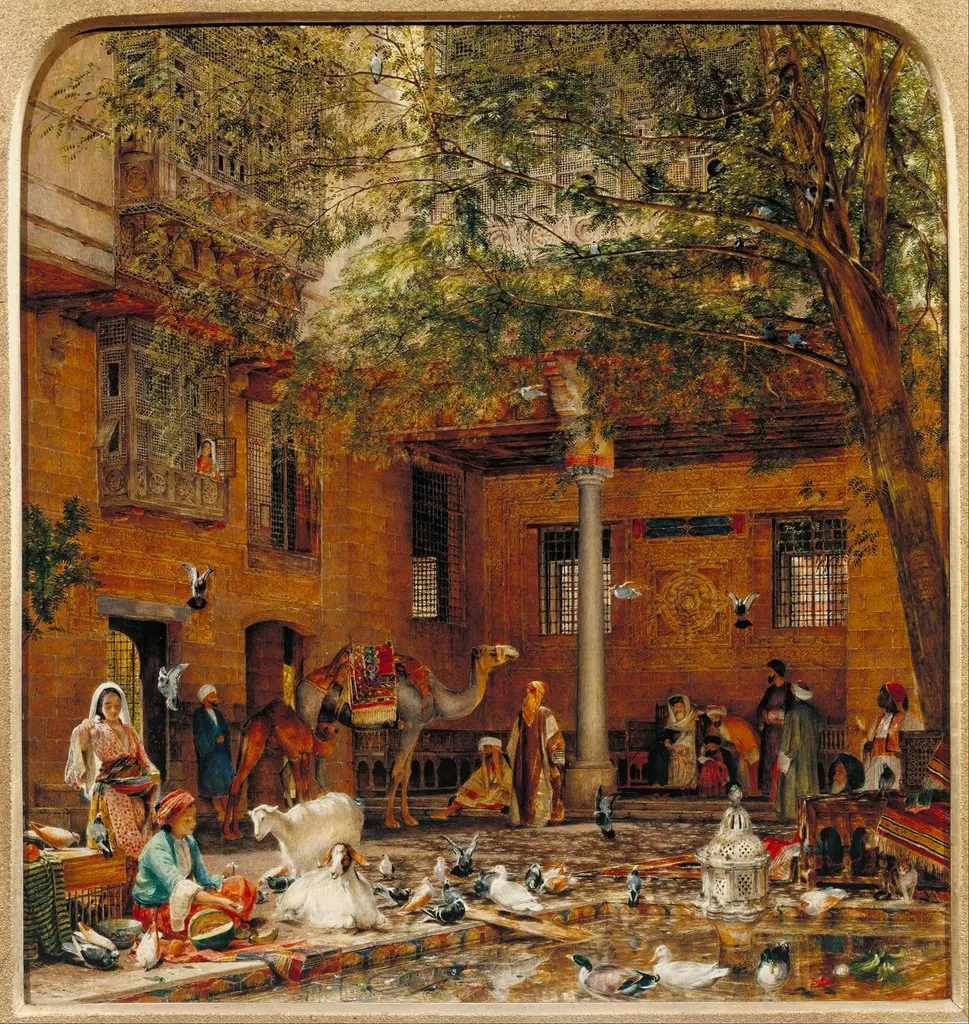
John Frederick Lewis (1804–1876) was an English Orientalist painter. He specialized in Oriental and Mediterranean scenes in detailed watercolour or oils, very often repeating the same composition in a version in each…


![Bedpost [verso], by Paul Cezanne](https://artifactworldgallery.com/img/paul-cezanne--bedpost-verso--1117199781ad2be5-w320.webp)