Artwork
The Esir Hani or Avrat Pazari, the female slave market near the Nur-i Osmaniye Cami, Istanbul
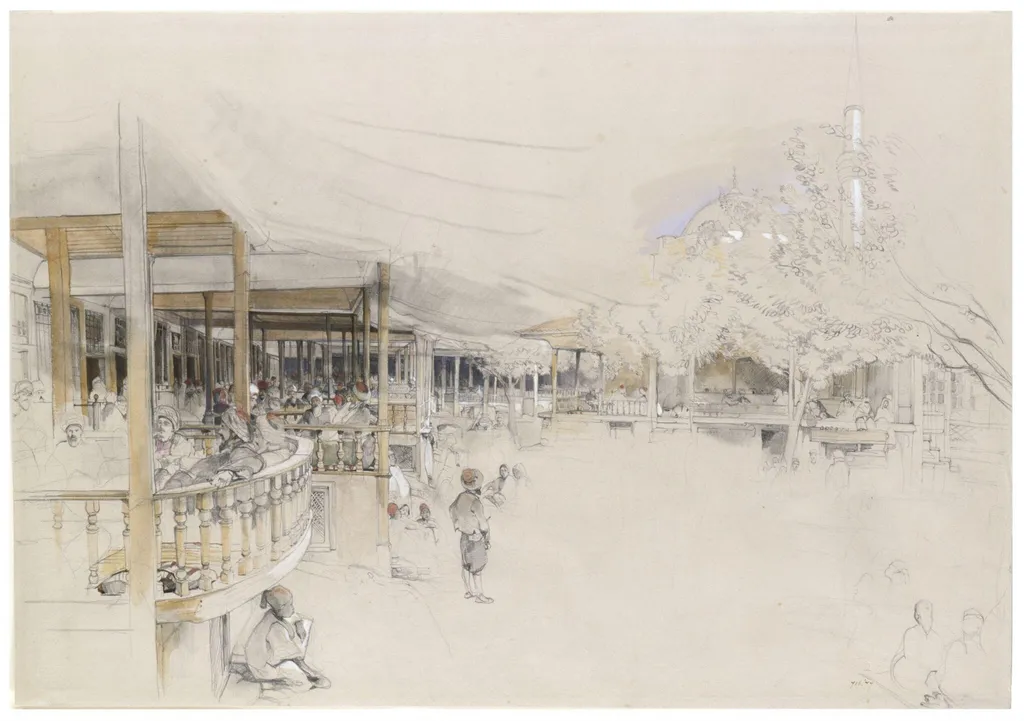
The Esir Hani or Avrat Pazari, the female slave market near the Nur-i Osmaniye Cami, Istanbul is a watercolor work on paper by the Orientalist artist John Frederick Lewis. It dates from 1841 and is held in the collection of the Victoria and Albert Museum. This watercolour depicts the female slave market known as Esir Hani, located near the Nur-i Osmaniye Mosque in Istanbul.
About this work
Overview
This watercolour depicts the female slave market known as Esir Hani, located near the Nur-i Osmaniye Mosque in Istanbul.
This watercolour depicts the female slave market known as Esir Hani, located near the Nur-i Osmaniye Mosque in Istanbul. Created by a Western artist, the work captures a private, regulated space where enslaved women were displayed for sale. The scene is rendered with quiet observation, suggesting the artist’s limited access—likely sketched covertly or from recollection due to restrictions on documenting such sites.
Subject & Meaning
The painting portrays enslaved women held within wooden enclosures, their visibility carefully controlled by dealers who kept higher-value individuals out of public view. The proximity to a mosque underscores the coexistence of religious and commercial life in Ottoman Istanbul. The composition avoids overt drama, instead emphasizing the quiet, institutionalized nature of the trade.
Technique & Style
Executed in watercolour, the work employs delicate washes and restrained detail, characteristic of 19th-century travel sketches. The palette is muted, focusing on architectural forms and subdued human figures. The style aligns with Romantic-era documentary practices, prioritizing observational accuracy over emotional exaggeration, reflecting a Western gaze on Eastern urban life.
History & Provenance
The artist, likely a foreign visitor to Istanbul, could not openly sketch the market due to Ottoman regulations. The image was probably made in secrecy or reconstructed from memory after a visit. Its survival suggests it was preserved as a personal record rather than a public commission, offering a rare visual testament to a rarely documented space.
Context
In the early 19th century, Istanbul’s slave markets operated under imperial oversight, with gendered segregation and economic stratification. Female slaves were often sold for domestic or concubine roles, and their display was tightly controlled. The market’s location near a major mosque reflects the integration of commerce into the city’s religious and civic fabric.
Legacy
The watercolour remains a fragmentary but significant record of a practice that was gradually declining under international pressure and internal reform. As one of few visual sources from a restricted site, it contributes to historical understanding of slavery in the late Ottoman Empire, offering insight without sensationalism.
Artist & collection
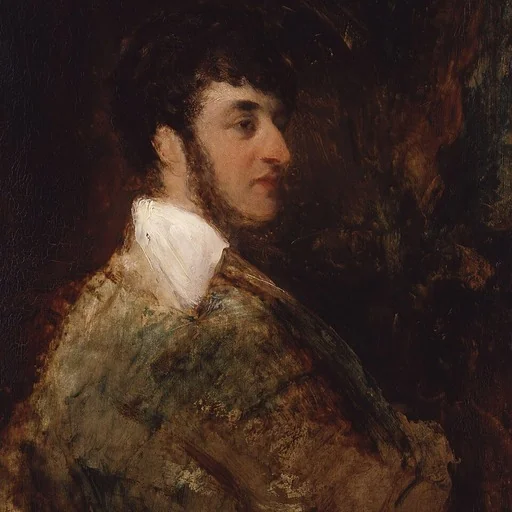
Artist
John Frederick Lewis (1804–1876) was an English Orientalist painter. He specialized in Oriental and Mediterranean scenes in detailed watercolour or oils, very often repeating the same composition in a version in each…

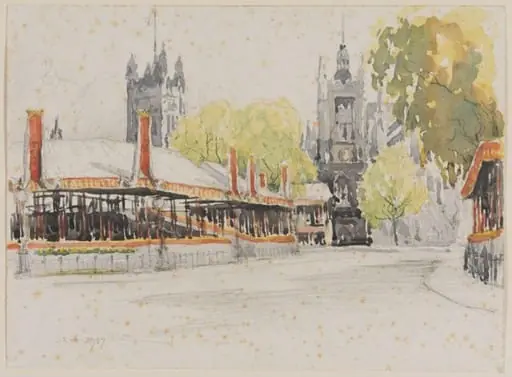 St. Margarets with stands
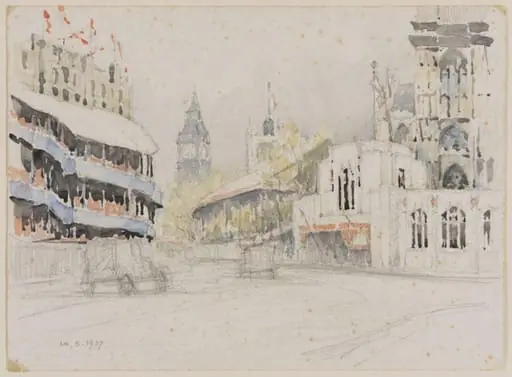 Entrance to Westminster Abbey with Big Ben in the distance
 Watergate Street Row, looking East, Chester
 Oberbaum-Brucke, Berlin
 The Promenade, Cheltenham, Gloucestershire
 Study : lawn and trees : hills in the distance
 Foundling Hospital
 Cannons Park, Edgware; from the Tennis Courts
 Oberbaum-Brucke, Berlin
 Greek House at Adalia
 Drawing of St. Cloud
 Westminster Abbey with stands