Artwork
Greek House at Adalia
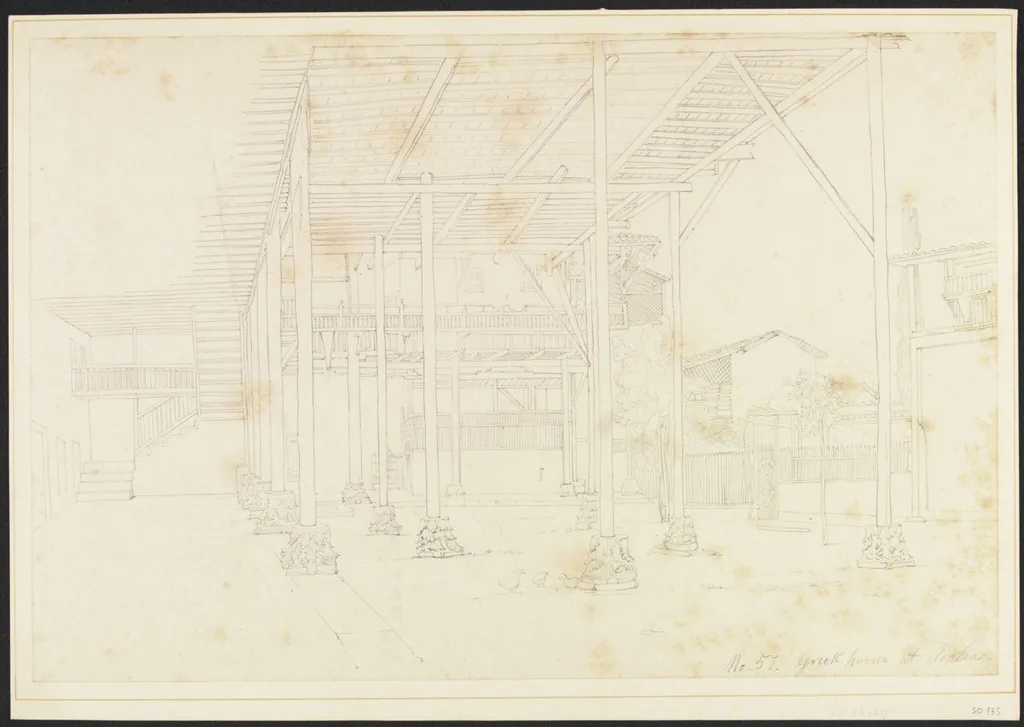
Greek House at Adalia is a drawing by the Romanticist artist Antonio or Anton Schranz. It dates from 1837 and is held in the collection of the Victoria and Albert Museum.
About this work
Overview
Antonio Schranz’s drawing records a wooden pavilion situated in the town then known as Adalia, later renamed Antalya after the Turkish Republic’s foundation in 1922. Executed in pencil between December 1836 and September 1837, the work forms part of a series of travel sketches produced during a documented journey that involved an unnamed patron.
Subject & Meaning
The image captures a tall, timber‑framed house with a steep tiled roof, supported by substantial posts that extend to a balcony. Open sides reveal the interior space, while surrounding structures and a low fence appear in lighter strokes, suggesting the artist’s interest in the building’s spatial relationship within its setting.
Technique & Style
Schranz employs cross‑hatching and varied line density to model the play of light on the wooden surfaces, deepening shadows where the sun strikes. The drawing’s loose, exploratory quality indicates a study rather than a finished composition, emphasizing structural form over decorative detail.
History & Provenance
The series of sketches from this voyage is dispersed among several collections, including the Benaki Museum in Athens and a private holding in Malta. The particular drawing entered the market through P. Heathcote‑Williams and was acquired in July 1984.
Context
Created during a period of heightened European travel to the Ottoman Levant, Schranz’s work reflects contemporary curiosity about regional architecture. The label “Greek house at Adalia” points to the building’s cultural identification within a multi‑ethnic coastal town.
Artist & collection
Artist
Antonio Schranz made watercolours of Egyptian and Levantine sites in the 1830s–40s.

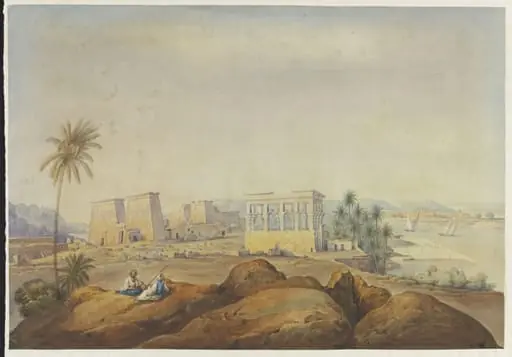 The Temple of Isis and Kiosk of Trajan on the Island of Philae
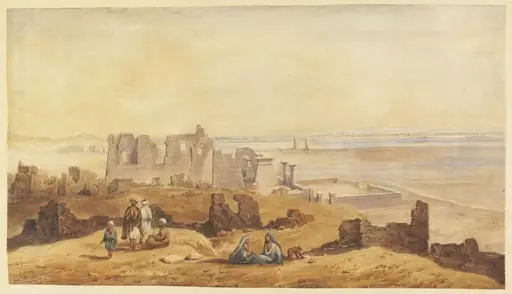 Luxor: the West Bank, with the Temple of Ramesses III at Madinat Habu; looking east towards the Nile
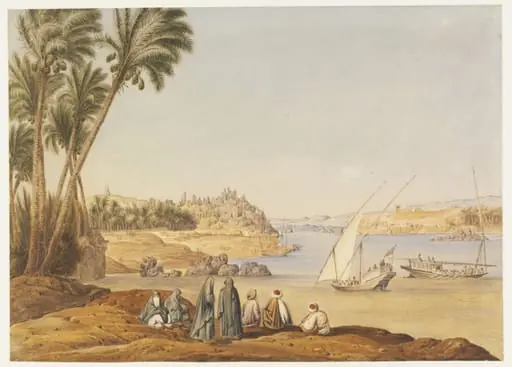 Aswan; looking south up the Nile
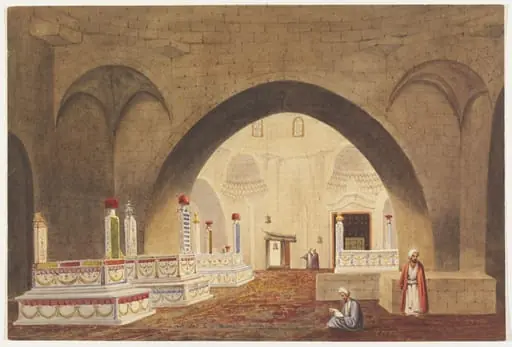 Mausoleum of Mehmet Ali and his family at Cairo
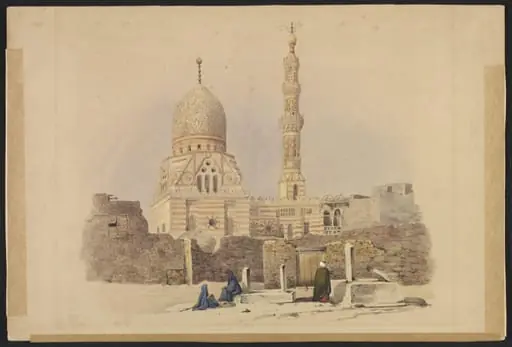 Mosk of Kaed Bey Cairo -
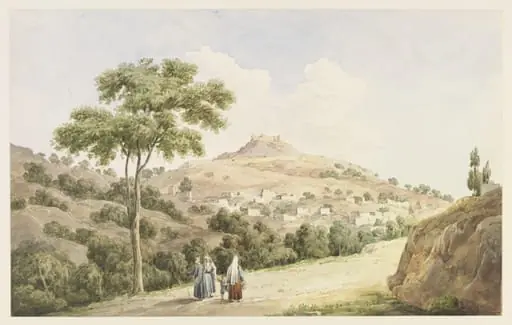 Saffed
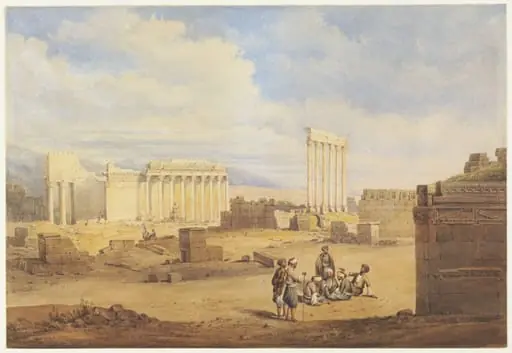 Baalbek
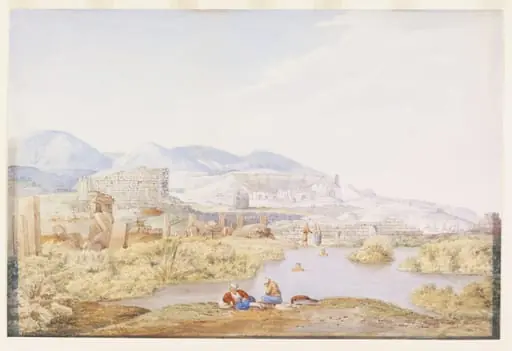 Hierapolis - Natural Hot Spring. Phrygia
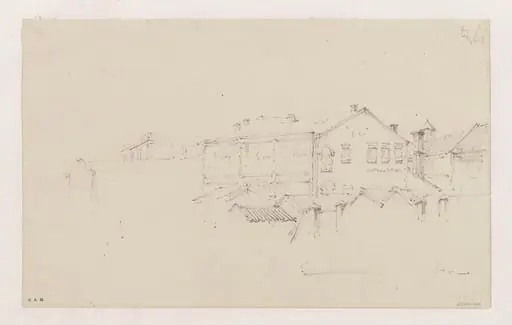 Chinese buildings, probably in Guangzhou (Canton)
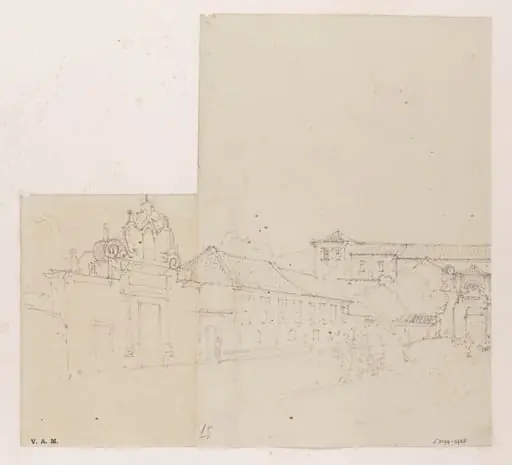 The gateway to the convent of Santa Clara, Macau
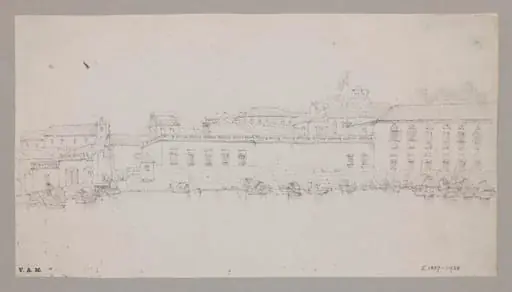 Buildings flanking the Inner Harbour, Macau
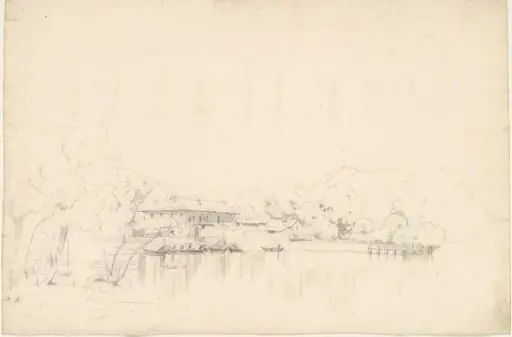 Lake Houses
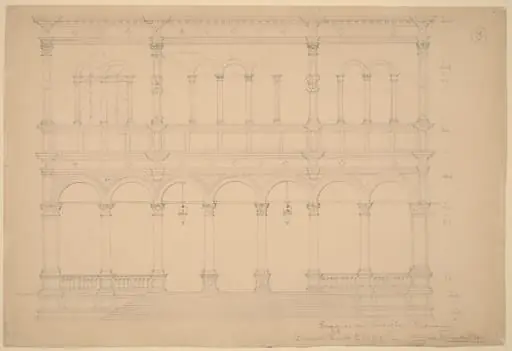 Loggia del Consiglio, Padua
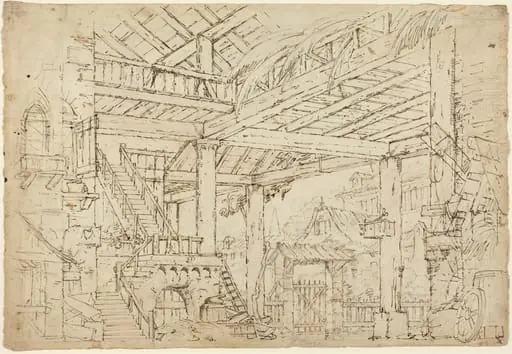 Interior of a Barn Built on Ancient Ruins
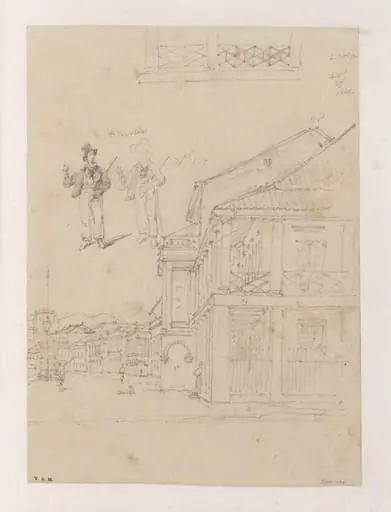 Buildings on the Praya Grande, Macau, with two studies of a Westerner
 Untitled
 A house with an awning extended, Macau
 York River