Artwork
Cannons Park, Edgware; from the Tennis Courts
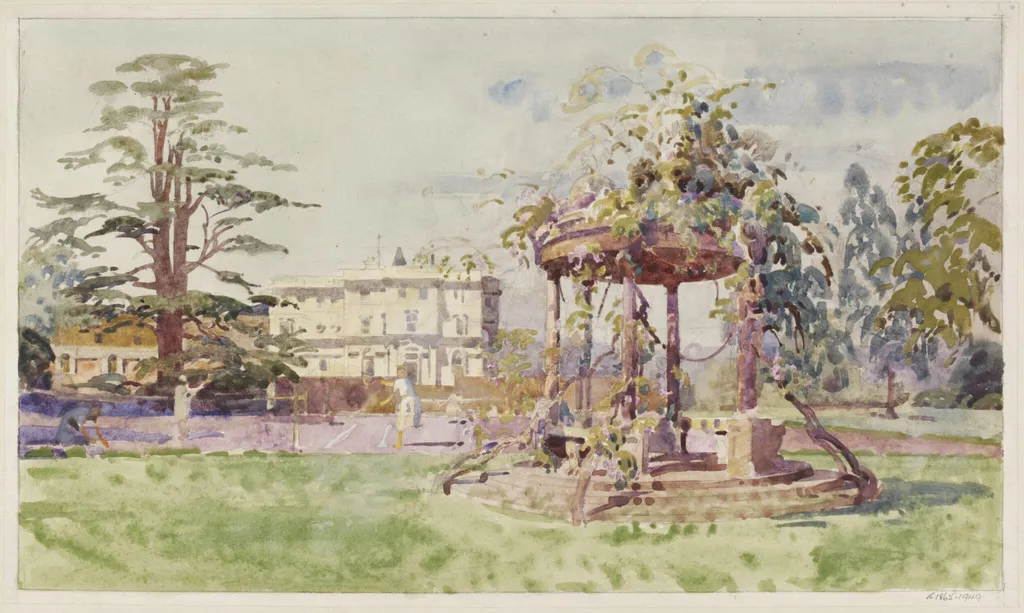
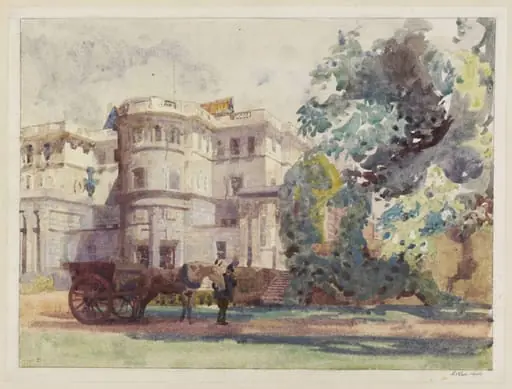
Cannons Park, Edgware; from the Tennis Courts is a watercolor work on paper by the Social Realist artist Bayes. It dates from 1940 and is held in the collection of the Victoria and Albert Museum. Created in 1940, this watercolour portrays Cannons Park in Edgware, focusing on the tennis courts and a central pavilion.
About this work
Overview
Created in 1940, this watercolour portrays Cannons Park in Edgware, focusing on the tennis courts and a central pavilion. The composition balances open grass, surrounding trees, and a distant building with a dome, offering a concise view of the park’s layout during the early wartime period.
Subject & Meaning
The work records a public recreational space, emphasizing the tranquility of the pavilion and its surroundings amid a landscape that was increasingly vulnerable to wartime disruption. By highlighting everyday leisure, the image underscores a sense of continuity in British life despite the looming threat of conflict.
Technique & Style
Executed with fluid, translucent brushstrokes, the artist captures the interplay of light and shade across the grass and foliage. The palette is softened, allowing sunlight to appear filtered through leaves, while the loose handling of paint conveys atmosphere rather than precise detail.
History & Provenance
The watercolour was produced under the Recording Britain scheme, a Ministry of Labour and National Service initiative funded by the Pilgrim Trust. The project, overseen by Sir Kenneth Clark, commissioned artists to document sites deemed at risk during World War II, resulting in a collection of over 1,500 works.
Context
Recorded at a time when many historic sites faced damage from bombing and post‑war development, the painting contributes to a broader effort to preserve visual records of national identity. Cannons Park, like many other locales, was selected for its representative character within the British landscape.
Artist & collection
Artist
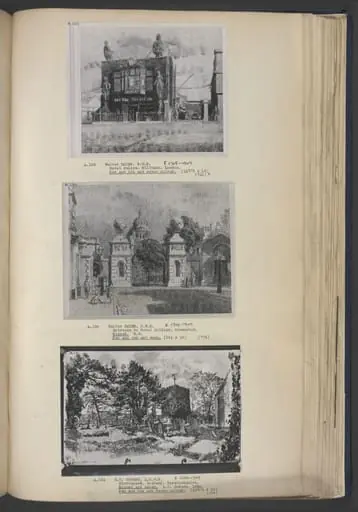
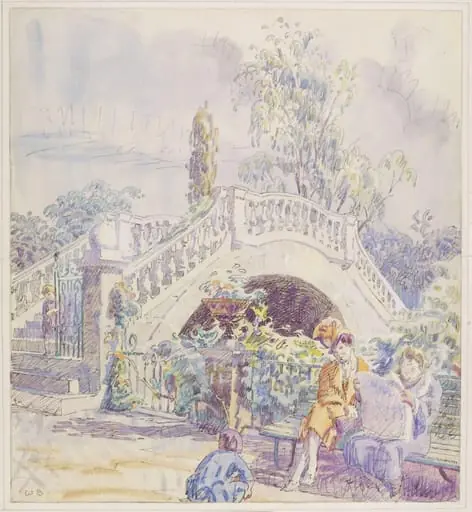
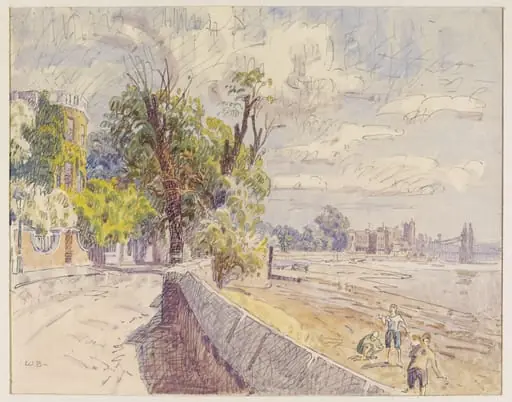
This artist painted watercolours around London in the 1940s. They captured quiet spots like The Gateway at Royal Naval College, Greenwich, The Garden at York House in Twickenham, and London Dock, Wapping. Each sheet…

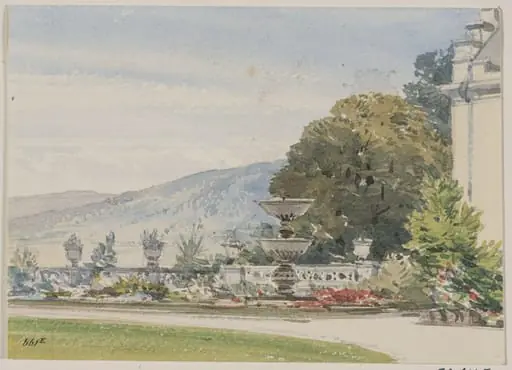 Souvenirs of Rosenau, the birthplace of H.R.H, the Prince Consort, Husband of Queen Victoria
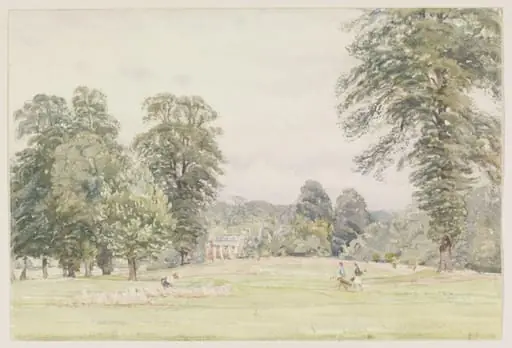 Richmond Golf Club, Sudbrook Park
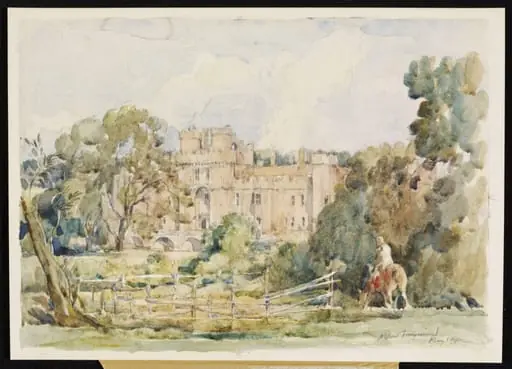 Herstmonceux Castle
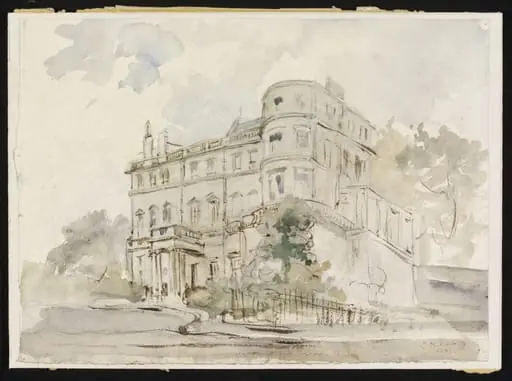 Carlton Terrace
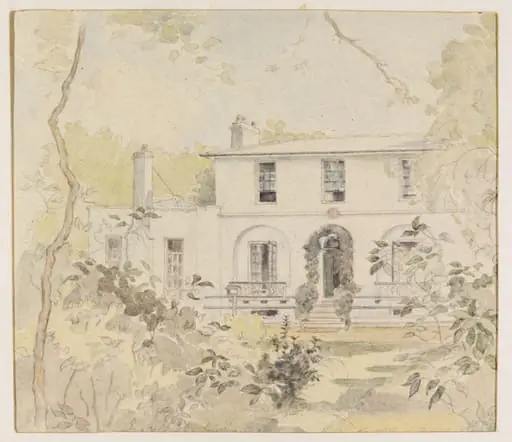 Keats House, Hampstead
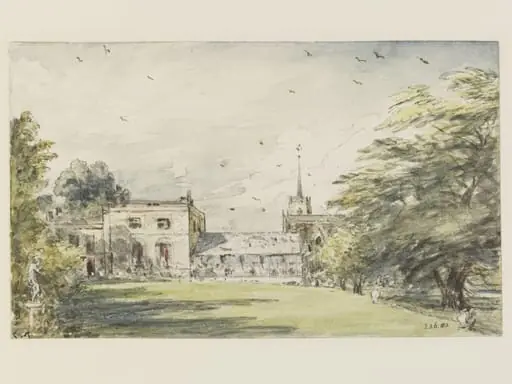 Pitt Place, Epsom, the house of Mr. Digby Neave
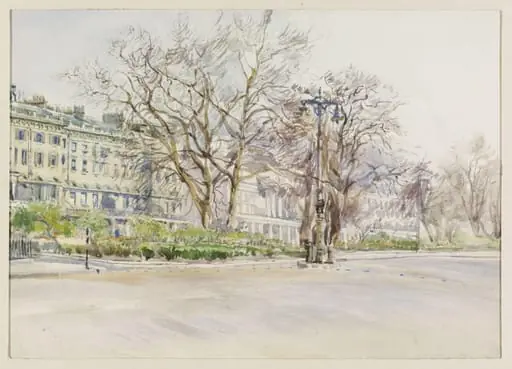 Eaton Square from Eaton Gate
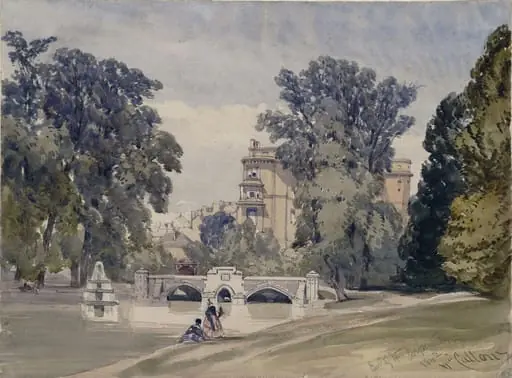 West end of the Serpentine, Kensington Gardens
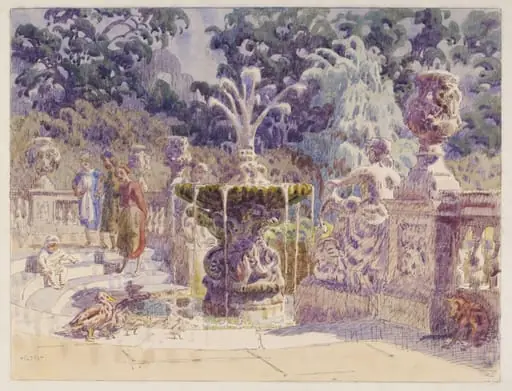 Fountain in Kensington Gardens
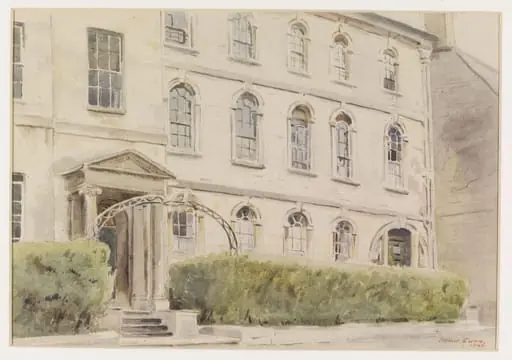 Park House, Cirencester
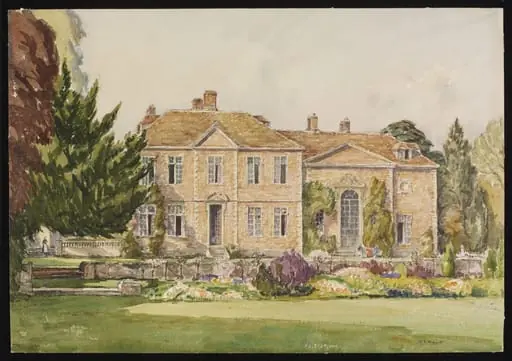 Heale House, Woodford
 Front Entrance, Cannons Park, Edgware