Artwork
Femeie și copil în barcă
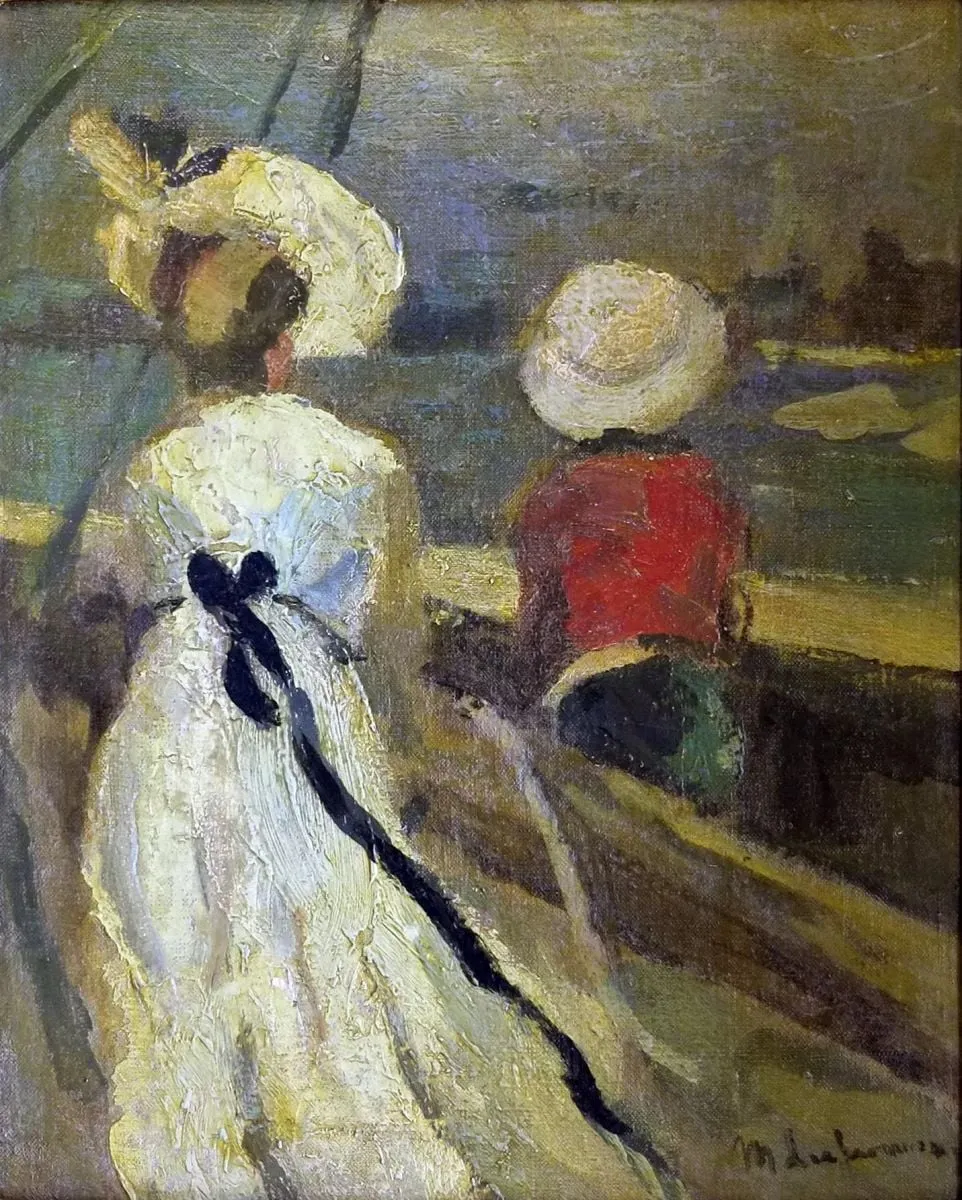
Femeie și copil în barcă is a print by Max Liebermann. It dates from 1929 and is held in the collection of the National Museum of Art of Romania.
About this work
Overview
Painted around 1929, *Femeie și copil în barcă* is a late work by Max Liebermann, a central figure in German Impressionism. It captures a quiet moment of domestic leisure, consistent with his interest in everyday life during his later years. The scene, set on water, reflects his enduring fascination with light, movement, and the subtleties of human interaction in natural settings.
Subject & Meaning
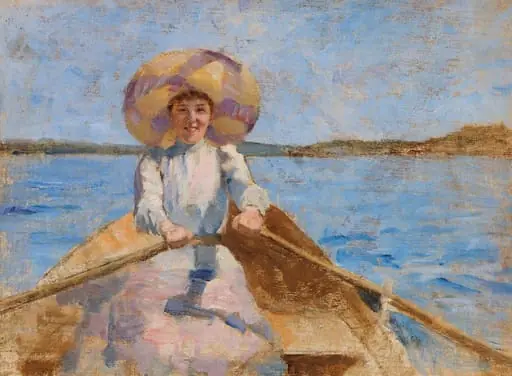
The painting portrays a woman and child seated in a boat, both turned away from the viewer, creating a sense of introspection and privacy.
The painting portrays a woman and child seated in a boat, both turned away from the viewer, creating a sense of introspection and privacy. Their attire—her white dress and hat, his red and green garments—suggests a casual outing, possibly on a summer day. The composition avoids narrative drama, instead emphasizing stillness and the unspoken bond between the figures, characteristic of Liebermann’s humanist approach.
Technique & Style
Liebermann employs loose, textured brushwork to render the woman’s dress and hat, giving them a tactile presence against the softer, more blended tones of the child’s clothing. The background dissolves into hazy water and distant foliage, achieved through rapid, impressionistic strokes. Color is used expressively rather than descriptively, with contrasts in saturation guiding the viewer’s attention without defining form rigidly.
History & Provenance
The painting entered the collection of the Museum of Ethnography, though its path from Liebermann’s studio to this institution remains undocumented. Unlike many of his works held in German public collections, this piece’s presence in an ethnographic museum suggests a later acquisition, possibly reflecting shifting institutional priorities or private donations in the mid-20th century.
Context
Created near the end of Liebermann’s life, the work aligns with his retreat from public themes toward intimate, personal subjects. As political tensions rose in Germany, his focus on tranquil domestic scenes may have been a quiet resistance to the era’s growing unrest. His style, rooted in French and Dutch Impressionism, remained consistent, even as the cultural landscape around him changed dramatically.
Legacy
Though less widely exhibited than his earlier urban or rural scenes, *Femeie și copil în barcă* exemplifies Liebermann’s mature approach: a sensitivity to light, quiet emotion, and the dignity of ordinary moments. It stands as a quiet testament to his lifelong commitment to capturing the subtleties of human experience through the language of Impressionism, without sentimentality or grandeur.
Artist & collection
Artist
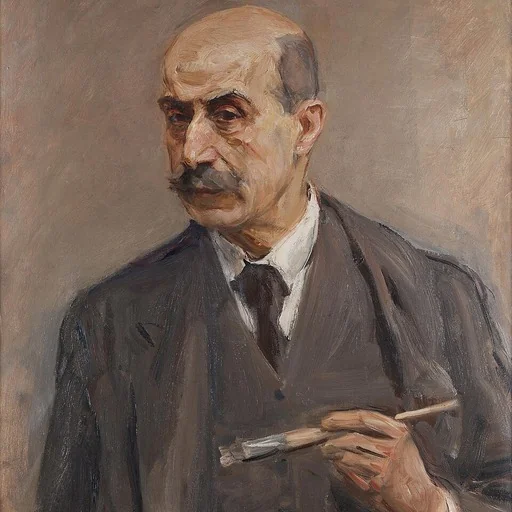
Max Liebermann (20 July 1847 – 8 February 1935) was a German painter and printmaker, and one of the leading proponents of Impressionism in Germany and continental Europe.