Artwork
Burgermeister Dr. Burchard
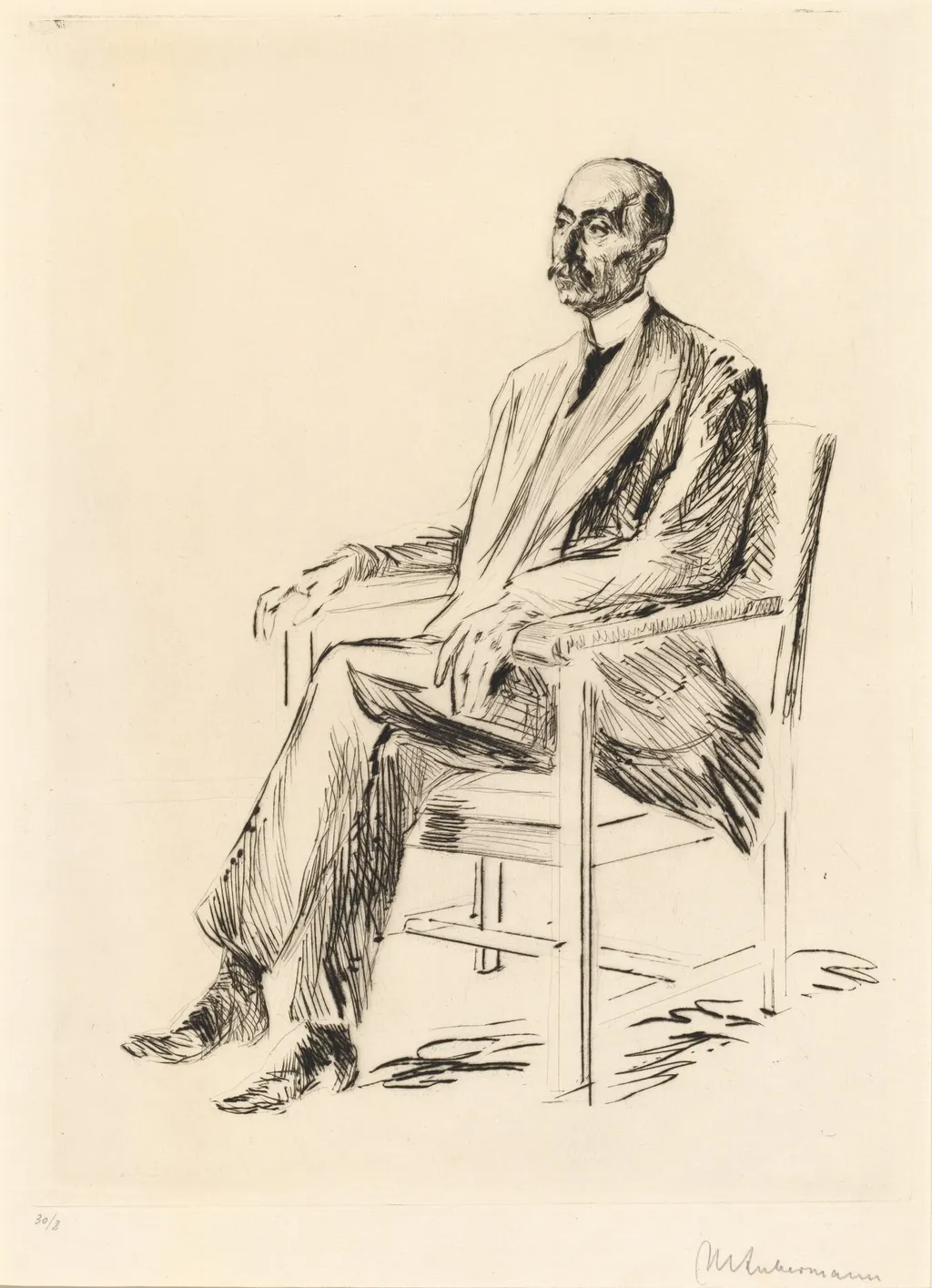
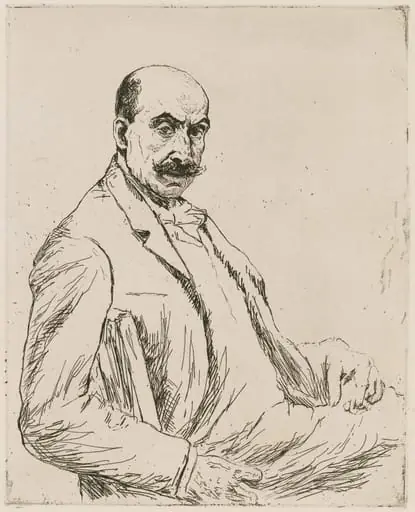
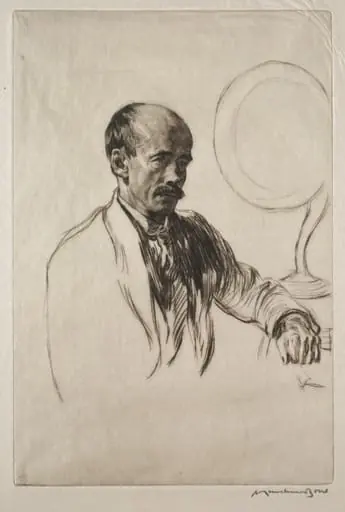
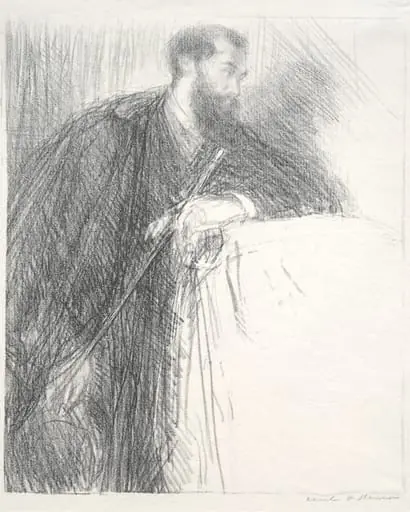
Burgermeister Dr. Burchard is an ink print by Max Liebermann. It dates from 1911 and is held in the collection of the National Gallery of Art.
About this work
Overview
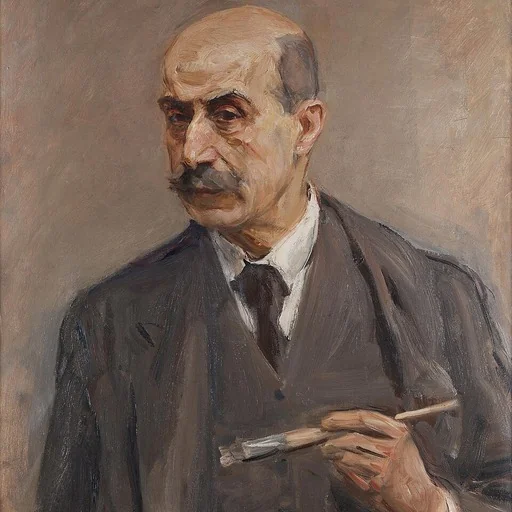
Created in 1911, this drypoint print by Max Liebermann presents Johann Heinrich Burchard seated in a chair. The portrait captures the subject in period attire, rendered with careful attention to the folds and textures of his clothing, characteristic of Liebermann’s precise line work.
Subject & Meaning
Johann Heinrich Burchard, identified by his title of Burgermeister, served as a municipal leader in Germany. The work reflects Liebermann’s interest in portraying prominent members of the bourgeois class, emphasizing their social standing through dignified pose and attire.
Technique & Style
Executed as a drypoint, the image relies on incised lines that produce rich, velvety blacks and subtle tonal variations. Liebermann’s approach combines his Impressionist sensibility with the exacting detail typical of printmaking, allowing fine rendering of fabric and facial features.
History & Provenance
Max Liebermann, a German Impressionist who studied in Weimar, Paris, and the Netherlands before establishing himself in Berlin in 1884, produced this print during a period when he was expanding his reputation as both painter and printmaker. The work later entered collections that highlight his contributions to early 20th‑century German art.
Context
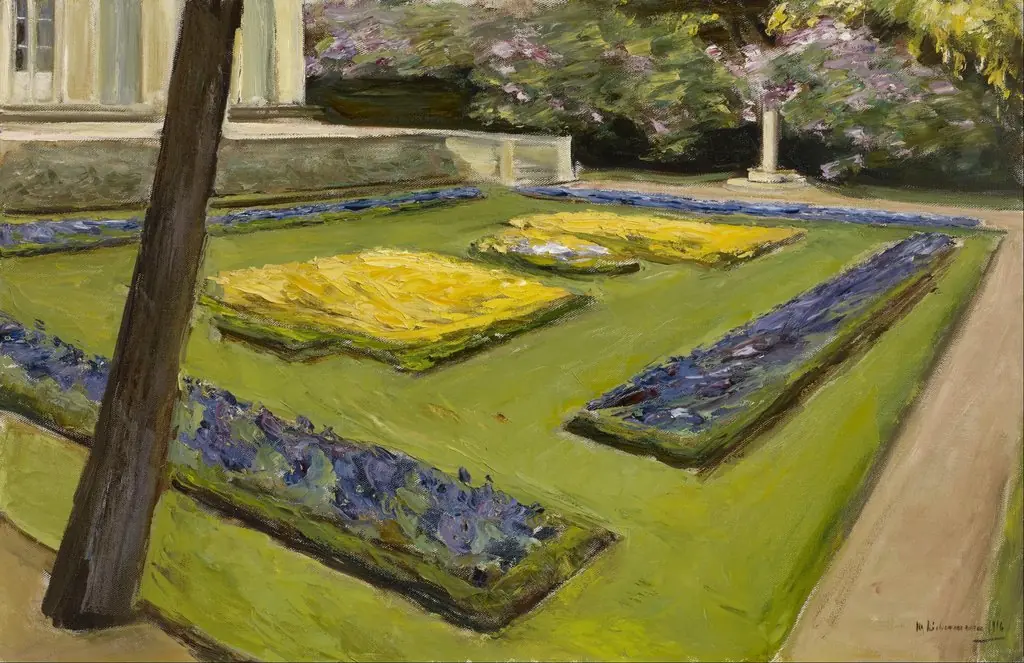
At the time of its creation, Liebermann was known for scenes of middle‑class life and, later, for garden views around Lake Wannsee. This portrait aligns with his broader focus on the social elite, complementing his contemporaneous interest in documenting the everyday world of Berlin’s affluent citizens.
Own this work as a print
Artist & collection
Artist
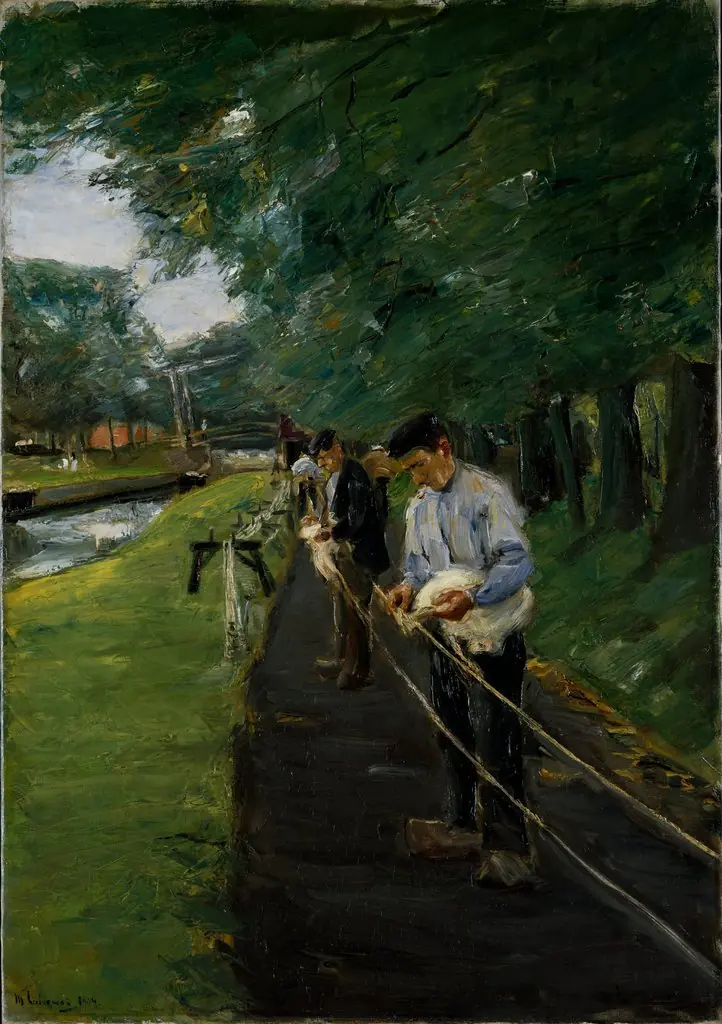
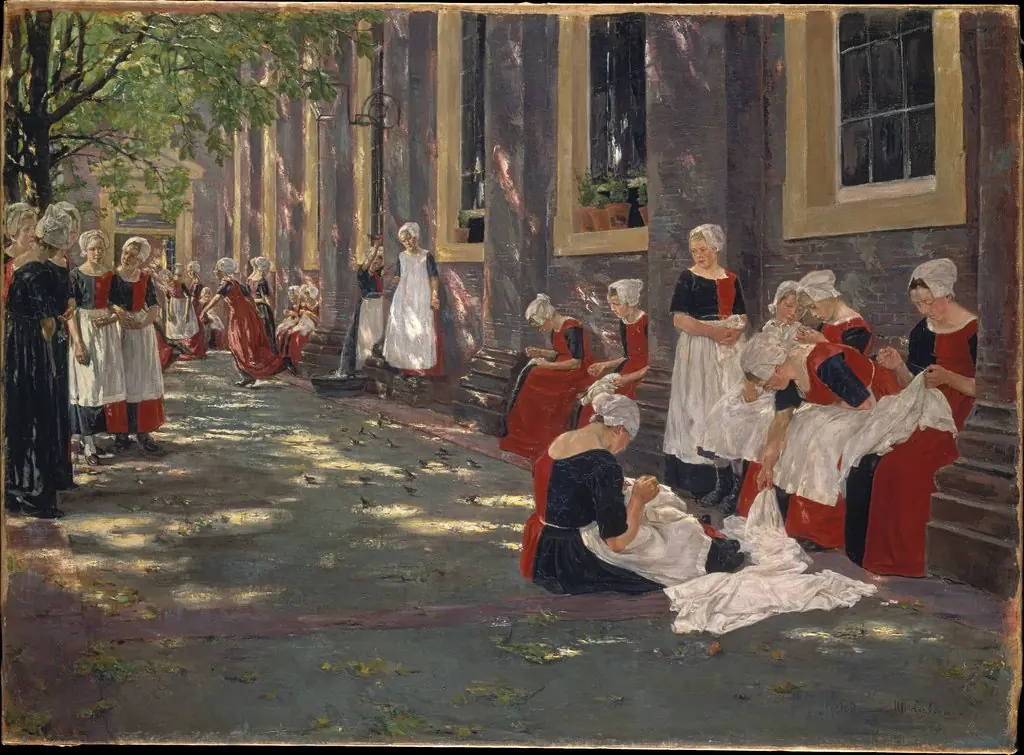
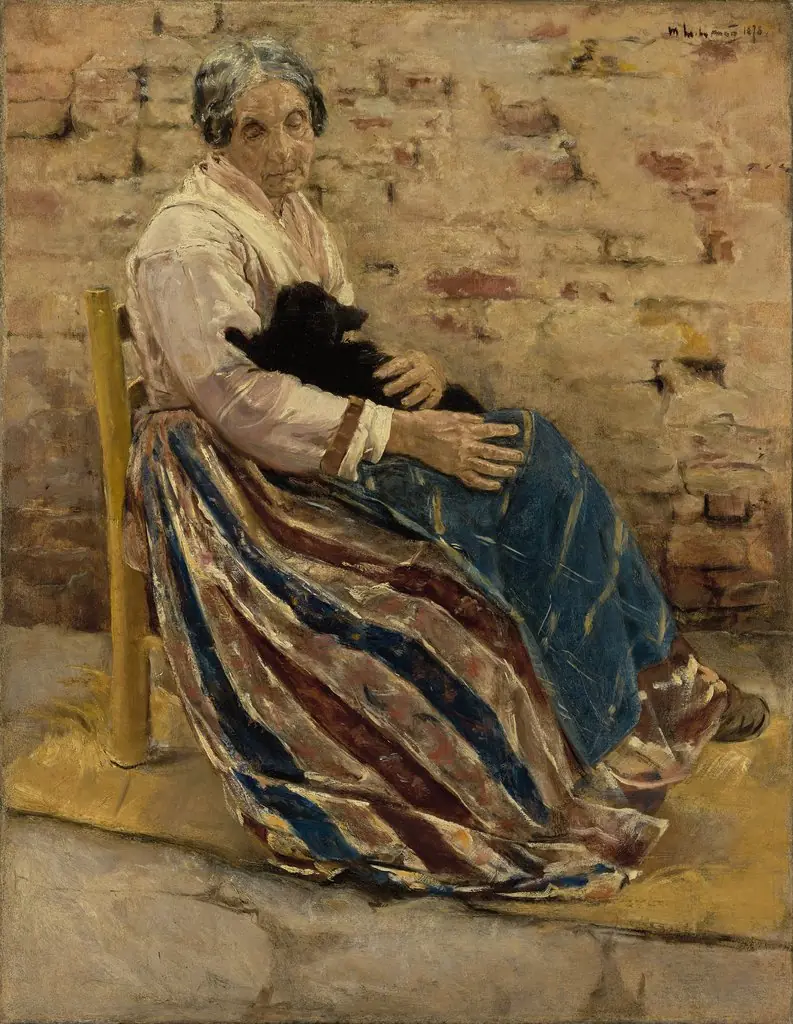
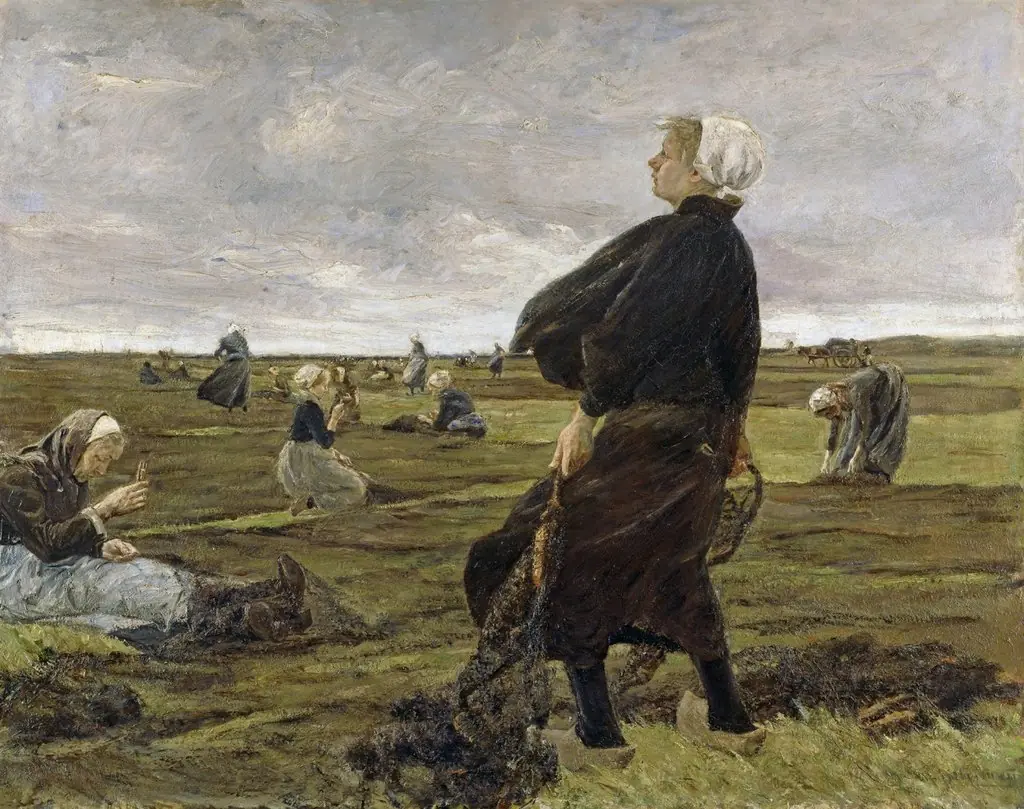
Max Liebermann (20 July 1847 – 8 February 1935) was a German painter and printmaker, and one of the leading proponents of Impressionism in Germany and continental Europe.