Artwork
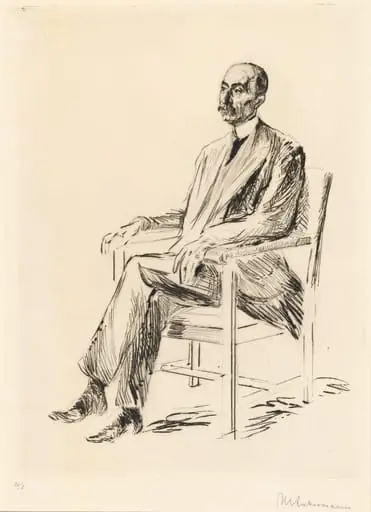
Selbstbildnis (Self-Portrait) from Deutsche Graphiker der Gegenwart (German Printmakers of Our Time)
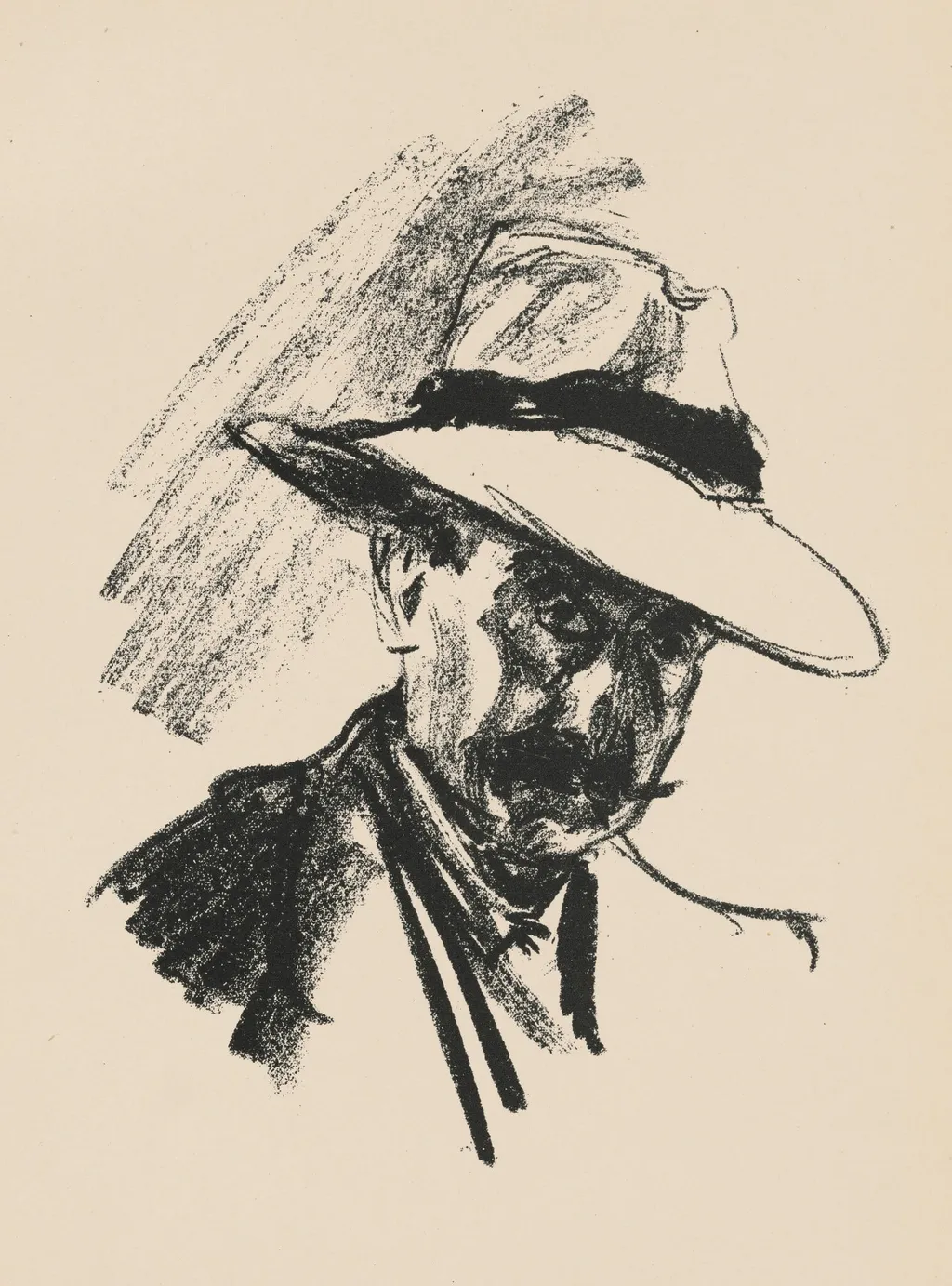
Selbstbildnis (Self-Portrait) from Deutsche Graphiker der Gegenwart (German Printmakers of Our Time) is an ink print by Max Liebermann. It dates from 1917 and is held in the collection of the National Gallery of Art.
About this work
Overview
Executed in lithography, the image captures the artist in a candid, unidealized manner.
Max Liebermann’s 1917 self-portrait is one of fifteen lithographs included in the portfolio *Deutsche Graphiker der Gegenwart*, a curated collection of works by leading German printmakers of the era. Executed in lithography, the image captures the artist in a candid, unidealized manner. It was produced as part of a bound volume that also featured woodcuts, photomechanical reproductions, and a drypoint, reflecting the diversity of graphic techniques practiced in early 20th-century Germany.
Subject & Meaning
The portrait presents Liebermann in profile, his face partially obscured by the shadow of a wide-brimmed hat and the high collar of his coat. His beard and the contour of his nose are rendered with minimal but deliberate strokes, suggesting introspection rather than public persona. The image avoids theatricality, aligning with Liebermann’s broader artistic ethos of quiet realism. It conveys the presence of an aging artist, not as a symbol but as a person, grounded in daily life.
Technique & Style
Liebermann employed lithography to achieve a fluid, sketch-like quality, using the stone’s surface to translate the spontaneity of drawing into print. The lines are loose and economical, avoiding heavy shading or detail, which gives the image a sense of immediacy. The tonal range is restrained, relying on contrast between the dark hat and the pale, shadowed face to define form. This approach reflects his Impressionist sensibility, prioritizing perception over precision.
History & Provenance
Created in 1917, the lithograph was produced for a limited-edition portfolio commissioned by a group of German art publishers to document contemporary printmaking. Liebermann, then in his seventies and a central figure in Berlin’s art world, contributed alongside peers such as Max Slevogt and Lovis Corinth. The portfolio was distributed to institutions and collectors, preserving a snapshot of German graphic art during the First World War.
Context
At the time of its creation, Liebermann was president of the Prussian Academy of Arts and a prominent advocate for modern art, despite rising nationalist sentiment. His inclusion in the portfolio affirmed his status among peers, even as his Jewish heritage and cosmopolitan tastes placed him at odds with emerging cultural ideologies. The portfolio itself served as a quiet assertion of artistic continuity amid political fragmentation.
Legacy
The self-portrait endures as a modest yet significant record of Liebermann’s later years, capturing his artistic integrity through restraint. Though not widely exhibited as a standalone work, its presence in the portfolio helped define a generation of German printmakers who valued personal expression over grand narrative. Today, it remains a key example of how lithography could convey psychological depth with minimal means.
Artist & collection
Artist
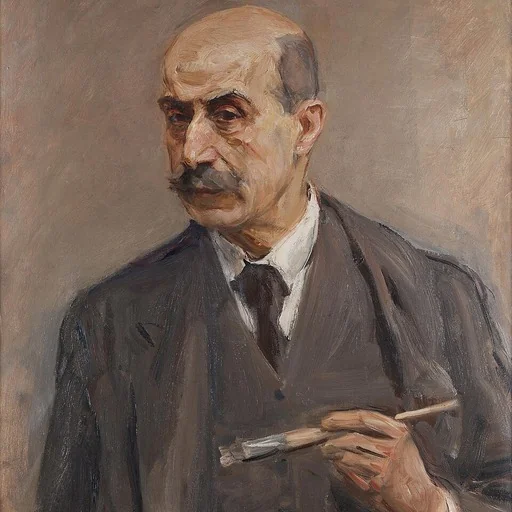
Max Liebermann (20 July 1847 – 8 February 1935) was a German painter and printmaker, and one of the leading proponents of Impressionism in Germany and continental Europe.

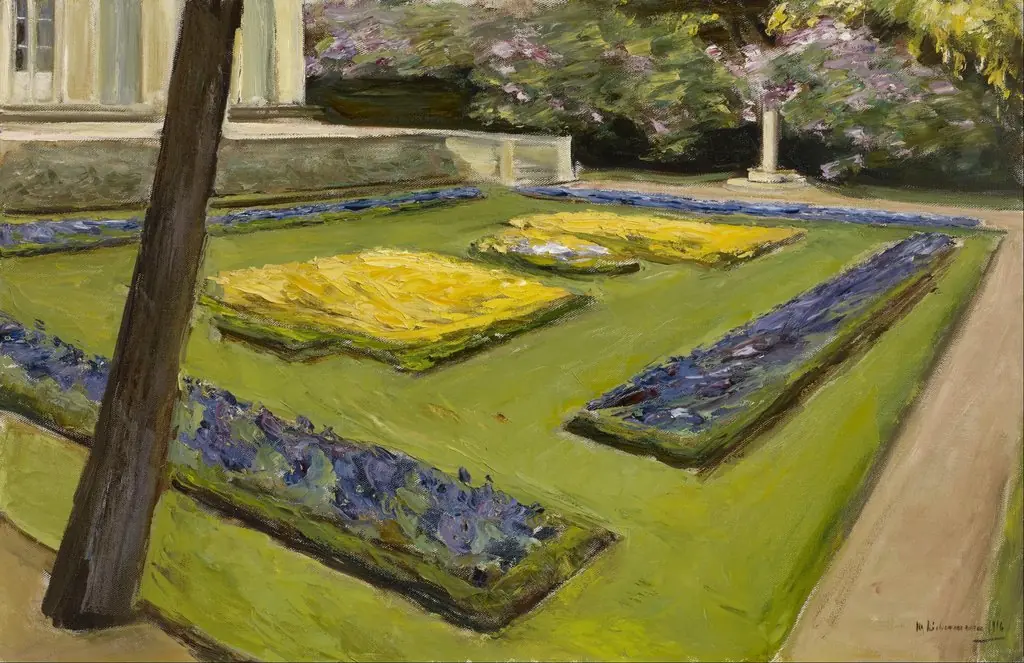
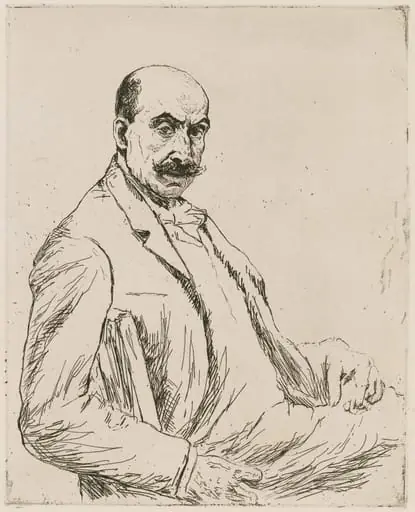
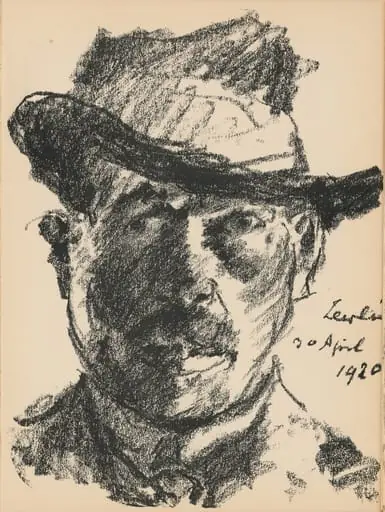 Selbstbildnis (Self-Portrait) from Deutsche Graphiker der Gegenwart (German Printmakers of Our Time)
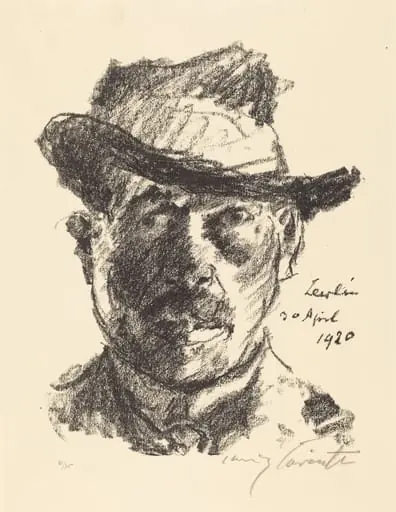 Selbstbildnis (Self-Portrait)
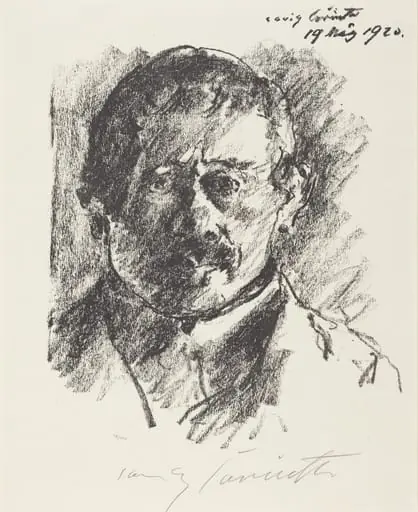 Selbstbildnis (Self-Portrait)
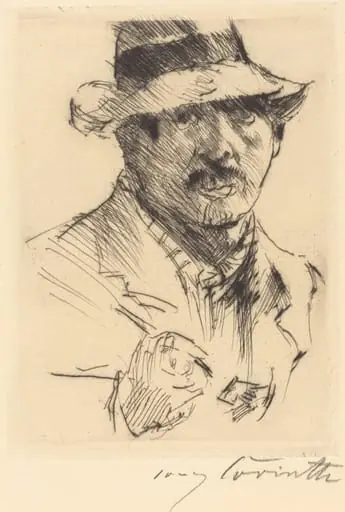 Selbstbildnis (Self-Portrait)
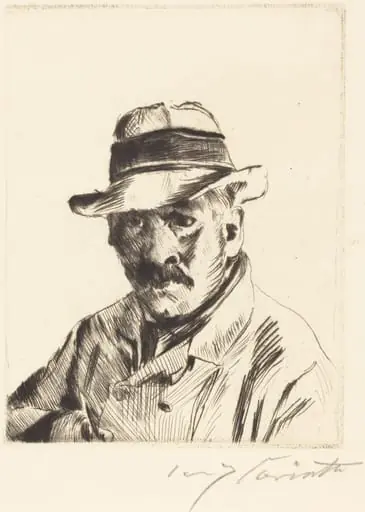 Selbstbildnis im Strohhut (Self-Portrait in a Straw Hat)
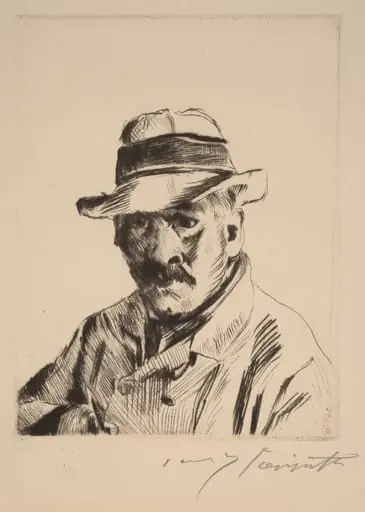 Selbstbildnis im Strohhut, als Brustbild (Self-Portrait in a Straw Hat, Bust Length)
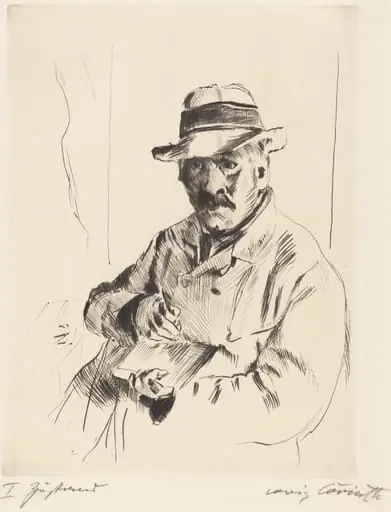 Selbstbildnis im Strohhut (Self-Portrait in a Straw Hat)
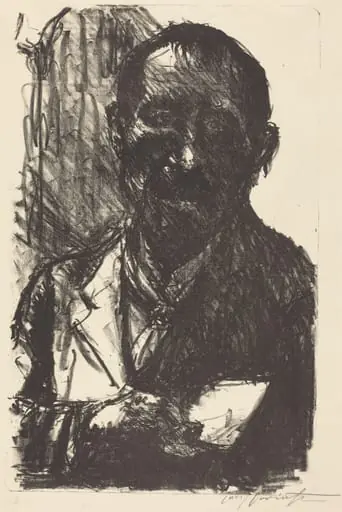 Selbstbildnis 1919 (Self-Portrait 1919)
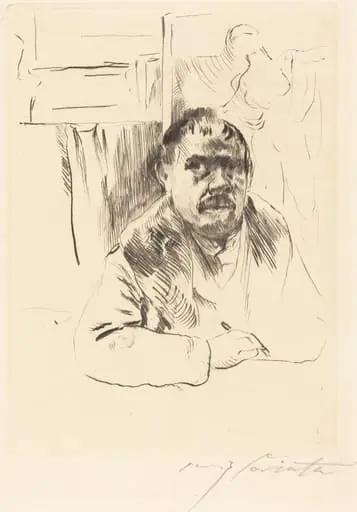 Selbstbildnis im Pelz (Self-Portrait in a Fur Coat)
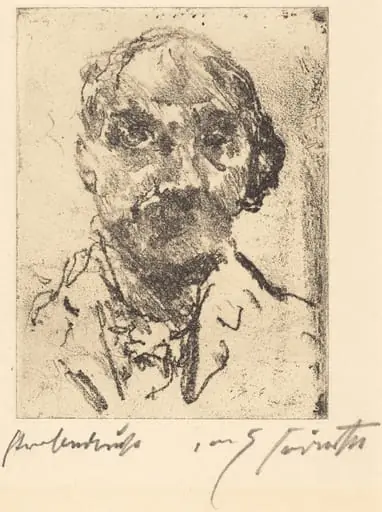 Selbstbildnis (Self-Portrait)
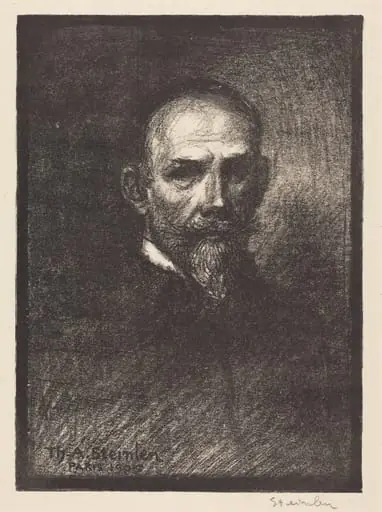 Self-Portrait (Steinlen de face, tete droite)