Artwork
The Prominent Rock (Sasso spicco) [plate I]
![The Prominent Rock (Sasso spicco) [plate I], by Jacopo Ligozzi, ink, 1612](https://artifactworldgallery.com/img/jacopo-ligozzi--the-prominent-rock-sasso-spicco-plate-i--40aeadb353359cc6-w1024.webp)
The Prominent Rock (Sasso spicco) [plate I] is an ink print by the Baroque artist Jacopo Ligozzi. It dates from 1612 and is held in the collection of the National Gallery of Art.
About this work
Overview
Created in 1612 by Jacopo Ligozzi, this engraving is the first plate in a series depicting natural formations. Executed with an engraved overslip, it combines fine line work with layered tonal effects to render a rugged landscape. The technique allows for subtle shifts in light and texture, characteristic of Ligozzi’s precision as a draftsman and his engagement with natural observation.
Subject & Meaning
The image centers on a solitary, sharply defined rock formation rising from a textured terrain of smaller stones, shrubs, and distant hills.
The image centers on a solitary, sharply defined rock formation rising from a textured terrain of smaller stones, shrubs, and distant hills. No human figures or architectural elements appear, emphasizing the rock as a subject of quiet contemplation. The composition suggests an interest in geological forms not as symbols, but as entities worthy of detailed study, aligning with early scientific curiosity about nature.
Technique & Style
Ligozzi employed fine, controlled engraving lines to model the rock’s surface, using cross-hatching and stippling to suggest weight and erosion. The overslip—a second layer of engraved lines—adds depth and contrast, enhancing the play of light across uneven surfaces. The monochromatic palette, limited to gray, black, and white, focuses attention on texture and form rather than color, reflecting a draftsmanship rooted in observational accuracy.
History & Provenance
The print was produced during Ligozzi’s tenure at the Medici court in Florence, where he documented flora, fauna, and geological specimens for scientific and decorative purposes. This plate likely originated as part of a larger illustrated study, possibly intended for private circulation among patrons interested in natural history. Its survival as a standalone print suggests later appreciation beyond its original context.
Context
In early 17th-century Italy, detailed natural studies were gaining traction among artists and scholars, bridging art and emerging empirical science. Ligozzi’s work aligns with this trend, echoing the interests of contemporaries who recorded specimens with precision. Unlike overtly dramatic Baroque landscapes, his approach is restrained, prioritizing observation over narrative or emotional intensity.
Legacy
Though not widely exhibited today, Ligozzi’s engravings contributed to a tradition of naturalistic printmaking in Tuscany. His method influenced later illustrators of botanical and geological subjects, particularly in courtly circles. The work remains a quiet example of how artistic skill was harnessed to document the natural world before the rise of modern scientific illustration.
Artist & collection

Artist
Jacopo Ligozzi (1547–1627) was an Italian painter, illustrator, designer, and miniaturist. His art can be categorized as late-Renaissance and Mannerist styles.

![Chapel of Saint Sebastian (Cappella di San Sebastiano) [plate N], by Jacopo Ligozzi](https://artifactworldgallery.com/img/jacopo-ligozzi--chapel-of-saint-sebastian-cappella-di-san-sebastiano-plate-n--144b97ba4a91d67b-w320.webp)
![Church of the Stigmata (Chiesa delle Stimmate) [plate M], by Jacopo Ligozzi](https://artifactworldgallery.com/img/jacopo-ligozzi--church-of-the-stigmata-chiesa-delle-stimmate-plate-m--255dd75981bd30e3-w320.webp)
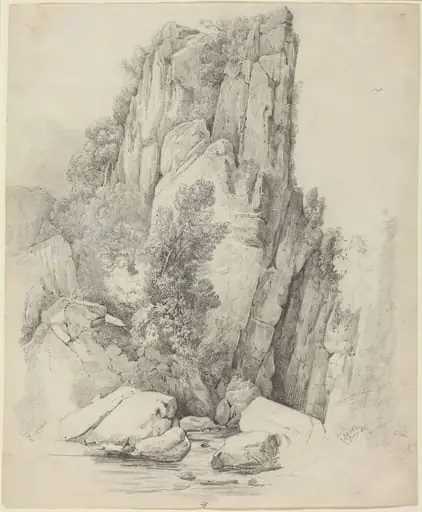 Rock Cliffs above a Stream
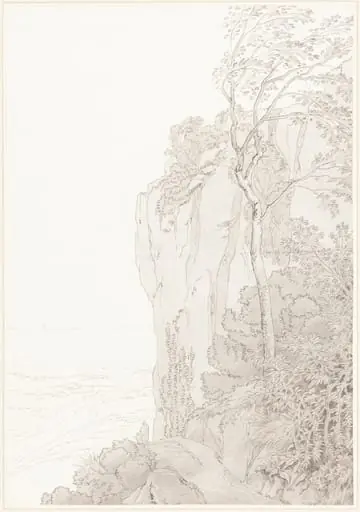 Sheer Cliffs above a Coastal Road
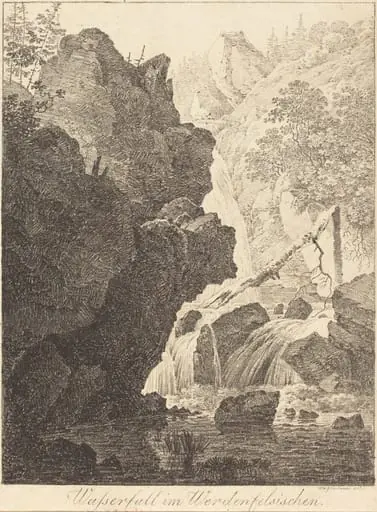 The Waterfall (Wasserfall im Werdenfelsischen)
![View of the Mountain of La Verna from the Road of Casentino (Vue de la montagne della Vernia...) [plate A], by Jacopo Ligozzi](https://artifactworldgallery.com/img/jacopo-ligozzi--view-of-the-mountain-of-la-verna-from-the-road-of-casentino--4d92ff423c874270-w320.webp) View of the Mountain of La Verna from the Road of Casentino (Vue de la montagne della Vernia...) [plate A]
View of the Mountain of La Verna from the Road of Casentino (Vue de la montagne della Vernia...) [plate A]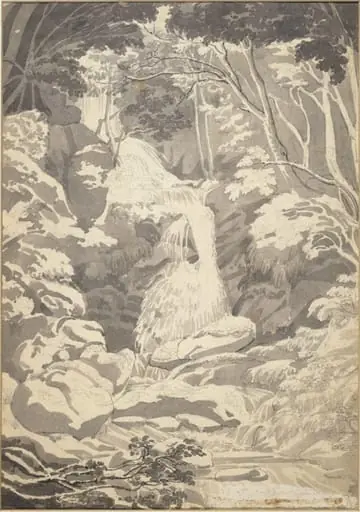 Waterfall
![The Site of the Bed and Oratory of Saint Francis (Luogo del 'letto' e dell'oratorio di San Francesco) [plate R], by Jacopo Ligozzi](https://artifactworldgallery.com/img/jacopo-ligozzi--the-site-of-the-bed-and-oratory-of-saint-francis-luogo-del-l--d2d91b10bc78c845-w320.webp) The Site of the Bed and Oratory of Saint Francis (Luogo del 'letto' e dell'oratorio di San Francesco) [plate R]
The Site of the Bed and Oratory of Saint Francis (Luogo del 'letto' e dell'oratorio di San Francesco) [plate R]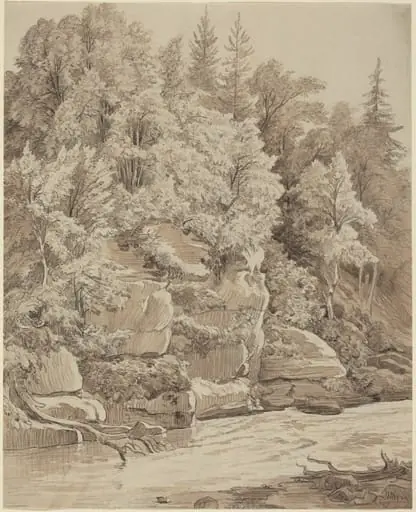 Wooded Cliffs along a Stream
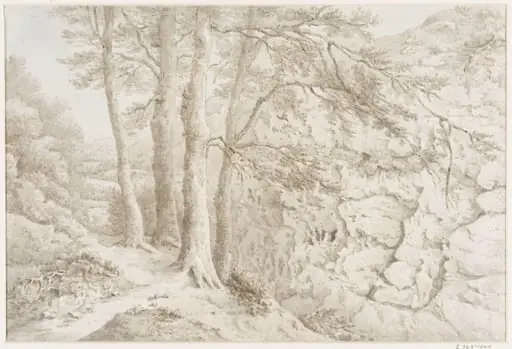 Drawing of a narrow ravine
![The Temptation of Saint Francis (Tentazione di San Francesco) [plate O], by Jacopo Ligozzi](https://artifactworldgallery.com/img/jacopo-ligozzi--the-temptation-of-saint-francis-tentazione-di-san-francesco--8a51c5ee5acc8aef-w320.webp) The Temptation of Saint Francis (Tentazione di San Francesco) [plate O]
The Temptation of Saint Francis (Tentazione di San Francesco) [plate O]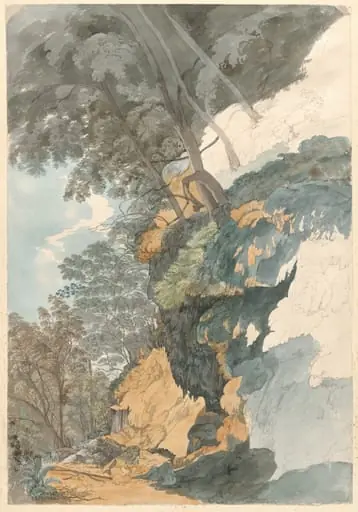 A Cliff Overhung with Trees