Artwork
Ecce homo
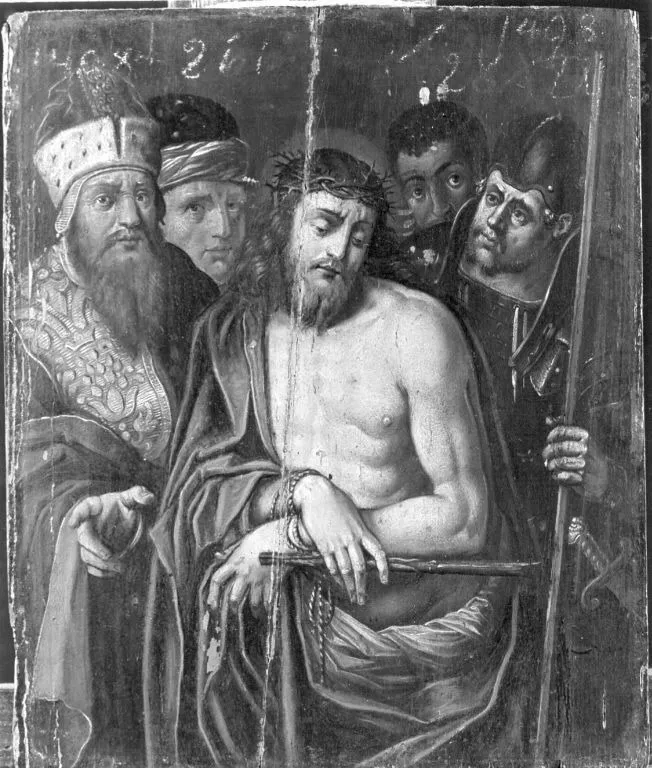
Ecce homo is an unspecified painting by the Mannerist artist Jacopo Ligozzi. It dates from 1594 and is held in the collection of the Bavarian State Painting Collections.
About this work
Overview
Jacopo Ligozzi, an Italian painter active in the late 16th century, completed the religious work *Ecce Homo* in 1594. The oil painting is housed in the Alte Pinakothek in Munich and portrays the biblical moment when Christ is presented to the crowd.
Subject & Meaning
At the composition’s core stands a shirtless Christ, crowned with thorns and draped with a dark mantle over his left shoulder. He clutches a staff in his right hand while his left arm rests on a ledge, surrounded by a group of men in varied dress, evoking the moment of public humiliation and accusation.
Technique & Style
Ligozzi employs pronounced chiaroscuro, allowing the dark background to recede and the illuminated figures to emerge with three‑dimensional presence. The handling reflects Mannerist tendencies toward artificial elegance, with elongated forms and a refined, somewhat stylized arrangement of the figures.
History & Provenance
Created toward the end of Ligozzi’s career, the painting entered the collection of the Bavarian State in the 19th century and now resides in the Alte Pinakothek. Its acquisition reflects the museum’s focus on late‑Renaissance and Mannerist works from Italy.
Artist & collection
Artist
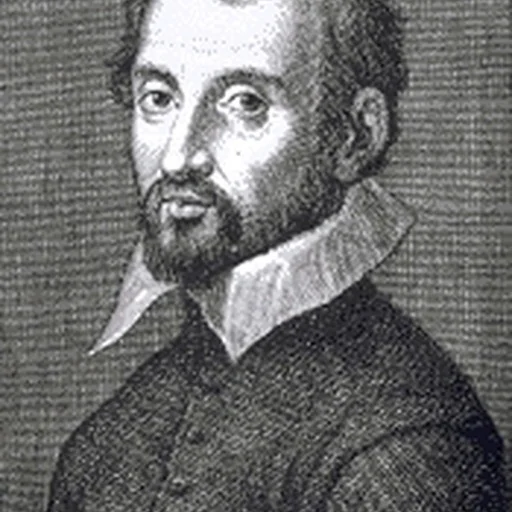
Jacopo Ligozzi (1547–1627) was an Italian painter, illustrator, designer, and miniaturist. His art can be categorized as late-Renaissance and Mannerist styles.

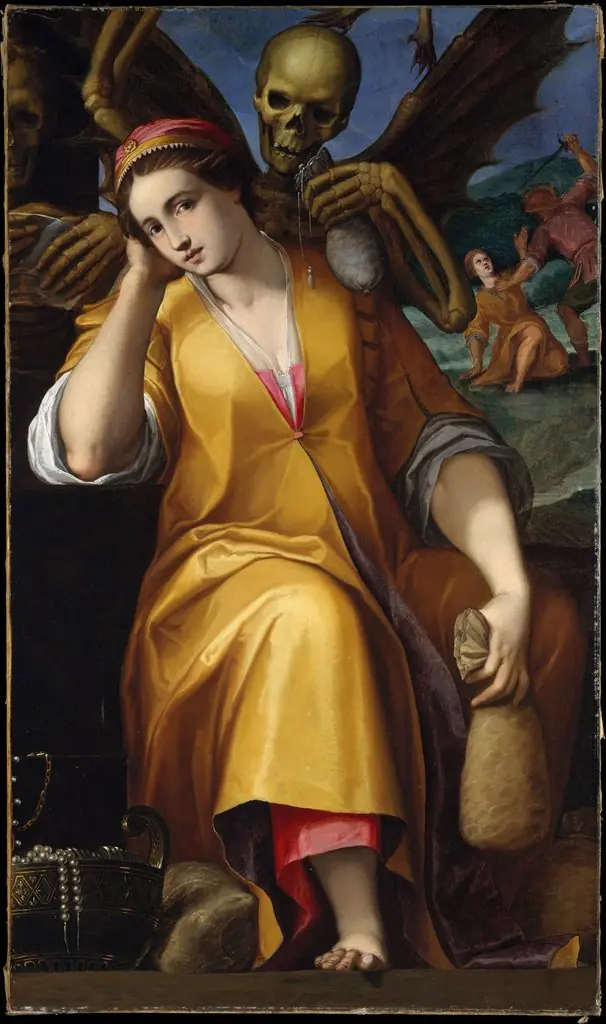 Allegory of Avarice
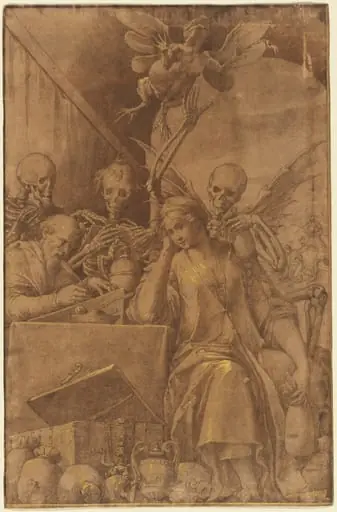 Avarice
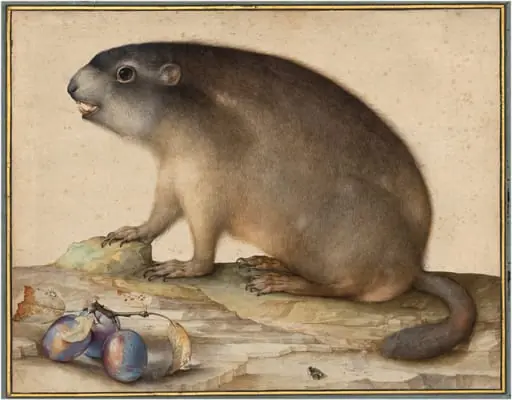 A Groundhog or Marmot with a Branch of Plums
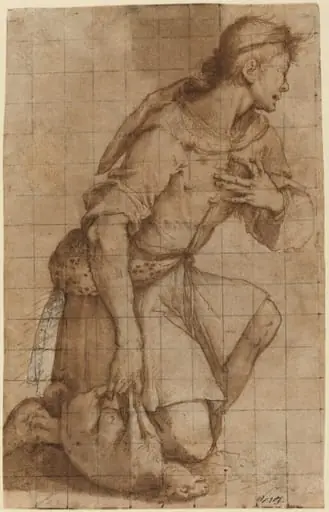 Kneeling Shepherd
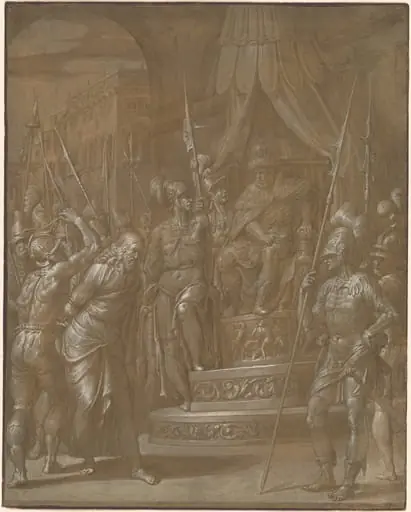 Christ before Herod
![Chapel of Saint Sebastian (Cappella di San Sebastiano) [plate N], by Jacopo Ligozzi](https://artifactworldgallery.com/img/jacopo-ligozzi--chapel-of-saint-sebastian-cappella-di-san-sebastiano-plate-n--144b97ba4a91d67b-w320.webp) Chapel of Saint Sebastian (Cappella di San Sebastiano) [plate N]
Chapel of Saint Sebastian (Cappella di San Sebastiano) [plate N]![Church of the Stigmata (Chiesa delle Stimmate) [plate M], by Jacopo Ligozzi](https://artifactworldgallery.com/img/jacopo-ligozzi--church-of-the-stigmata-chiesa-delle-stimmate-plate-m--255dd75981bd30e3-w320.webp) Church of the Stigmata (Chiesa delle Stimmate) [plate M]
Church of the Stigmata (Chiesa delle Stimmate) [plate M]![Interior of the Chapel of Mary Magdelene (Interno della cappella della Maddalena) [plate H], by Jacopo Ligozzi](https://artifactworldgallery.com/img/jacopo-ligozzi--interior-of-the-chapel-of-mary-magdelene-interno-della-cappe--2c8c7a51e39993f2-w320.webp) Interior of the Chapel of Mary Magdelene (Interno della cappella della Maddalena) [plate H]
Interior of the Chapel of Mary Magdelene (Interno della cappella della Maddalena) [plate H]
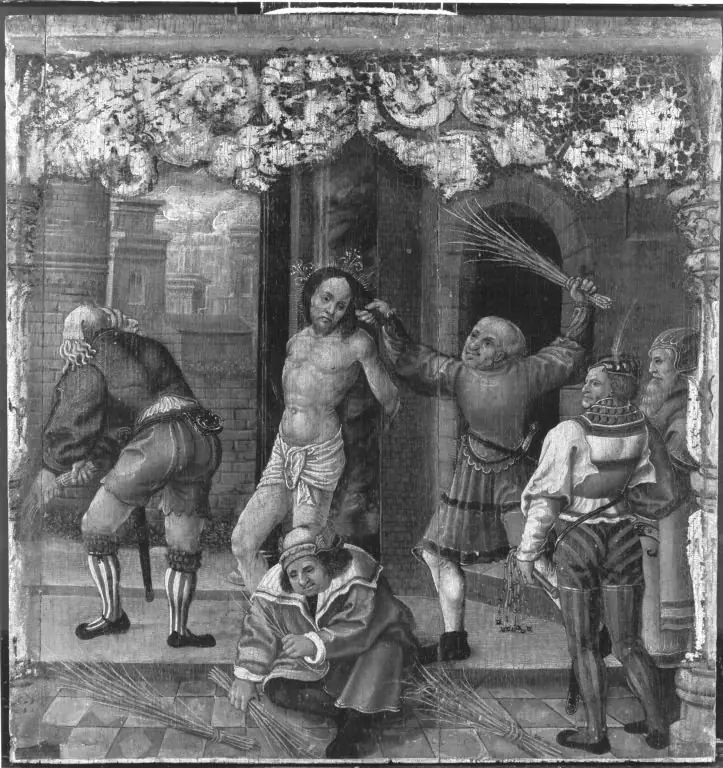 The flagellation of Christ
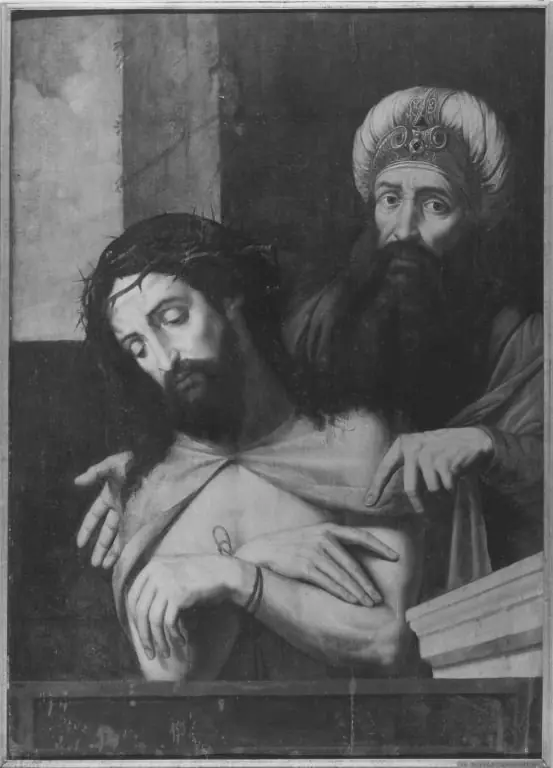 Ecce homo
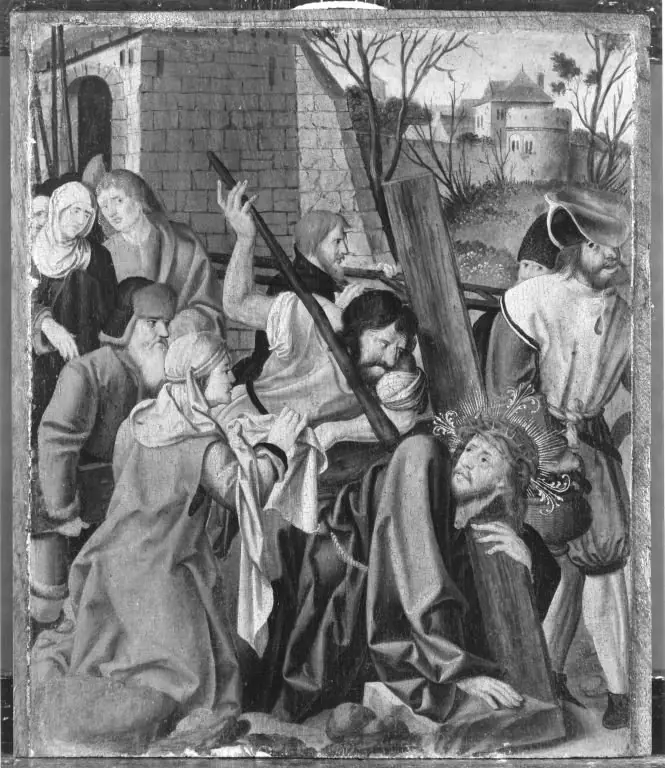 The carrying of the cross
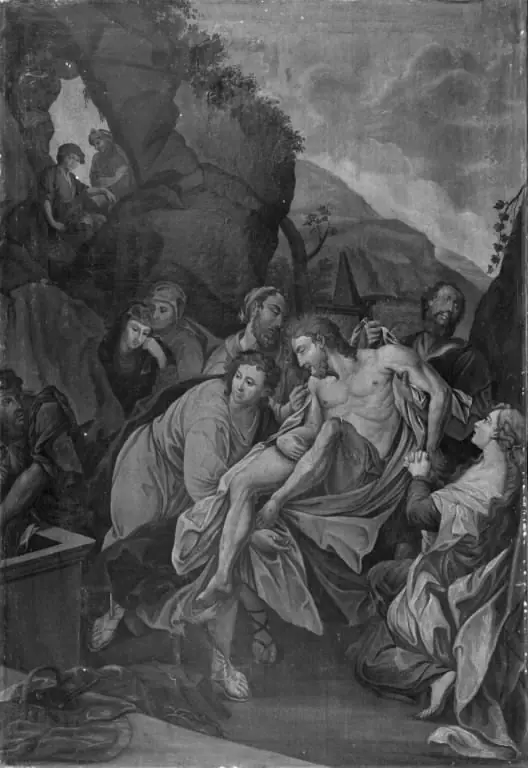 The Entombment
 The Entombment
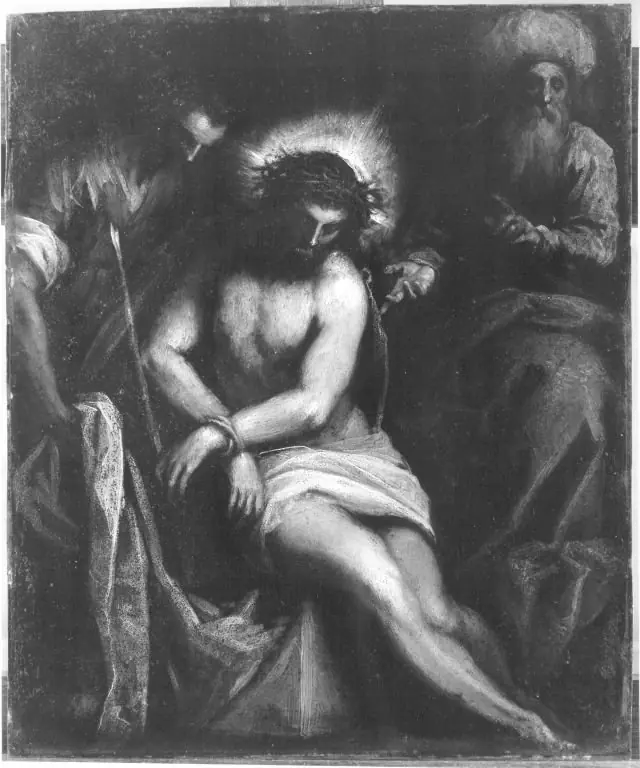 Ecce homo
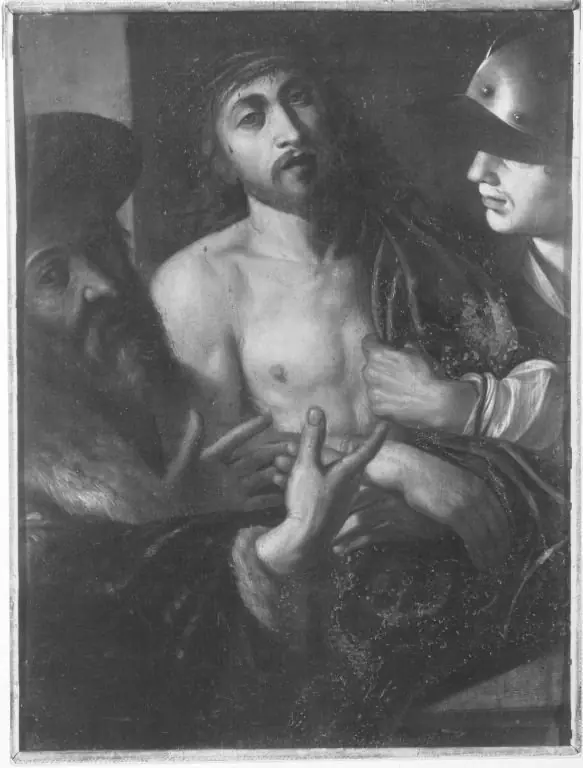 Ecce homo
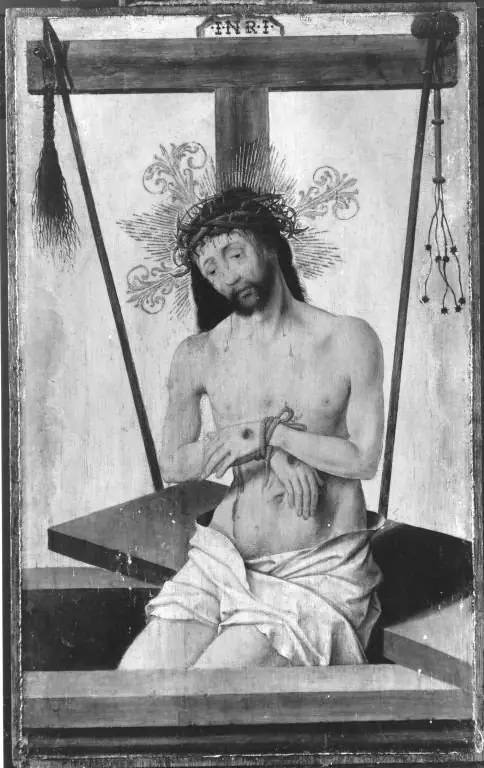 Christus als Schmerzensmann
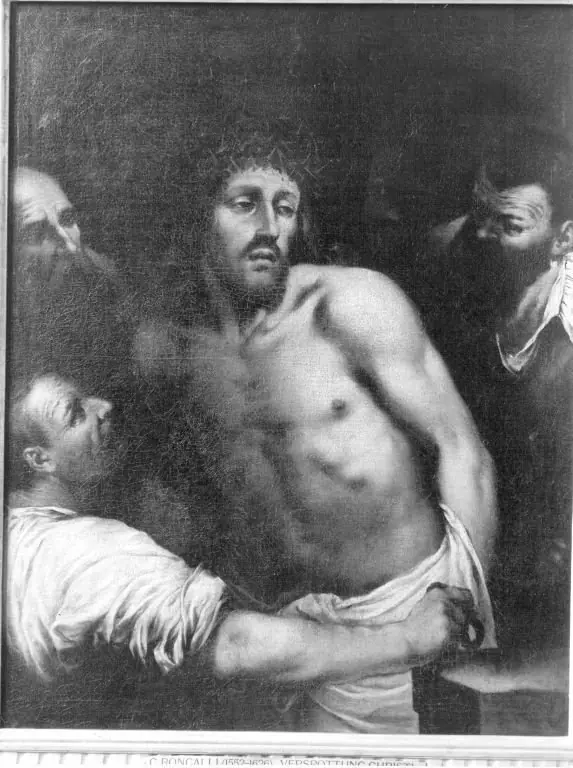 Verspottung Christi
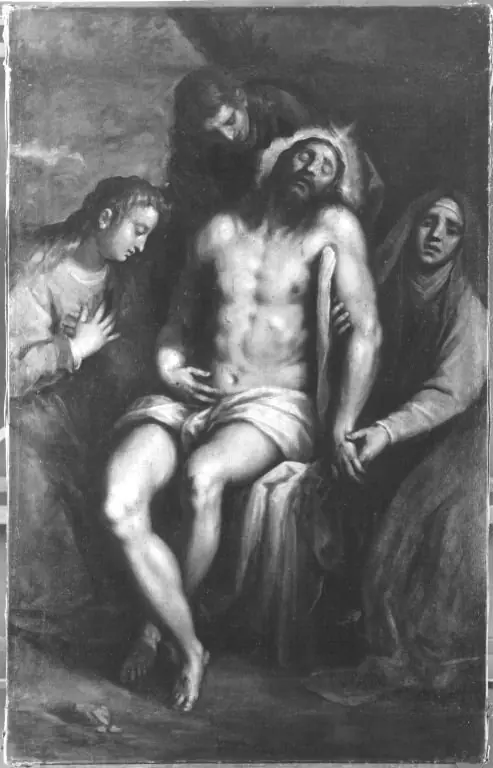 Beweinung Christi
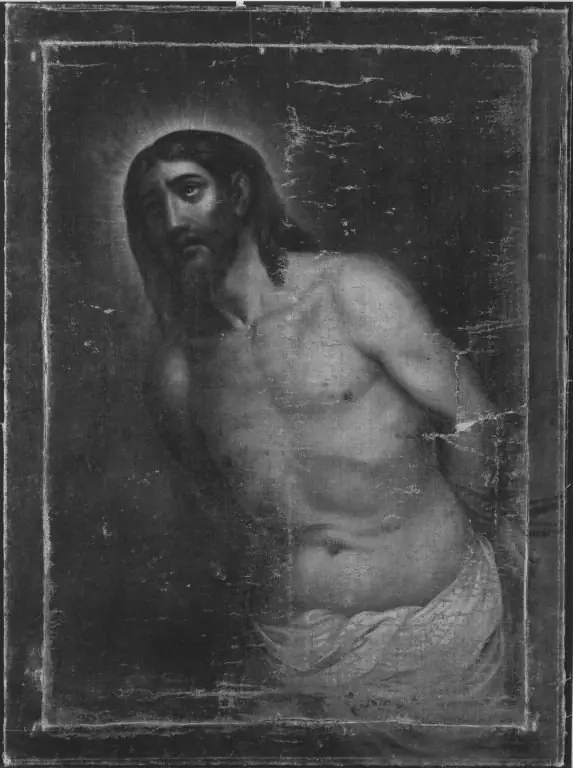 Christus vor der Geißelung (Kopie nach)
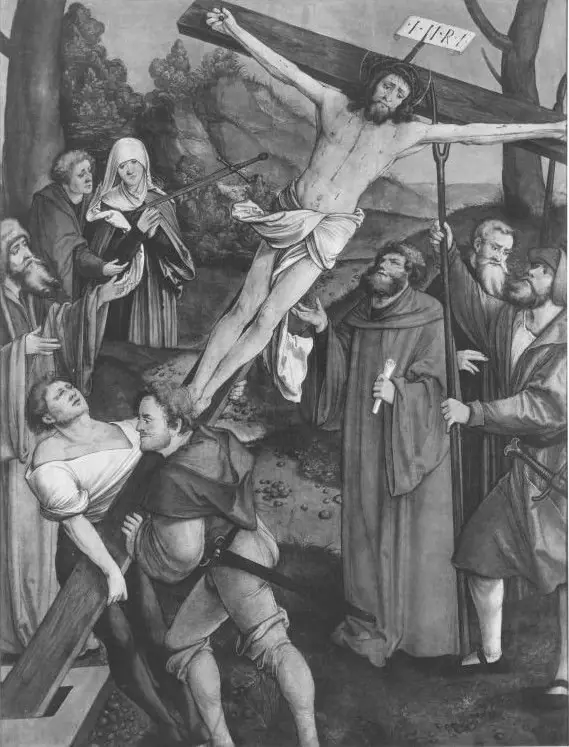 Christgartner Altar: Fall Christi bei der Kreuzaufrichtung (Abgetrennte Rückseite von WAF 920)