Artwork
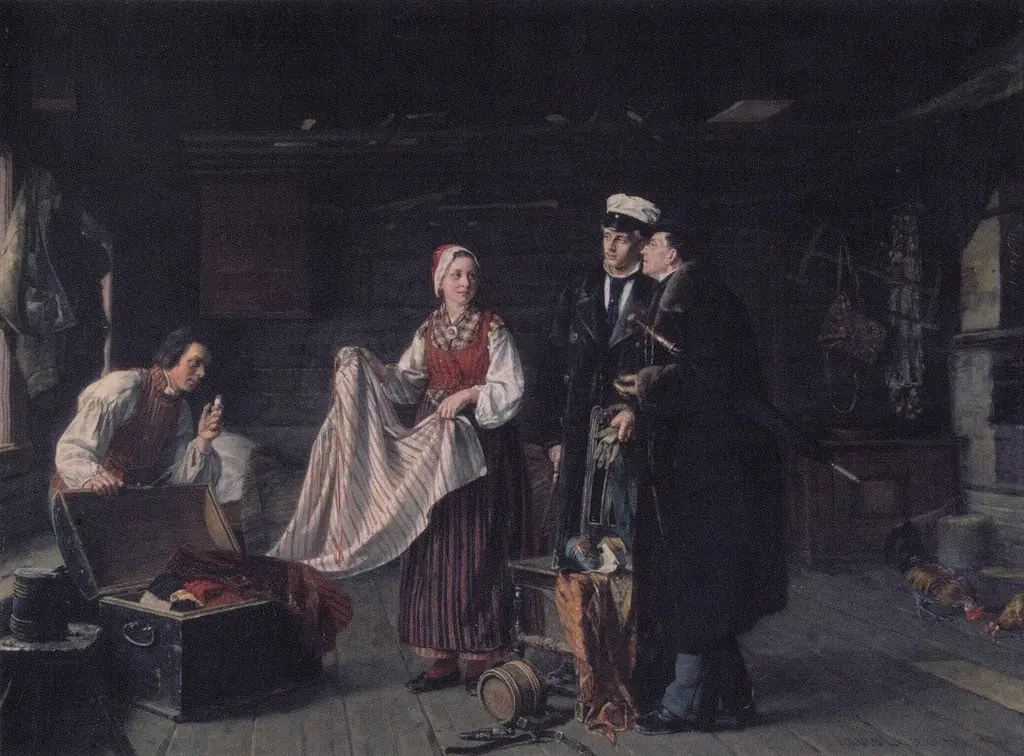
Kansanpukujen osto Säkylässä
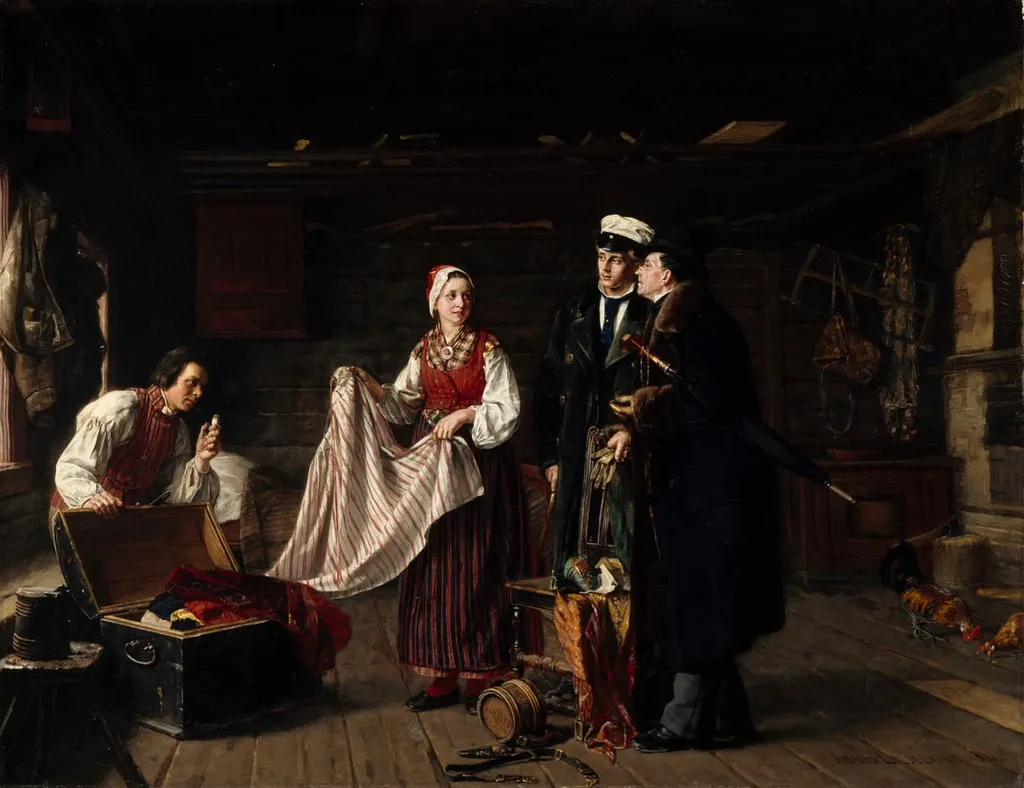
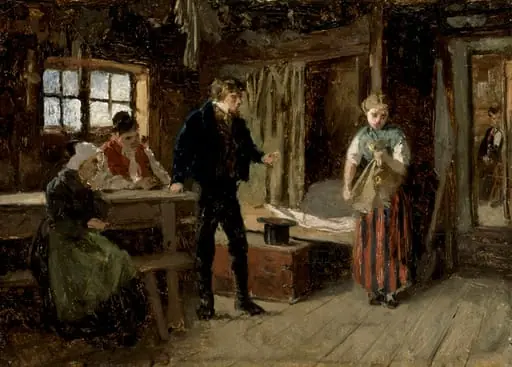
Kansanpukujen osto Säkylässä is an unspecified painting by Arvid Liljelund. It is held in the collection of the Finnish National Gallery. The work depicts a modest interior where four figures occupy a cramped, wooden chamber.
About this work
Overview
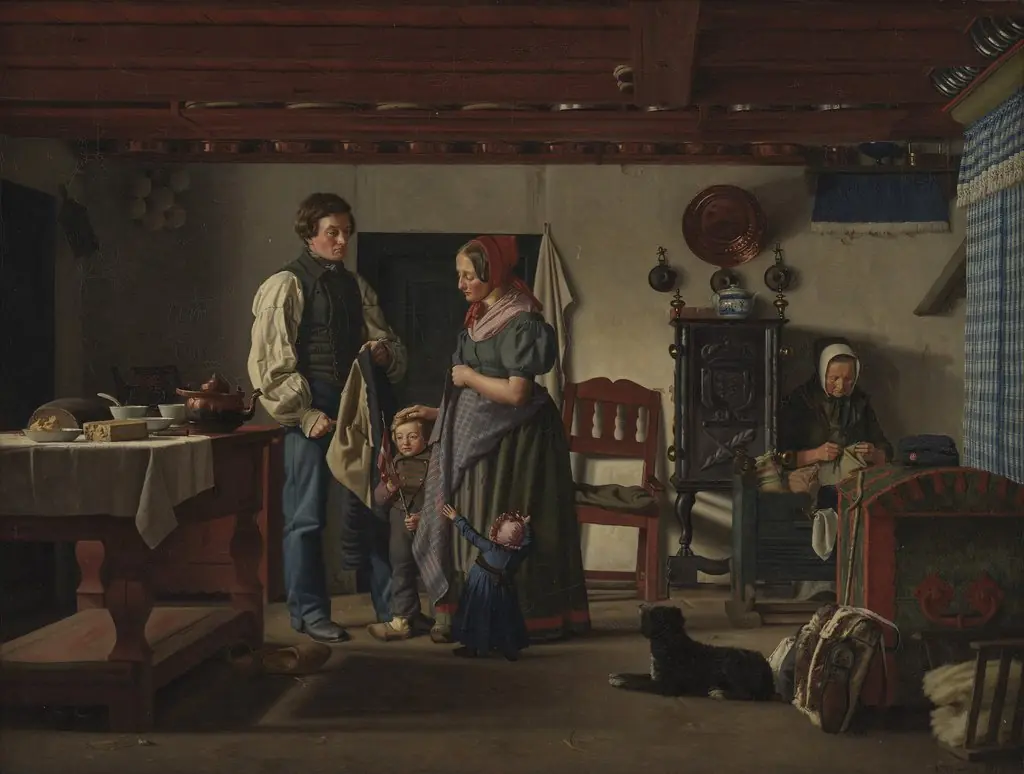
A woman in a striped dress and vivid red apron lifts a pale cloth, while a man in a dark coat and cap rests a cane against his side.
The work depicts a modest interior where four figures occupy a cramped, wooden chamber. A woman in a striped dress and vivid red apron lifts a pale cloth, while a man in a dark coat and cap rests a cane against his side. A second man sits on a low chest, his gaze directed downward, and a young boy stands nearby, holding a hat. The floor is littered with tools, fabrics, and a small dog, emphasizing the everyday nature of the setting.
Subject & Meaning
The composition captures a quiet domestic episode, likely related to the preparation or purchase of clothing, as suggested by the presence of textiles and the woman's handling of a cloth. The juxtaposition of the bright red headscarf against the muted surroundings highlights the central role of the female figure in this routine activity, while the other characters contribute a sense of communal involvement.
Technique & Style
Rendered with a restrained palette, the artist employs chiaroscuro to model the figures against the rough wooden walls, creating depth within the confined space. The brushwork is detailed in the textures of fabric and wood, yet the overall treatment remains economical, focusing attention on the interaction among the occupants rather than elaborate ornamentation.
History & Provenance
The painting originates from a Finnish context, as indicated by its title referencing the purchase of clothing in Säkylä, a locality in western Finland. It has been catalogued as an image in museum collections, though specific dates of creation, artist attribution, or acquisition history are not provided in the available documentation.
Context
Domestic interiors were a common subject in 19th‑century Nordic art, reflecting social customs surrounding household labor and family life. The inclusion of everyday objects—cane, chest, tools, and a dog—situates the scene within a realistic portrayal of rural Finnish life, aligning with ethnographic interests in documenting regional habits.
Legacy
While the piece does not occupy a prominent place in broader art historical narratives, it serves as a visual record of everyday Finnish domesticity. Its presence in museum holdings contributes to the preservation of cultural memory concerning clothing practices and household environments in historical Säkylä.
Artist & collection