Artwork
Opintoja luonnossa
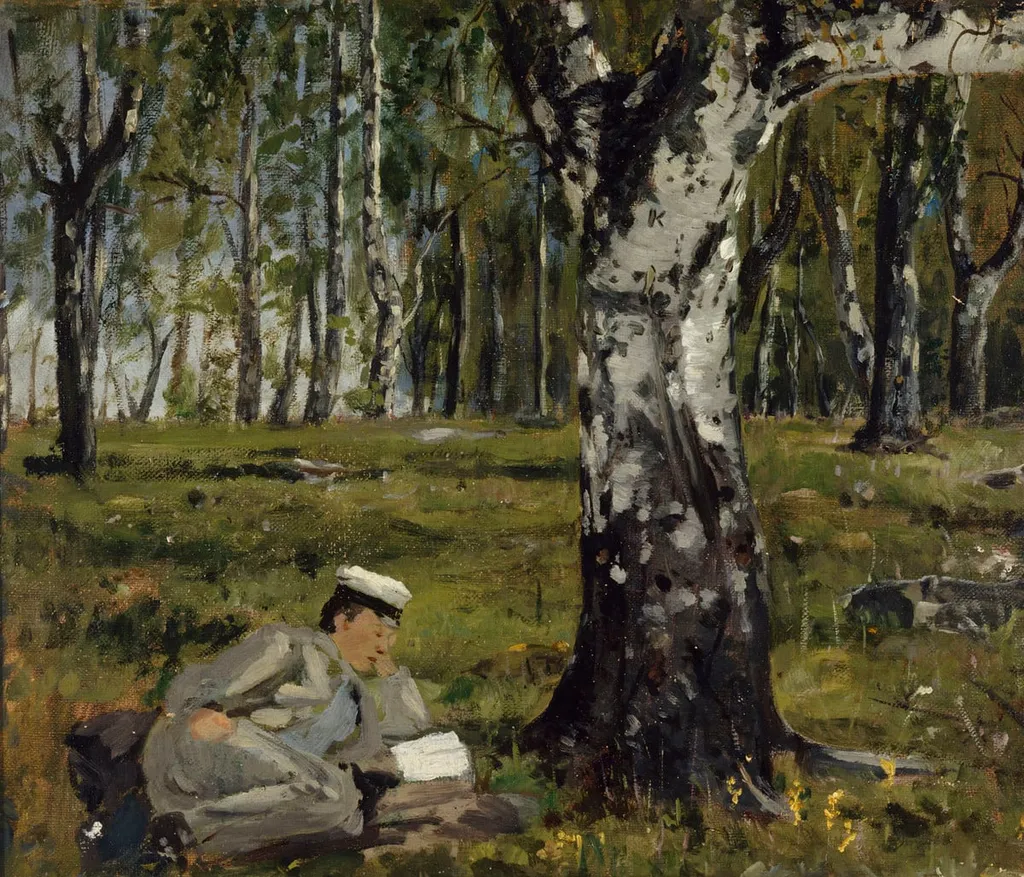
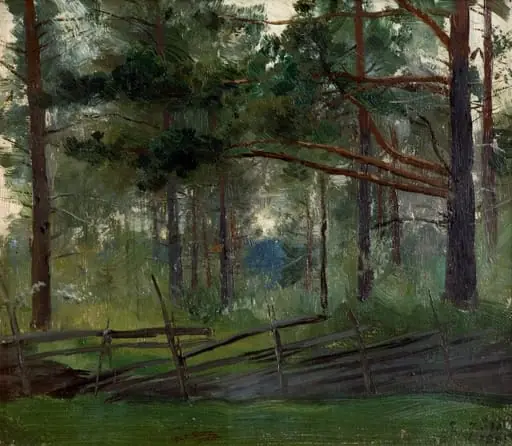
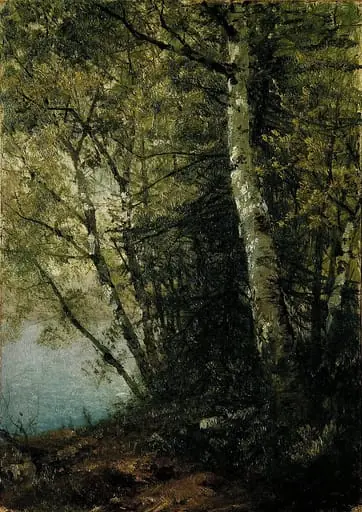
Opintoja luonnossa is an unspecified painting by Arvid Liljelund. It is held in the collection of the Finnish National Gallery. This work depicts a solitary figure seated beneath a birch tree in a forest setting.
About this work
Overview
The atmosphere suggests quiet contemplation, with no overt narrative or dramatic elements, focusing instead on stillness and immersion in nature.
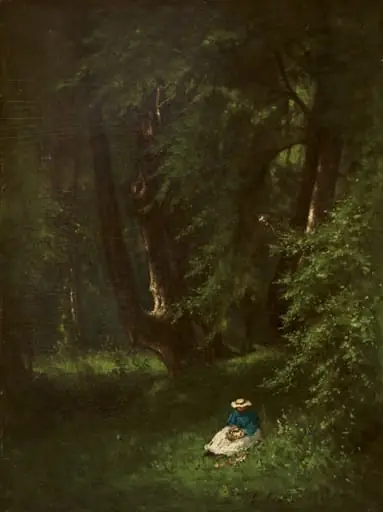
This work depicts a solitary figure seated beneath a birch tree in a forest setting. The person, dressed in a dark coat and light hat, leans against the trunk while holding a book. The surrounding trees rise tall and slender, their trunks and the ground rendered with dense, tactile brushwork. The atmosphere suggests quiet contemplation, with no overt narrative or dramatic elements, focusing instead on stillness and immersion in nature.
Subject & Meaning
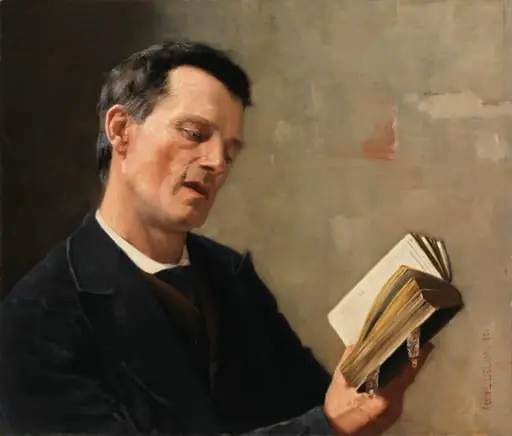
The figure appears absorbed in reading, their face expressionless yet attentive, implying inward focus rather than external action. The setting—a quiet woodland with uneven grass and layered foliage—frames the act of study as a private, almost meditative ritual. The choice of a book suggests intellectual engagement, while the natural surroundings imply a harmony between learning and the environment.
Technique & Style
Thick, textured brushstrokes create a tactile surface, particularly in the tree bark and shadowed ground, using impasto to emphasize materiality. The paint is applied with visible energy, avoiding smooth blending in favor of rough, directional strokes. The figure is rendered with minimal facial detail, contrasting with the dense foliage, directing attention to posture and presence rather than individual identity.
History & Provenance
The work is titled 'Opintoja luonnossa,' Finnish for 'Studies in Nature,' suggesting it was created as part of a series exploring outdoor observation. It likely dates from the late 19th or early 20th century, a period when Nordic artists increasingly turned to natural settings for artistic and philosophical reflection. Its origin remains unverified, but its style aligns with regional tendencies of the time.
Context
During the period this work was likely made, Finnish artists were developing a distinct visual language rooted in local landscapes and introspective themes. The emphasis on solitude, natural texture, and quiet activity reflects broader cultural movements valuing personal reflection and connection to the land, distinct from urban or academic traditions of the era.
Legacy
The painting contributes to a tradition of Nordic art that privileges atmosphere and quietude over spectacle. Its use of impasto and focus on everyday solitude influenced later generations of regional painters who sought to convey emotional depth through material texture and restrained composition, rather than narrative drama.
Artist & collection