Artwork
A Hundred Sparrows in a Lofty Grove

A Hundred Sparrows in a Lofty Grove is an unspecified painting by the Ming dynasty painting artist Lin Liang. It dates from 1506 and is held in the collection of the Cleveland Museum of Art.
About this work
You can learn more about this style by looking at the work of artist: Lin Liang (Chinese, 1416–1480).
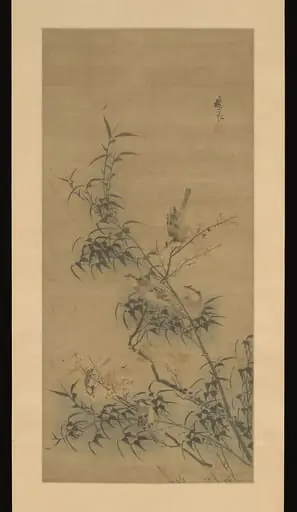
This painting shows sparrows playing in a forest with trees, grass, and a waterfall.
The sparrows are doing different things, like flying and perching.
The artist painted them with quick brushstrokes, which makes them look like they're moving.
The sparrows in this painting are special because they represent regular people in Chinese society.
They're not like the noble birds that symbolize wealthy or important people.
You can learn more about this style by looking at the work of artist: Lin Liang (Chinese, 1416–1480).
Overview
This ink-and-color scroll depicts a dense grove of trees, grasses, and a cascading waterfall, populated by a hundred sparrows in varied poses. The birds are shown in motion—flying, perching, alighting—creating a dynamic rhythm across the composition. The artist captures their energy through rapid, fluid brushwork, suggesting spontaneity and life rather than static representation. The scene invites quiet contemplation of nature’s unguarded moments.
Subject & Meaning
Sparrows, as humble and ubiquitous birds, symbolize the common people in traditional Chinese visual culture, contrasting with ornamental birds like pheasants or peacocks that denote aristocracy. Their presence here reflects a humanistic focus on everyday life, grounded in observation rather than idealization. The painting elevates the ordinary, suggesting dignity and vitality in the mundane, without overt moralizing or allegory.
Technique & Style
Executed in a freehand ink-wash style, the sparrows are rendered with swift, confident strokes that convey movement and form without detailed outlining. The artist employs varying ink tones and minimal color to suggest texture and depth, while the background foliage is suggested with loose, expressive brushwork. This approach aligns with the literati tradition of capturing essence over precision, prioritizing rhythm and spontaneity.
History & Provenance
Attributed to Lin Liang, a court painter of the Ming dynasty active in the 15th century, the work reflects his role in bridging academic and informal painting styles. Though few of his scrolls survive, this piece exemplifies his reputation for lively animal depictions. Its provenance traces through imperial and private collections, preserved for its technical fluency and expressive vitality rather than ceremonial function.
Context
During the Ming dynasty, court artists like Lin Liang were encouraged to depict nature with observational accuracy, even as literati ideals favored expressive brushwork. This painting sits at that intersection: it honors the natural world through direct study, yet employs the fluid techniques favored by scholar-painters. The choice of sparrows over exotic birds signals a subtle shift toward valuing the common over the ceremonial in artistic subject matter.
Legacy
Lin Liang’s approach to animal painting influenced later generations who sought to capture movement and character through economy of brushstroke. While not widely copied, his style contributed to the broader evolution of ink painting that emphasized vitality and spontaneity. This scroll remains a reference for its balanced fusion of naturalism and expressive freedom, embodying a quiet but enduring aesthetic principle.
Artist & collection


 Chrysanthemums and Cabbage
 Tao Yuanming's Return Home
 Returning to the Village in a Rainstorm
 View from the Keyin Pavilion on Paradise (Baojie) Mountain
 Buddha's Conversion of Five Bhiksu
 Mt. Taibo in the Style of Wang Meng
 Buddha's Conversion of Five Bhiksu
 Rocks, Orchid, and Bamboo
 Flowers of Four Seasons, with Poems
 Mt. Taibo in the Style of Wang Meng