Artwork
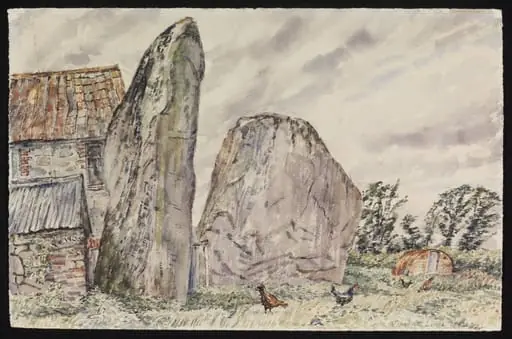
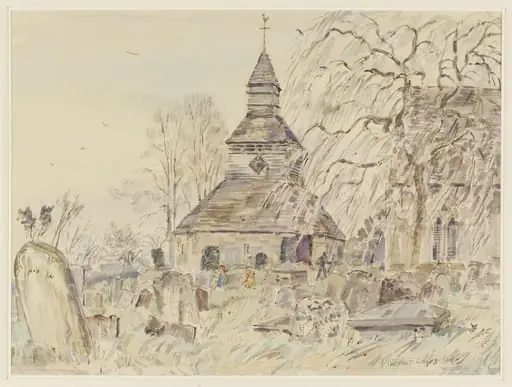
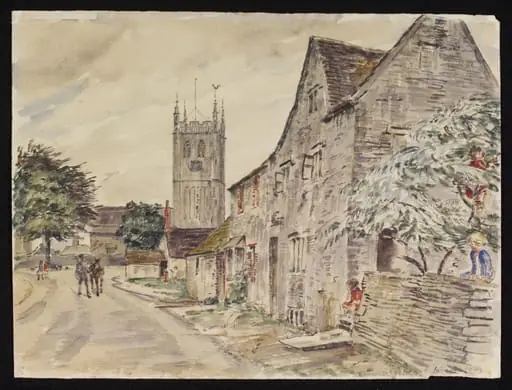
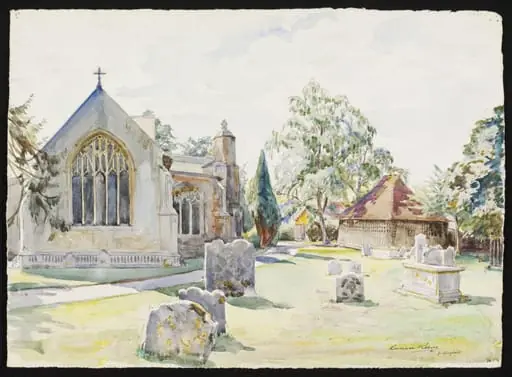
Church Porch and Manor, Avebury
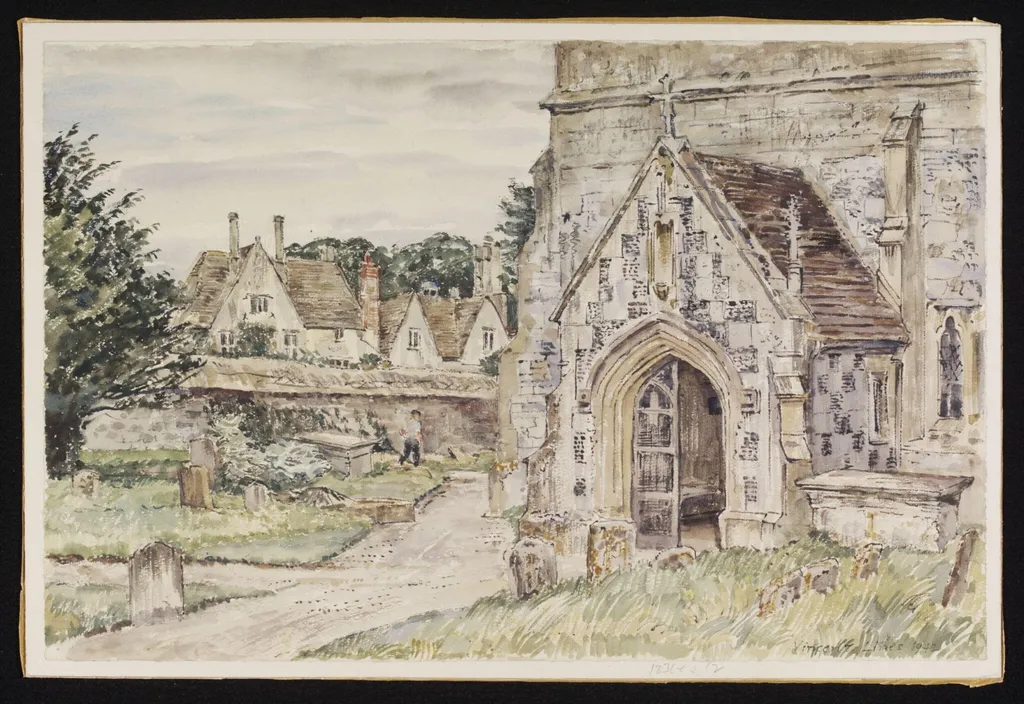
Church Porch and Manor, Avebury is a watercolor work on paper by Lines. It dates from 1942 and is held in the collection of the Victoria and Albert Museum.
About this work
Overview
Created in 1942, this watercolour is one of many works produced under the Recording Britain project, a wartime initiative to preserve visual records of the nation’s rural architecture. Executed with quiet precision, it captures a modest village scene in Avebury, focusing on the enduring presence of ecclesiastical and domestic structures amid the English countryside. The work was commissioned by the Pilgrim Trust under the direction of Sir Kenneth Clark, aiming to safeguard cultural memory during a time of national uncertainty.
Subject & Meaning
Rather than dramatizing the scene, the artist emphasizes continuity — the endurance of vernacular architecture against the backdrop of global conflict.
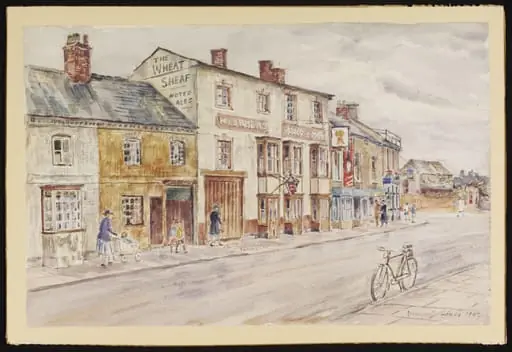
The painting centers on a weathered church porch and adjacent manor buildings, their forms softened by time and weather. The inclusion of scattered figures and modest dwellings suggests a quiet, ongoing rural life, unremarkable yet deeply rooted. Rather than dramatizing the scene, the artist emphasizes continuity — the endurance of vernacular architecture against the backdrop of global conflict. The absence of grandeur underscores the value of ordinary, everyday heritage.
Technique & Style
The artist employed loose, fluid brushwork to convey texture and atmosphere, allowing the paper’s natural tone to suggest light and shadow. Stone surfaces are rendered with dry, scratchy strokes; grass and foliage are suggested through soft washes. The palette is restrained — muted browns, greys, and ochres — reinforcing the sense of age and stillness. This restrained approach reflects the project’s emphasis on truthful documentation over artistic embellishment.
History & Provenance
Commissioned by the Pilgrim Trust in 1939, the Recording Britain project employed artists to document landscapes and buildings at risk from wartime destruction or neglect. This watercolour was completed in 1942 as part of that effort. It entered the collection of the Victoria and Albert Museum, where it remains as part of a larger archive of over 1,500 works created during the war, preserving a visual record of Britain’s rural character.
Context
During the Second World War, Britain faced widespread disruption, and cultural preservation became a quiet act of resistance. The Recording Britain project responded to fears that historic buildings might be lost to bombing or decay. Artists were sent across the country to record scenes of daily life and vernacular architecture, creating a collective archive that valued the overlooked and the unassuming as vital to national identity.
Legacy
The watercolour contributes to a significant wartime archive that continues to inform historical and architectural studies. Its unembellished depiction of rural England offers insight into the aesthetic and ethical priorities of its time: accuracy, reverence for place, and the quiet dignity of ordinary structures. Today, it stands as a testament to the role of art in sustaining collective memory during periods of upheaval.
Artist & collection