Artwork
East Bergholt Church and Bell Cage
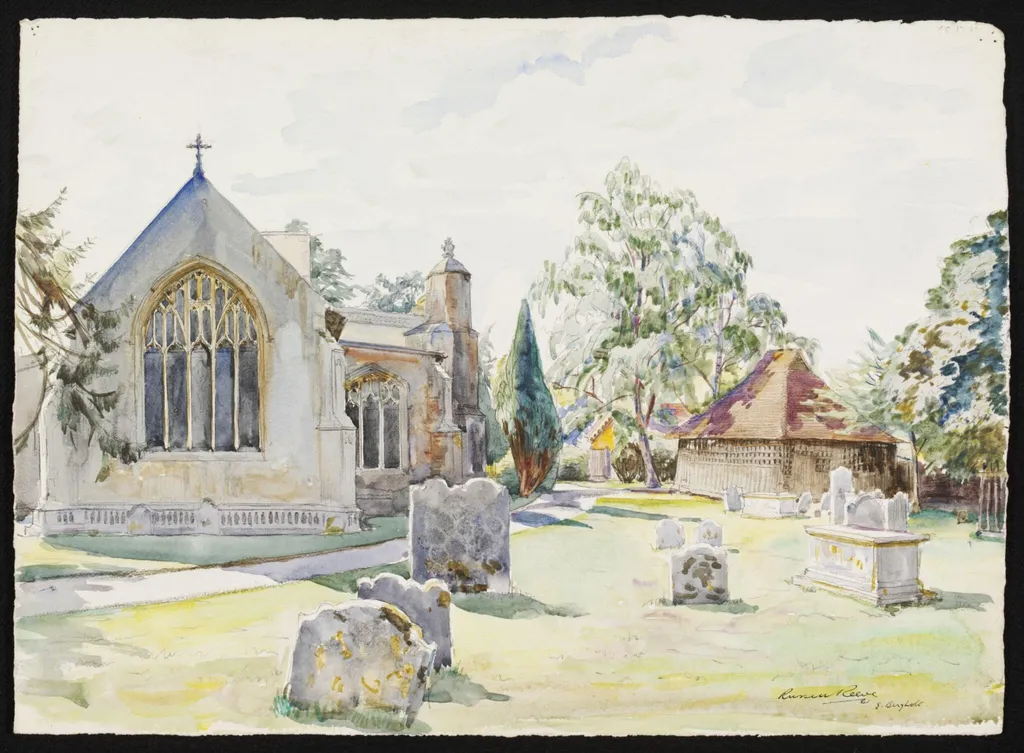
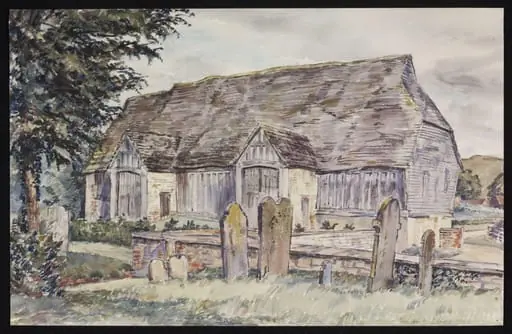
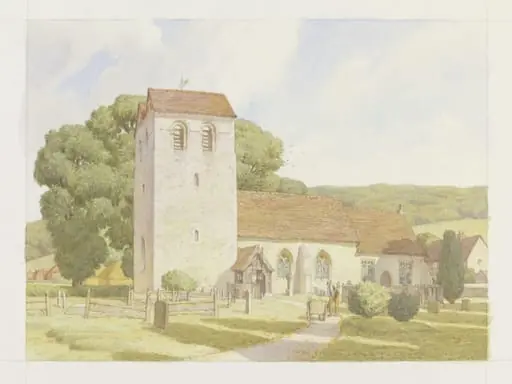
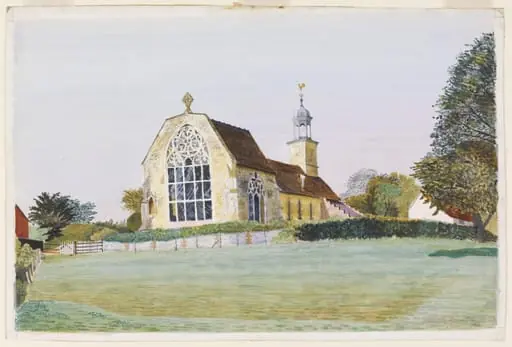
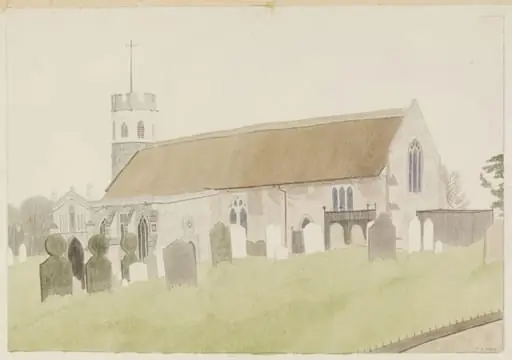
East Bergholt Church and Bell Cage is a watercolor work on paper by W. Russell Reeve. It dates from 1941 and is held in the collection of the Victoria and Albert Museum. This watercolour by W.
About this work
Overview
The composition centers on the church’s distinctive bell cage, a wooden structure with a pyramidal roof that has stood since the early 16th century.
This watercolour by W. Russell Reeve depicts the parish church of East Bergholt, a village in Suffolk closely associated with John Constable. The composition centers on the church’s distinctive bell cage, a wooden structure with a pyramidal roof that has stood since the early 16th century. Reeve’s focus on this architectural detail reflects both local heritage and the quiet endurance of rural English landmarks.
Subject & Meaning
The painting highlights the bell cage as both a functional object and a historical artifact. Originally installed in 1531 as a temporary replacement after construction of the church tower halted due to the fall of Cardinal Wolsey, it was never replaced. Its continued use underscores the persistence of tradition in village life, with the heaviest set of five hand-rung bells in England still operated by wooden hammers.
Technique & Style
Reeve employs transparent watercolour washes to capture the texture of weathered wood and the play of light on the church’s stone facade. Delicate brushwork defines the cage’s latticework and the subtle gradations of sky and foliage. The composition avoids dramatic contrast, favoring a restrained tonal harmony that aligns with the quiet dignity of its subject.
History & Provenance
The bell cage dates to 1531, erected after funding for the church tower ceased following Cardinal Wolsey’s decline. Though intended as temporary, it has remained in place for nearly five centuries. Reeve’s watercolour, created in the 20th century, documents this enduring feature within the landscape of East Bergholt, a place long tied to English artistic memory through Constable’s earlier depictions.
Context
East Bergholt, known as 'Constable Country,' has been a recurring subject in English landscape art since the 18th century. Reeve’s work enters this tradition not as a reinterpretation of Constable’s vision, but as a quiet observation of a local structure that survived historical disruption. The painting situates the bell cage within its physical and cultural environment, emphasizing continuity over change.
Legacy
Reeve’s watercolour preserves a record of a structure that has outlasted political and religious upheavals. While not widely exhibited, the piece contributes to a regional archive of vernacular architecture. Its significance lies in its unembellished documentation of a working relic, offering insight into how rural communities maintain historical continuity through everyday practice.
Artist & collection
Artist
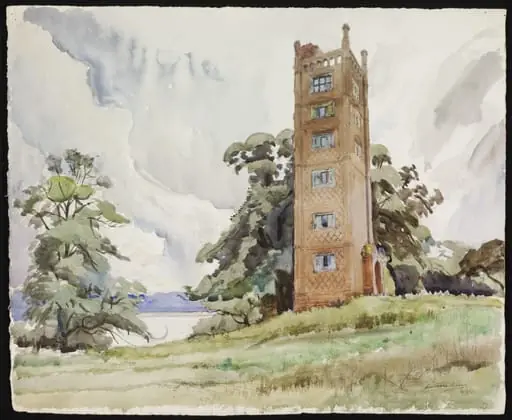
W. Russell Reeve painted quiet English landscapes in watercolor, often capturing Suffolk landmarks like East Bergholt Church and Freston Tower. In 1932 he recorded Red House Farm near Ipswich, and in 1941 he returned to…