Artwork
The Virgin and Child
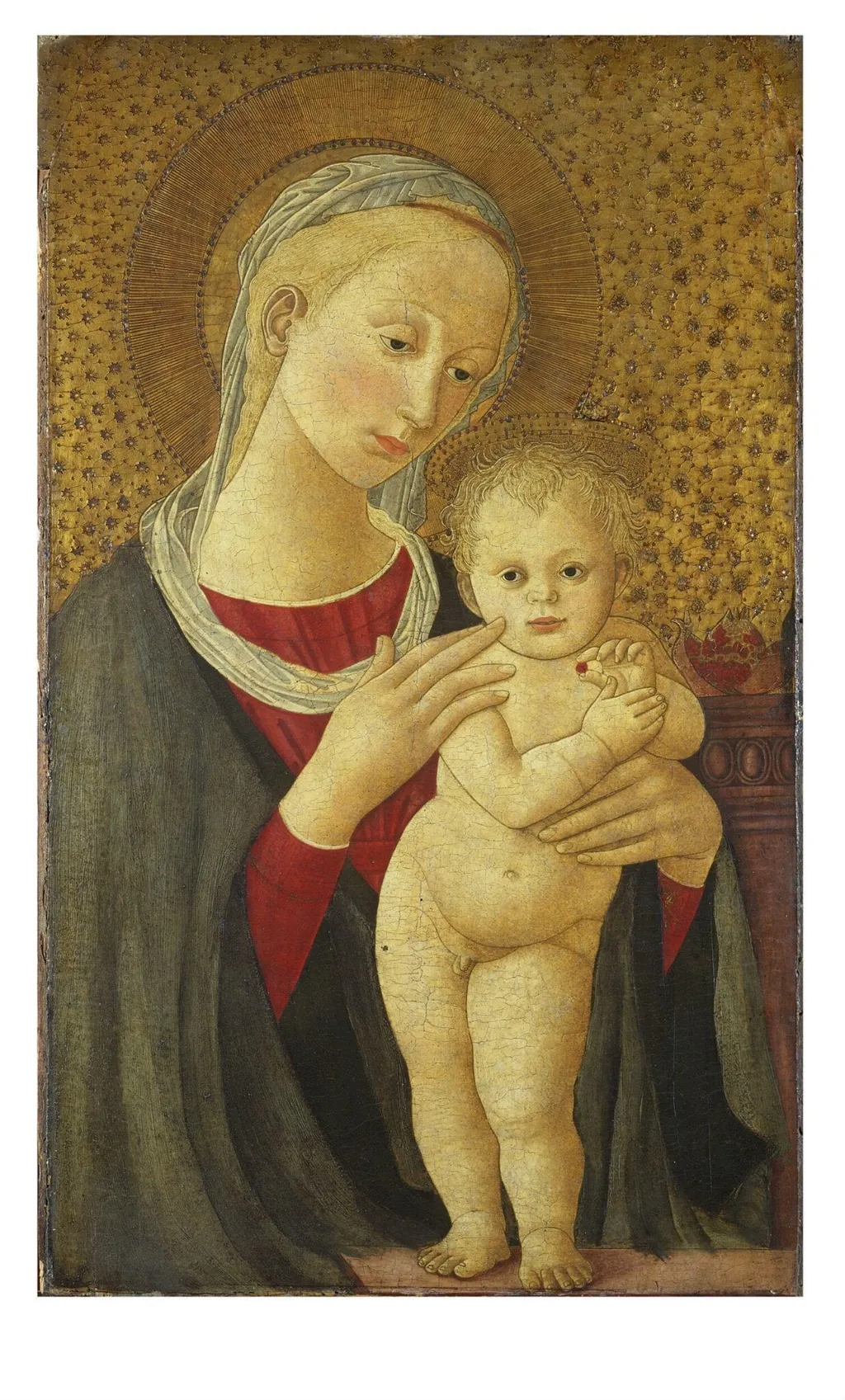
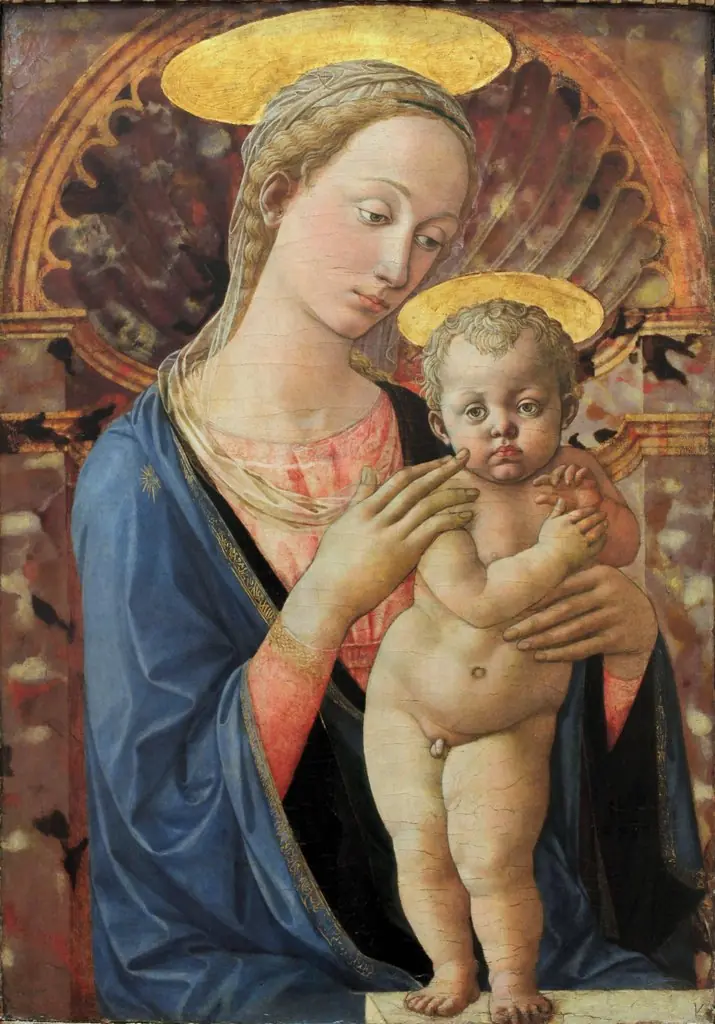
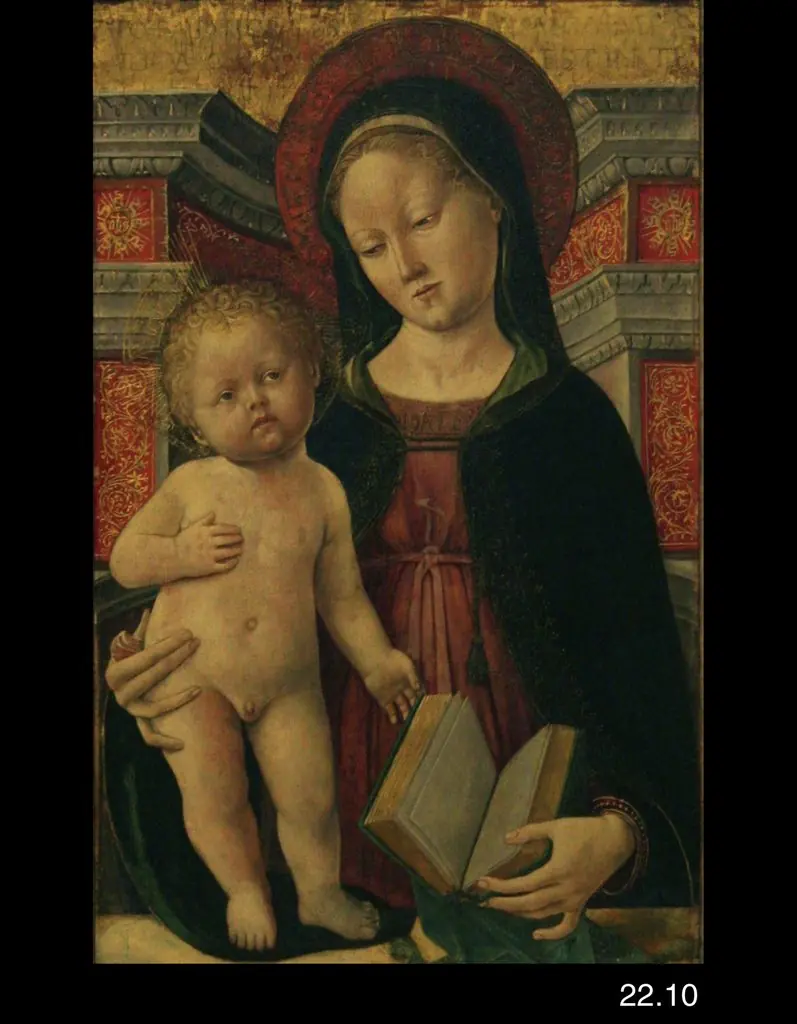
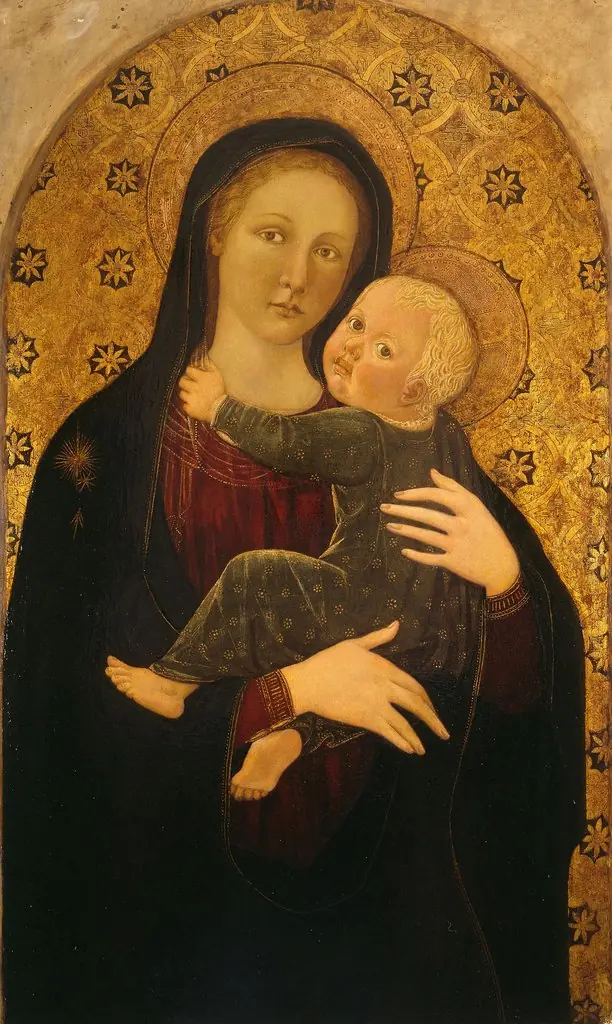
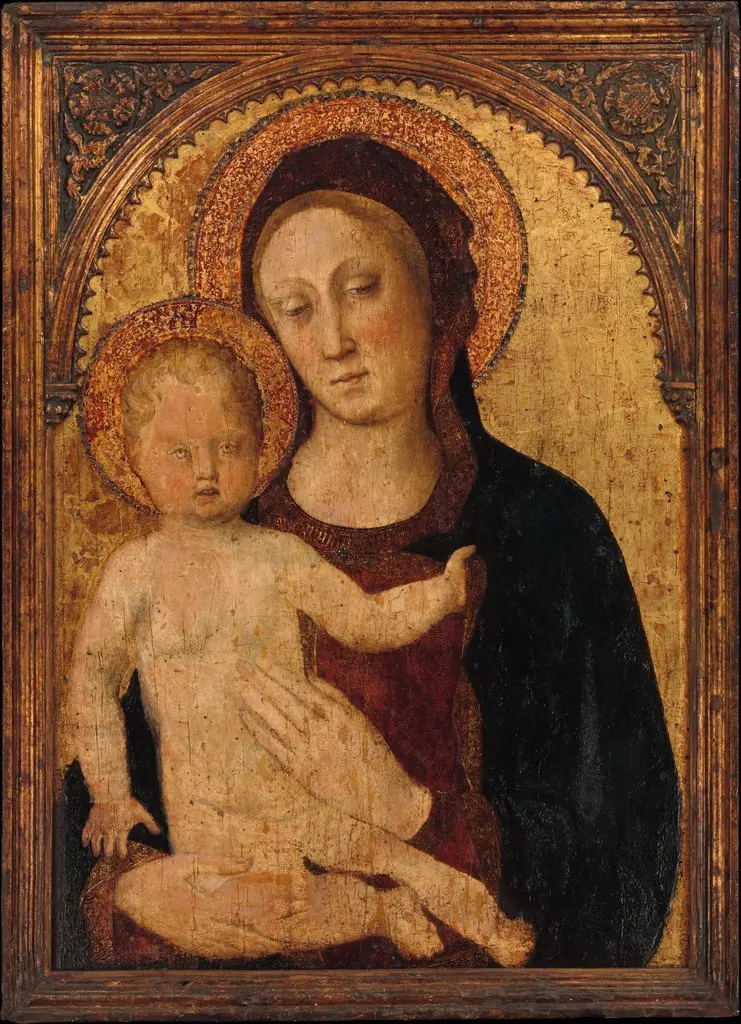
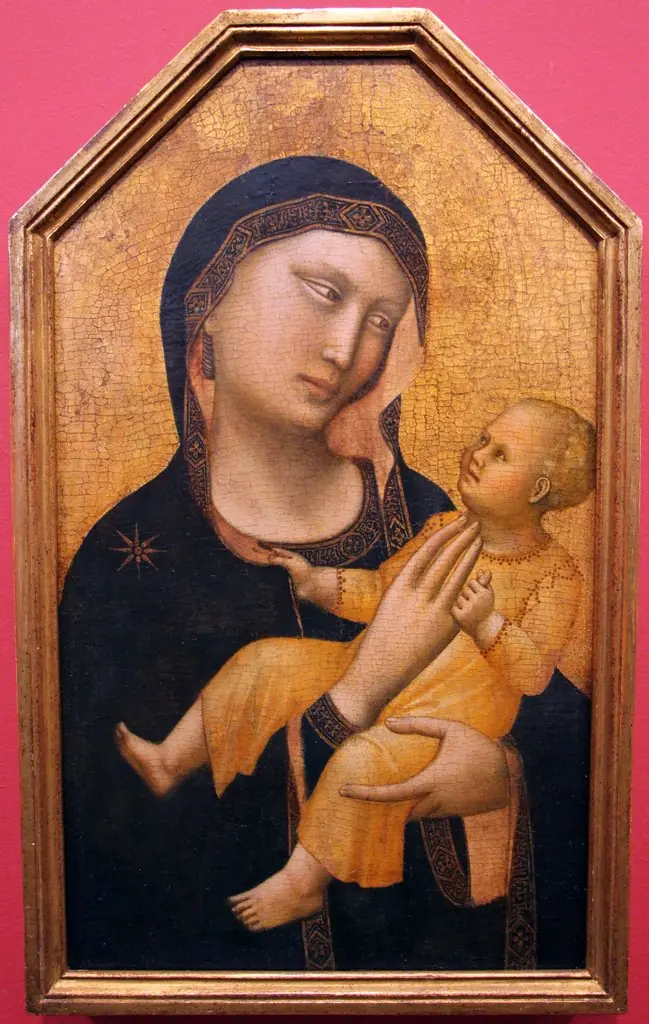
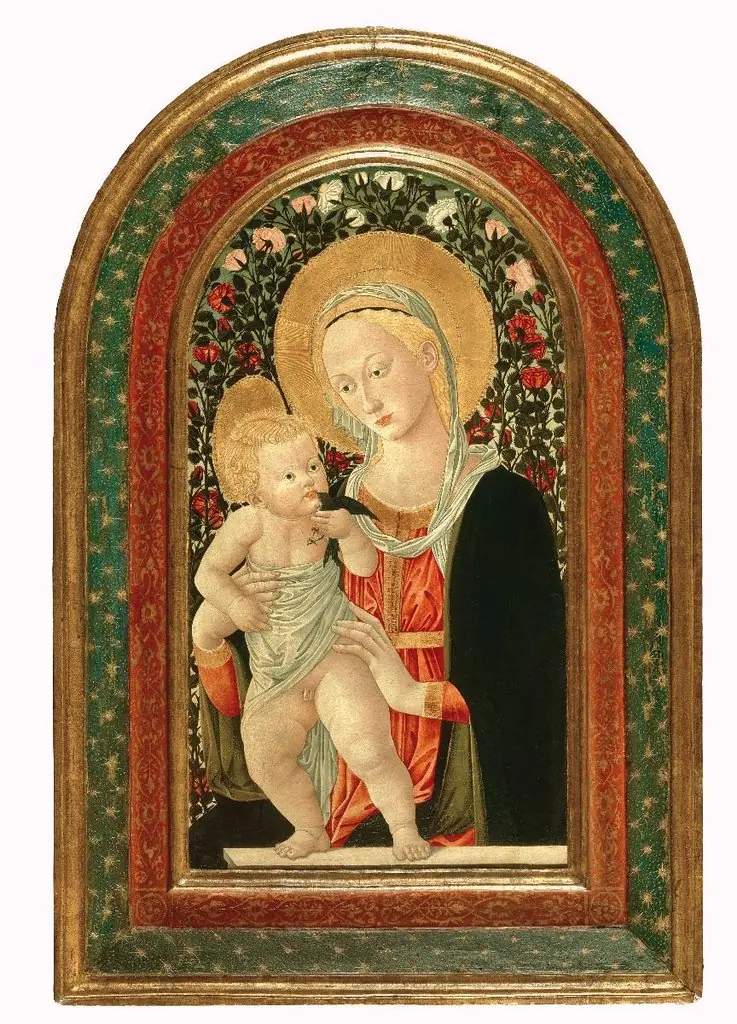
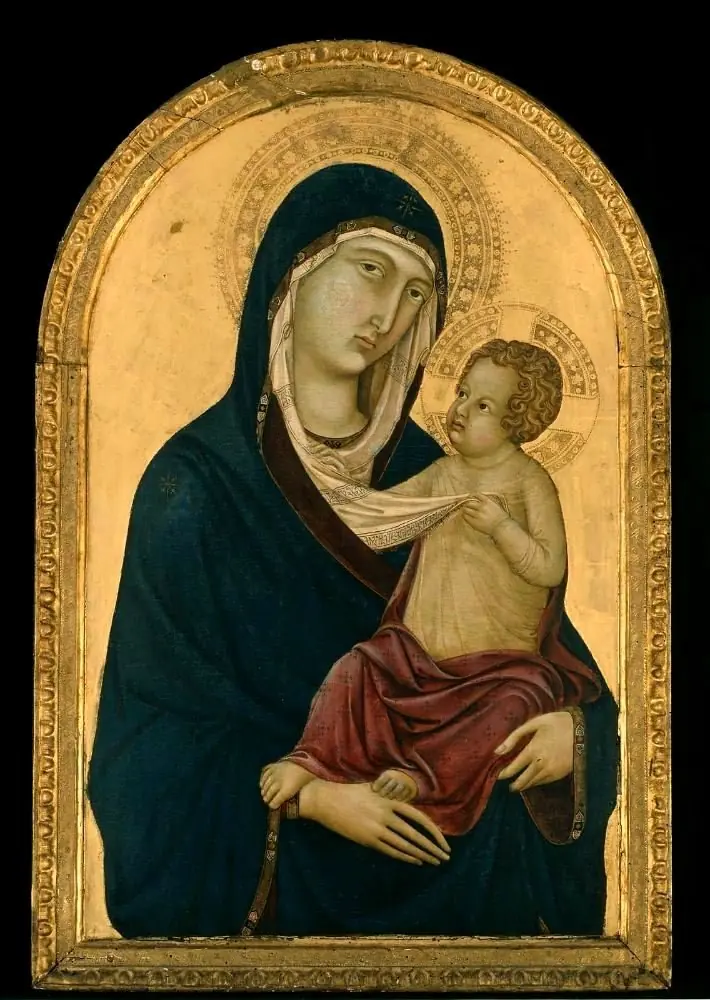
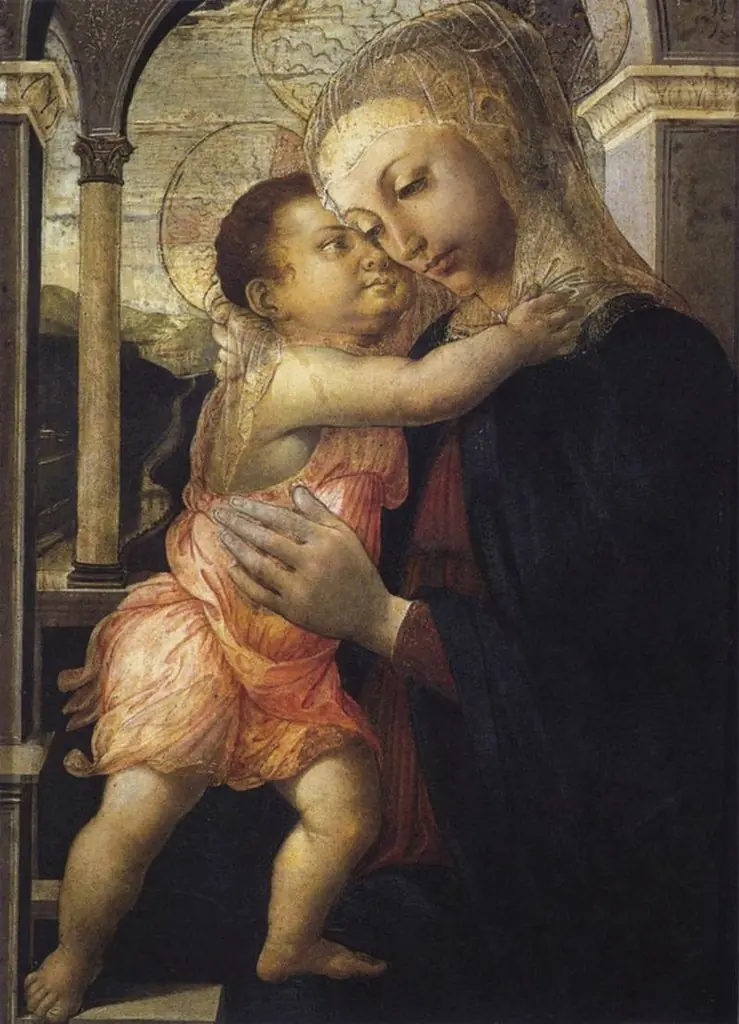
The Virgin and Child is a tempera painting by the Early Renaissance artist Lippi and Pesellino Imitator. It dates from 1455 and is held in the collection of the Victoria and Albert Museum. This tempera painting depicts the Virgin Mary with the infant Jesus, executed in the mid-15th century style of early Renaissance Florence.
About this work
This shows Mary in a red robe holding baby Jesus. Soft light falls on her face and his bare chest. The gold background is flat, like a sheet of metal.
The artist copied a famous Lippi design but added their own touches. Tiny details—like the fold in Mary’s sleeve—look almost real. This was likely made after Pesellino died in 1457.
See it in person at the Victoria and Albert Museum.
Overview
Though attributed to a follower of Pesellino, it reflects a compositional model developed in collaboration between Pesellino and Fra Filippo Lippi.
This tempera painting depicts the Virgin Mary with the infant Jesus, executed in the mid-15th century style of early Renaissance Florence. Though attributed to a follower of Pesellino, it reflects a compositional model developed in collaboration between Pesellino and Fra Filippo Lippi. Created after Pesellino’s death in 1457, the work was likely intended for private devotion, reflecting the demand for intimate religious imagery among Florentine households.
Subject & Meaning
The Virgin holds the Christ Child, who reaches toward a pomegranate resting in her lap. The fruit, with its clustered seeds, symbolizes the resurrection and the promise of eternal life through Christ’s sacrifice. The tender interaction between mother and child conveys both human tenderness and sacred significance, aligning with devotional practices that emphasized Mary’s role as intercessor and Christ’s dual nature as divine and human.
Technique & Style
Tempera on panel was the standard medium for panel paintings of this period, allowing fine detail and luminous color. The gold background remains flat and unmodulated, typical of earlier traditions, yet the folds of Mary’s robe and the soft modeling of the Child’s skin show a refined attention to naturalism. These subtle textures suggest the influence of Lippi’s expressive style, adapted by a skilled follower who enhanced the original design with delicate precision.
History & Provenance
The painting is a later interpretation of a composition originally developed by Pesellino and Fra Filippo Lippi during their collaborative period in the 1440s and 1450s. While the original works by Pesellino are rare, this version, produced after his death, demonstrates the enduring popularity of their shared iconography. It entered the collection of the Victoria and Albert Museum, where it remains as an example of Florentine devotional art from the mid-15th century.
Context
In mid-15th century Florence, private devotional images of the Virgin and Child were widely commissioned by wealthy families for home altars. Artists like Pesellino and Lippi responded to this market by refining compositions that balanced spiritual solemnity with emotional warmth. Their works, often copied by workshop assistants, helped standardize devotional imagery, bridging the gap between the rigid forms of the early Renaissance and the more naturalistic approaches of later generations.
Legacy
Though not the work of a major master, this painting preserves the visual language of a significant Florentine artistic partnership. It reflects how workshop practices transmitted stylistic innovations across generations, influencing the development of Renaissance devotional art. The persistence of such compositions into the late 15th century underscores their cultural resonance and the enduring appeal of the Virgin and Child motif in domestic spirituality.
Artist & collection
Artist
This pair borrowed the graceful style of early Italian painters to craft devotional panels full of soft colors and flowing folds.