Artwork
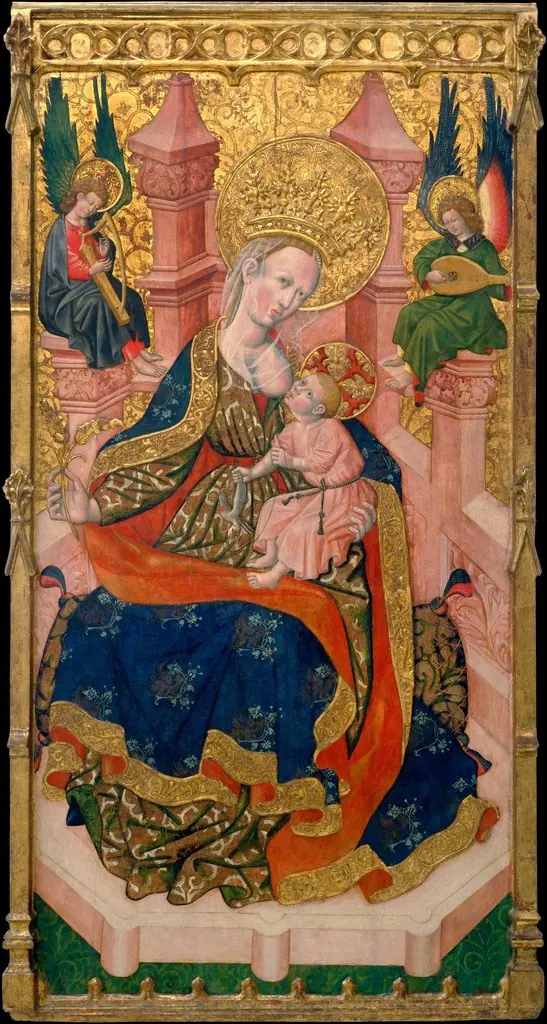
Altarpiece of the Virgin Suckling the Child, Saint Clare and Saint Anthony the Abbott
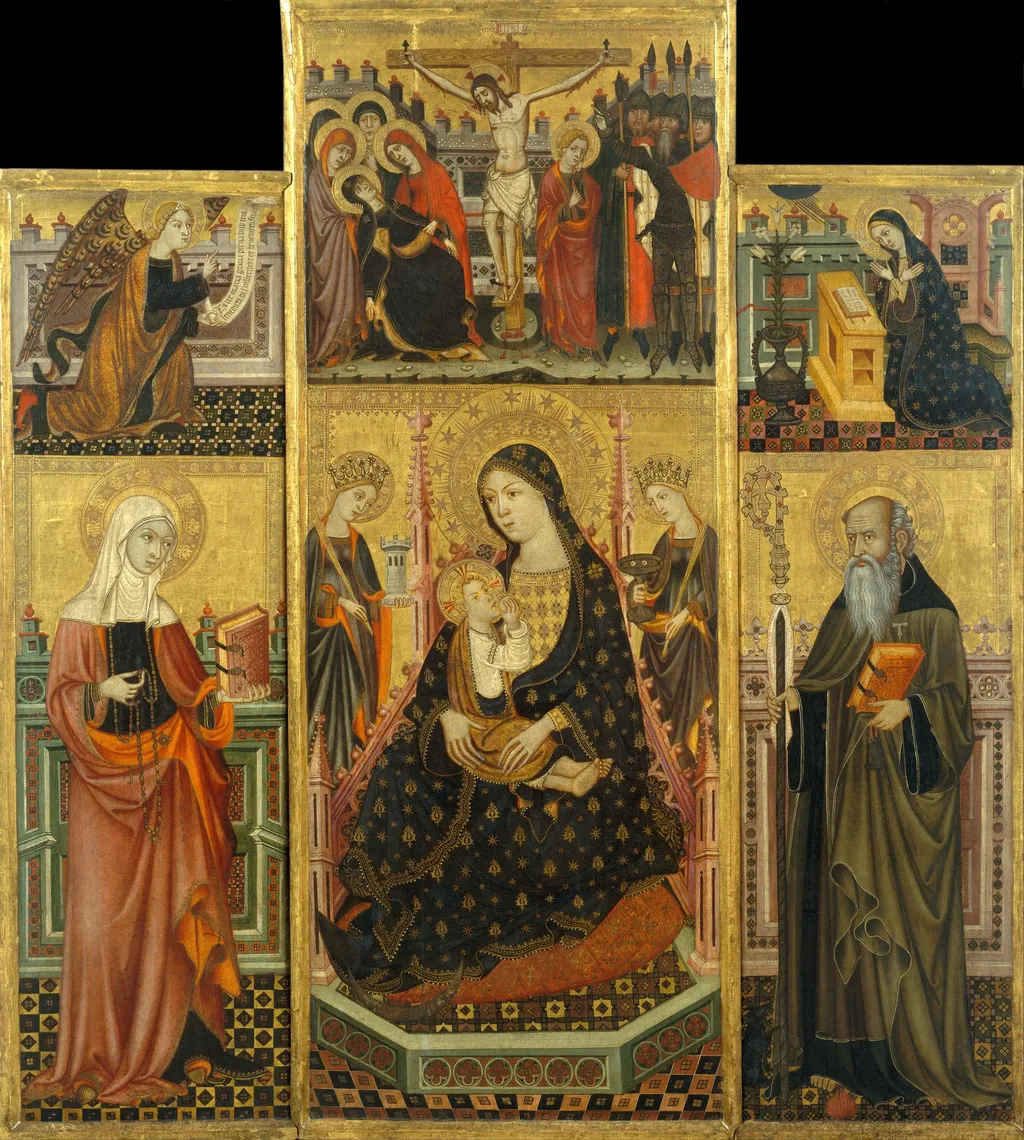
Altarpiece of the Virgin Suckling the Child, Saint Clare and Saint Anthony the Abbott is a tempera painting by Llorenç Saragossa. It dates from 1400 and is held in the collection of the Museu Nacional d'Art de Catalunya.
About this work
Overview
The work exemplifies late medieval Catalan panel painting, combining sacred imagery with refined decorative detail.
This tempera-on-panel triptych, dated around 1400, was painted by Llorenç Saragossa and features the Virgin Mary with the Christ Child at its center, flanked by Saint Clare and Saint Anthony the Abbott. It was created for devotional use and remains in the collection of the Museu Nacional d'Art de Catalunya. The work exemplifies late medieval Catalan panel painting, combining sacred imagery with refined decorative detail.
Subject & Meaning
The central scene portrays the Virgin nursing the infant Jesus, emphasizing maternal tenderness and divine nourishment. To her left, Saint Clare, identified by her Franciscan habit, holds a book and rosary, symbolizing contemplative prayer. To her right, Saint Anthony the Abbott, in monastic robes, grips a staff and book, representing his role as a desert father and spiritual guide. Together, the figures form a devotional triad centered on grace, humility, and intercession.
Technique & Style
Executed in tempera on wood, the painting employs a gold-leaf background typical of Gothic altarpieces, enhancing the sacred atmosphere. Figures are rendered with delicate linework and flat, rhythmic drapery, while facial expressions remain serene and stylized. Color is used symbolically: red for Clare’s devotion, green for Anthony’s asceticism. The composition is symmetrical, reinforcing spiritual order and balance.
History & Provenance
The altarpiece was likely commissioned for a church or convent in Catalonia during the early 15th century. It remained in regional religious use until the 19th century, when it entered the collection of the Museu Nacional d'Art de Catalunya. Its preservation reflects the museum’s focus on safeguarding medieval Catalan religious art, though little documentation survives regarding its original location or patron.
Context
Created during a period of flourishing Catalan Gothic art, the altarpiece aligns with devotional trends emphasizing the Virgin’s humanity and the intercession of saints. Similar triptychs were common in monastic settings, serving as focal points for prayer. The choice of Saint Clare and Saint Anthony reflects the popularity of Franciscan and eremitic spirituality in late medieval Catalonia, where both orders held significant influence.
Legacy
As one of the few surviving works attributed to Llorenç Saragossa, the altarpiece offers insight into regional painting practices before the full adoption of Renaissance naturalism. Its preservation allows study of tempera technique and iconographic conventions in pre-modern Catalonia. Though not widely known beyond specialist circles, it remains a key example of devotional art from the region’s late medieval period.
Own this work as a print
Artist & collection

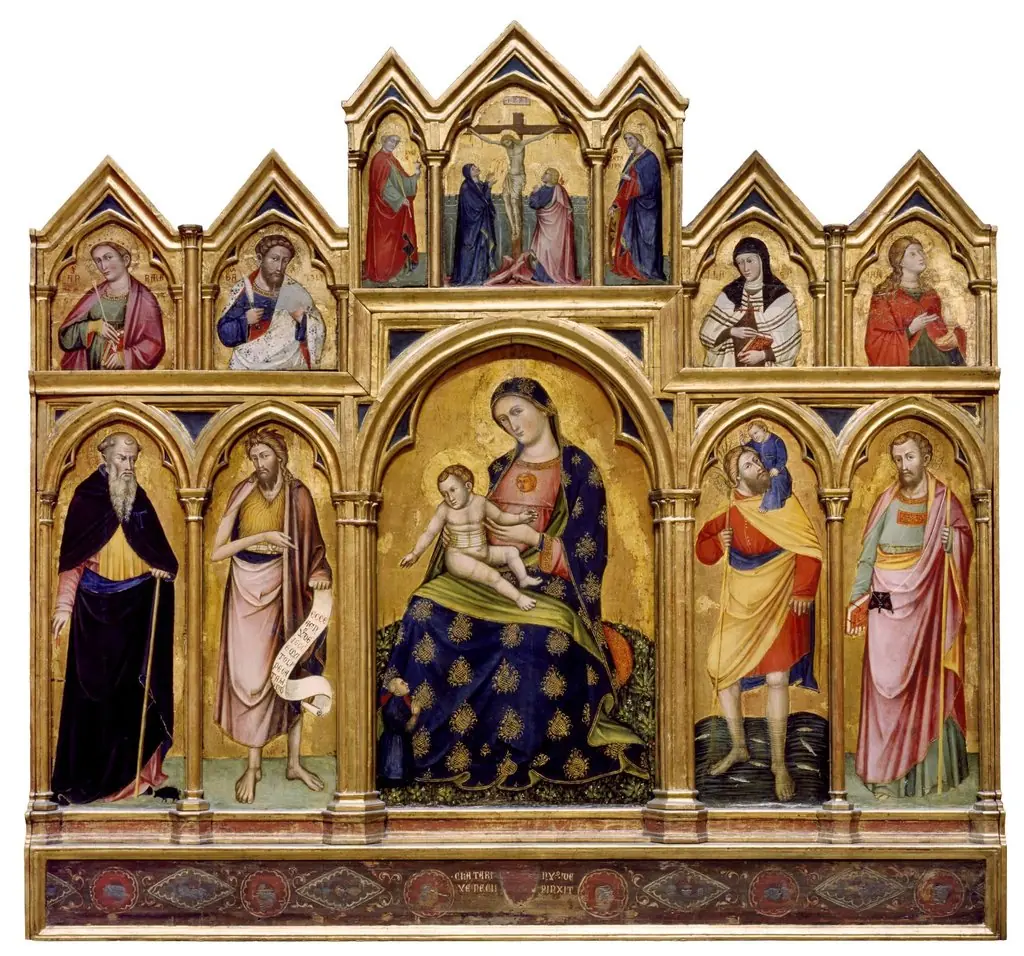 Madonna and Child, Crucifixion and Saints
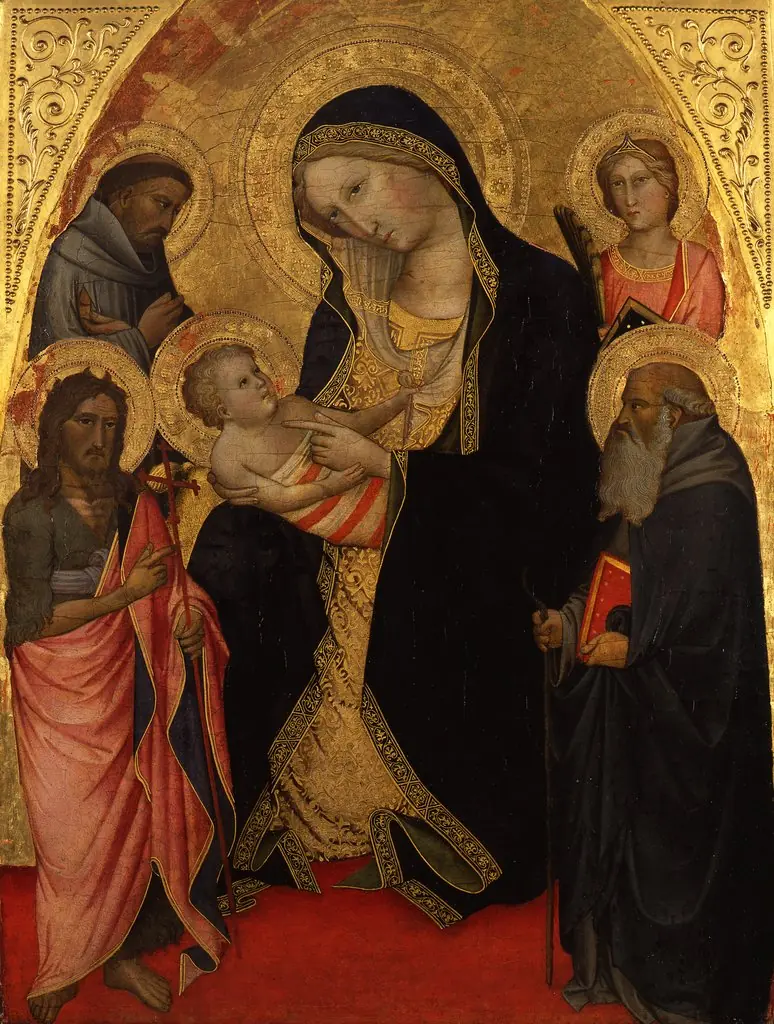 Madonna with the child, St. John the Baptist, St. Francis and St. Anthony and a martyr
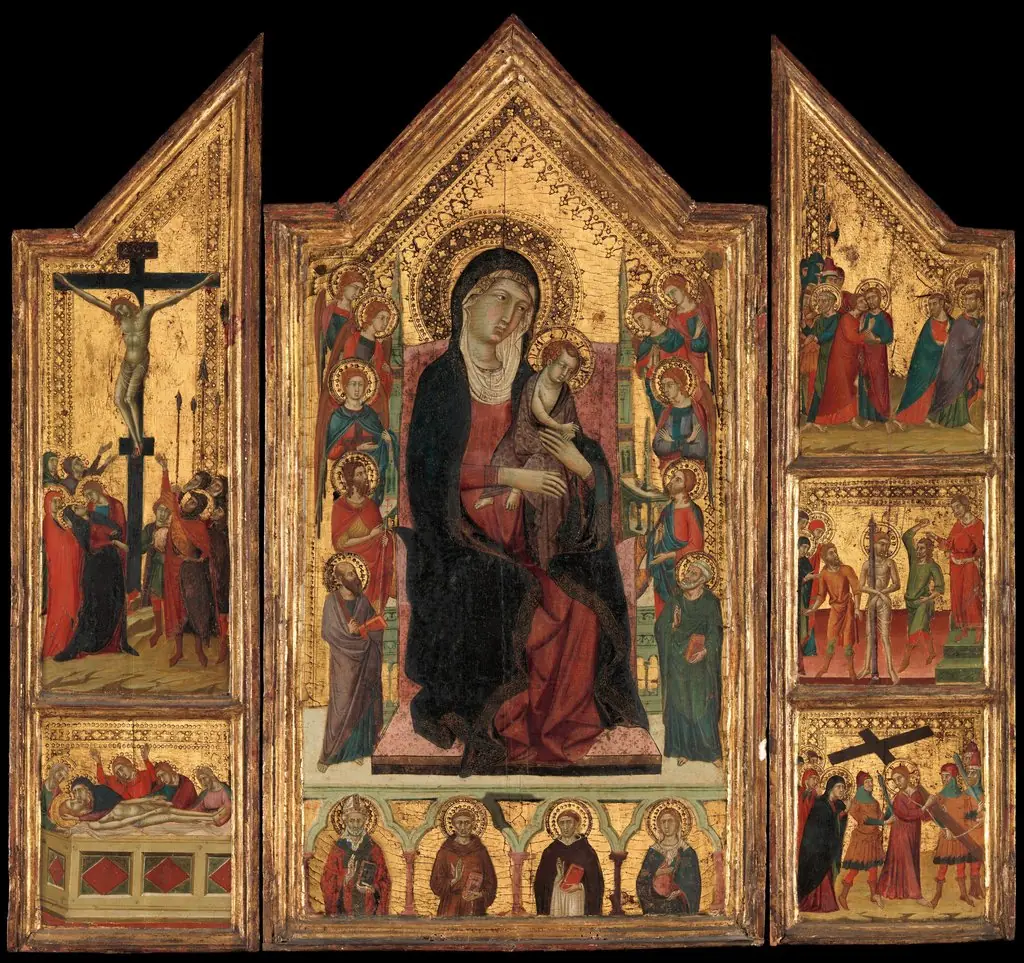 Madonna and Child Enthroned
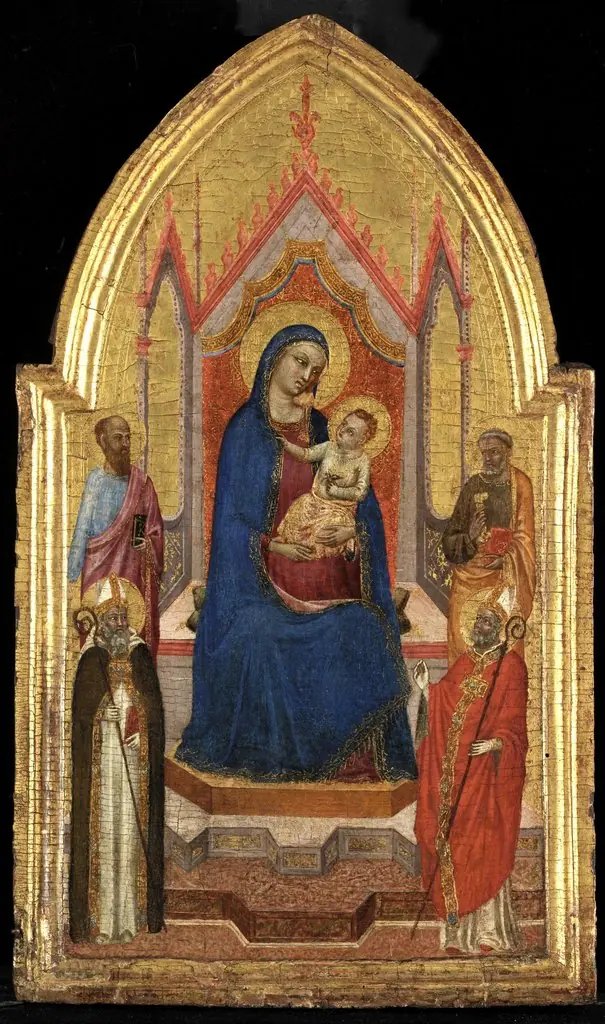 Madonna and Child Enthroned with Four Saints
![Madonna and Child Enthroned with Four Saints and Eighteen Angels [middle panel], by Puccio di Simone](https://artifactworldgallery.com/img/puccio-di-simone--madonna-and-child-enthroned-with-four-saints-and-eighteen-an--24dd12ad513d60ea-w320.webp) Madonna and Child Enthroned with Four Saints and Eighteen Angels [middle panel]
Madonna and Child Enthroned with Four Saints and Eighteen Angels [middle panel]![Saint Anthony Abbot [left panel], by Puccio di Simone](https://artifactworldgallery.com/img/puccio-di-simone--saint-anthony-abbot-left-panel--b93626e2d00b6158-w320.webp) Saint Anthony Abbot [left panel]
Saint Anthony Abbot [left panel]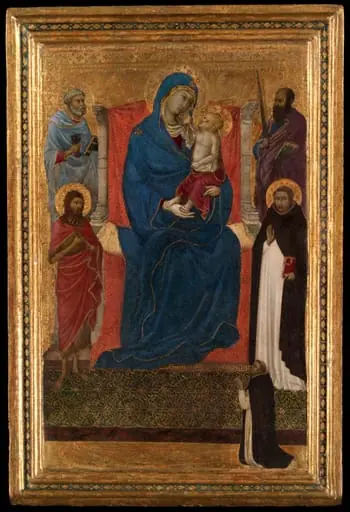 Virgin and Child Enthroned with Saints Peter, Paul, John the Baptist, and Dominic and a Dominican Supplicant
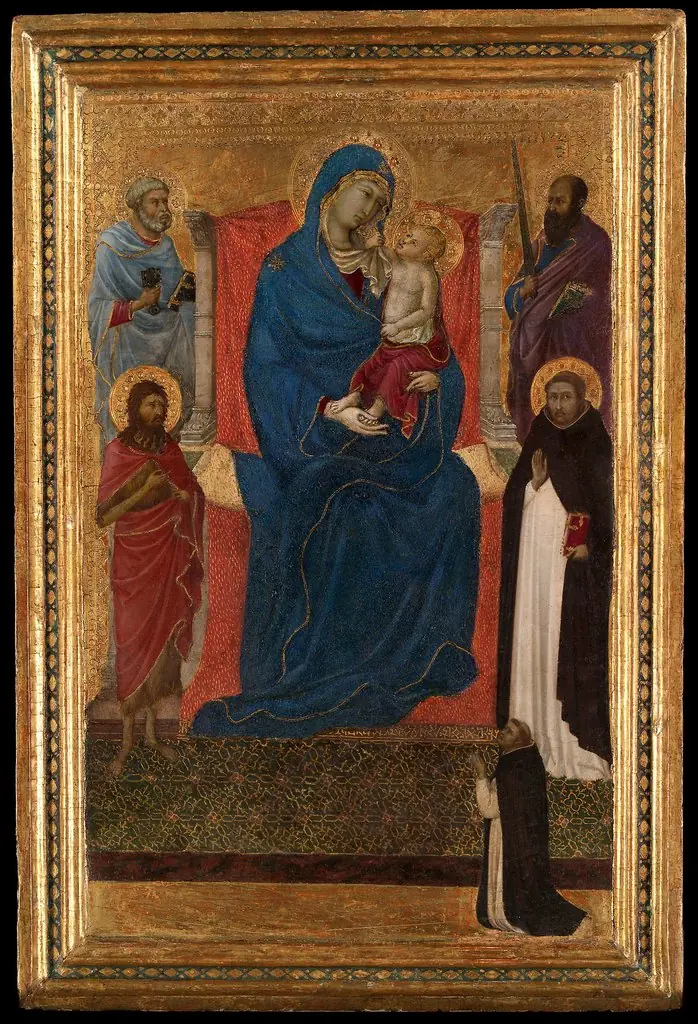 Virgin and Child Enthroned with Saints Peter, Paul, John the Baptist, Dominic and a Donor