Artwork
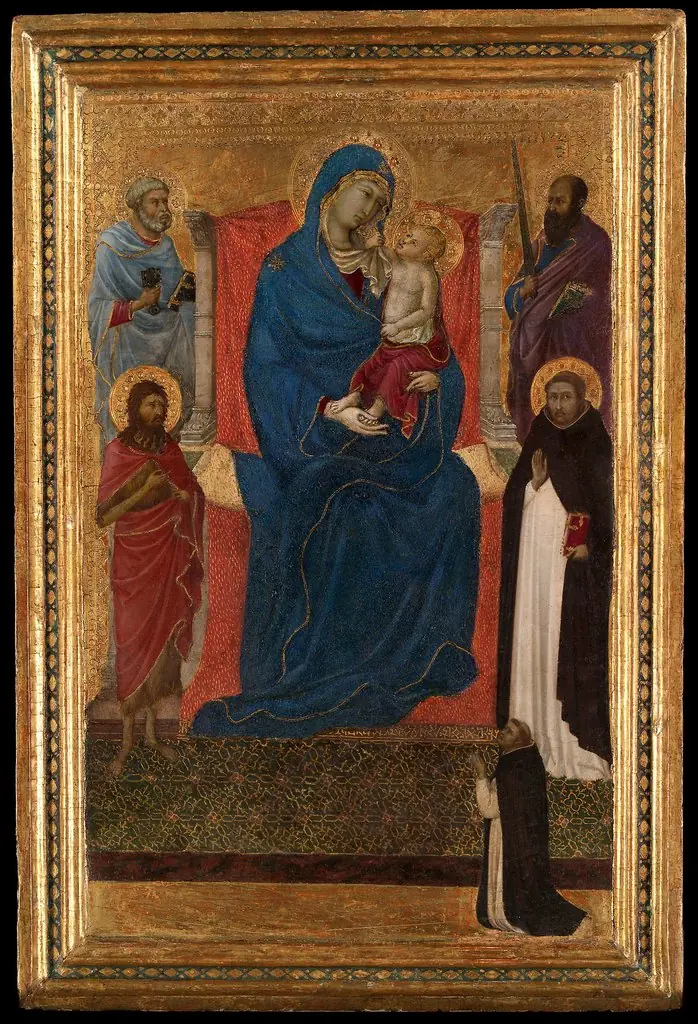
Virgin and Child Enthroned with Saints Peter, Paul, John the Baptist, and Dominic and a Dominican Supplicant
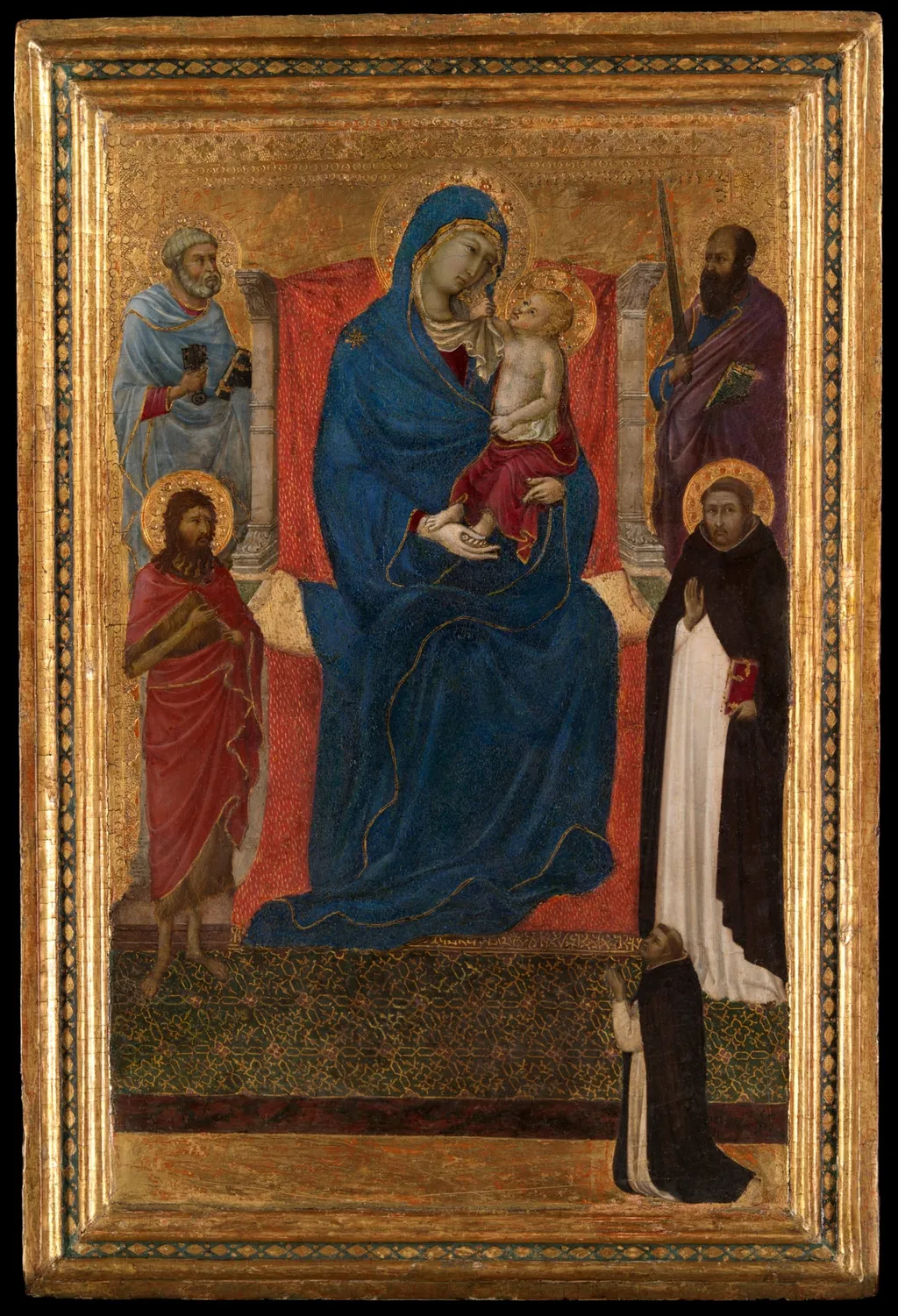
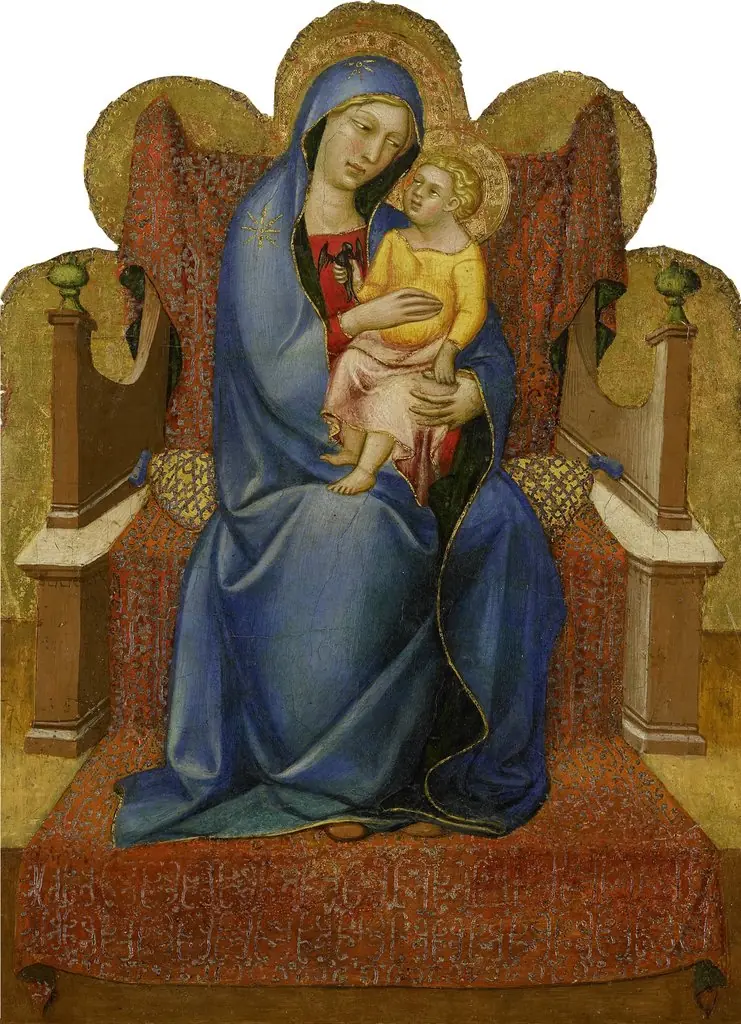
Virgin and Child Enthroned with Saints Peter, Paul, John the Baptist, and Dominic and a Dominican Supplicant is a tempera painting by the Byzantine icon painting artist Ugolino di Nerio. It dates from 1330 and is held in the collection of the Art Institute of Chicago. This tempera panel presents the Virgin enthroned with the Christ Child, flanked by saints Peter, Paul, John the Baptist and Dominic.
About this work
Overview
The composition’s balanced arrangement and intimate scale suggest it functioned as a personal devotional object rather than a public altarpiece.
This tempera panel presents the Virgin enthroned with the Christ Child, flanked by saints Peter, Paul, John the Baptist and Dominic. A Dominican friar kneels before the throne, his posture indicating supplication, while Saint Dominic stands nearby as an intercessor. The composition’s balanced arrangement and intimate scale suggest it functioned as a personal devotional object rather than a public altarpiece.
Subject & Meaning
The central focus on Mary and the infant Jesus reflects a common medieval emphasis on maternal intercession. The inclusion of prominent saints—Peter, Paul, John the Baptist, and the order’s founder Dominic—creates a theological hierarchy, while the kneeling friar embodies the viewer’s own petition for divine mercy, with Dominic acting as a mediator between the monk and the sacred figures.
Technique & Style
Executed in tempera on wood, the work displays the crisp linearity and luminous color typical of mid‑thirteenth‑century Italian panel painting. Figures are rendered with a restrained naturalism, their drapery articulated in fine, overlapping folds. The compositional layout, with a central throne and surrounding saints, parallels contemporaneous works by artists such as Ugolino di Nerio, indicating shared workshop conventions.
History & Provenance
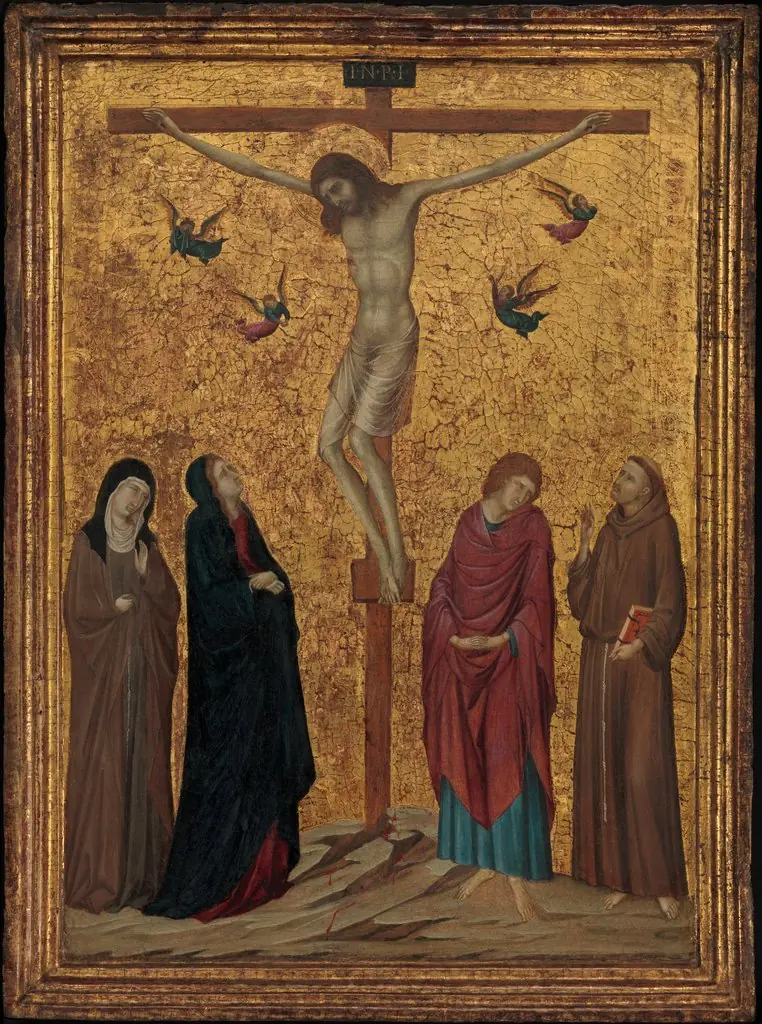
A 1260 account by Dominican chronicler Gerard de Frachet mentions that friars kept images of Mary and the crucified Christ in their cells for continual contemplation. This panel likely fulfilled that role. Physical evidence of hinge remnants along the left edge points to its original pairing in a diptych, most plausibly with a companion Crucifixion scene, forming a devotional pair for private use.
Context
Within Dominican spirituality, visual aids served as focal points for meditation and prayer, reinforcing the order’s emphasis on the humanity of Christ and the compassion of Mary. The presence of a Dominican supplicant and his patron saint underscores the personal nature of the work, situating it within the broader practice of monastic interior devotion during the High Middle Ages.
Artist & collection
Artist
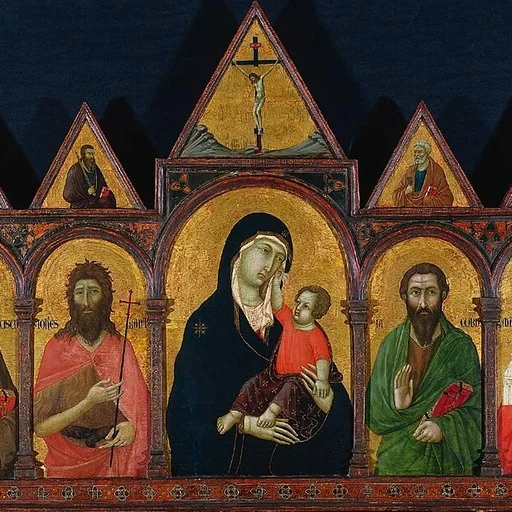
Ugolino di Nerio (1280? – 1349) was an Italian painter active in his native city of Siena and in Florence between the years 1317 and 1327. He was a follower of Duccio di Buoninsegna, from whose Maestà some of his…

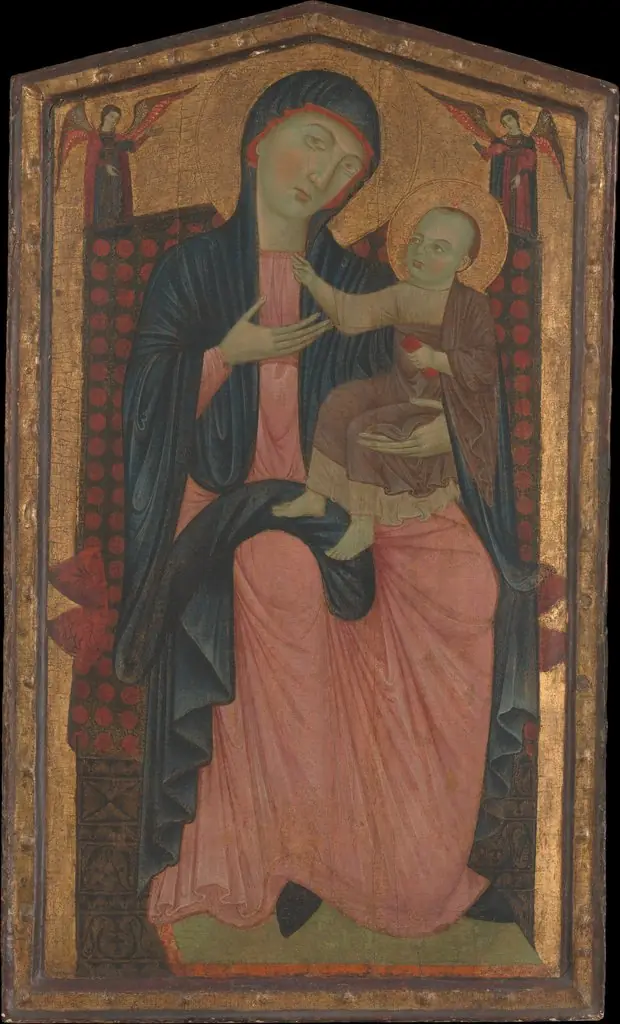 Madonna and Child Enthroned
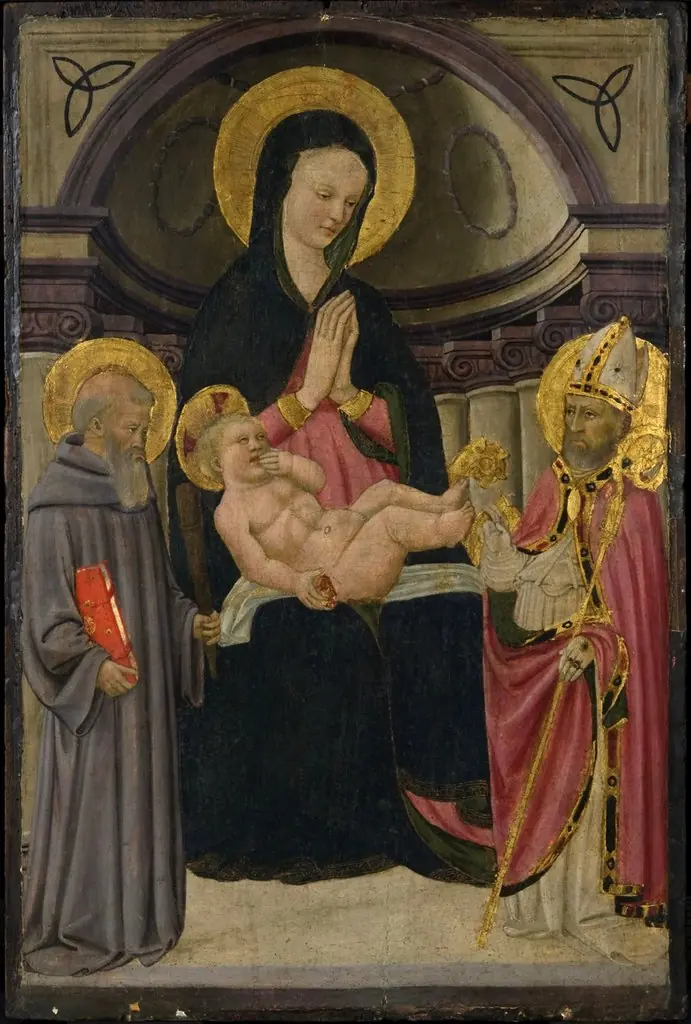 Virgin and Child Enthroned with Saint Benedict and a Bishop Saint
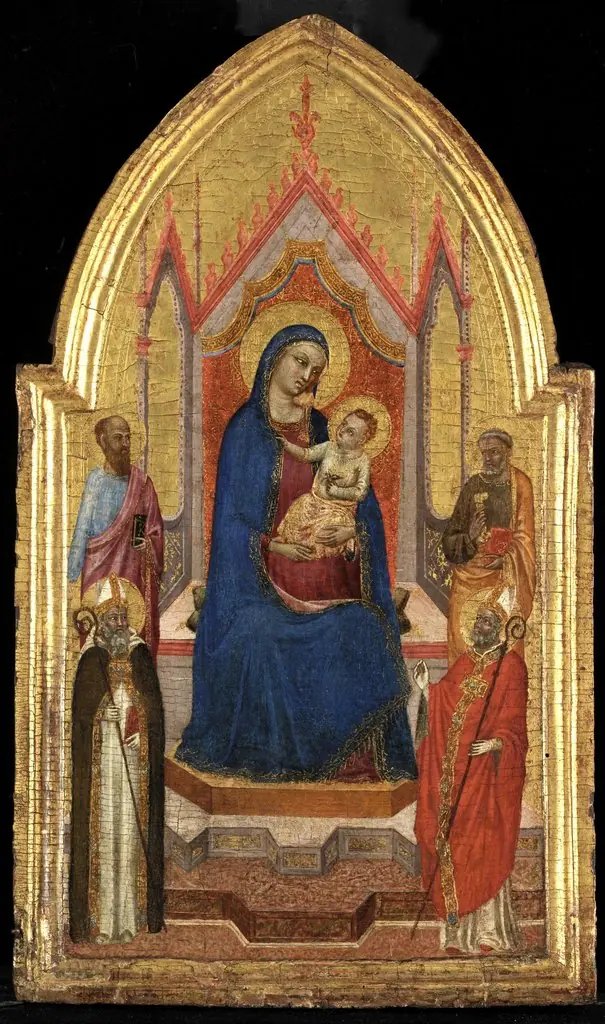 Madonna and Child Enthroned with Four Saints
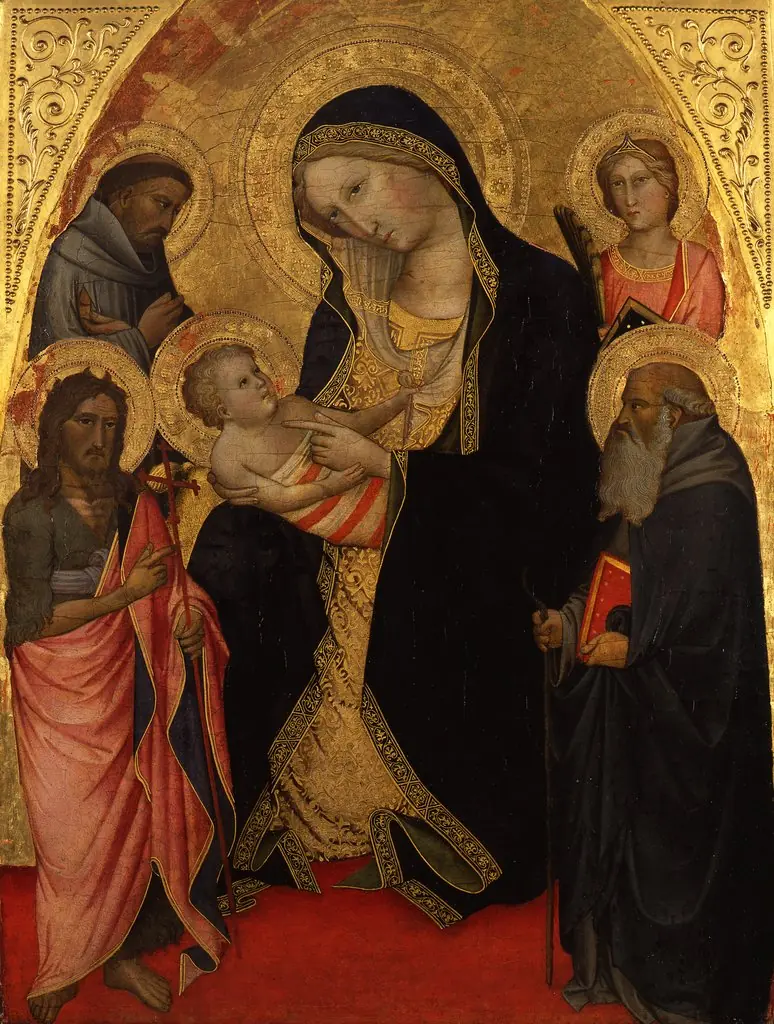 Madonna with the child, St. John the Baptist, St. Francis and St. Anthony and a martyr
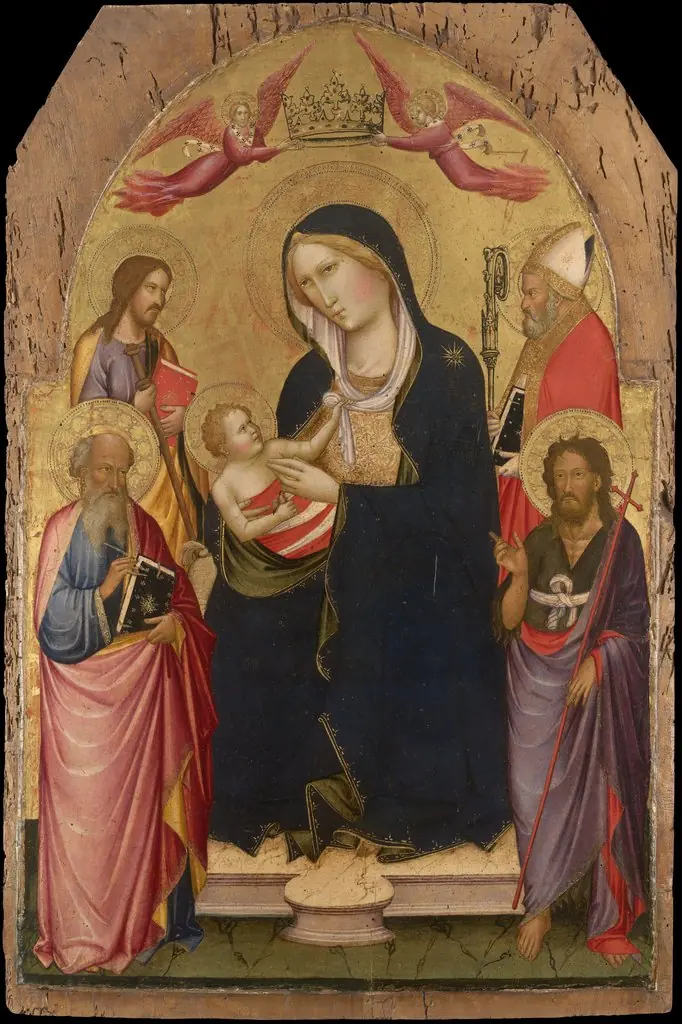 Madonna and Child with SS. John the Evangelist,John the Baptist, James of Compostela and Nicholas of Bari
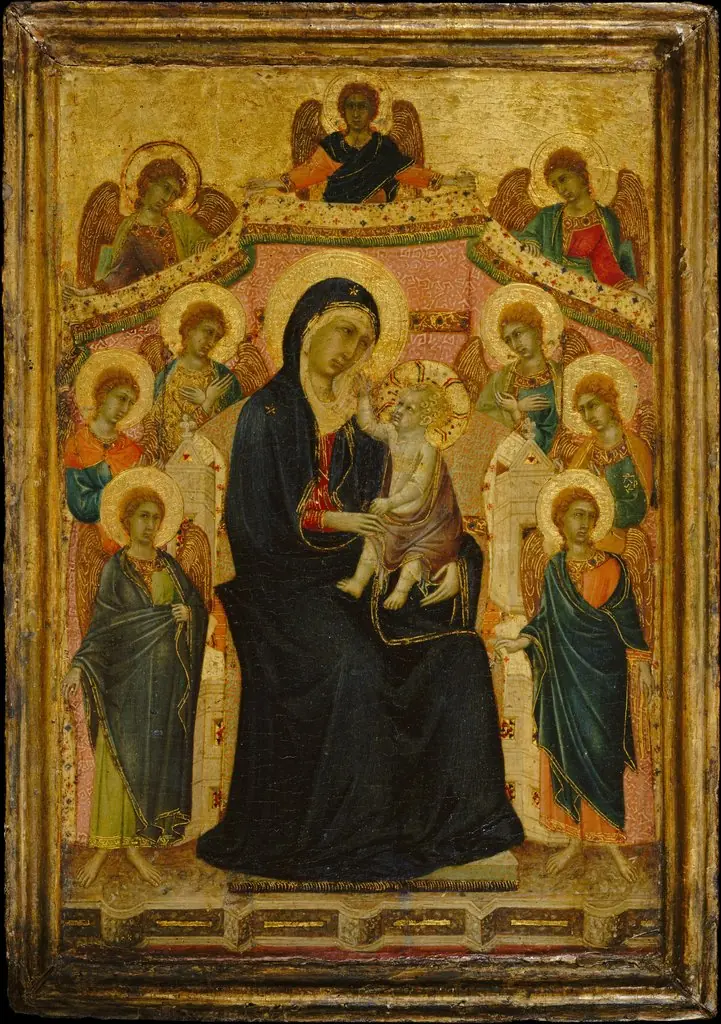 Madonna and Child with Nine Angels
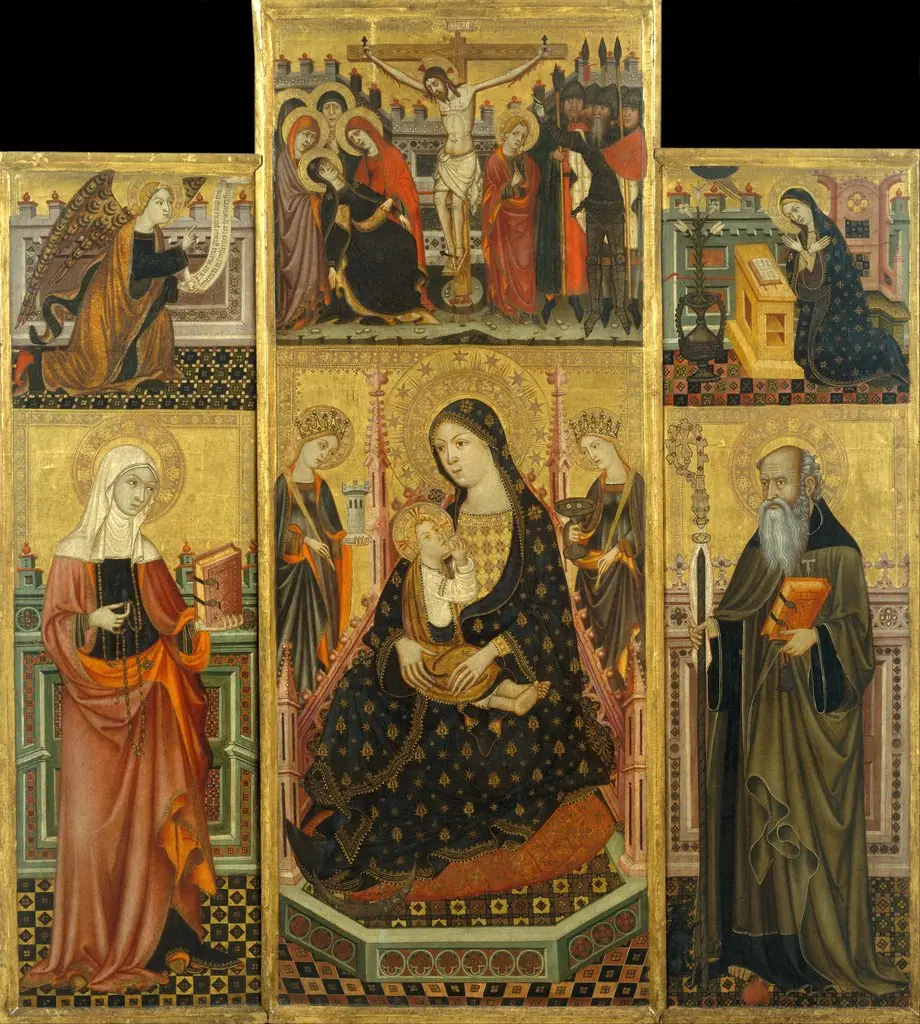 Altarpiece of the Virgin Suckling the Child, Saint Clare and Saint Anthony the Abbott
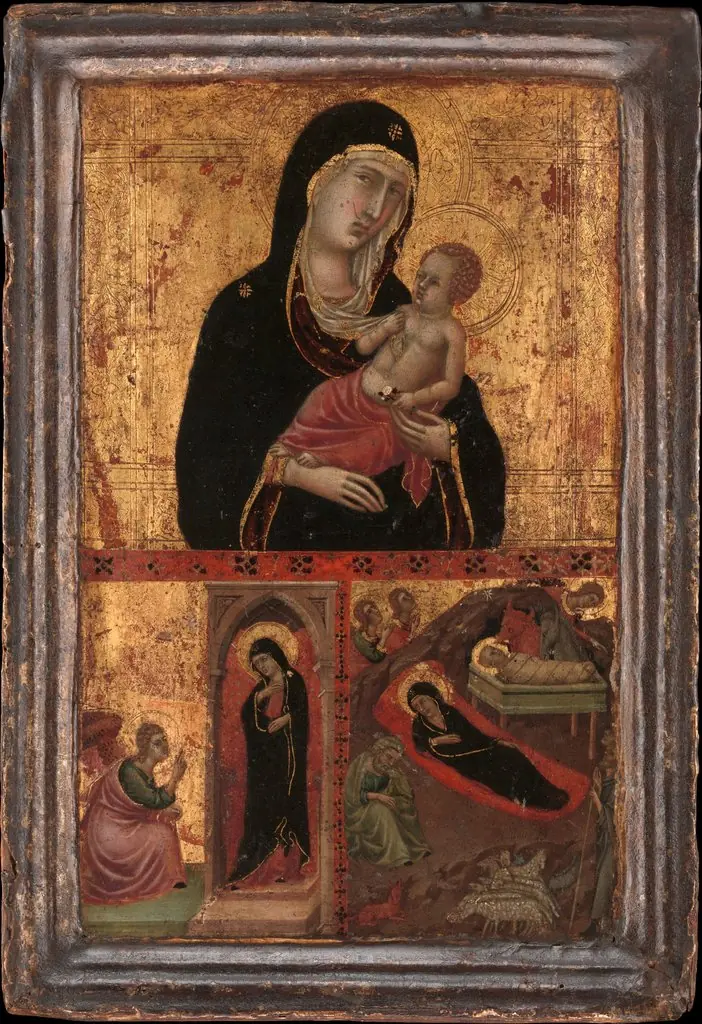 Madonna and Child with the Annunciation and the Nativity
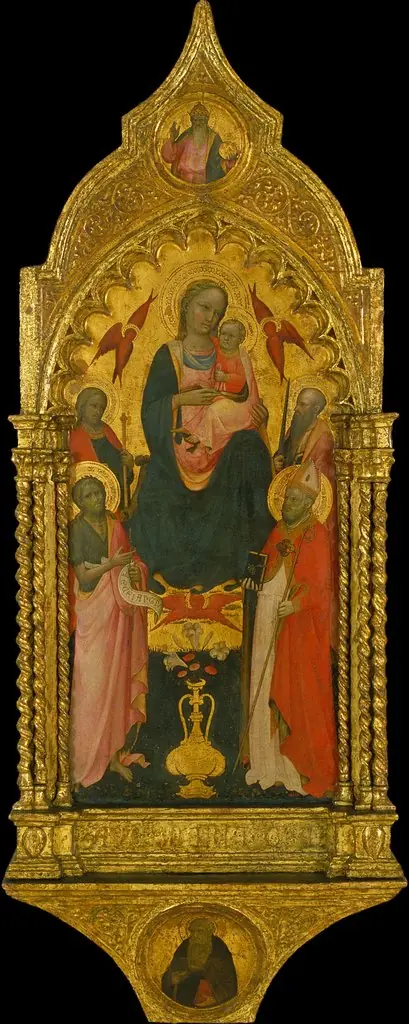 Virgin and Saints
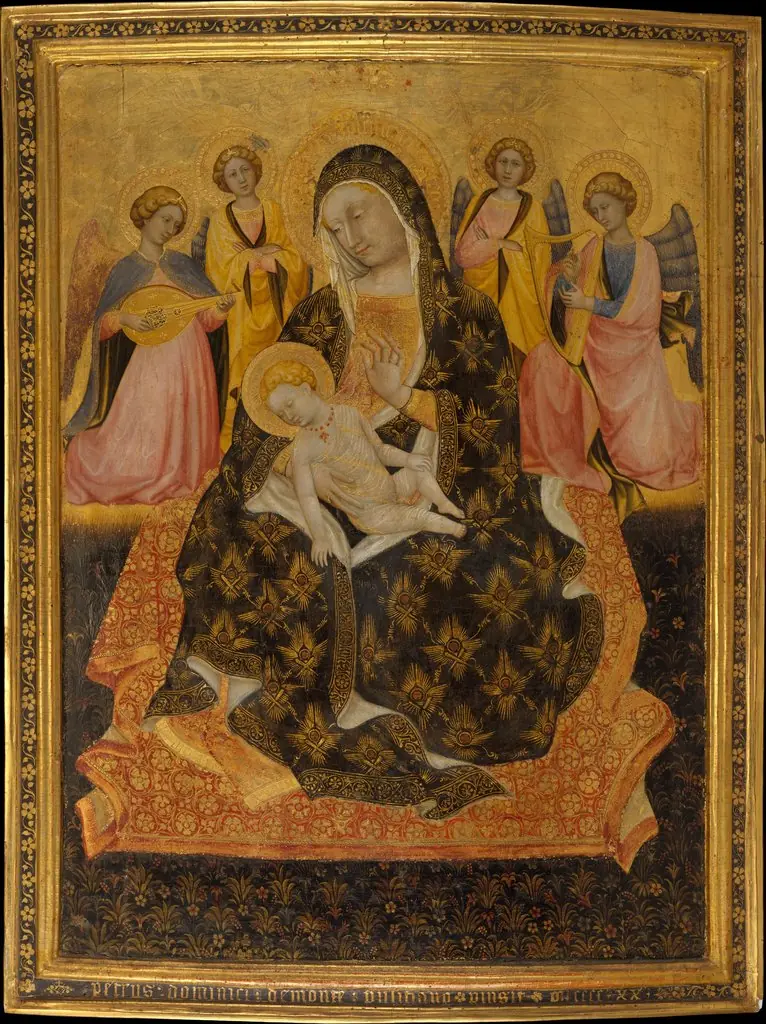 Madonna and Child with Angels
 Virgin and Child