Artwork
O fată
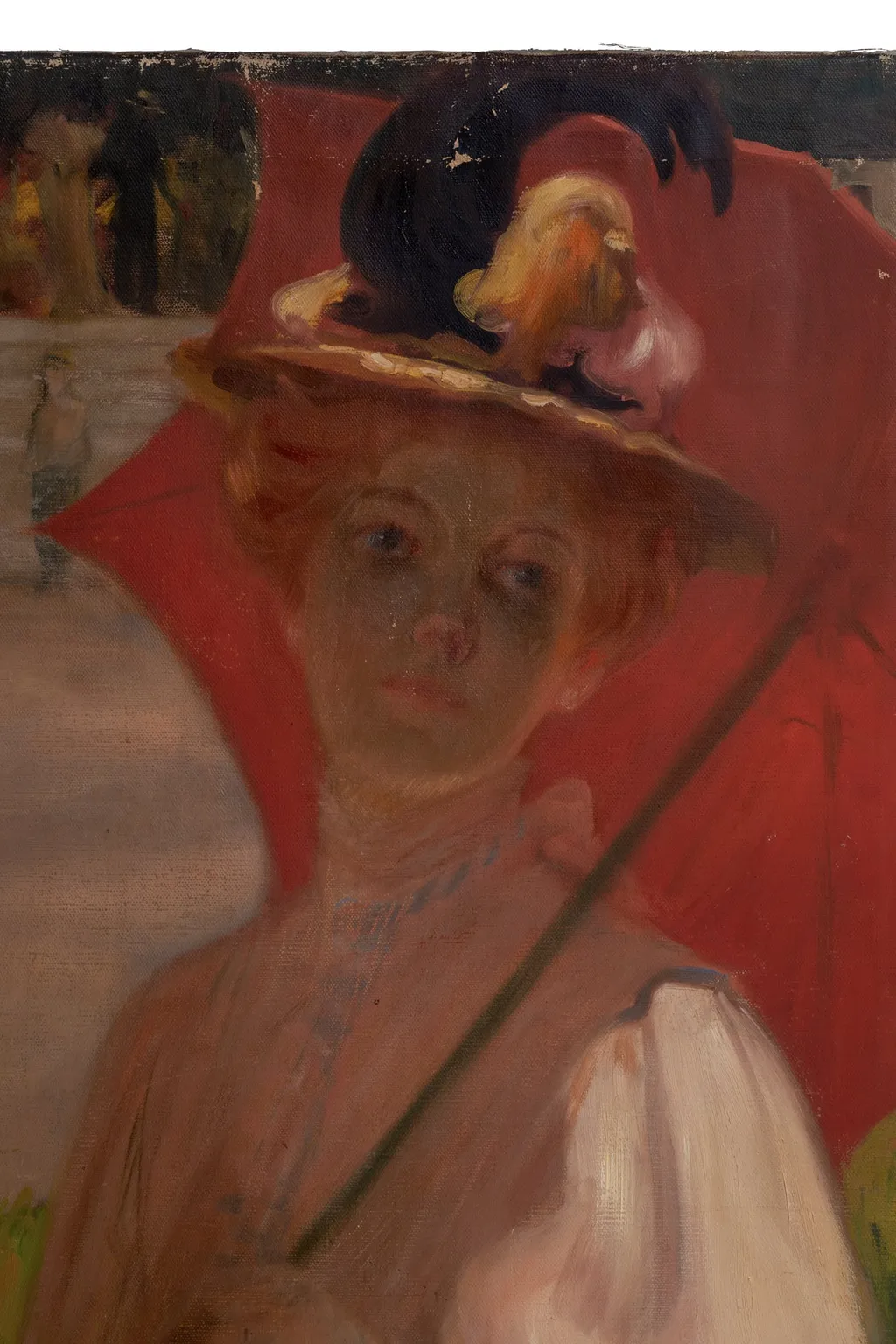
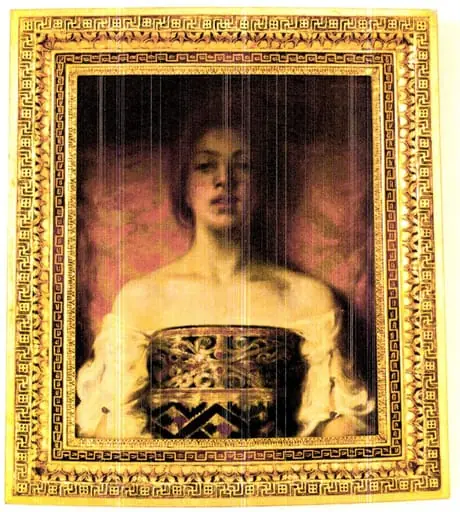
O fată is a print by Kimon Loghi. It dates from 1912 and is held in the collection of the Moldova National Museum Complex.
About this work
Overview
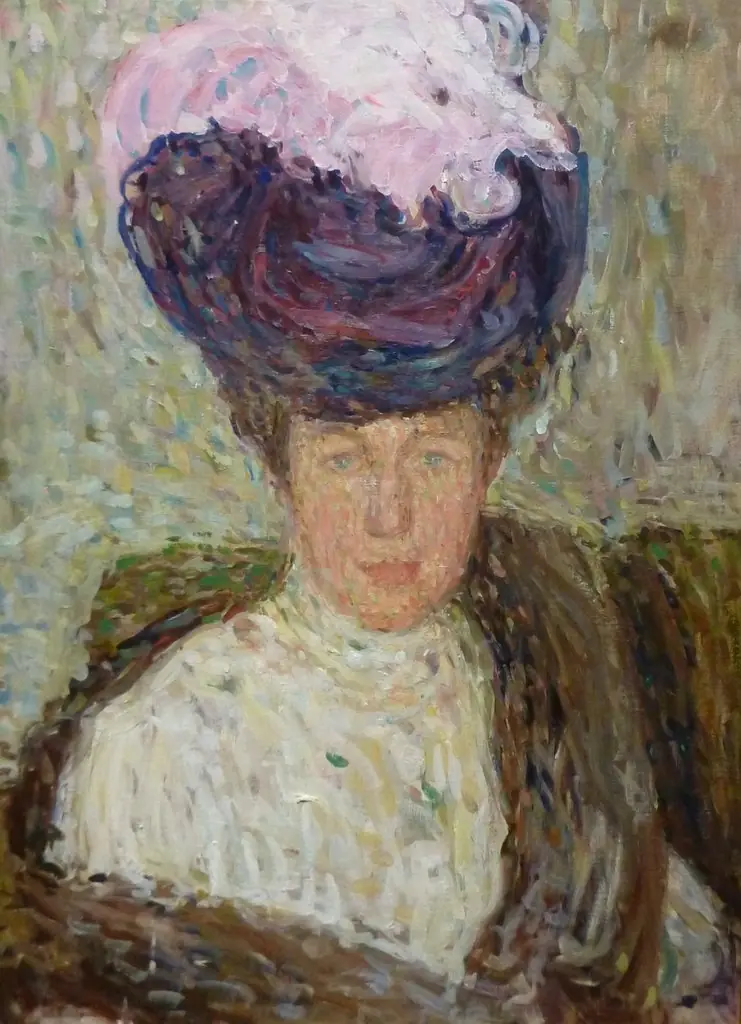
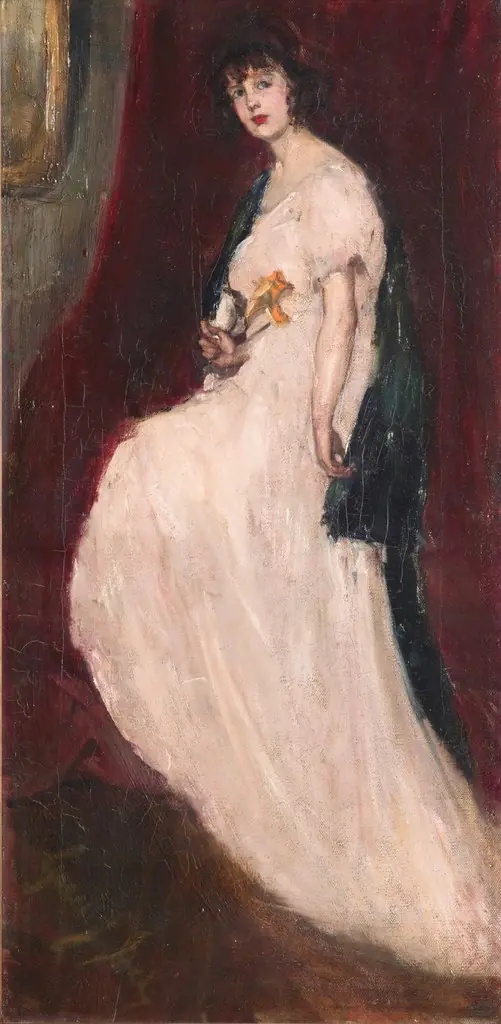
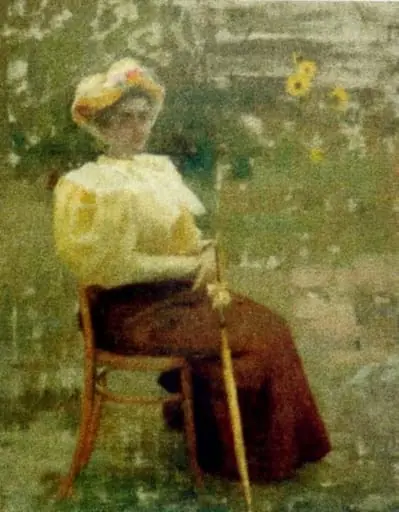
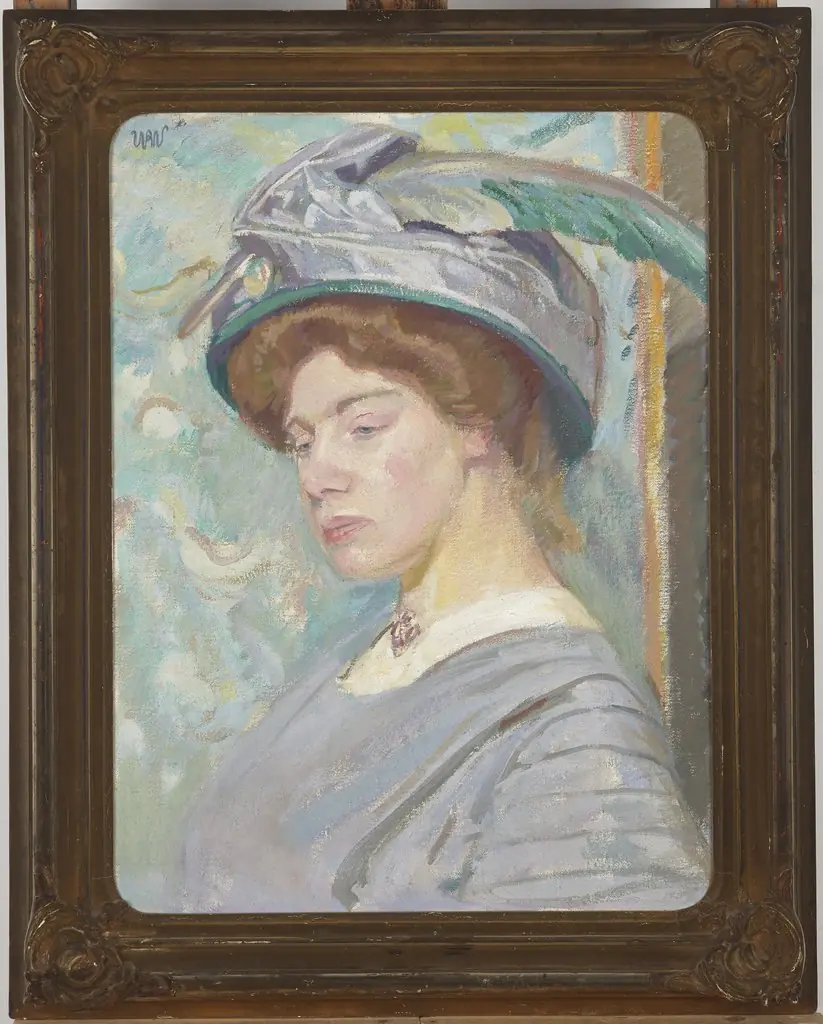
O fată, painted around 1912 by Romanian artist Kimon Loghi, is a portrait focusing on a young woman’s upper body and face. Set against a deep, undefined background, the figure emerges through stark contrasts of light and shadow. The composition isolates the subject, drawing attention to her gaze and the texture of her clothing, rendered with deliberate, tactile brushwork.
Subject & Meaning
The subject is a young woman, her expression partially obscured by shadow, yet her wide eyes convey quiet intensity. The lack of contextual details—no setting, no clear identity—shifts focus to her presence and inner state. The red garment may suggest vitality or emotional weight, while the obscured features invite contemplation rather than narrative.
Technique & Style
Loghi employs thick, visible brushstrokes to build form and texture, particularly in the fabric and skin tones. The strong chiaroscuro—sharp contrasts between light and dark—sculpts the face and shoulder with dramatic precision. The red fabric stands out against the muted background, enhancing the sense of volume and depth through impasto-like layering.
History & Provenance
Created during Loghi’s early career, O fată reflects his engagement with post-impressionist and expressionist tendencies in early 20th-century European art. While its exact provenance remains undocumented, the work is recognized within Romanian art circles as an example of his experimental portraiture from this period.
Context
In the years surrounding 1912, Romanian artists were increasingly influenced by broader European movements, moving away from academic realism toward more emotive and structural approaches. Loghi’s use of bold contrasts and textured surfaces aligns with contemporaneous trends in France and Germany, though his focus remains intimate and personal.
Legacy
O fată stands as a representative work of Loghi’s exploration of psychological depth through formal means. Though not widely reproduced, it is cited in scholarly discussions of Romanian modernism for its synthesis of emotional restraint and painterly vigor, influencing later generations interested in expressive portraiture.
Artist & collection
Artist
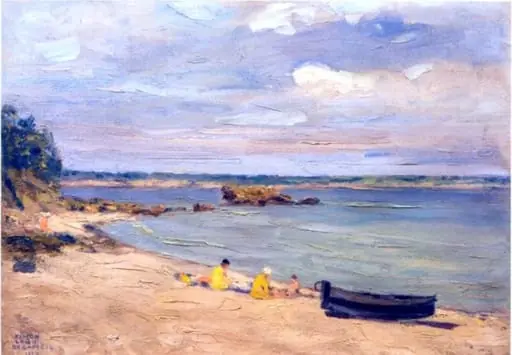
Kimon Loghi painted bright, sunlit scenes of people at leisure by the sea. In 1903 he showed “Balada” and later captured bathers in “Femei la scăldat,” set a beach near Concarneau in “Plajă la Beg - Meil,” and printed…