Artwork
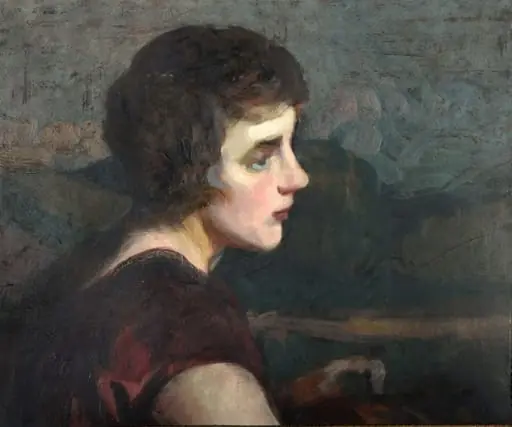
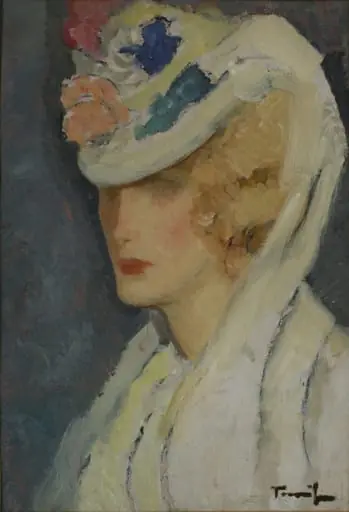
Portret de femeie din profil
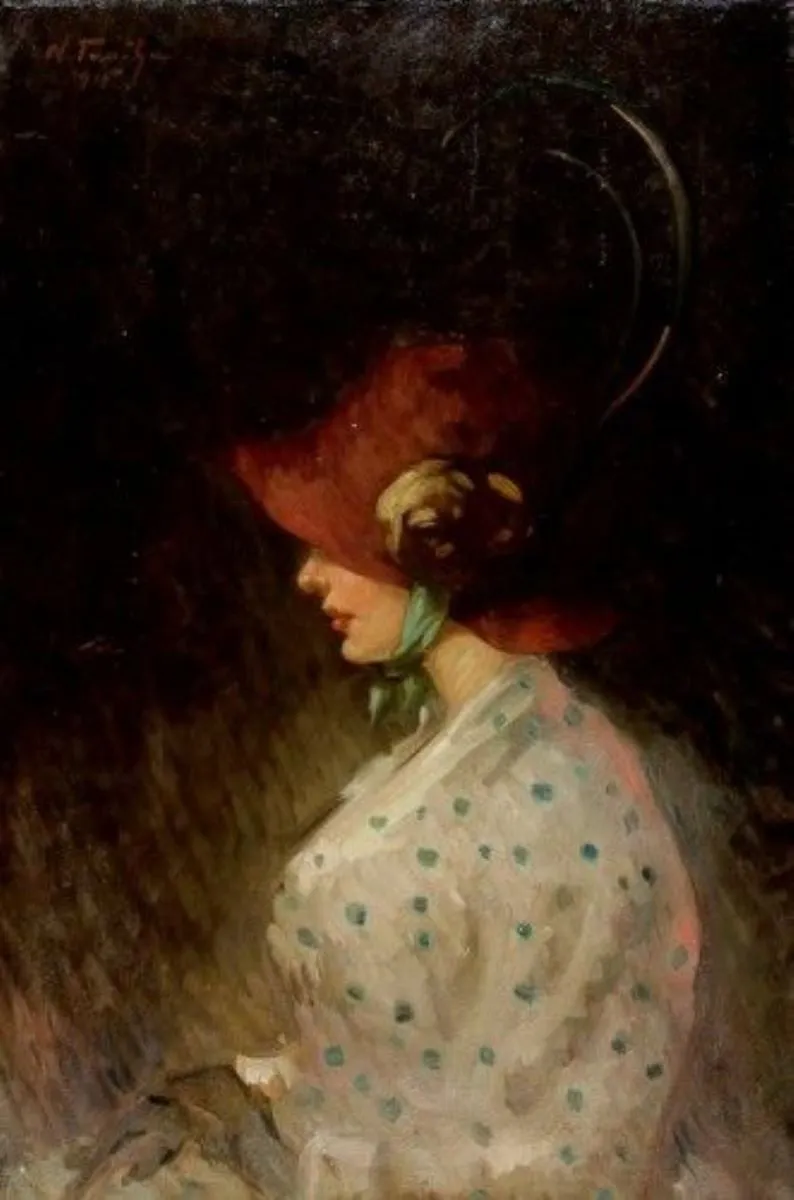
Portret de femeie din profil is an unspecified painting by Nicolae Tonitza. It is held in the collection of the Brukenthal National Museum.
About this work
Overview
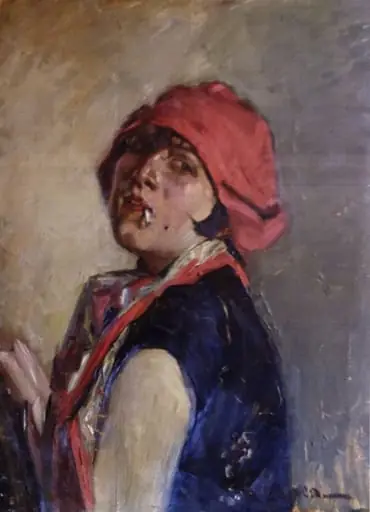
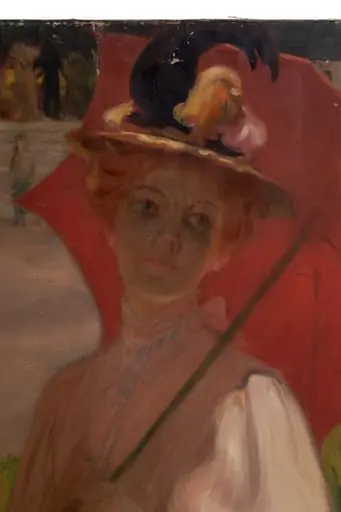
This portrait presents a woman viewed in strict profile, her form rendered with loose, visible brushwork against a dark, undefined background.
This portrait presents a woman viewed in strict profile, her form rendered with loose, visible brushwork against a dark, undefined background. Her attire—a red hat with a green ribbon and a white dress patterned with blue dots—draws attention through vivid color contrasts. The face is intentionally softened, obscuring identity while emphasizing mood over likeness. The composition prioritizes emotional resonance over detail, aligning with expressive tendencies in early 20th-century Romanian painting.
Subject & Meaning
The sitter’s identity remains unknown, and her blurred features suggest an intentional avoidance of individual portraiture. Rather than capturing a specific person, the work evokes a generalized sense of quiet dignity and introspection. The elegant clothing implies social refinement, yet the abstraction of form and the somber backdrop introduce ambiguity, inviting interpretation beyond mere representation.
Technique & Style
The artist employs bold, gestural brushstrokes and unblended pigments to construct form and texture. The dark background enhances the luminosity of the figure’s clothing, while the lack of fine detail in the face underscores emotional ambiguity. Color is used expressively rather than naturallyistically, with the red, white, and blue elements creating rhythmic visual tension. The handling of light and shadow reflects an interest in chiaroscuro, though not in the classical sense.
History & Provenance
The painting’s origin and early ownership are not documented in public records. It is attributed to the broader circle of Romanian modernists active in the early 1900s, possibly influenced by post-impressionist and expressionist currents. Its survival suggests it was retained within private collections, though no exhibition history or documented provenance is publicly available.
Context
Created during a period of artistic transition in Romania, the work reflects a shift from academic realism toward more subjective, emotionally charged imagery. Artists like Nicolae Tonitza were exploring how light, color, and brushwork could convey inner states rather than external accuracy. This portrait aligns with that movement, prioritizing psychological presence over literal representation.
Legacy
Though not widely exhibited or reproduced, the painting contributes to the understanding of Romanian modernism’s embrace of emotional expression through formal simplification. Its stylistic choices—blurred features, vivid patterning, and dynamic brushwork—anticipate later developments in Eastern European expressionist portraiture, serving as a quiet but significant example of the era’s evolving visual language.
Artist & collection
Artist
Nicolae Tonitza painted quiet still lifes and village scenes, often showing colorful vegetables on a table or blooming flowers in simple pots.