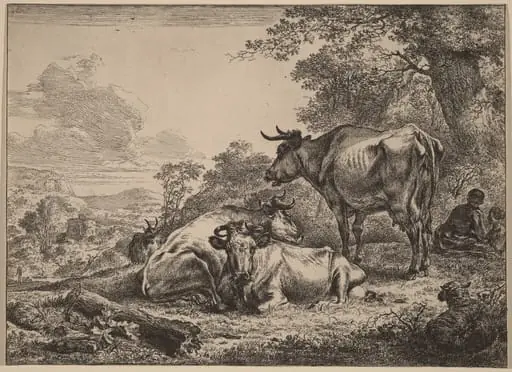
Artwork
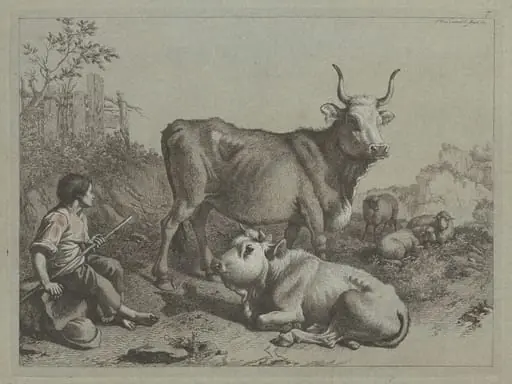
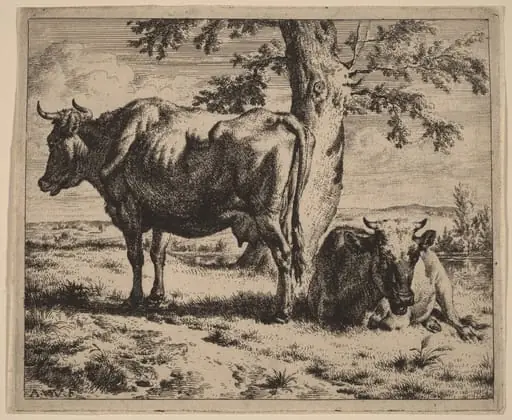
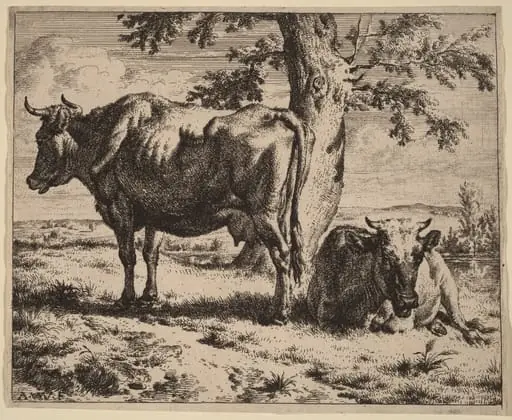
Reclining Cow and Calf in the Open
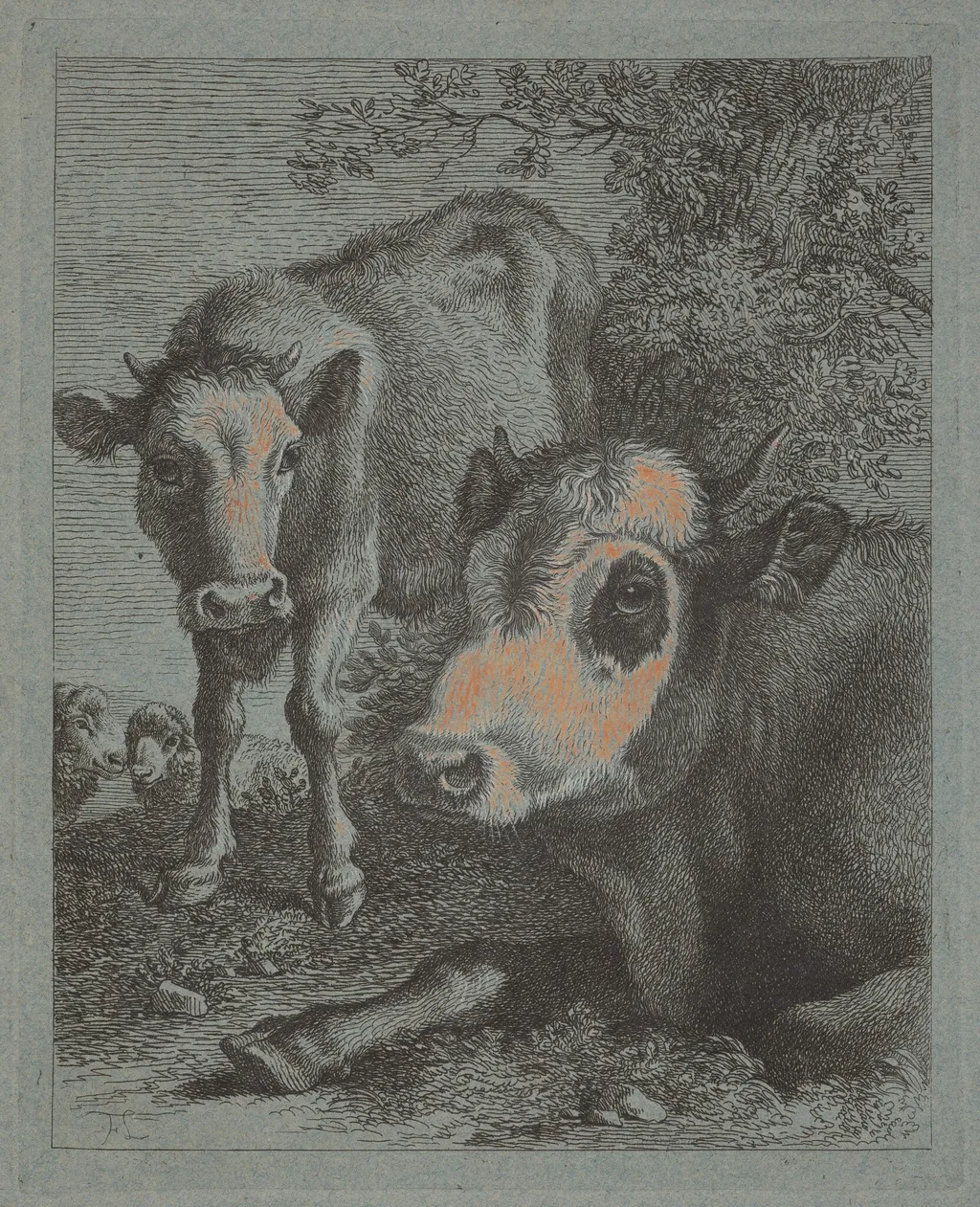
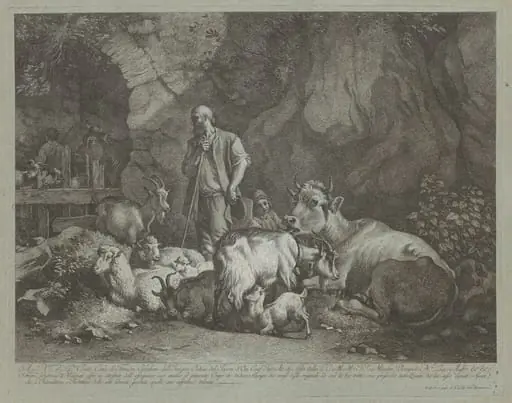
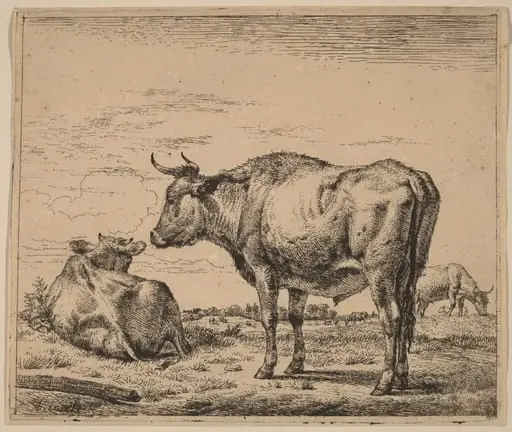
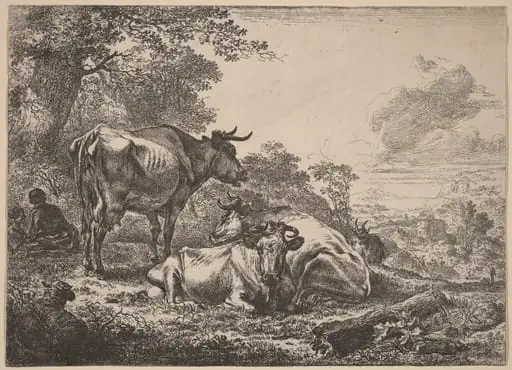
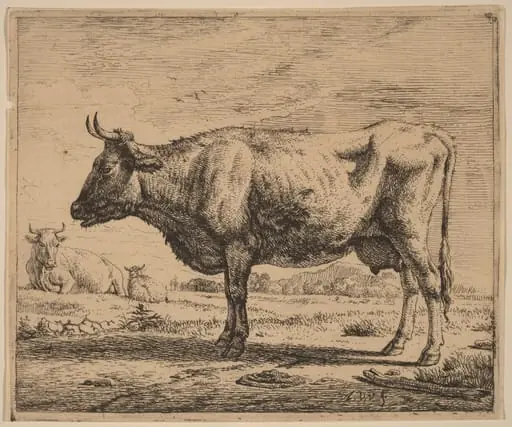
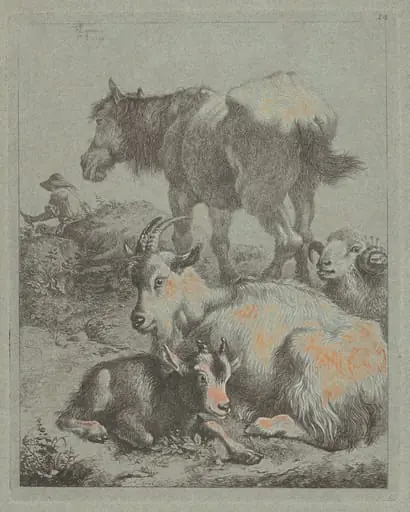
Reclining Cow and Calf in the Open is a gouache print by the Baroque artist Francesco Londonio. It dates from 1758 and is held in the collection of the National Gallery of Art.
About this work
Overview
Created in 1758, *Reclining Cow and Calf in the Open* is a print by Milanese artist Francesco Londonio. Executed as an etched plate enhanced with white gouache on blue paper, the work presents a quiet rural tableau that reflects the artist’s long‑standing interest in everyday pastoral scenes.
Subject & Meaning
The composition centers on a cow and its newborn calf lying together in a grassy field. By portraying the animals at rest, Londonio emphasizes a tranquil, natural rhythm, inviting viewers to contemplate the simplicity of agrarian life and the bond between mother and offspring.
Technique & Style
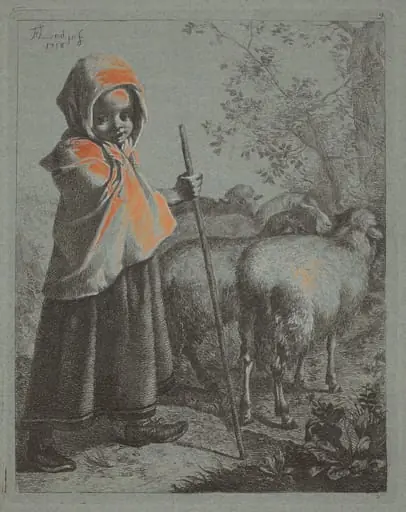
Londonio combined traditional etching with the application of white gouache, allowing him to highlight the animals’ forms against the cool blue ground. The gouache adds opacity and texture to the fur, while the etched lines retain fine detail, producing a contrast between the tactile animal surfaces and the smooth paper background.
History & Provenance
Trained under Ferdinando Porta and Giovanni Battista Sassi and later instructed in engraving by Benigno Bossi, Londonio produced this work after journeys to Rome and Naples. The print was likely intended for the Northern Italian market, where rustic genre subjects were in demand among private collectors.
Context
The piece belongs to the late‑Baroque and early Rococo period in Milan, a time when artists frequently turned to bucolic themes to satisfy patrons seeking decorative yet narrative images. Londonio’s focus on farm life aligns with a broader regional taste for genre scenes that celebrated everyday labor and landscape.
Artist & collection

Artist
Francesco Londonio (1723–1783) was an Italian painter, engraver, and scenographer, active mainly in his native Milan in a late-Baroque or Rococo style.