Artwork
Seated Peasant Boy Holding a Sheep
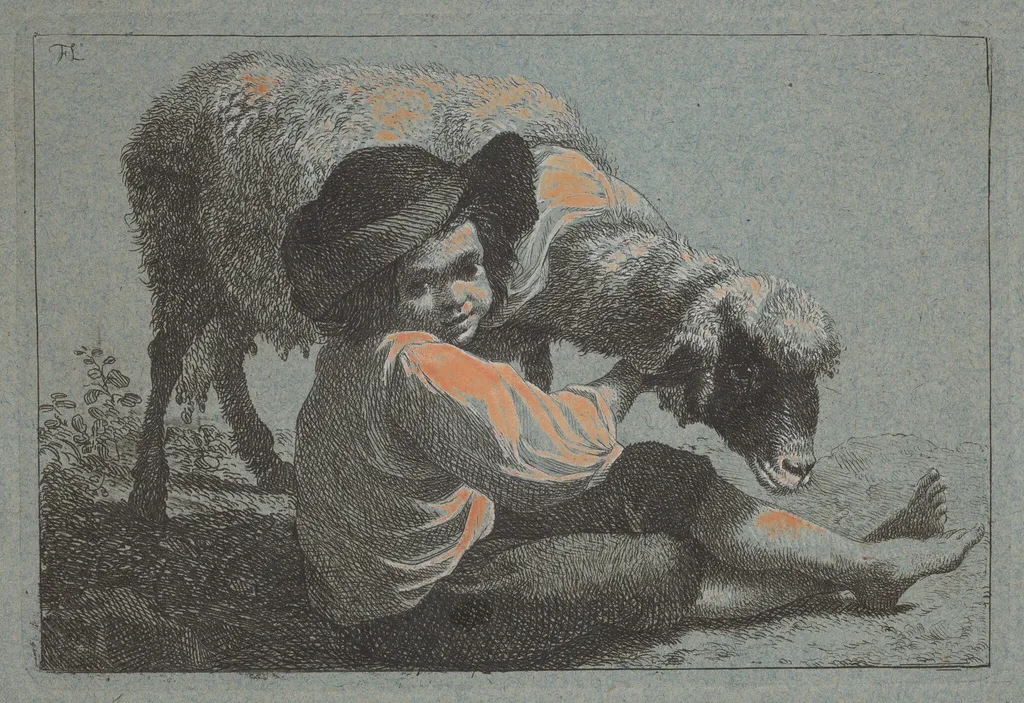
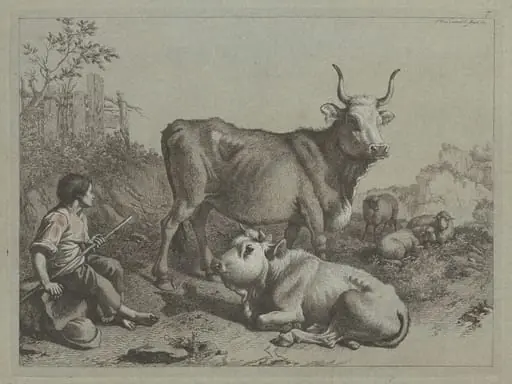
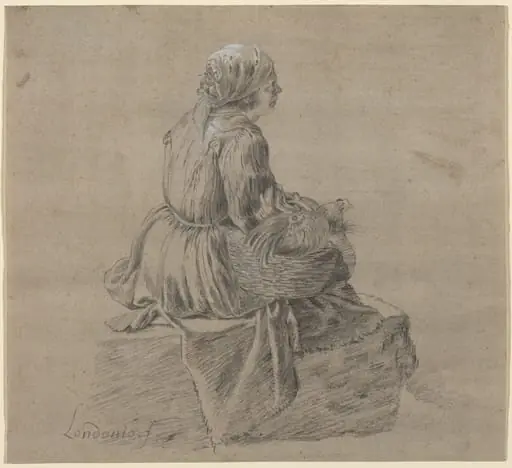
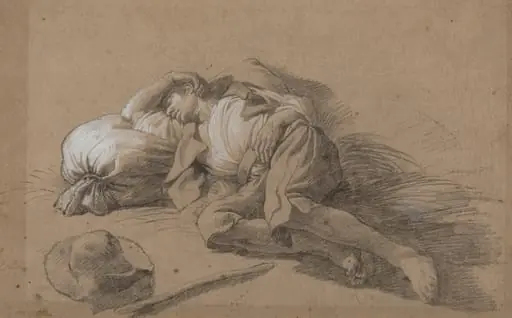
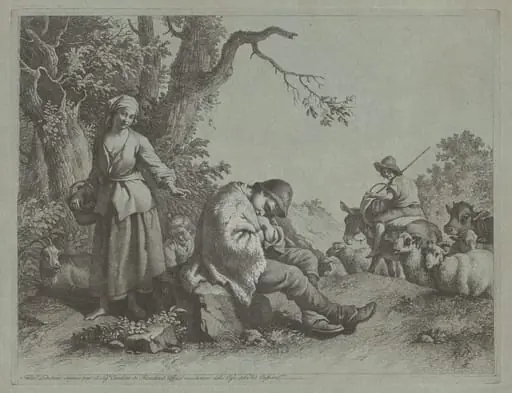
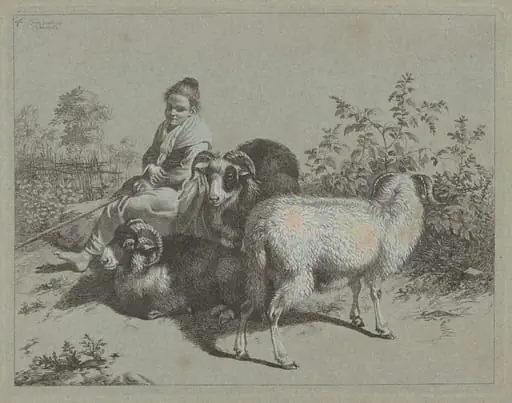
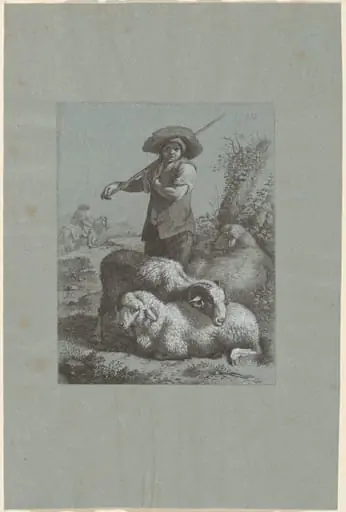
Seated Peasant Boy Holding a Sheep is an ink print by the Baroque artist Francesco Londonio. It dates from 1753 and is held in the collection of the National Gallery of Art. Created in 1753, this print depicts a young peasant boy seated on the ground while gently holding a sheep.
About this work
Overview
Created in 1753, this print depicts a young peasant boy seated on the ground while gently holding a sheep. The composition captures a quiet, intimate moment in a rural setting, emphasizing the calm interaction between child and animal. Rendered on blue laid paper, the image conveys a serene atmosphere typical of genre works that focus on everyday life.
Subject & Meaning
The central figures—a modestly dressed boy and a docile sheep—illustrate a simple pastoral scene that celebrates the harmony between humans and livestock. The boy’s relaxed posture and the animal’s downward gaze suggest familiarity and mutual trust, inviting viewers to contemplate the dignity of ordinary labor and the quiet dignity of rural existence.
Technique & Style
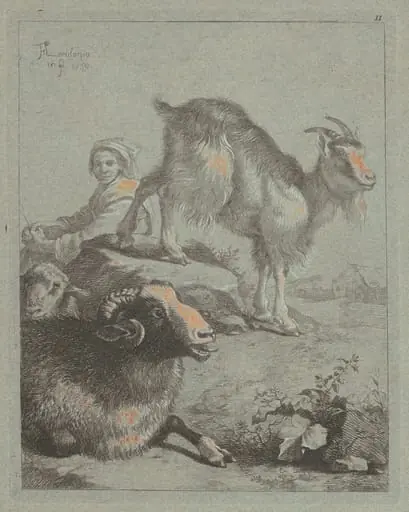
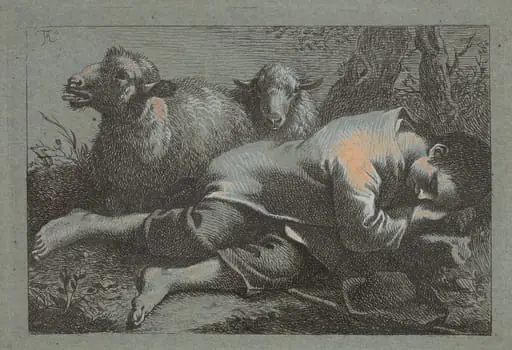
Executed as an etching heightened with white, the print relies on fine line work to model forms, while the added white highlights create contrast against the blue paper background. The delicate rendering of the sheep’s fleece and the subtle shading of the boy’s clothing reflect the late‑Baroque to Rococo sensibility prevalent in Northern Italy, balancing detail with a light, decorative touch.
History & Provenance
The work was produced by Francesco Londonio, an Italian painter and engraver active in Milan. Trained under Ferdinando Porta and Giovanni Battista Sassi, Londonio also studied engraving with Benigno Bossi and traveled to Rome and Naples. The print was likely intended for the market of Northern Italian patrons who favored genre scenes of rustic life.
Context
Londonio’s oeuvre frequently explored pastoral themes, aligning with the 18th‑century taste for genre subjects that depicted peasants and animals in idealized yet realistic settings. This print fits within that tradition, reflecting the broader cultural interest in agrarian life during the late Baroque and early Rococo periods, when artists often highlighted the simplicity and virtue of the countryside.
Artist & collection

Artist
Francesco Londonio (1723–1783) was an Italian painter, engraver, and scenographer, active mainly in his native Milan in a late-Baroque or Rococo style.