Artwork
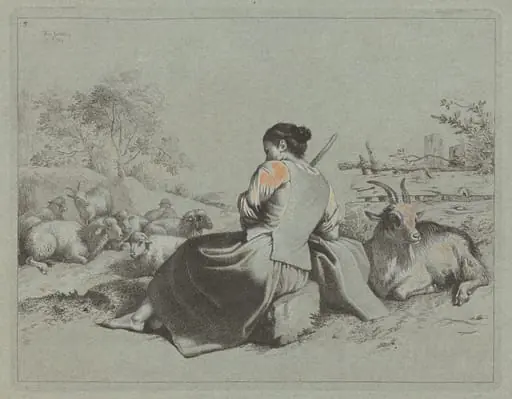
Seated Shepherdess, a Ram, a Sheep and a Goat
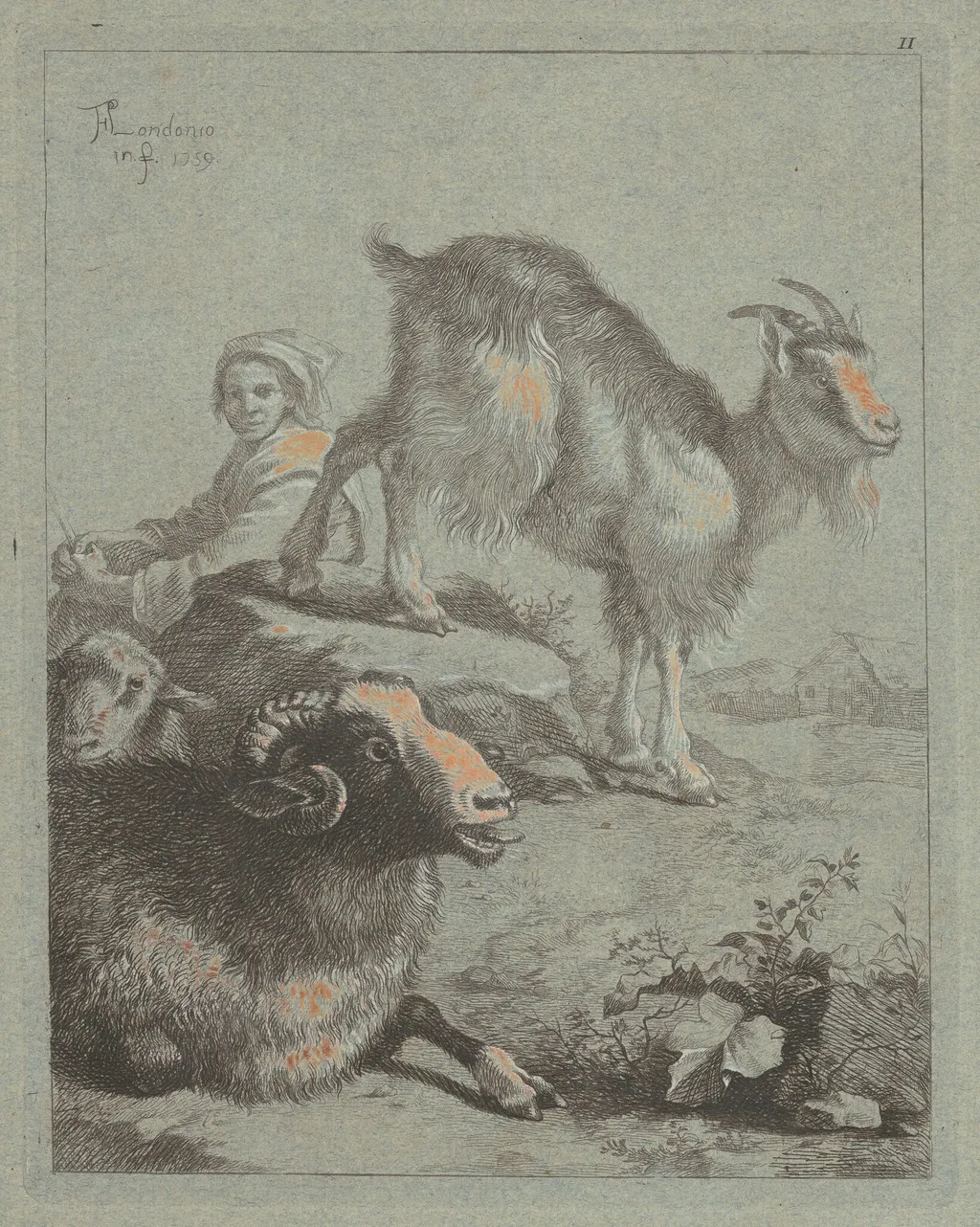
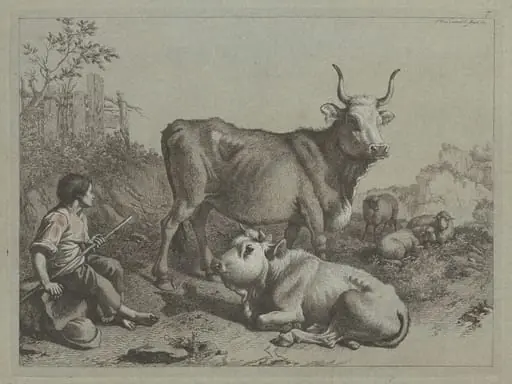
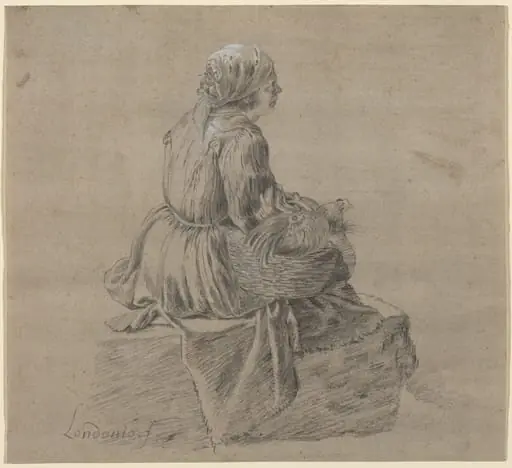
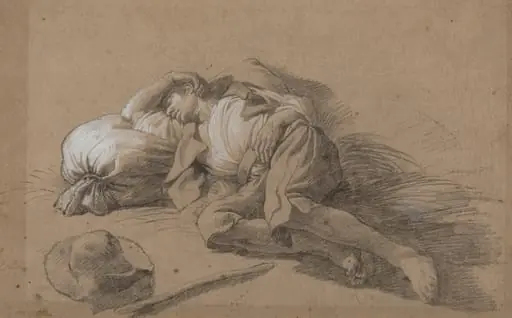
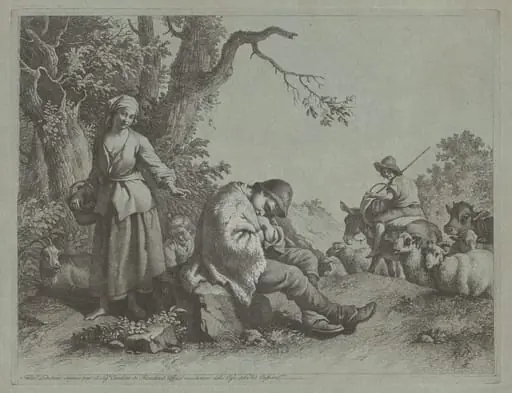
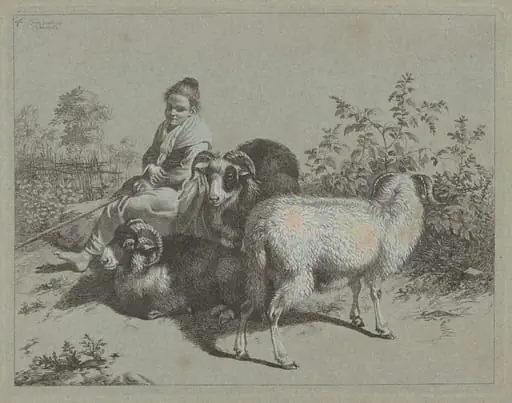
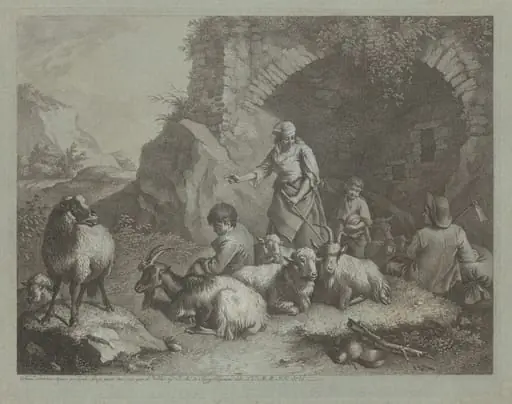
Seated Shepherdess, a Ram, a Sheep and a Goat is an ink print by the Romanticist artist Francesco Londonio. It dates from 1759 and is held in the collection of the National Gallery of Art.
About this work
Overview
Executed on blue laid paper with white heightening, the print exemplifies his engagement with pastoral imagery.
Francesco Londonio, a Milanese artist of the late-Baroque and Rococo periods, produced this etching in 1759. Executed on blue laid paper with white heightening, the print exemplifies his engagement with pastoral imagery. Londonio’s training under Ferdinando Porta and Giovanni Battista Sassi in Milan, alongside his study of engraving with Benigno Bossi, shaped his approach to rural subjects, which appealed to Northern Italian collectors.
Subject & Meaning
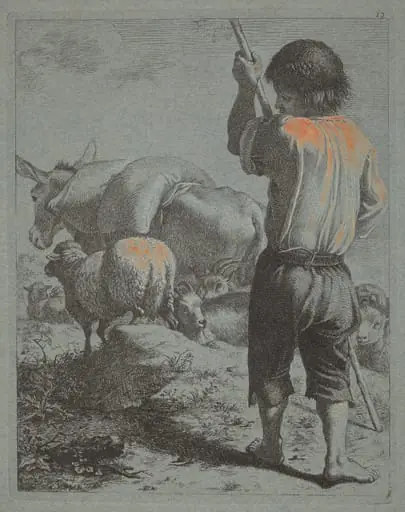
The composition centers on a shepherdess seated on rocky terrain, accompanied by a ram, sheep, and goat. Her relaxed posture and the animals’ varied stances evoke a moment of rural tranquility. The distant trees and faint structure in the background reinforce the pastoral setting, suggesting a harmonious coexistence between human and animal figures within an idyllic landscape.
Technique & Style
Londonio’s etching employs fine, controlled lines and delicate shading to define forms, while white heightening enhances dimensionality against the blue paper ground. The technique imparts a textural richness, particularly in the animals’ wool and the shepherdess’s garments. The decorative sensibility aligns with Rococo aesthetics, balancing naturalism with a refined, almost ornamental quality.
History & Provenance
Created in 1759, the print reflects Londonio’s reputation for pastoral scenes, a genre favored by affluent patrons in Northern Italy. As an etching, it likely circulated among collectors drawn to rural themes, though specific early ownership remains unrecorded. Its survival in this medium underscores the artist’s dual practice as both painter and printmaker.
Context
Pastoral imagery held enduring appeal in 18th-century Europe, offering urban elites an idealized vision of rural life. Londonio’s work aligns with this tradition, catering to a market that valued decorative yet naturalistic depictions of the countryside. His compositions often merged genre elements with a Rococo lightness, distinguishing them from earlier, more austere Baroque treatments.
Legacy
While not among Londonio’s most widely reproduced works, this etching contributes to the broader appreciation of his pastoral oeuvre. Its technical execution and thematic content reflect the tastes of its time, preserving a moment in the evolution of Rococo printmaking. Today, it serves as a document of 18th-century artistic preoccupations with rural subject matter.
Artist & collection

Artist
Francesco Londonio (1723–1783) was an Italian painter, engraver, and scenographer, active mainly in his native Milan in a late-Baroque or Rococo style.