Artwork
Shepherd with his Flock
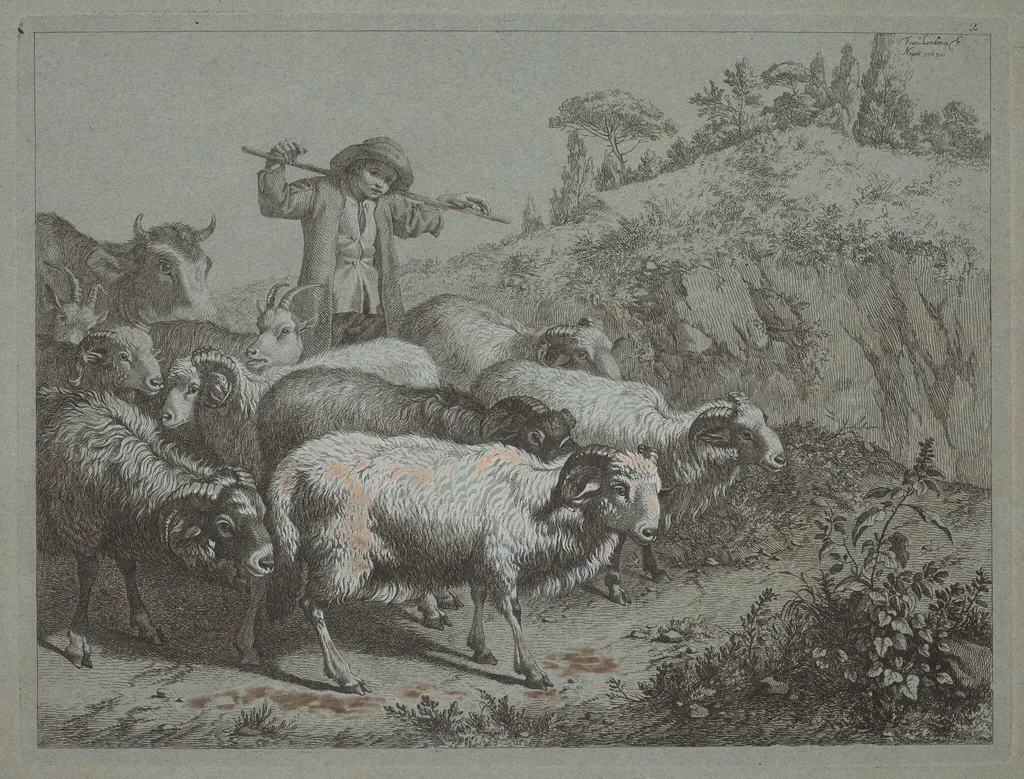
Shepherd with his Flock is a gouache print by the Baroque artist Francesco Londonio. It dates from 1753 and is held in the collection of the National Gallery of Art.
About this work
Overview
As an Italian artist trained in Milan, Londonio specialized in rural scenes, blending observational detail with decorative refinement.
Created in 1753, *Shepherd with his Flock* is an etching on blue laid paper, enhanced with white gouache by Francesco Londonio. As an Italian artist trained in Milan, Londonio specialized in rural scenes, blending observational detail with decorative refinement. The use of colored paper and opaque highlights was a deliberate choice to elevate the print beyond mere reproduction, aligning it with the tastes of collectors who valued intimate, atmospheric depictions of country life.
Subject & Meaning
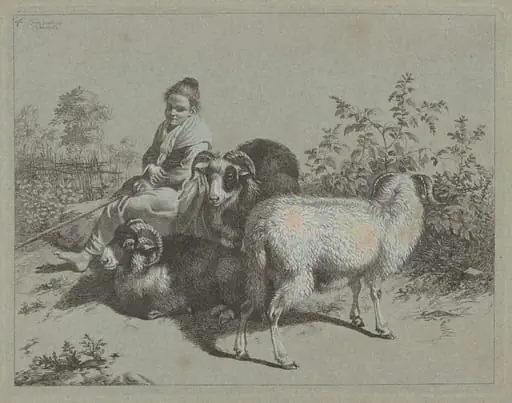
The image portrays a solitary shepherd on a gentle slope, staff in hand, overseeing a modest flock of sheep and goats. His posture suggests quiet vigilance rather than labor, emphasizing harmony between human and animal within a tranquil landscape. The scene avoids idealization, presenting rural existence with quiet dignity. It reflects an 18th-century fascination with pastoral simplicity, valued by patrons seeking respite from urban life through imagery of unspoiled nature.
Technique & Style
Londonio employed etching to render fine, controlled lines defining the animals’ forms and the terrain’s contours. White gouache was applied selectively to the wool of the sheep, creating luminous contrasts against the blue paper ground. This technique mimicked the texture of fleece while enhancing the sense of light. The style merges the precision of engraving with the softness of Rococo sensibility, avoiding dramatic tension in favor of calm, observational realism.
History & Provenance
Londonio trained under Ferdinando Porta and Giovanni Battista Sassi in Milan, later studying engraving with Benigno Bossi. His exposure to Roman and Neapolitan art influenced his treatment of landscape and figure. While few records detail the early ownership of this specific print, its production aligns with the flourishing market for small-scale, decorative prints among Northern Italian aristocrats and middle-class collectors during the mid-18th century.
Context
In mid-18th century Lombardy, there was growing interest in genre scenes depicting rural labor and pastoral life, influenced by broader European trends toward naturalism. Unlike grand historical or religious subjects, these works appealed to patrons seeking relatable, serene imagery. Londonio’s prints contributed to this niche, offering a quiet alternative to the ornate styles dominating courtly art, while still retaining decorative appeal through refined technique and tonal harmony.
Legacy
Londonio’s prints, including *Shepherd with his Flock*, remain examples of how etching could be adapted for intimate, atmospheric expression rather than mass reproduction. His use of colored paper and gouache highlights influenced later printmakers seeking to bridge the gap between drawing and print. Though not widely celebrated in his time, his work offers insight into the evolving tastes of provincial Italian collectors and the quiet persistence of pastoral themes in Enlightenment-era visual culture.
Artist & collection

Artist
Francesco Londonio (1723–1783) was an Italian painter, engraver, and scenographer, active mainly in his native Milan in a late-Baroque or Rococo style.

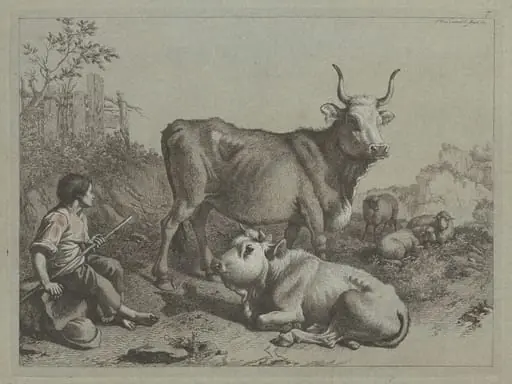
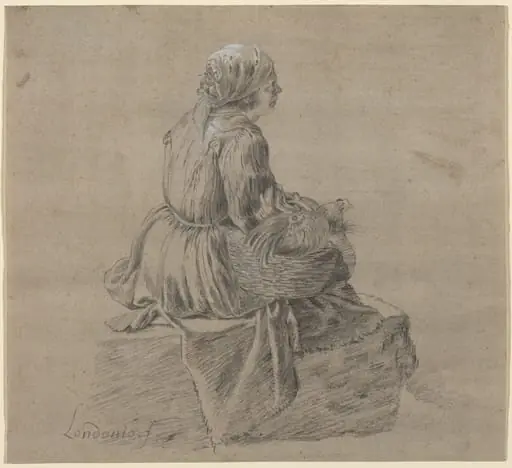
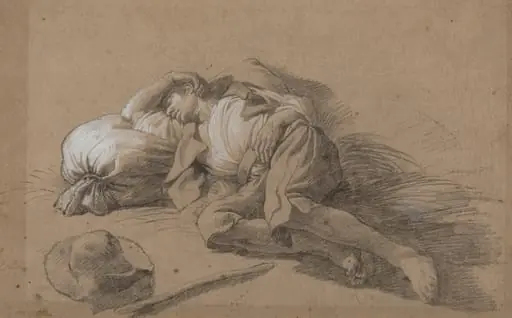
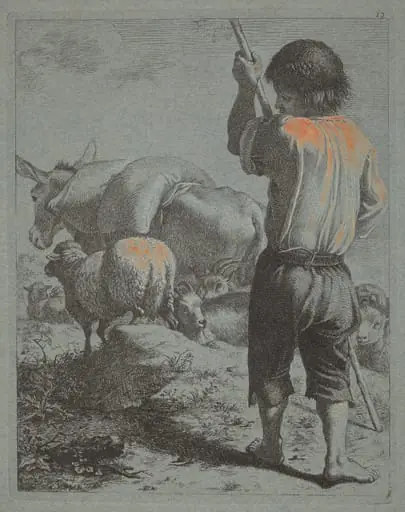 Shepherd with Donkey, Sheep and Goat
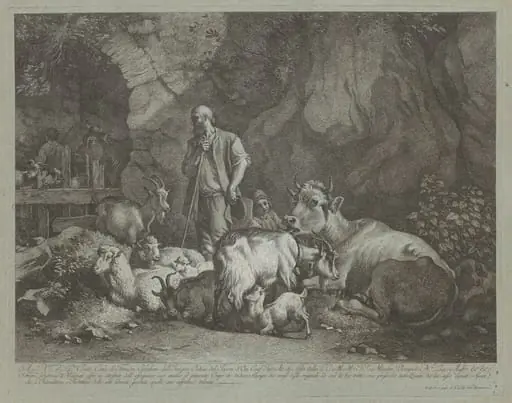
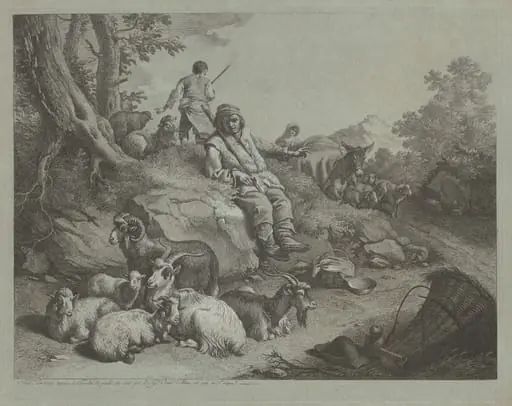 Seated Shepherd before a Flock of Goats
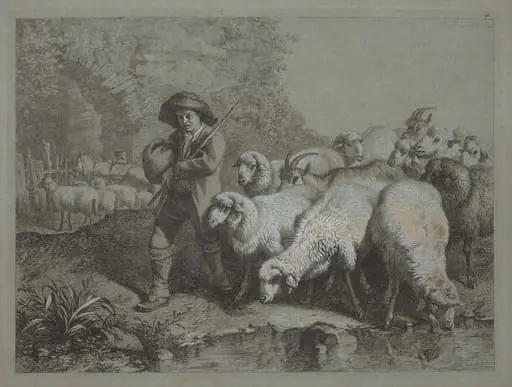 Shepherd with a Sack Driving a Flock
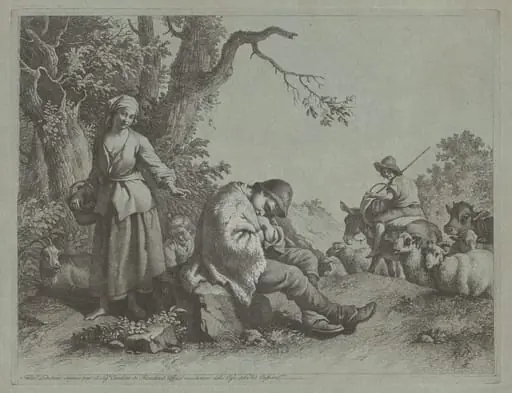
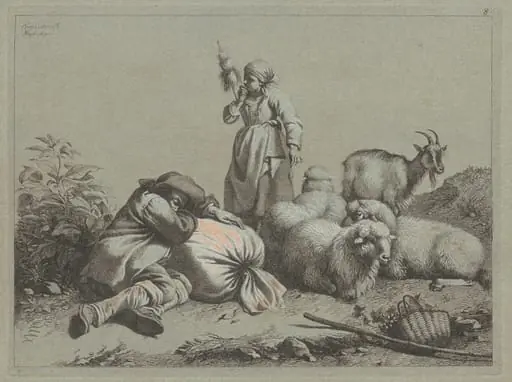 Sleeping Peasant and Standing Spinner
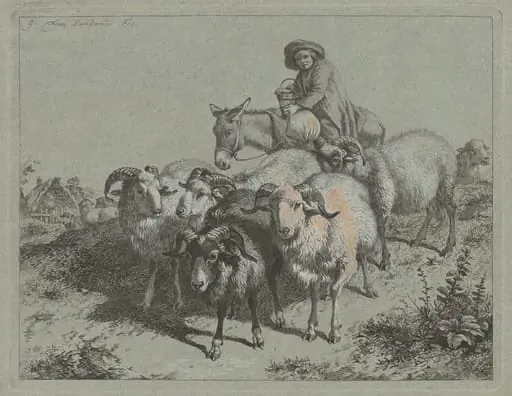 Boy on a Donkey Driving a Flock
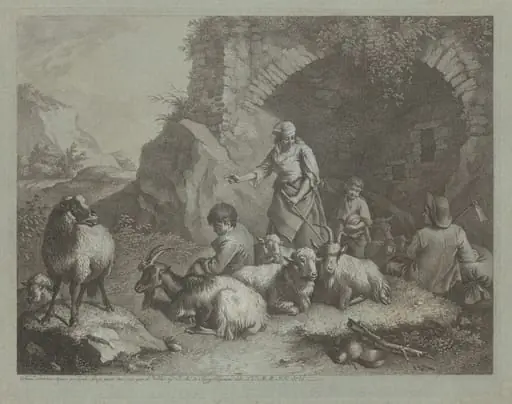 Woman, Shepherd Boys, and Sheep near an Arch
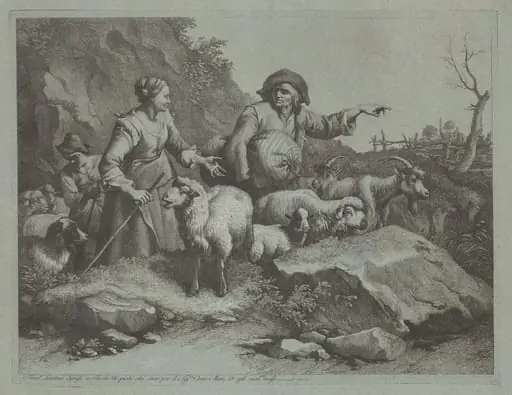 Peasant Man with a Sack and Two Shepherdesses
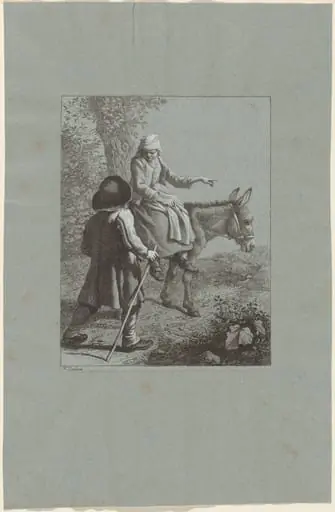
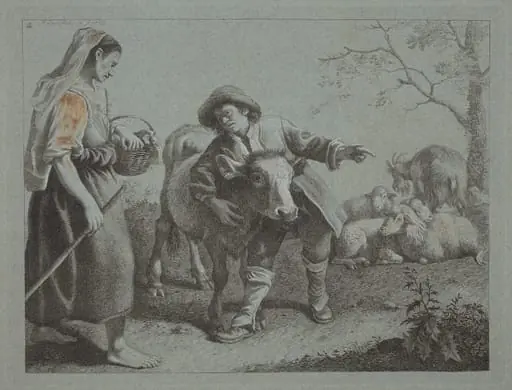 Shepherd Pointing Out the Direction to a Shepherdess
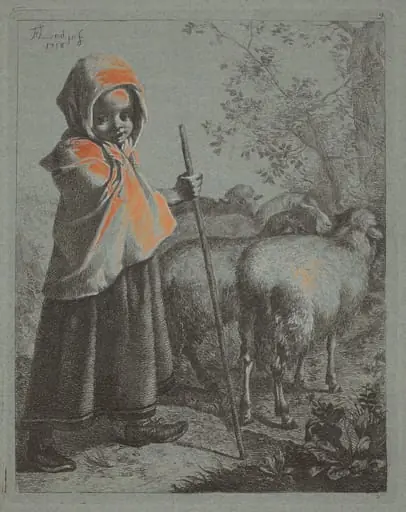
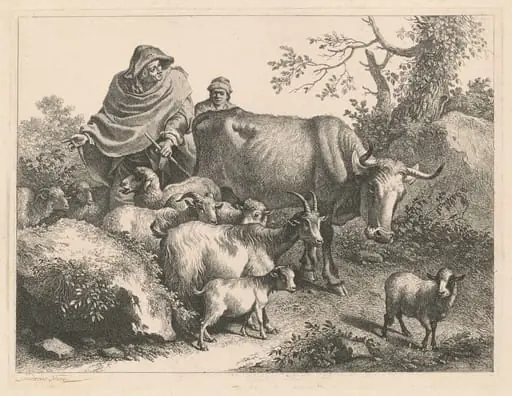 Shepherd Wearing a Cape Driving a Flock