Artwork
The Post House, Amboise
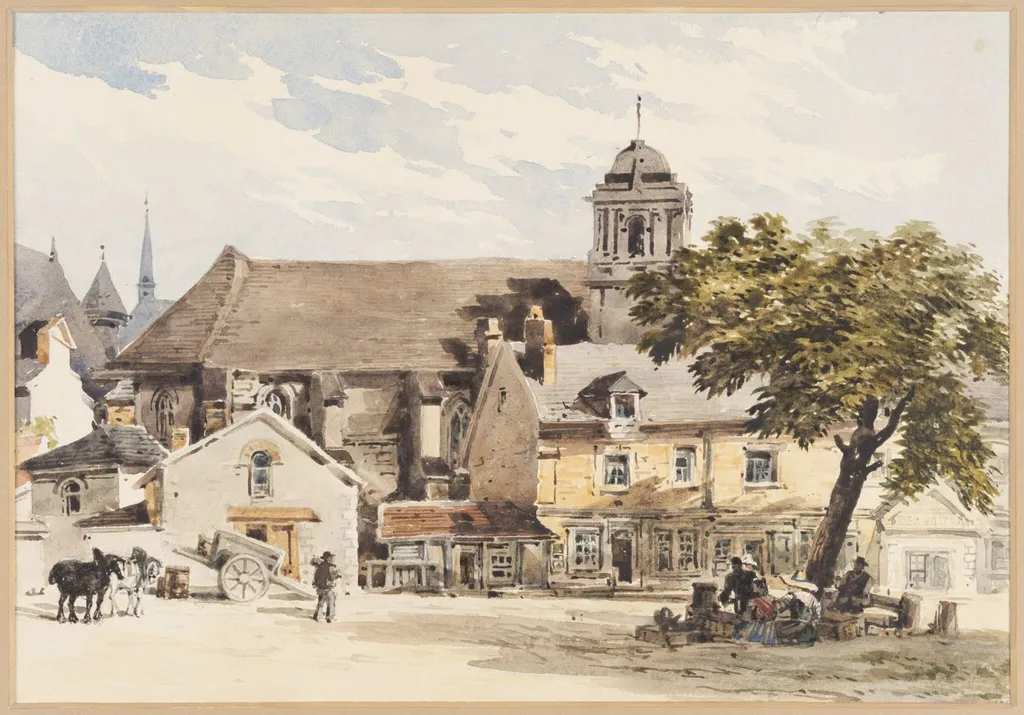
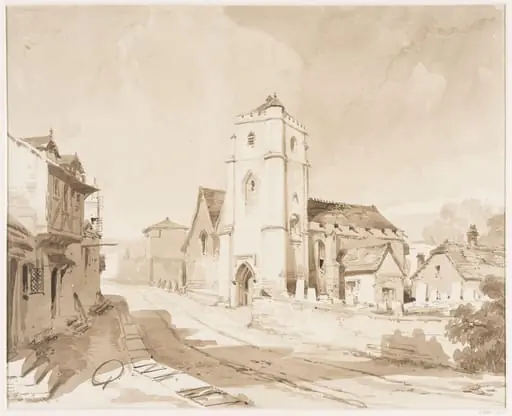
The Post House, Amboise is a watercolor work on paper by the British Romanticist artist Charles Claude Pyne. It dates from 1822 and is held in the collection of the Victoria and Albert Museum. The watercolor portrays the Post House at Amboise, a modest settlement in central France.
About this work
Overview
The watercolor portrays the Post House at Amboise, a modest settlement in central France. A church spire rises behind a grouping of low, sloping-roofed structures, while a horse‑drawn wagon and a few figures linger beneath a tree in the foreground. The scene captures a moment of quiet activity along a travel route, emphasizing the ordinary rhythm of village life.
Subject & Meaning
The composition centers on a functional crossroads where travelers pause. The presence of the post house, the horse and cart, and the resting figures suggests a place of respite for wayfarers. By highlighting these everyday interactions rather than heroic or historic events, the work reflects an interest in the lived experience of ordinary people within a rural French setting.
Technique & Style
Executed in watercolor, the artist employs a restrained palette of muted blues, grays, and earth tones. Soft washes convey atmospheric sky and weathered stone, while delicate brushwork defines the tree’s foliage and the texture of the wagon. The overall effect is one of subtle tonal harmony, lending the scene a calm, almost documentary quality.
Context
Created during a period when French artists increasingly turned to genre scenes, the piece aligns with a broader 19th‑century fascination with rural life and the infrastructure of travel. The depiction of a post house—a hub for mail and passenger services—reflects contemporary concerns with connectivity and the changing pace of movement across the countryside.
Own this work as a print
Artist & collection

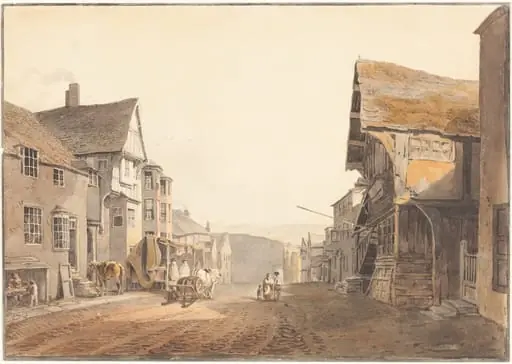 Conway in North Wales
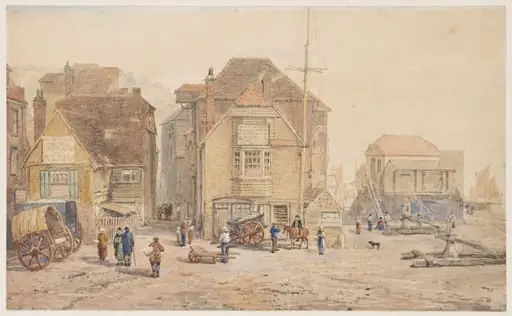 The old fishmarket at Hastings
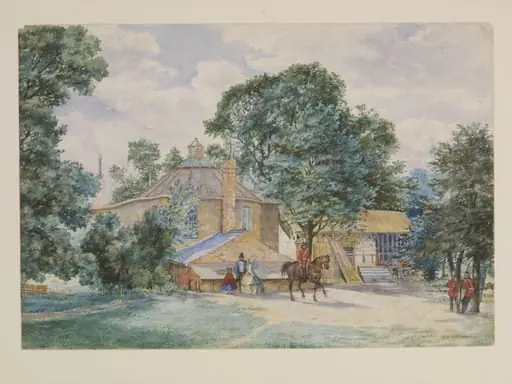 The first lecture theatre at the South Kensington Museum, later the Victoria and Albert Museum
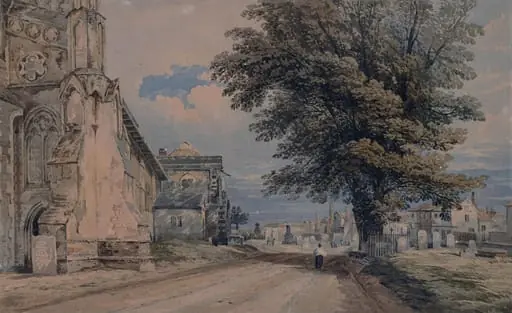 Waltham Abbey
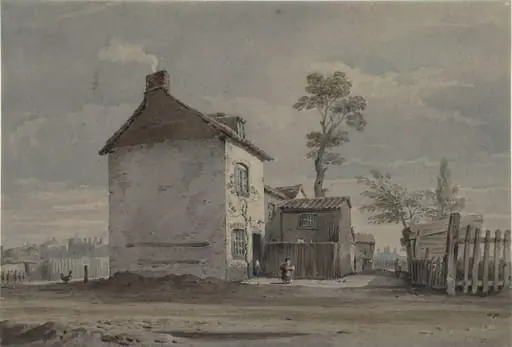 Cottages in a landscape
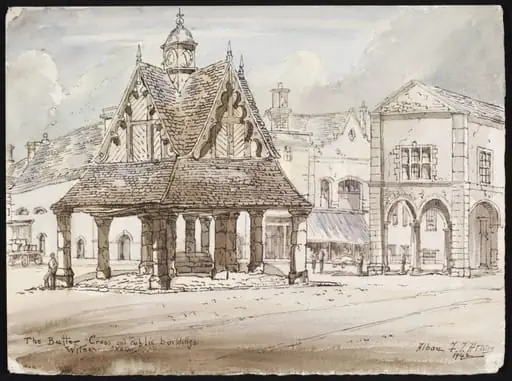 The Butter Cross and Public Buildings, Witney
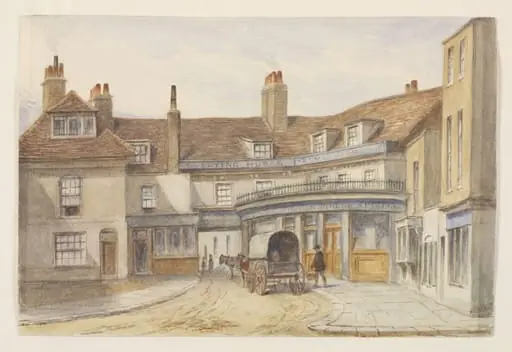 The Flying Horse, Hackney
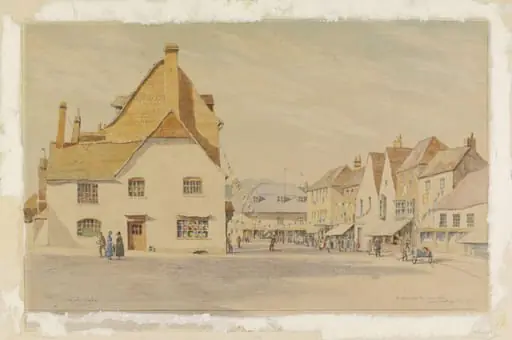 Preparing for the Coronation, West Malling, May, 1937.
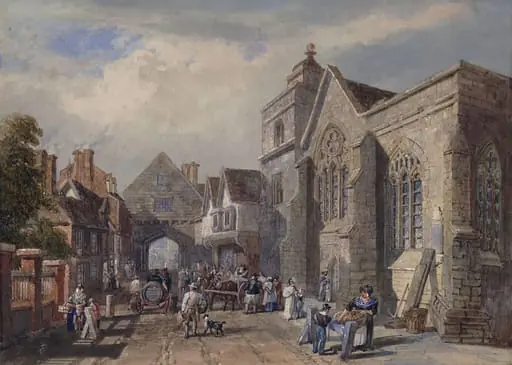 St. Nicholas Church and the College Gateway, Rochester
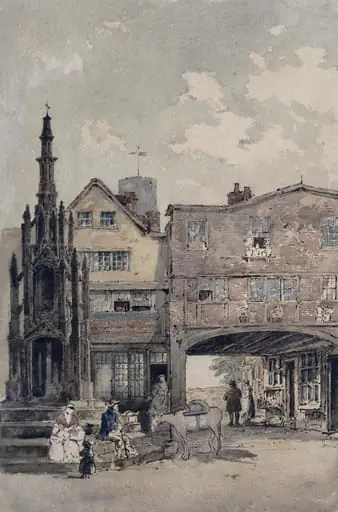 The Butter-Cross, Winchester
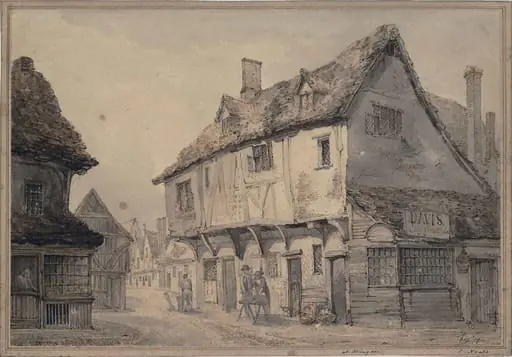 Old Houses at Abingdon, Berkshire
 Untitled