Artwork
Country Pleasures
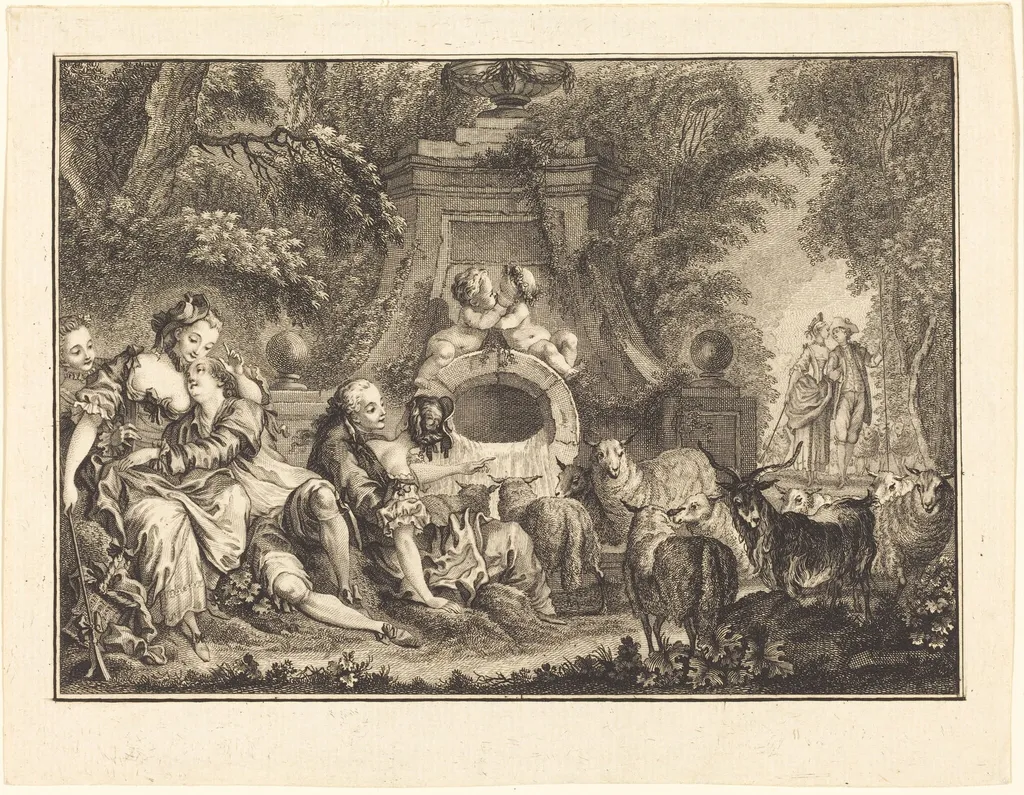
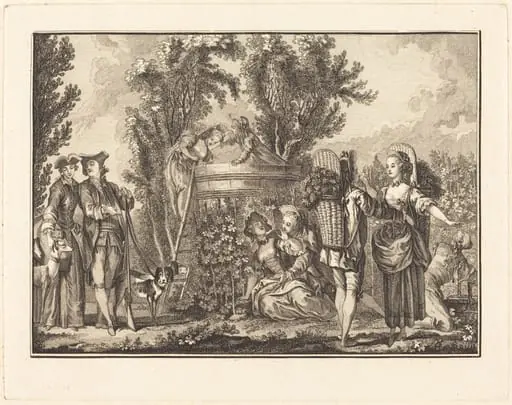
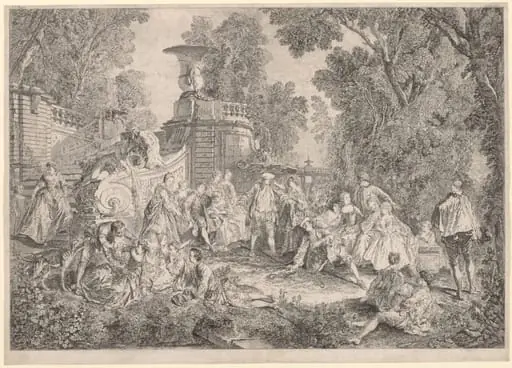
Country Pleasures is an ink print by the Baroque artist Joseph de Longueil. It dates from 1761 and is held in the collection of the National Gallery of Art.
About this work
Overview
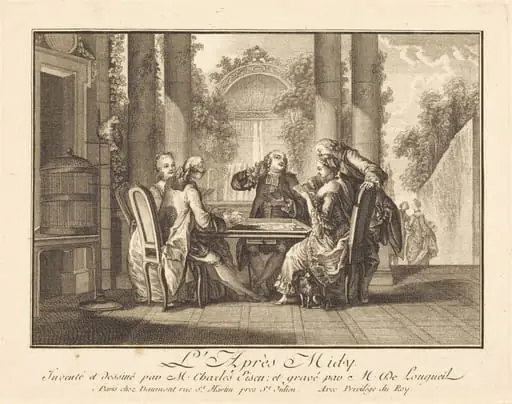
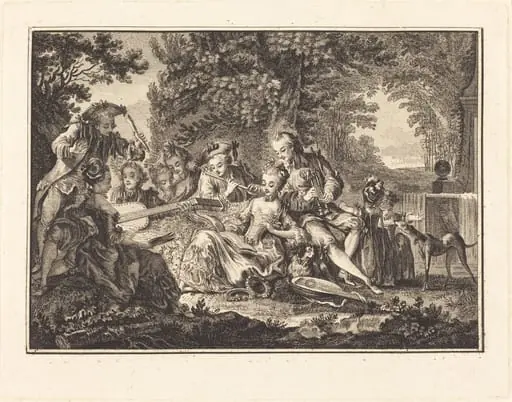
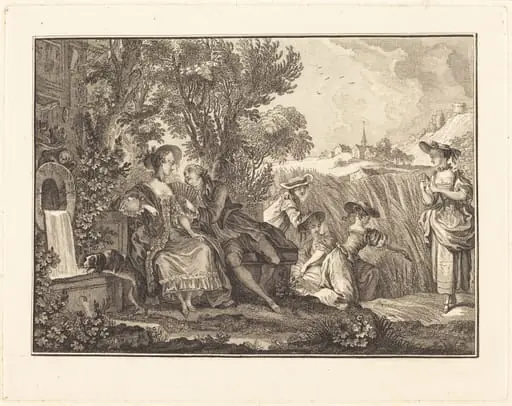
Created in 1761 by Joseph de Longueil, Country Pleasures is a finely detailed print combining etching and engraving techniques. It depicts an idealized garden scene populated by figures in leisurely poses, domestic animals, and ornamental features. The composition balances natural elements with artificial structures, reflecting 18th-century tastes for cultivated nature and refined sociability.
Subject & Meaning
The scene portrays aristocratic relaxation in a landscaped garden, with figures engaged in quiet pastimes: a woman with a fan, a child at play, and distant companions. The inclusion of a statue, cherubs, and a globe suggests classical allusions and intellectual leisure. Rather than depicting labor or utility, the image emphasizes cultivated idleness as a sign of social status and refined taste.
Technique & Style
Longueil employed precise etching and engraving to render fine textures and intricate details within a compact format. Delicate lines define foliage, fabric, and stone surfaces, while subtle tonal variations suggest depth and light. The dense composition, rich in small figures and symbolic objects, reflects the period’s preference for visual complexity and layered meaning in decorative prints.
History & Provenance
The print was produced in France during the mid-18th century, a time when garden imagery flourished in print culture. Though specific early ownership records are sparse, its subject matter aligns with popular decorative prints circulated among the educated elite. It likely served as an interior ornament, reinforcing cultural ideals of leisure and classical antiquity.
Context
This work emerged during the height of the Rococo period, when garden scenes symbolized the harmony between nature and aristocratic life. Similar imagery appeared in tapestries and porcelain, often commissioned by wealthy patrons. The presence of mythological references and exotic objects like the globe reflects broader Enlightenment interests in antiquity and global knowledge.
Legacy
Country Pleasures exemplifies the role of printmaking in disseminating aesthetic ideals beyond elite circles. While not widely attributed to major artistic movements, its craftsmanship and thematic coherence place it within a broader tradition of French decorative prints. It remains a quiet testament to how everyday objects conveyed cultural values through subtle visual cues.
Artist & collection