Artwork
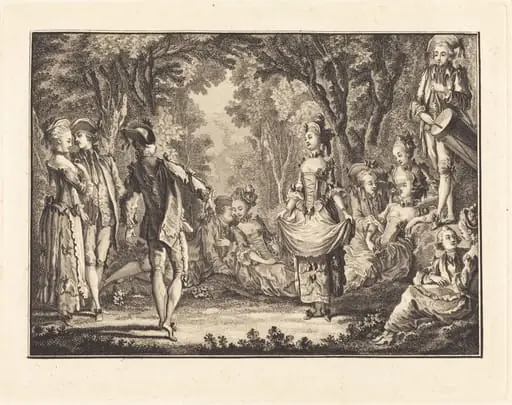
The Game of Blind Man's Bluff
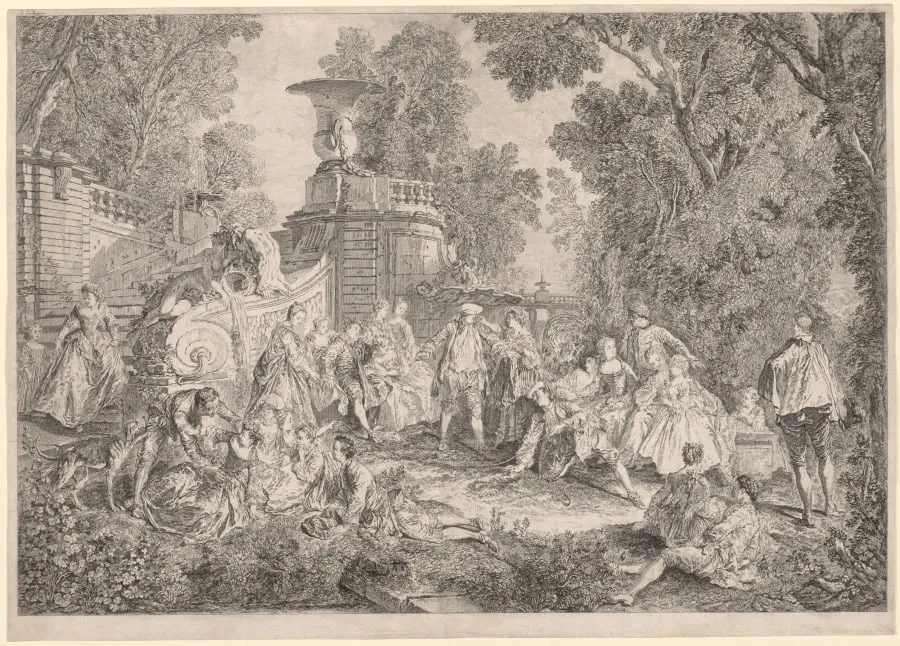
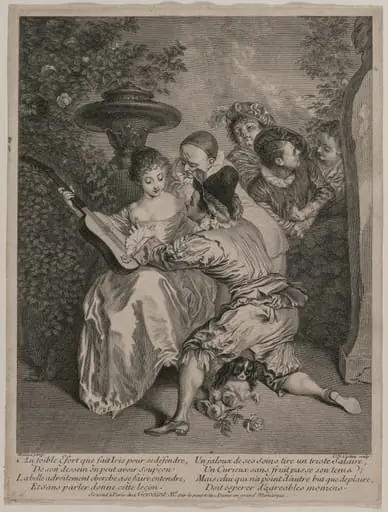
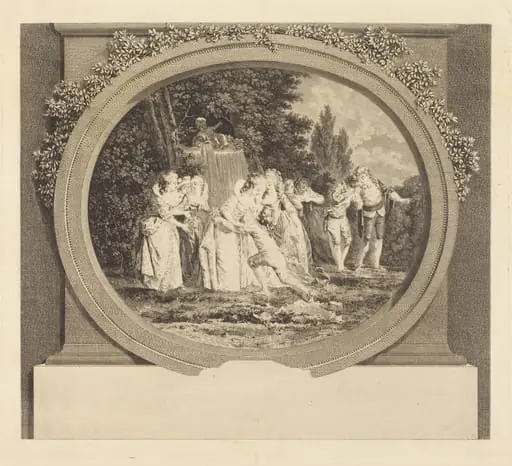
The Game of Blind Man's Bluff is a print by the Baroque artist Charles-Nicolas Cochin. It dates from 1739 and is held in the collection of the Cleveland Museum of Art.
About this work
Overview
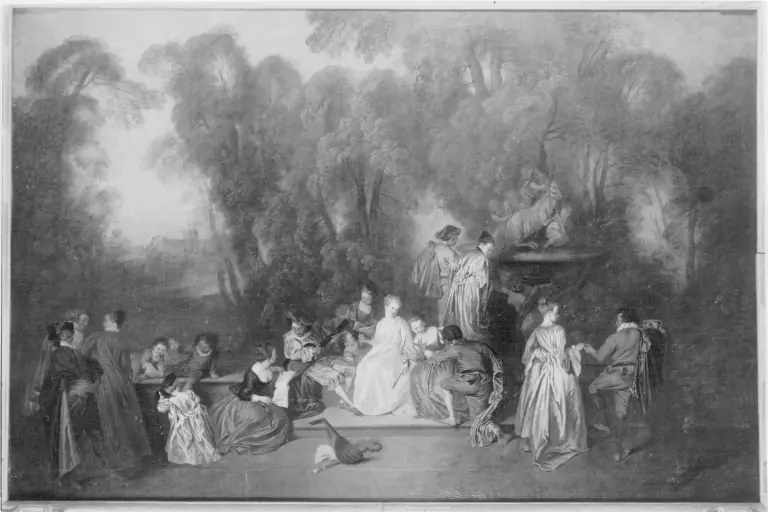
This etching by Charles-Nicolas Cochin reproduces a painting by Nicolas Lancret, transforming the original into a printed work meant for wider circulation.
This etching by Charles-Nicolas Cochin reproduces a painting by Nicolas Lancret, transforming the original into a printed work meant for wider circulation. Created in the mid-18th century, it captures a moment of leisure among aristocratic youth engaged in the game of blind man’s bluff. The medium of etching allowed such scenes to reach audiences beyond those who could view original paintings in private collections.
Subject & Meaning
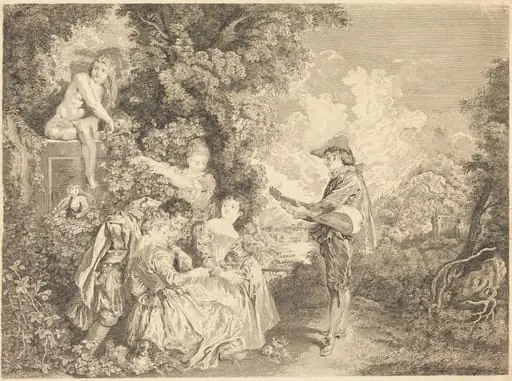
The scene depicts a group of elegantly dressed figures playing a children’s game in a cultivated garden, blending innocence with aristocratic leisure. The blindfolded player, arms outstretched, becomes the focal point amid laughing onlookers who evade capture. This lighthearted moment reflects the French elite’s fascination with pastoral fantasy, where nature and play served as refined escape from courtly formality.
Technique & Style
Cochin employed a loose, fluid etching technique that mimics the spontaneity of a sketch. Delicate, uneven lines convey movement and texture without heavy shading, enhancing the scene’s airy, playful tone. The absence of rigid detail invites the viewer’s eye to wander, mirroring the carefree energy of the figures. This approach contrasts with more formal engraving styles of the period.
History & Provenance
Cochin was among a generation of printmakers commissioned to reproduce popular paintings for public consumption. This etching was likely produced shortly after Lancret’s original, capitalizing on the popularity of fête champêtre imagery. Such prints circulated in salons and private collections, helping to standardize visual motifs of aristocratic leisure across Europe.
Context
The garden setting, adorned with rococo balustrades and nude statuary, aligns with contemporary garden design favored by French nobility, echoing the fountains of François Boucher. These elements framed idealized outdoor entertainments, blending classical references with contemporary pastimes. The scene reflects a cultural moment when art, fashion, and social ritual converged in curated natural spaces.
Legacy
Cochin’s etching exemplifies how reproductive prints democratized access to elite visual culture in 18th-century France. By translating Lancret’s composition into a more immediate, sketch-like form, it influenced how such scenes were perceived and reproduced. The work remains a key example of how printmaking shaped public taste and preserved the aesthetics of Rococo leisure.
Artist & collection
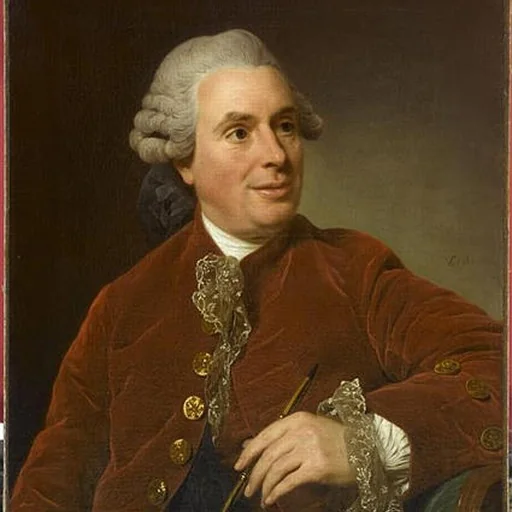
Artist
Charles-Nicolas Cochin was a French engraver, designer, writer, and art critic. To distinguish him from his father of the same name, he is variously called Charles-Nicolas Cochin le Jeune, Charles-Nicolas Cochin le…