Artwork
L'apres-midi
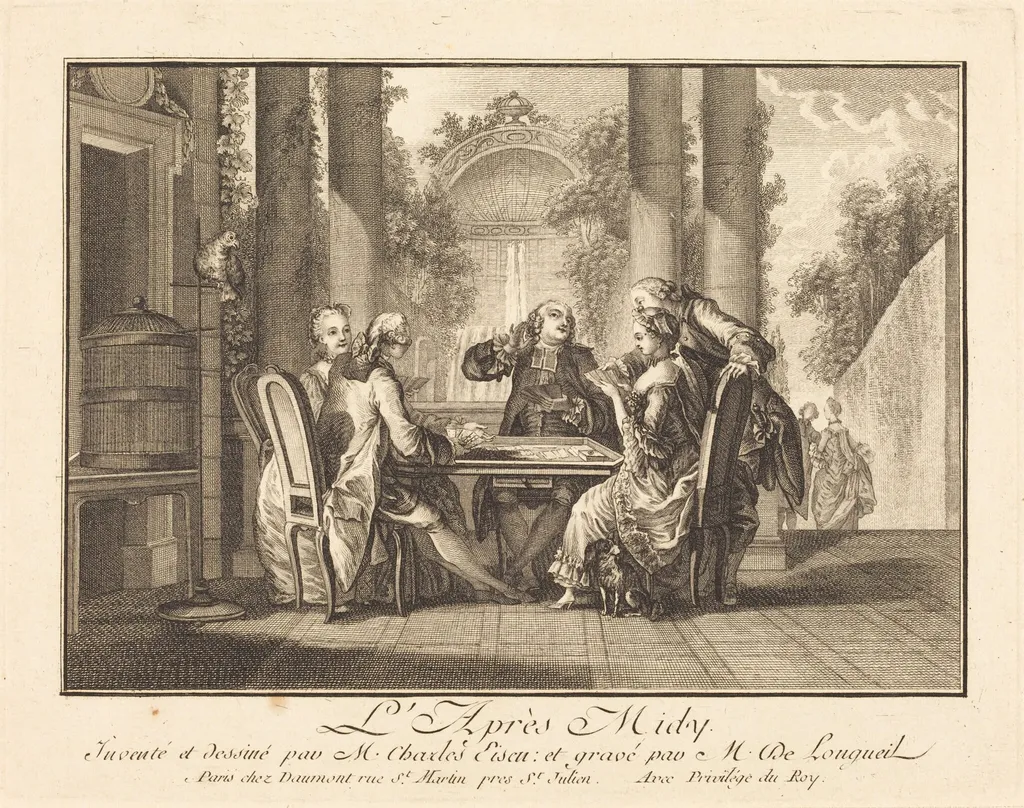
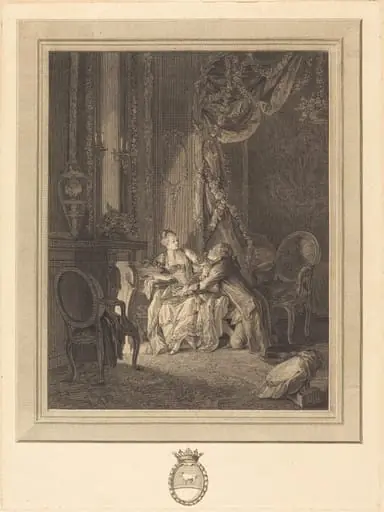
L'apres-midi is an ink print by the Baroque artist Joseph de Longueil. It dates from 1761 and is held in the collection of the National Gallery of Art.
About this work
Overview
The composition is framed by a window that opens onto a street view, linking the private interior with the public exterior.
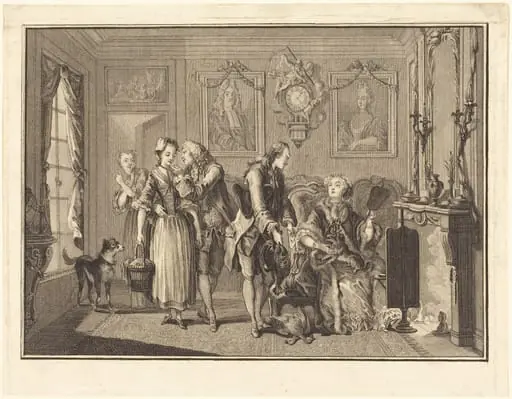
Joseph de Longueil’s 1761 print *L’Après‑Midi* is an etching‑engraving that captures a quiet interior gathering. Rendered in monochrome, the work presents a modestly furnished room where three figures are engaged in a leisurely activity, while a servant illuminates the scene with a candle. The composition is framed by a window that opens onto a street view, linking the private interior with the public exterior.
Subject & Meaning
The title, translating to “Afternoon,” suggests a moment of relaxed social interaction. Two men and a woman are seated at a table, appearing to examine papers or play cards, indicating a genteel pastime. The presence of the attendant, poised with a candle, underscores the domestic hospitality typical of middle‑class French interiors of the period.
Technique & Style
Longueil combines etching’s fluid lines with the precision of engraving to render fine details in clothing, furnishings, and architectural elements. The delicate hatching conveys texture—from the sheen of fabrics to the grain of wooden surfaces—while the contrast of light and shadow, especially around the candle’s flame, creates a subtle atmospheric depth.
History & Provenance
Created in 1761, the print reflects the mid‑eighteenth‑century French printmaking tradition, where artists produced multiple impressions for a broader audience. While specific ownership records are scarce, the work has circulated among collections that specialize in French ornamental prints and genre scenes.
Context
*L’Après‑Midi* belongs to a genre of domestic genre scenes popular in pre‑Revolutionary France, illustrating everyday life with an emphasis on interior decor and social customs. Such images often served both decorative and didactic purposes, offering viewers a glimpse into contemporary manners and interior design.
Legacy
Although not widely cited in major art historical narratives, the print exemplifies the technical skill of French engravers of the era and contributes to the visual documentation of eighteenth‑century interior spaces, informing both scholars and designers of the period’s aesthetic sensibilities.
Artist & collection