Artwork
Four Cows
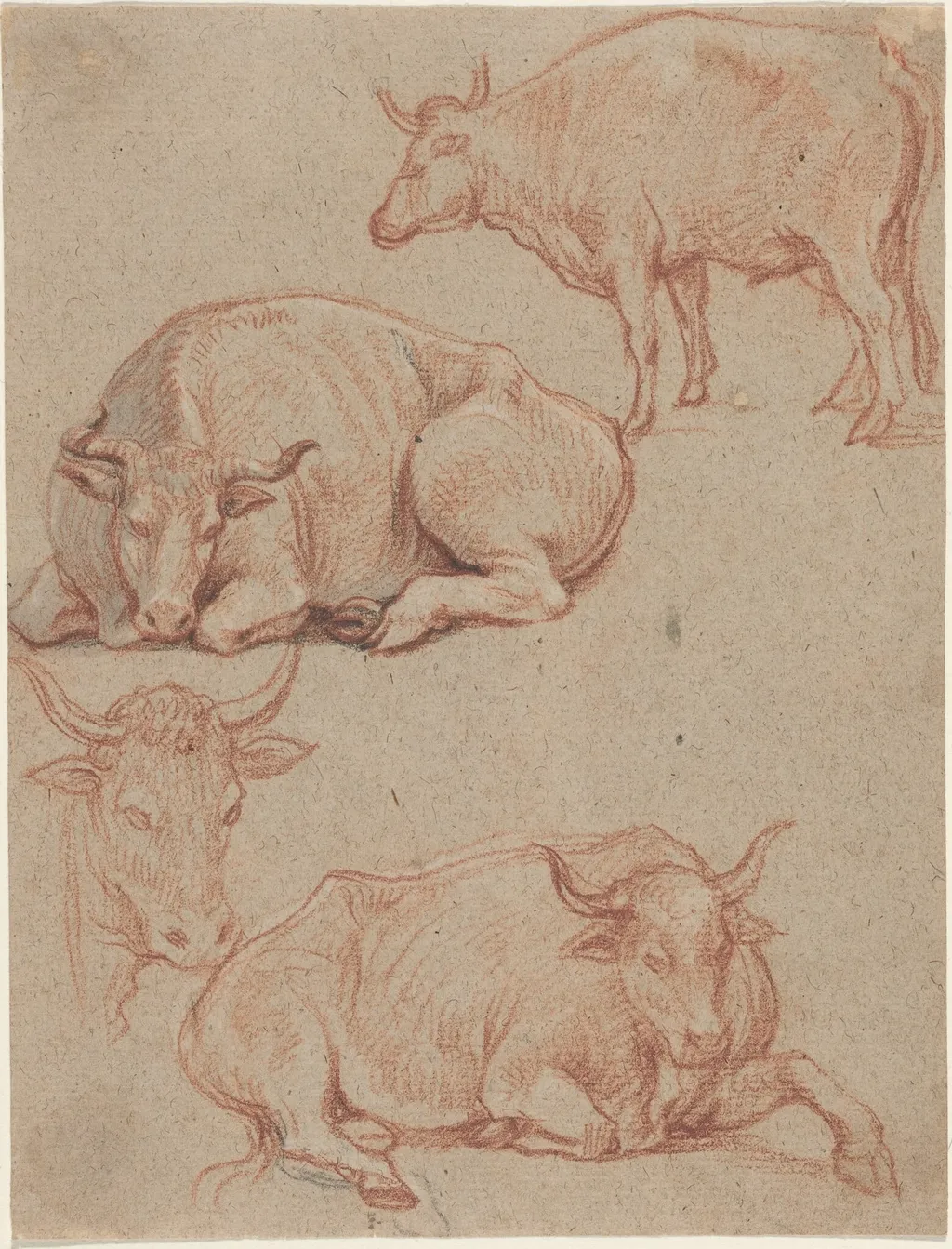
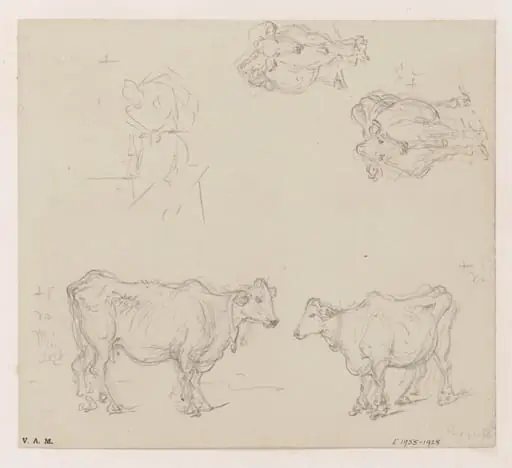
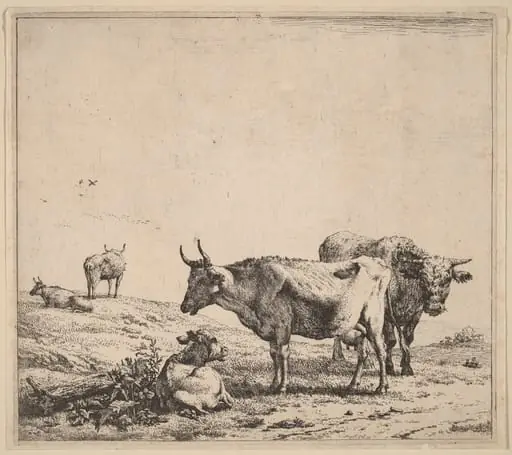
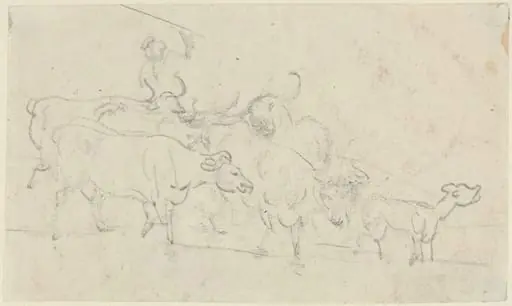
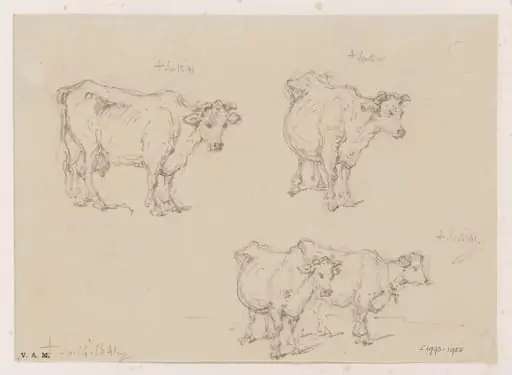
Four Cows is a chalk drawing by the Baroque artist Claude Lorrain. It dates from 1641 and is held in the collection of the National Gallery of Art.
About this work
Overview
Four Cows is a drawing created in 1641 by Claude Lorrain, a prominent Baroque-era French artist, using red and black chalks with gray wash on laid paper.
Subject & Meaning
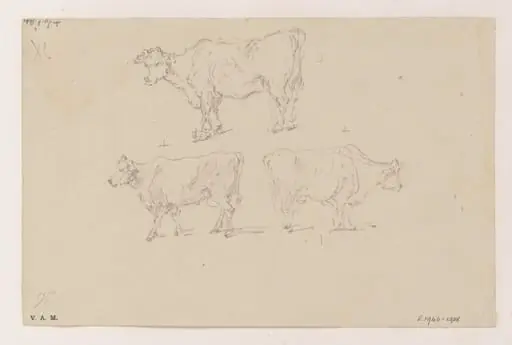
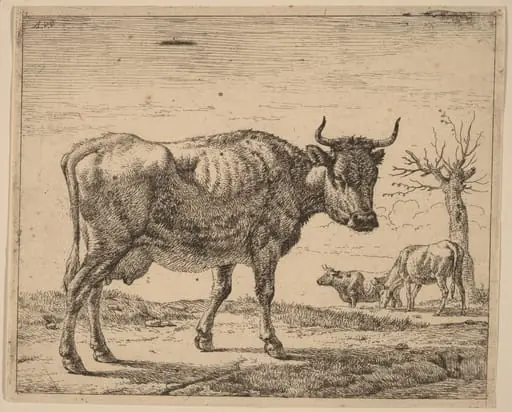
The drawing depicts four cows in a serene grassy field, with one facing the viewer and the others turned away, set against a backdrop of trees and a low hill, exemplifying Lorrain's penchant for pastoral themes.
Technique & Style
Lorrain's characteristic blend of naturalistic detail and classical composition is evident in the soft yet clear lines achieved through the combination of red and black chalks overlayed with gray wash.
History & Provenance
Originally created as a study for a potential larger painting, 'Four Cows' reflects Lorrain's common practice of using drawings as preparatory works during his career, mostly spent in Italy.
Context
Produced during Lorrain's maturity in Italy, 'Four Cows' aligns with the Baroque emphasis on naturalism while maintaining the classical harmony characteristic of his landscapes and pastoral scenes.
Artist & collection
Artist
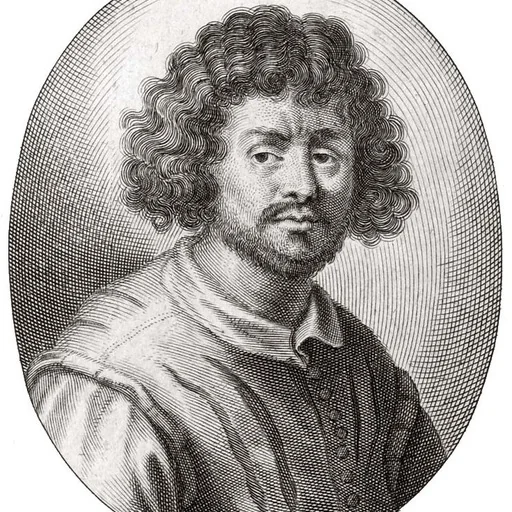
Claude Lorrain (French: ; born Claude Gellée , called le Lorrain in French; traditionally just Claude in English; c.