Artwork
Three Cows
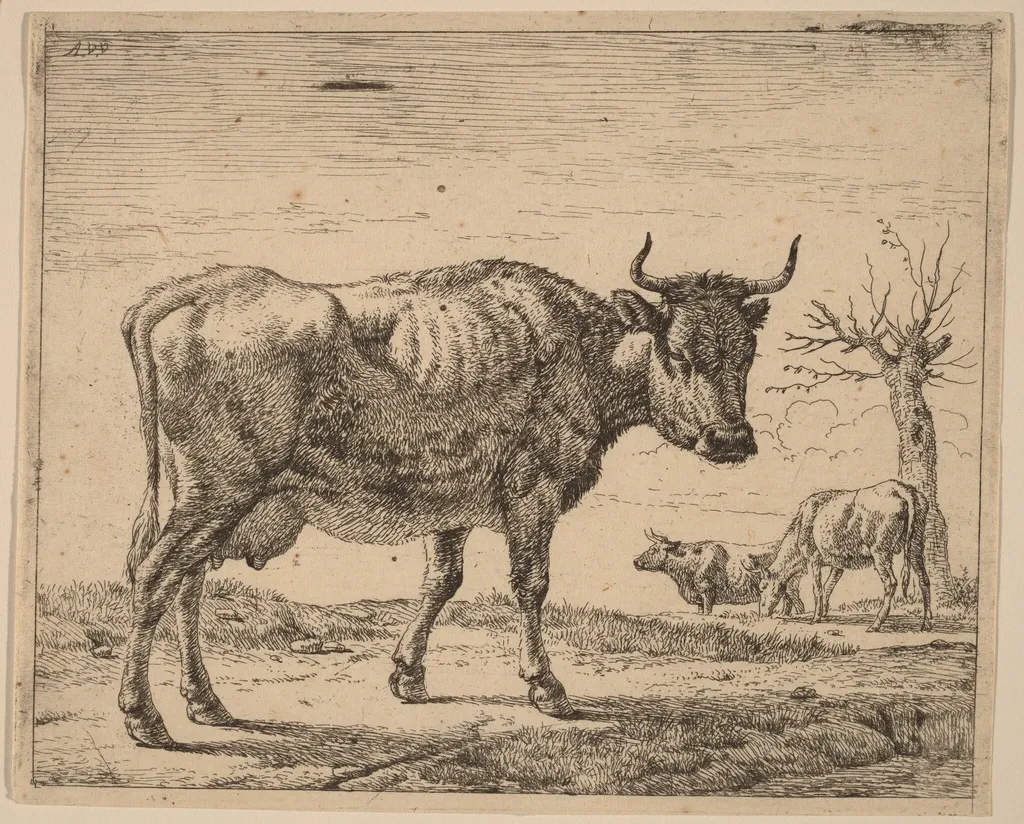
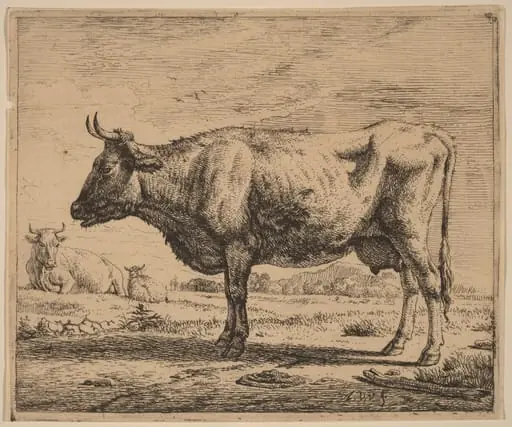
Three Cows is an ink print by the Baroque artist Adriaen van de Velde. It dates from 1658 and is held in the collection of the National Gallery of Art.
About this work
Overview
Adriaen van de Velde, a Dutch artist active in the mid-17th century, produced this etching around 1658 as part of his broader exploration of rural life.
Adriaen van de Velde, a Dutch artist active in the mid-17th century, produced this etching around 1658 as part of his broader exploration of rural life. Though primarily known as a painter, he frequently turned to printmaking to study natural forms. *Three Cows* exemplifies his interest in quiet, everyday scenes, rendered with precision and sensitivity to animal anatomy and environmental atmosphere.
Subject & Meaning
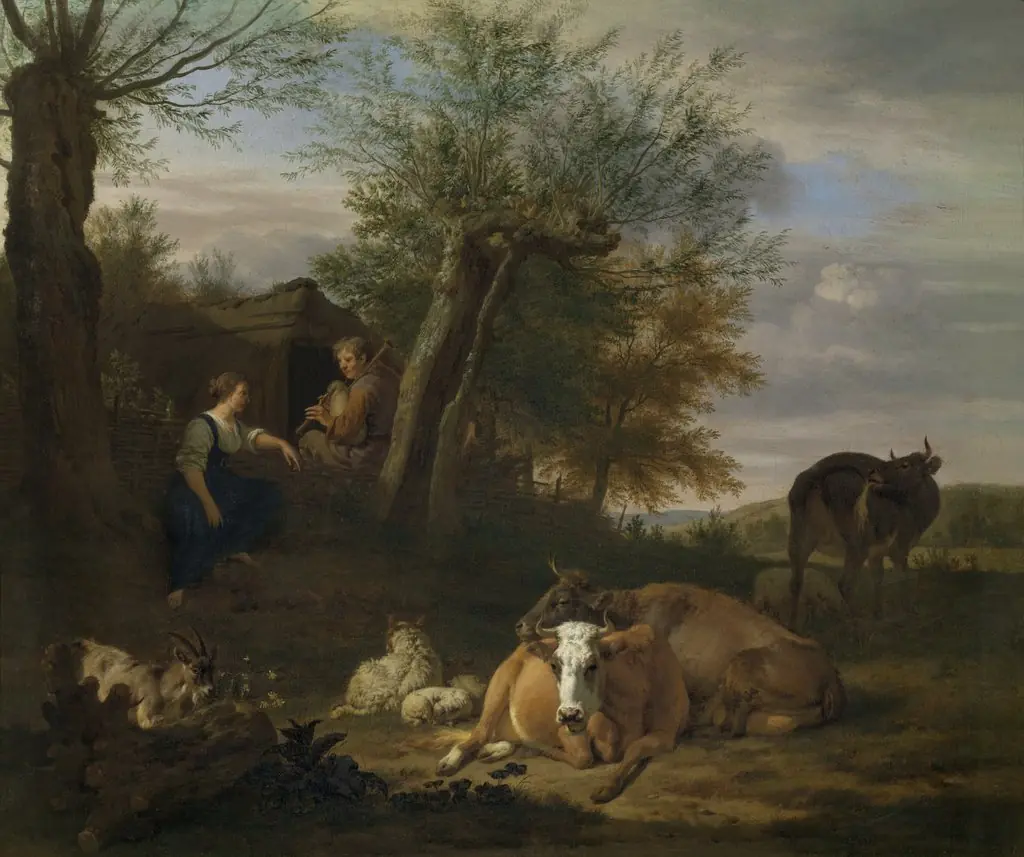
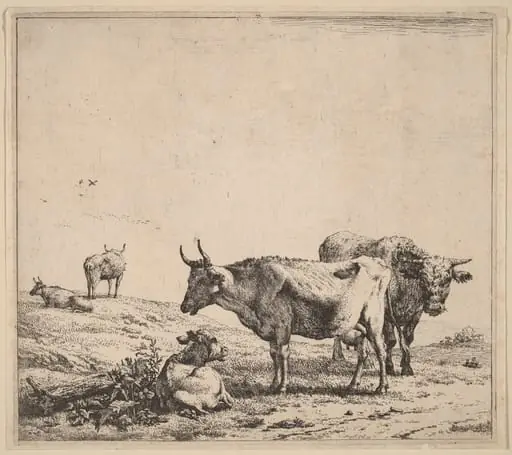
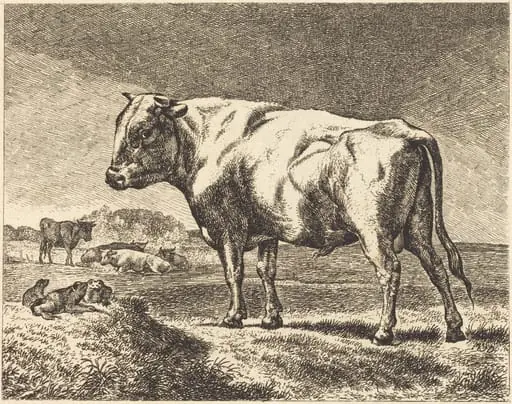
The print depicts three cattle standing calmly in an open field, their postures suggesting rest rather than movement. There is no narrative or human presence—only the animals and the earth they inhabit. This focus on ordinary livestock reflects a broader Dutch appreciation for the dignity of rural labor and the quiet beauty of the natural world, stripped of idealization or drama.
Technique & Style
Van de Velde employed drypoint to etch the cows and their surroundings, using a sharp needle to scratch directly into a metal plate. The resulting lines are soft, slightly blurred, and rich in tonal variation, capturing the texture of fur and the subtle play of light across their backs. The technique allowed for spontaneous, sketch-like marks that convey both immediacy and quiet observation.
History & Provenance
Created during Van de Velde’s mature period in Amsterdam, the etching was likely made for private collectors rather than public sale. His prints were circulated among connoisseurs who valued his ability to translate observational drawing into print. The work survives in several institutional collections, including the National Gallery of Art in Washington, D.C., where it is held as part of a broader study of Dutch graphic art.
Context
Van de Velde operated within the Dutch Italianate tradition, which often merged local landscapes with classical sensibilities. Yet *Three Cows* avoids grandeur, instead grounding itself in the modest realism favored by Dutch artists of the time. His prints served as both artistic exercises and records of animal behavior, aligning with a broader scientific and aesthetic interest in nature’s details.
Legacy
Though less celebrated than his paintings, Van de Velde’s etchings influenced later generations of animal and landscape draftsmen. His use of drypoint to capture texture and movement without embellishment set a precedent for direct, observational printmaking. The quiet authority of works like *Three Cows* continues to be studied for their restraint and sensitivity to form.
Own this work as a print
Artist & collection

Artist
Adriaen van de Velde, was a Dutch painter, draughtsman, and print artist. His favorite subjects were landscapes with animals and genre scenes. He also painted beaches, dunes, forests, winter scenes, portraits in…