Artwork
Il Greco in Troia: Plate 7
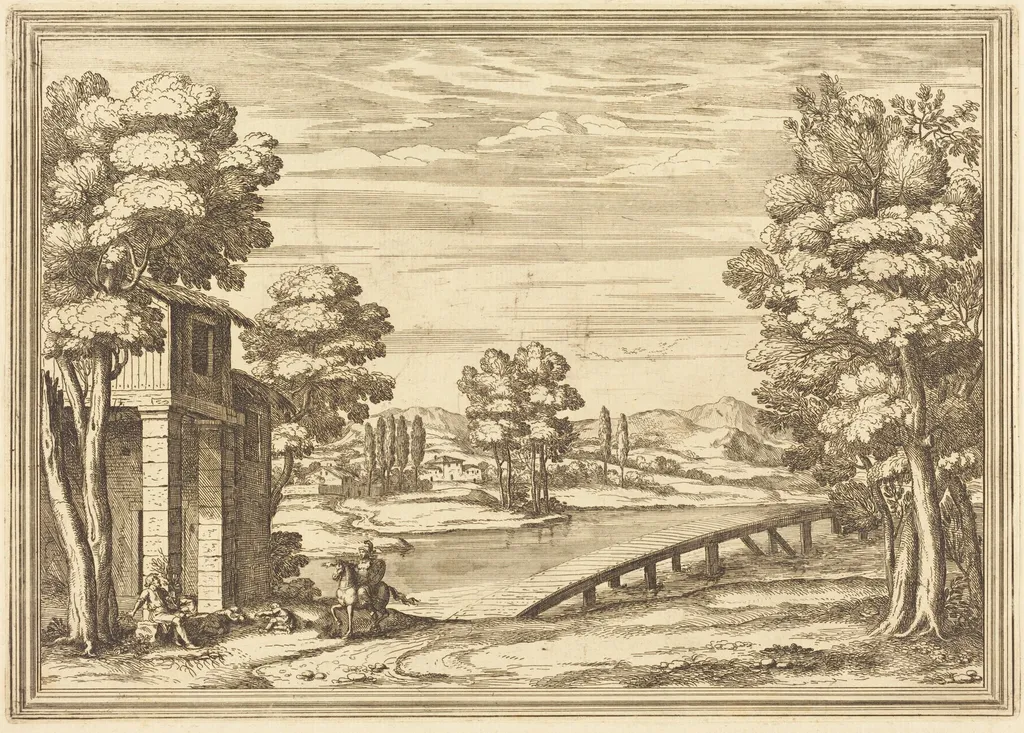
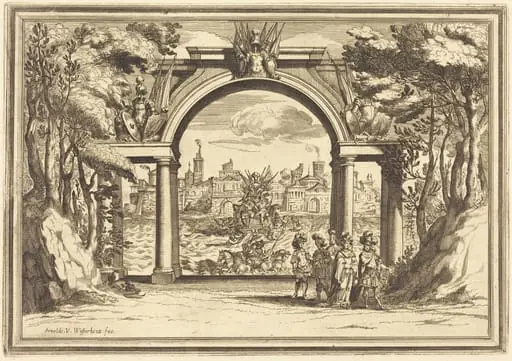
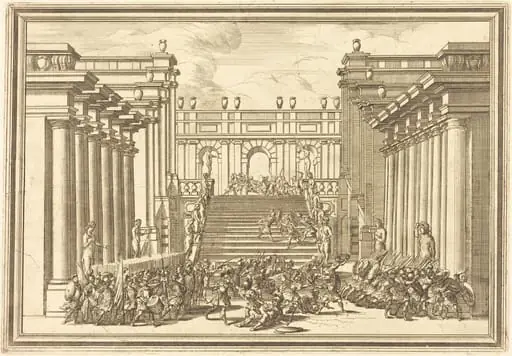
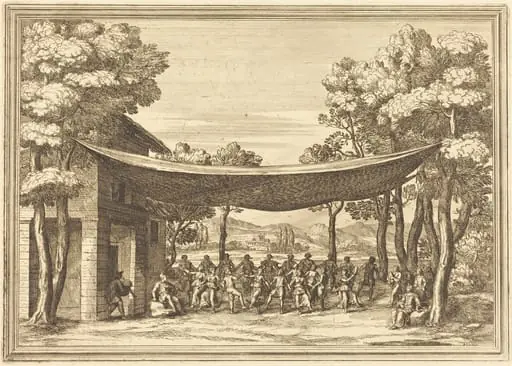
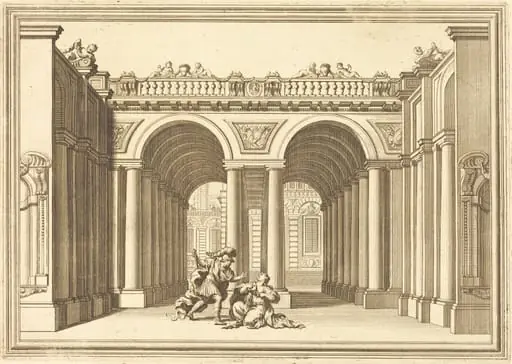
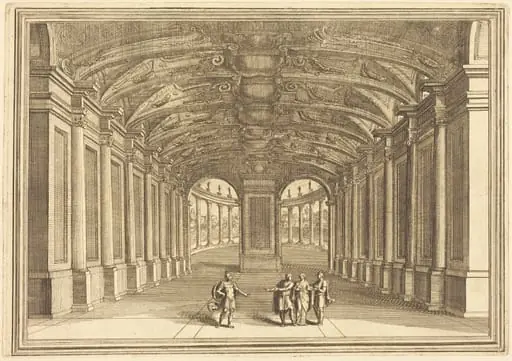
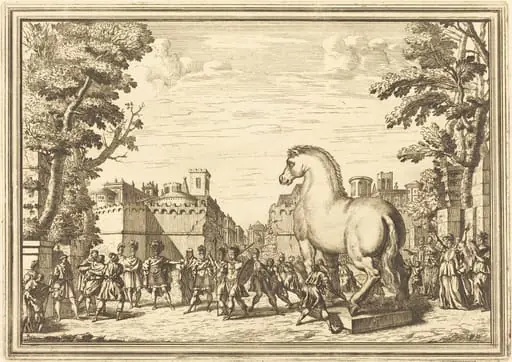
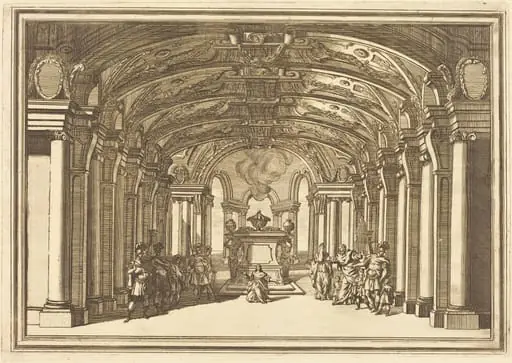
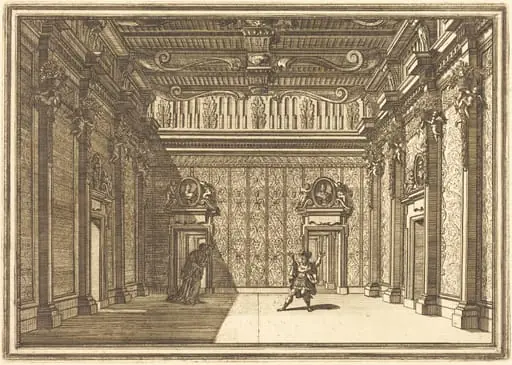
Il Greco in Troia: Plate 7 is an ink print by the Baroque artist Arnold von Westerhout. It dates from 1688 and is held in the collection of the National Gallery of Art.
About this work
Overview
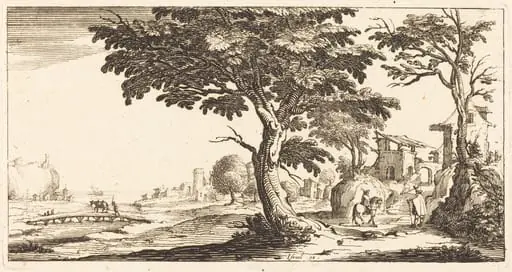
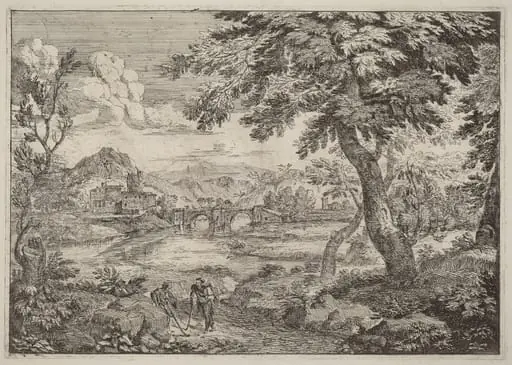
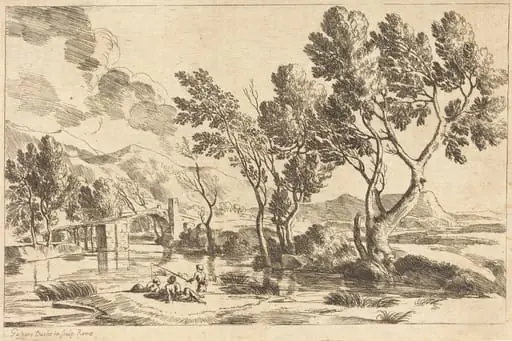
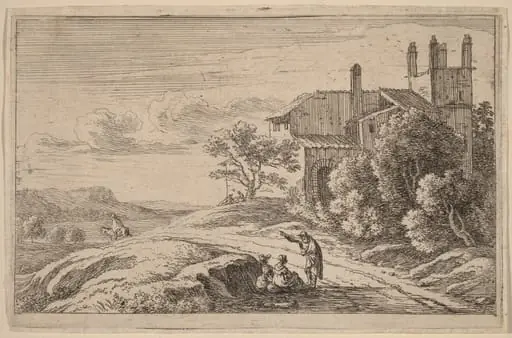
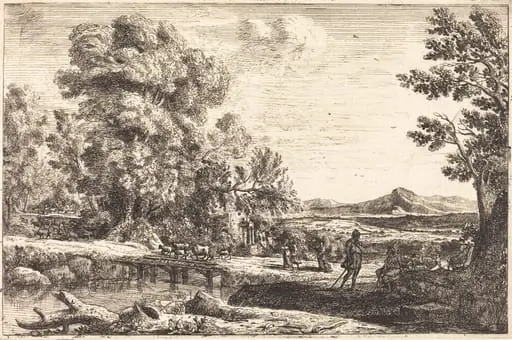
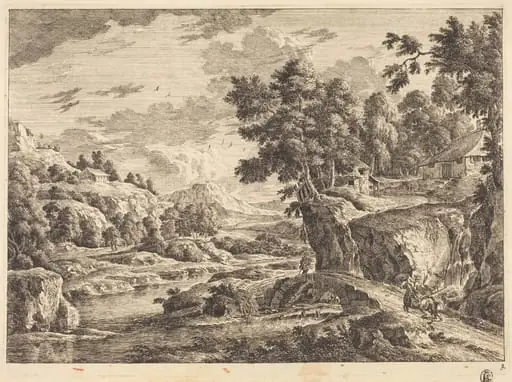
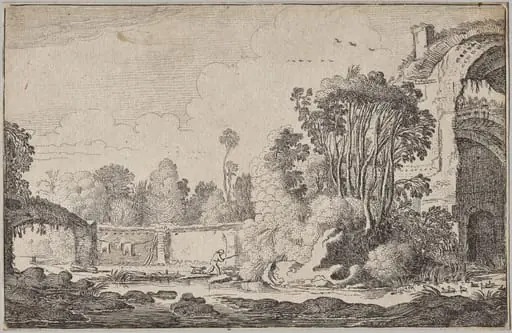
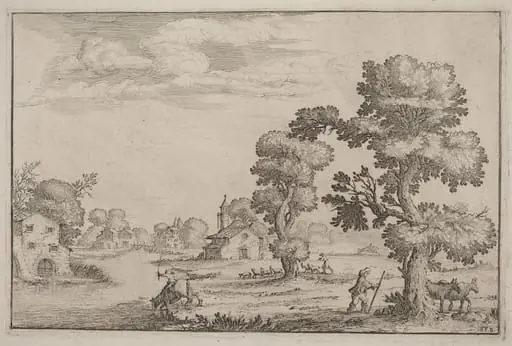
Arnold von Westerhout’s print titled *Il Greco in Troia: Plate 7* is an engraving and etching executed on laid paper in 1688. The work belongs to the print medium and presents a tranquil river landscape, featuring a modest bridge, a wooden well beneath two leafless trees, and distant dwellings set against gently rolling hills.
Subject & Meaning
The composition captures a serene moment of rural life: a solitary figure walks along the riverbank, while the surrounding architecture and natural elements suggest a quiet, perhaps contemplative, scene of everyday activity in an imagined or historic setting.
Technique & Style
Westerhout employs delicate, intersecting lines to model depth, allowing the trees and hills to recede into the background. The fine linear work, characteristic of late‑17th‑century engraving, creates a sense of atmospheric perspective and a calm, measured rhythm across the surface of the paper.
History & Provenance
Created in 1688, the print is a restrike, indicating that the original plate was used for subsequent impressions. Its survival on laid paper reflects the typical material choices of the period, and the work remains documented as part of Westerhout’s oeuvre of landscape prints.
Artist & collection