Artwork
Landscape
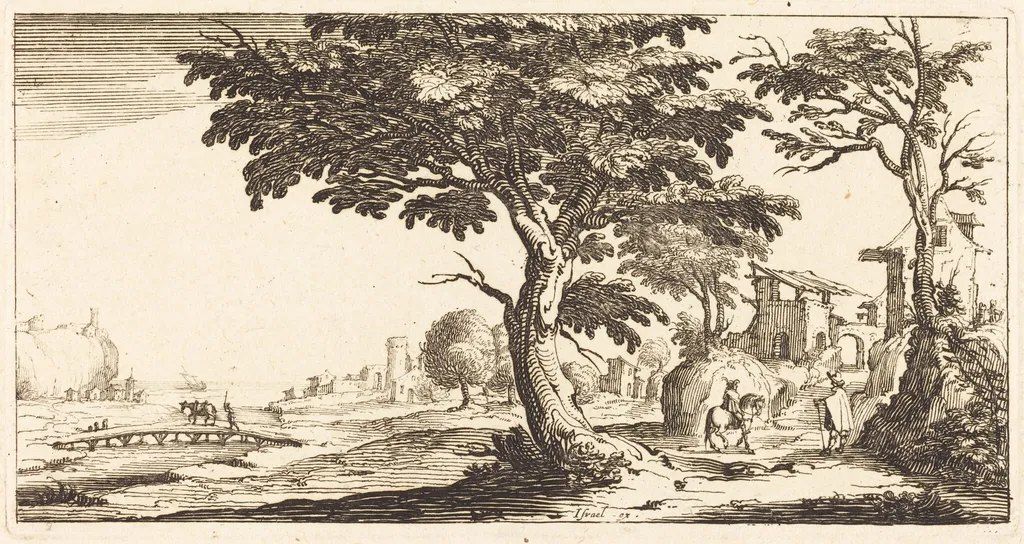
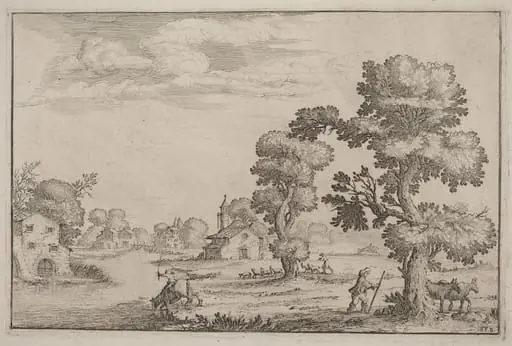
Landscape is an ink print by the Baroque artist French 17th Century. It dates from 1635 and is held in the collection of the National Gallery of Art.
About this work
Overview
The work is an etching on laid paper depicting a tranquil rural landscape. Central to the composition is a solitary, mature tree, while a modest bridge arches over a river in the foreground. Distant structures cluster near the horizon, accompanied by a few figures and animals. The sky is rendered with a light wash, and the terrain rolls gently in soft hills.
Subject & Meaning
The scene presents an idealized view of countryside life, emphasizing harmony between nature and human habitation. The solitary tree serves as a focal point, suggesting stability, while the bridge implies connection and movement across the landscape. The scattered figures and livestock hint at everyday activity, reinforcing a sense of peaceful coexistence within a bucolic setting.
Technique & Style
Executed with fine, incised lines, the etching achieves a nuanced sense of depth and volume. The artist employs cross‑hatching and delicate stippling to model foliage, architecture, and water, a method typical of early nineteenth‑century printmaking. The use of laid paper contributes a subtle texture that interacts with the ink, enhancing the tonal variation across the monochrome surface.
History & Provenance
Created as a print, the piece belongs to a period when etching was widely used to reproduce detailed landscape studies for both artistic and documentary purposes. While specific ownership records are not provided, the work’s material and stylistic traits align it with the broader tradition of European landscape etchings circulated among collectors and institutions during the era.
Artist & collection

Artist
Seventeenth-century French printmakers turned ink into story. Their tools were burin and acid, paper their stage. Look at the Beggar Woman with Rosary (1622), etched on laid paper, her hands folded around faith, or The…

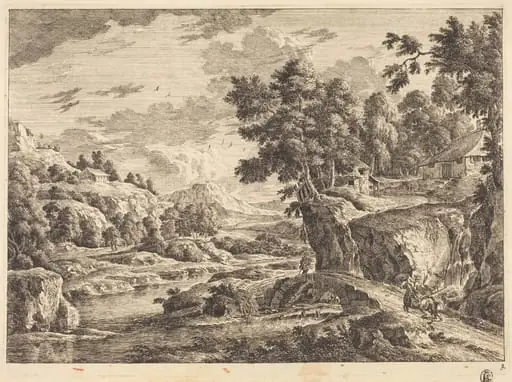 Landscape with a Bridge and Three Farm Buildings
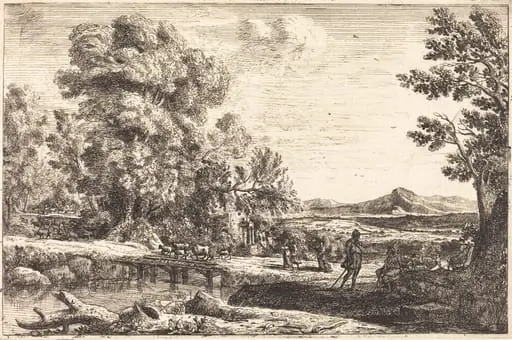 Rebecca and Eliezer (Le pont de bois)
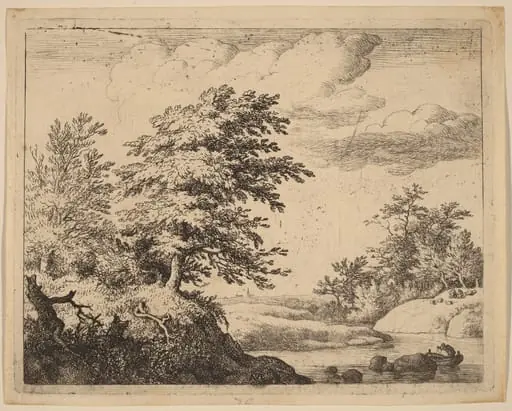 Winding River
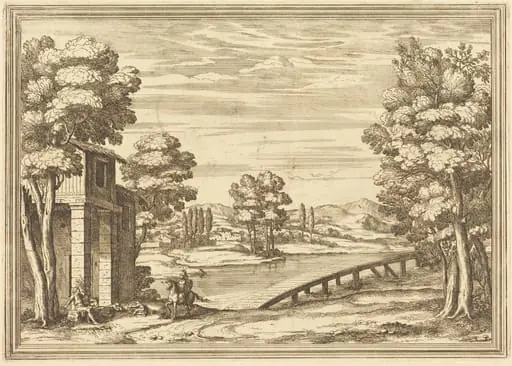 Il Greco in Troia: Plate 7
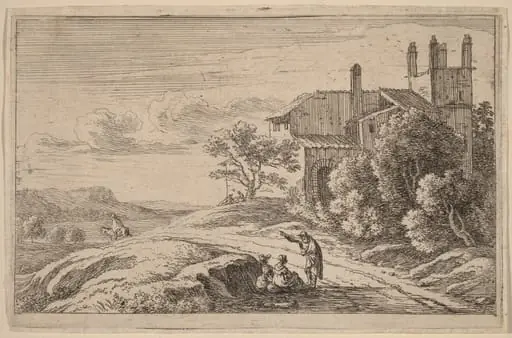 Building with a Square Tower
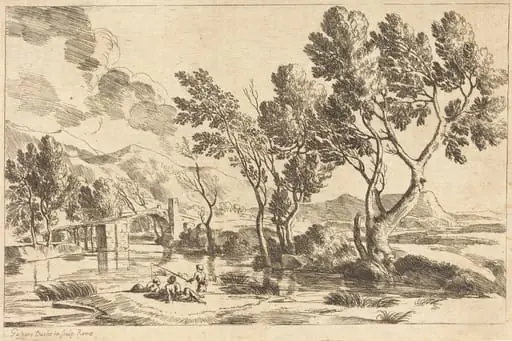 Roman Landscape
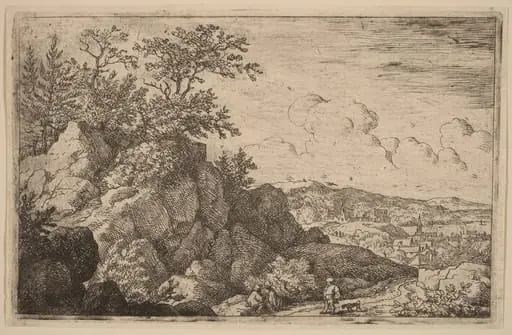 Peasant with His Dog
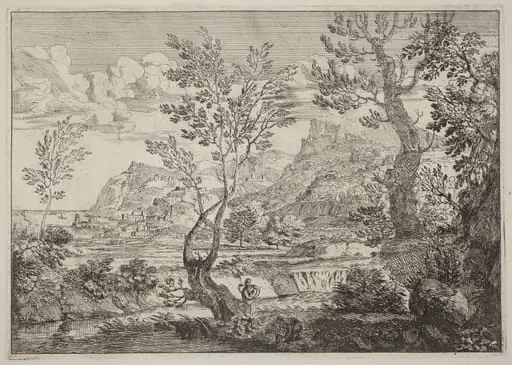 A Waterfall
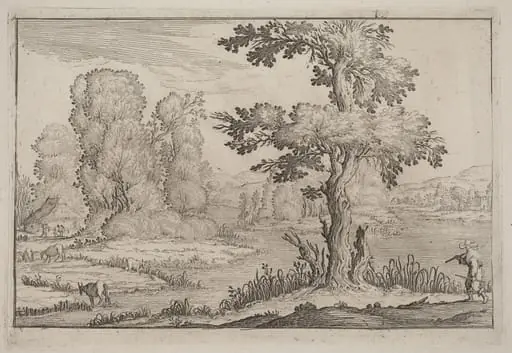 Herdsman and Cows Crossing a River
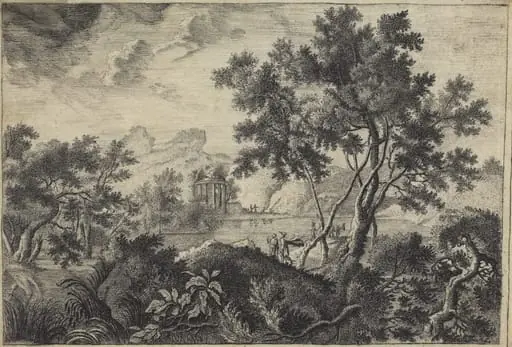 Classical Landscape with a Tempietto
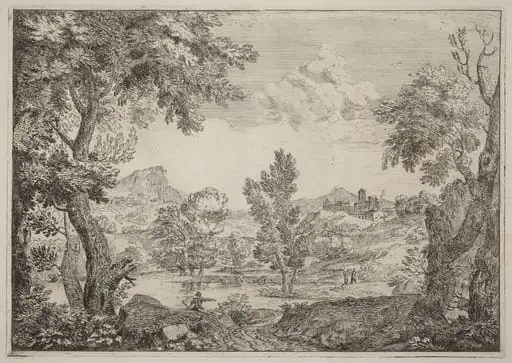 The Stream
 Lakeside Village with Herdsmen