Artwork
Egypt and Nubia, Volume I: Grand Portico of the Temple of Philae, Nubia
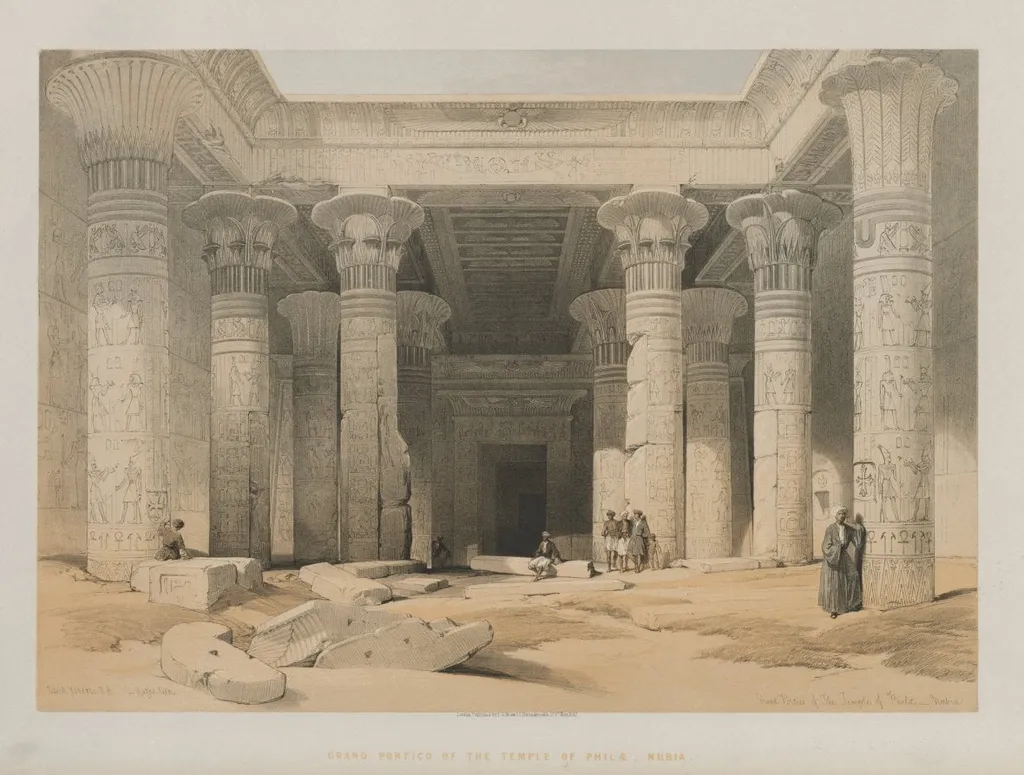
Egypt and Nubia, Volume I: Grand Portico of the Temple of Philae, Nubia is a print by the Romanticist artist Louis Haghe. It dates from 1847 and is held in the collection of the Cleveland Museum of Art.
About this work
Overview
Haghe, a Belgian-born artist active in England, specialized in lithography and collaborated with the firm Day & Haghe to produce detailed architectural records.
Created in 1847 by Louis Haghe, this lithograph is part of the first volume of a multi-part series documenting ancient Egyptian and Nubian monuments. Haghe, a Belgian-born artist active in England, specialized in lithography and collaborated with the firm Day & Haghe to produce detailed architectural records. The print captures the Grand Portico of the Temple of Philae, emphasizing its scale and decay, and was intended as a scholarly record rather than a decorative image.
Subject & Meaning
The image portrays the entrance of the Temple of Philae, a religious site dedicated to the goddess Isis, now partially submerged due to later dam construction. The towering columns, adorned with lotus capitals and hieroglyphic inscriptions, reflect the temple’s ceremonial function. Scattered debris and weathered surfaces suggest centuries of erosion and neglect, conveying a sense of time’s passage and the fragility of ancient monuments in the face of environmental and human change.
Technique & Style
Haghe employed lithography to achieve fine tonal gradations and precise detail, mimicking the texture of weathered stone through careful shading and line work. The composition balances architectural grandeur with intimate decay, using shadow to define depth and surface irregularities. Figures in the foreground, though small, provide scale and a quiet human presence, reinforcing the monument’s isolation and endurance without romanticizing its ruin.
History & Provenance
The print was produced during a period of heightened European interest in Egyptology, following Napoleon’s campaign and the decipherment of the Rosetta Stone. Haghe’s series was commissioned to document sites before they were altered by modern development. The Temple of Philae was later relocated in the 1970s to save it from flooding caused by the Aswan High Dam, making this 1847 record a valuable historical reference for its original setting.
Context
Haghe’s work emerged amid a wave of archaeological documentation in the 19th century, when European institutions sought to systematically record antiquities. His images were distributed to scholars, libraries, and collectors, contributing to the growing body of visual knowledge about ancient Nubia. Unlike earlier travelers’ sketches, his prints aimed for accuracy over embellishment, aligning with emerging standards of scientific illustration in the Victorian era.
Legacy
The lithograph remains a key example of early archaeological documentation in print form. Haghe’s technical precision and restrained aesthetic influenced later survey projects in the Middle East. While Romanticism often idealized ruins, his approach prioritized fidelity to form and condition, offering a sober record that continues to inform archaeological and architectural studies of Philae’s original state.
Artist & collection
Artist
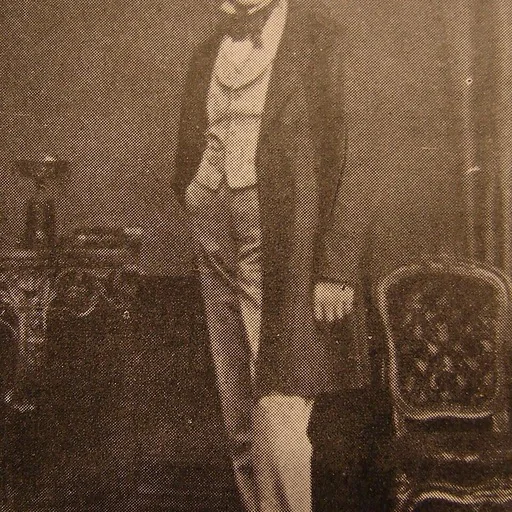
Louis Haghe (17 March 1806 – 9 March 1885) was a lithographer and watercolourist from the Netherlands and then the United Kingdom.

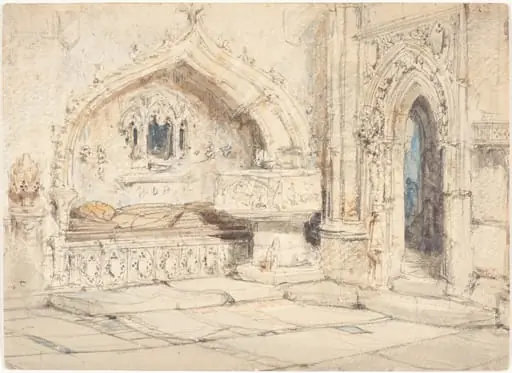 Interior of a Church with a Wall Tomb and Medieval Font
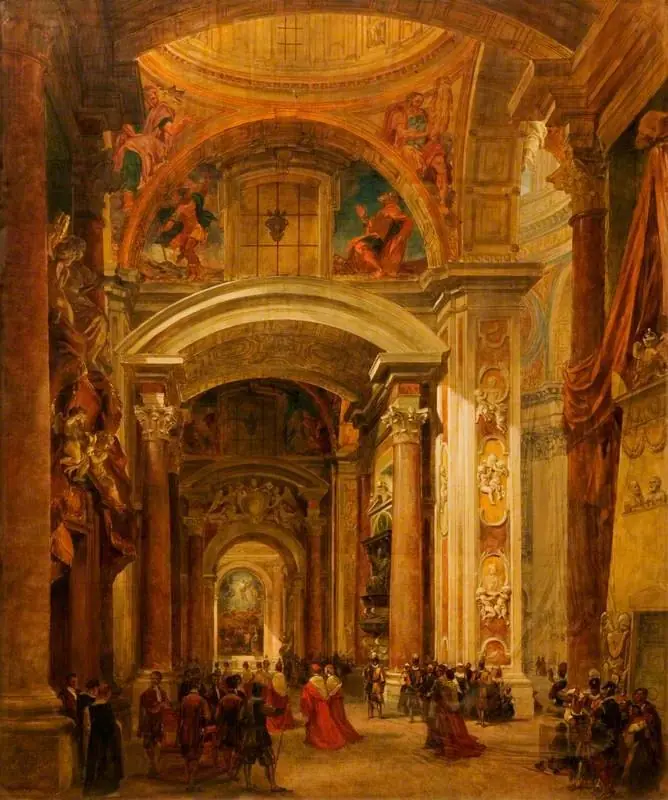 Interior of St Peter's, Rome
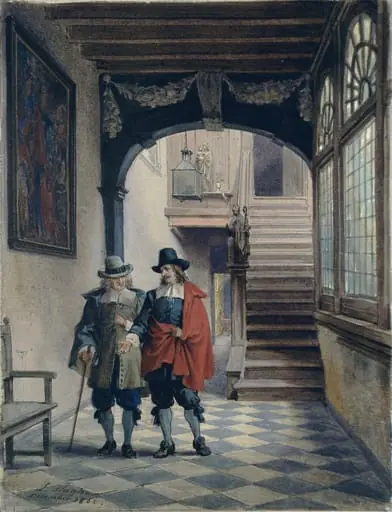 The Corridor, Brewer's Hall, Antwerp
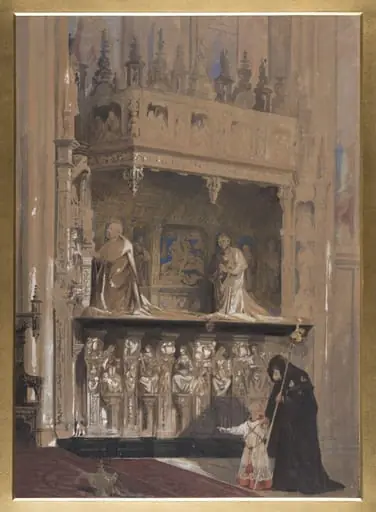 Monument of the Cardinald D'Amboise in Rouen Cathedral
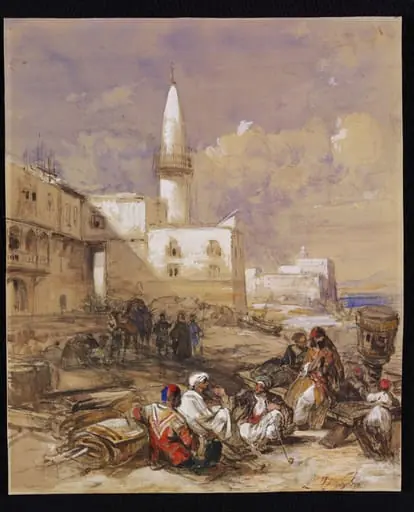 The Quay at Suez
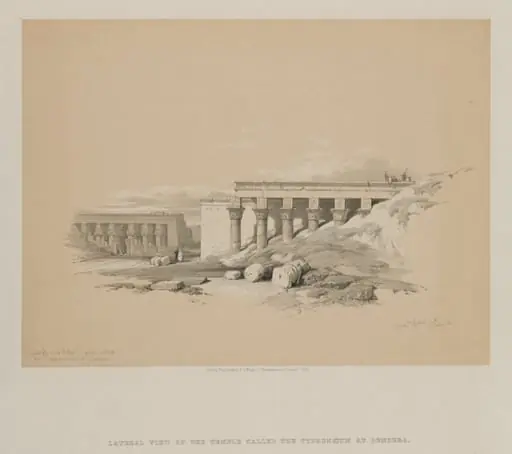 Egypt and Nubia, Volume II: Lateral View of the Temple called The Typhonoeum at Dendera
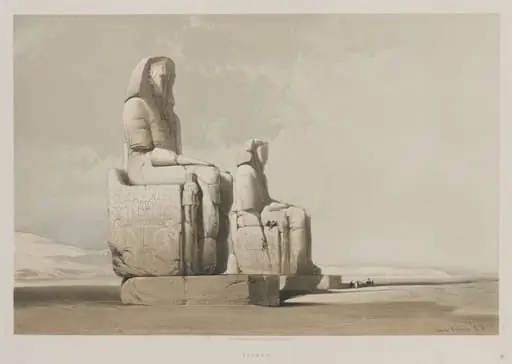 Egypt and Nubia, Volume I: Thebes
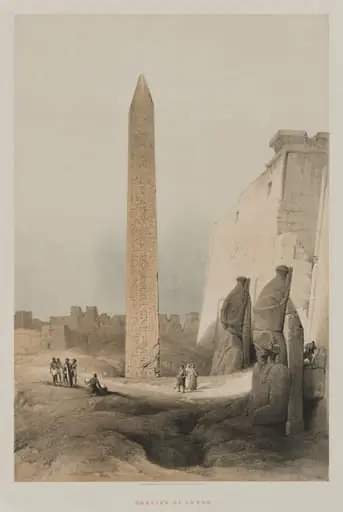 Egypt and Nubia, Volume I: Luxor
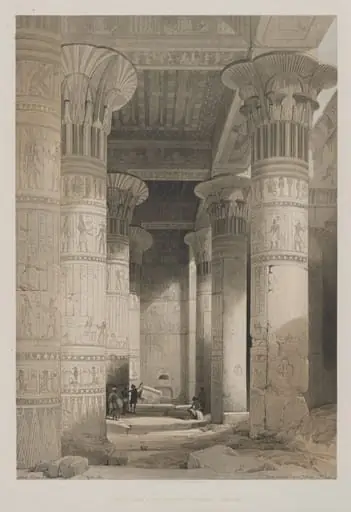 Egypt and Nubia, Volume I: View Under the Grand Portico of the Temple, Philae
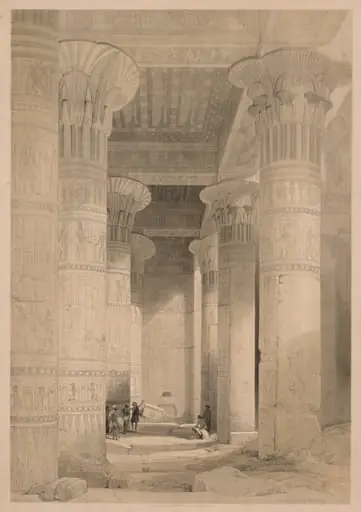 Egypt and Nubia: Volume I - Frontispiece, View under the Grand Portico, Philae
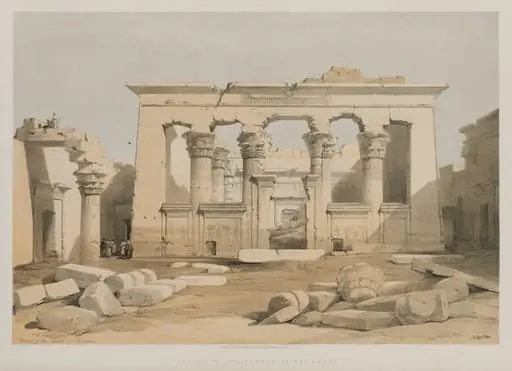 Egypt and Nubia, Volume I: Portico of the Temple of Kalabshe
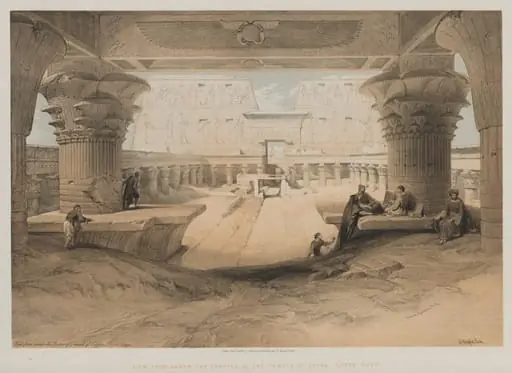 Egypt and Nubia, Volume I: View from Under the Portico of the Temple of Edfou, Upper Egypt
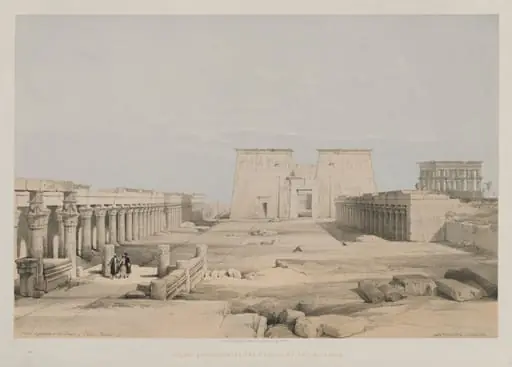 Egypt and Nubia, Volume I: Grand Approach to the Temple of Philae, Nubia
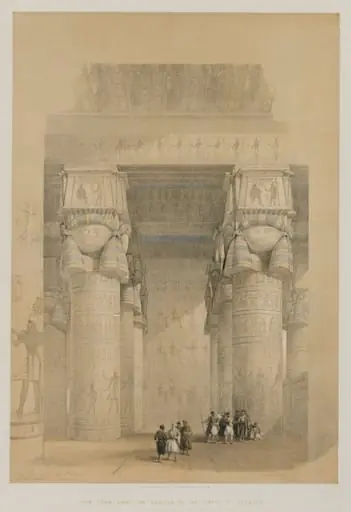 Egypt and Nubia, Volume II: View from Under the Portico of the Temple of Dendera
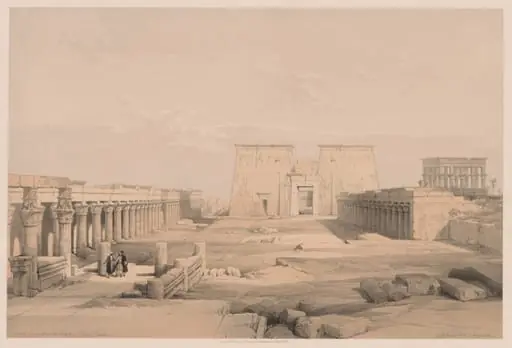 Egypt and Nubia: Volume I - No. 42, Grand Approach to the Temple of Philae, Nubia
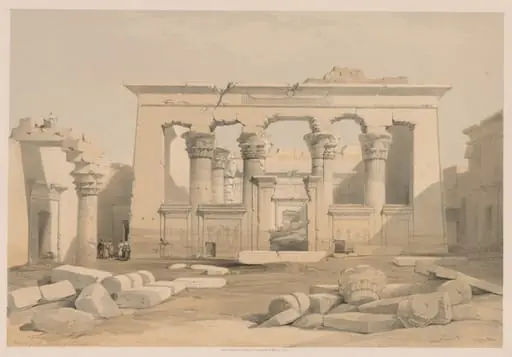 Egypt and Nubia: Volume I - No. 28, Portico of the Temple of Kalabshi
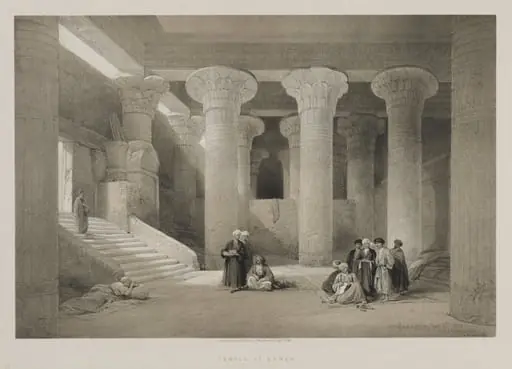 Egypt and Nubia, Volume I: Temple at Esneh
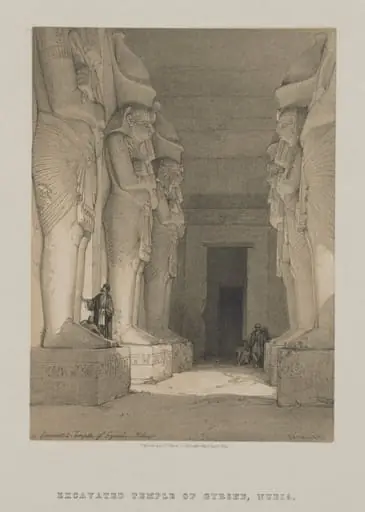 Egypt and Nubia, Volume I: Excavated Temple of Gyrshe, Nubia
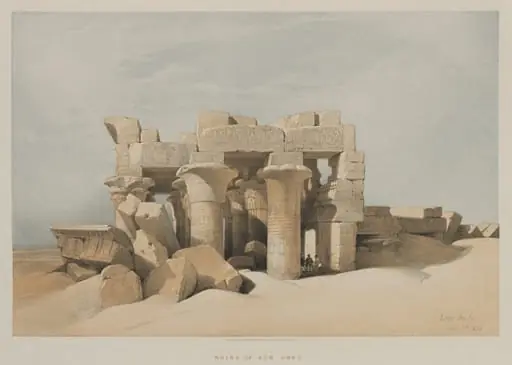 Egypt and Nubia, Volume I: Kom-Ombo
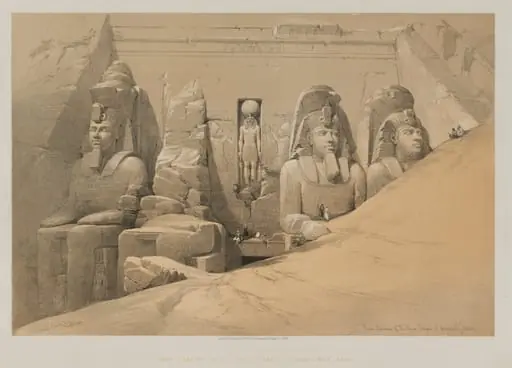 Egypt and Nubia, Volume II: Front Elevation of the Great Temple of Aboo Simbel, Nubia