Artwork
Egypt and Nubia, Volume I: Excavated Temple of Gyrshe, Nubia
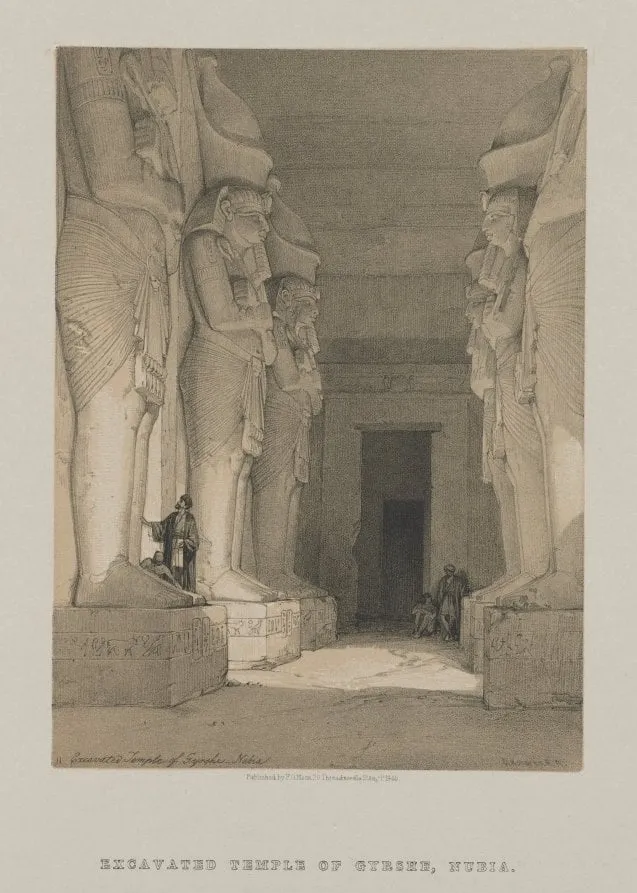
Egypt and Nubia, Volume I: Excavated Temple of Gyrshe, Nubia is a print by the Romanticist artist Louis Haghe. It dates from 1846 and is held in the collection of the Cleveland Museum of Art.
About this work
Overview
Created in 1846 by Louis Haghe, this lithograph is one of many plates in the first volume of a documented archaeological survey of Egypt and Nubia.
Created in 1846 by Louis Haghe, this lithograph is one of many plates in the first volume of a documented archaeological survey of Egypt and Nubia. Produced by the London-based firm Day & Haghe, which Haghe helped establish in the 1830s, the print emerged from a broader Victorian effort to record ancient sites through precise visual documentation. It reflects the era’s growing scholarly interest in the material remains of the Nile Valley.
Subject & Meaning
The image captures the entrance of a temple in Nubia, dominated by two colossal stone statues flanking a narrow passageway. One figure holds an object near its chest, the other rests a hand on its knee, both rendered in rigid, formal poses typical of ancient Nubian and Egyptian monumental art. Small human figures at the base emphasize the scale of the architecture, reinforcing the temple’s enduring presence and the anonymity of its original purpose.
Technique & Style
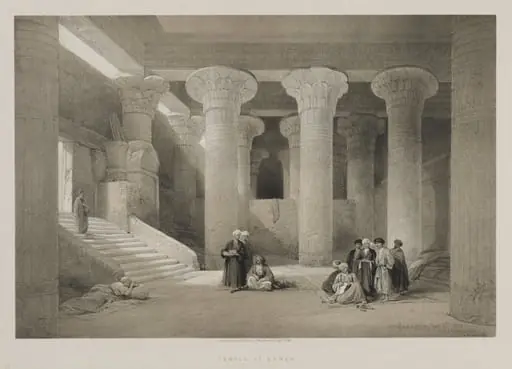
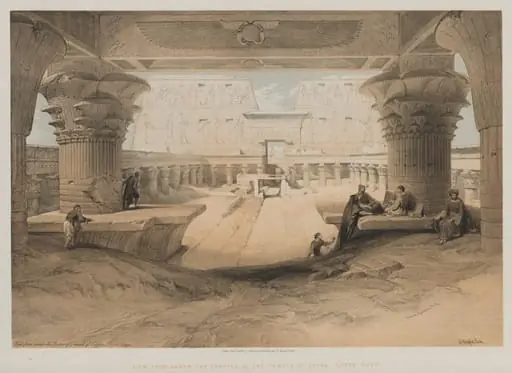
Haghe rendered the scene using lithography, a technique that allowed for fine tonal detail and mass reproduction. The composition relies on careful shading to convey depth and texture in the stone, while the hieroglyphic carvings along the walls are rendered with precision. The drawing, based on on-site sketches, avoids romantic embellishment, prioritizing archaeological accuracy over dramatic effect.
History & Provenance
The print was produced as part of a multi-volume publication commissioned during a period of heightened European interest in Nubian antiquities. Haghe traveled with or relied on expedition teams who documented sites before extensive excavation or looting. The work was distributed to institutions and collectors, contributing to early academic records of temples later altered by modern infrastructure projects.
Context
This image belongs to a wave of 19th-century visual documentation that coincided with the rise of Egyptology and imperial exploration. While Romanticism often idealized ruins, Haghe’s approach was more systematic, aligning with scientific efforts to catalog ancient monuments. The focus on architectural detail and absence of narrative suggests a purpose rooted in record-keeping rather than emotional appeal.
Legacy
The lithograph remains a key visual source for understanding the state of Nubian temples before later flooding and archaeological intervention. Its technical precision and fidelity to observed detail make it valuable to modern scholars reconstructing lost contexts. Though not widely exhibited today, it endures in institutional archives as a primary record of early archaeological practice.
Artist & collection
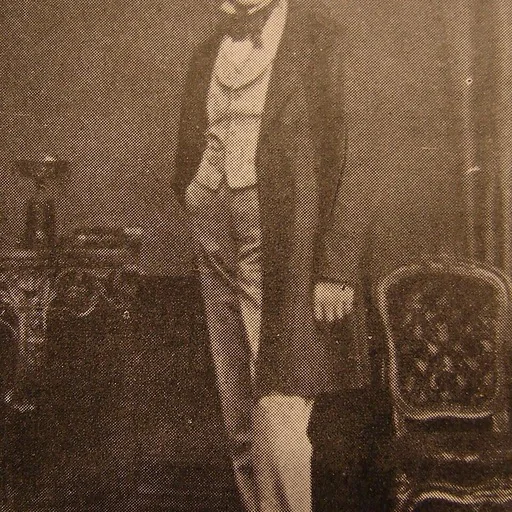
Artist
Louis Haghe (17 March 1806 – 9 March 1885) was a lithographer and watercolourist from the Netherlands and then the United Kingdom.

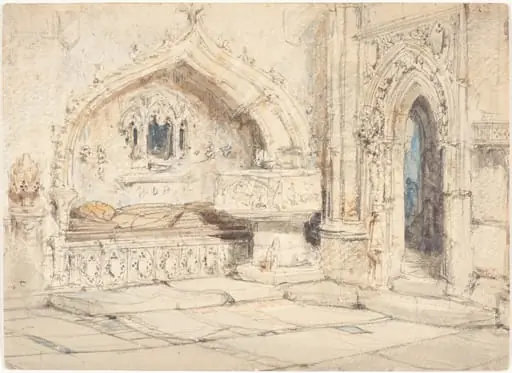 Interior of a Church with a Wall Tomb and Medieval Font
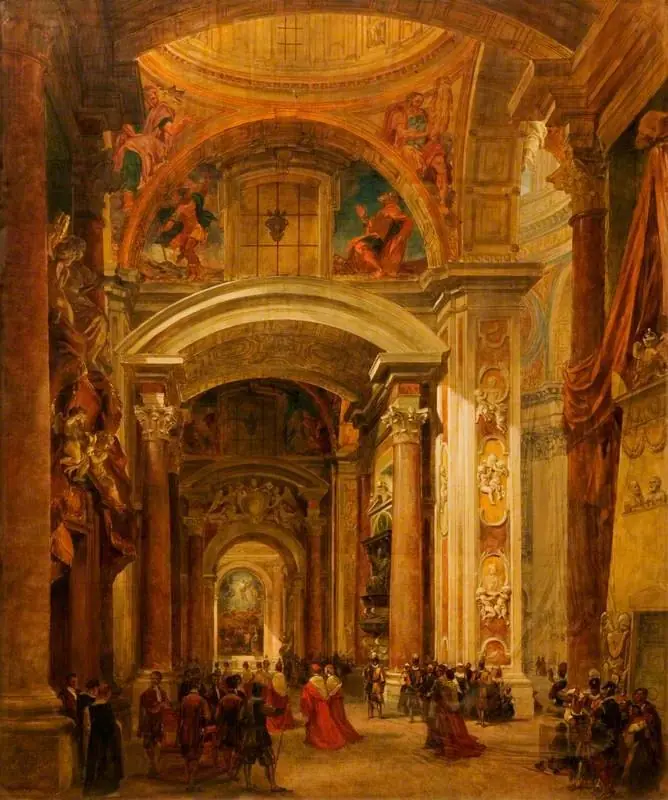 Interior of St Peter's, Rome
 The Corridor, Brewer's Hall, Antwerp
 Monument of the Cardinald D'Amboise in Rouen Cathedral
 The Quay at Suez
 Egypt and Nubia, Volume II: Lateral View of the Temple called The Typhonoeum at Dendera
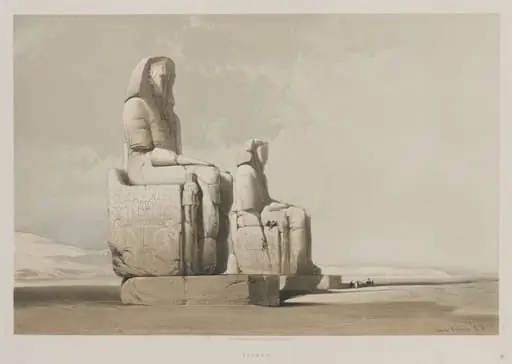 Egypt and Nubia, Volume I: Thebes
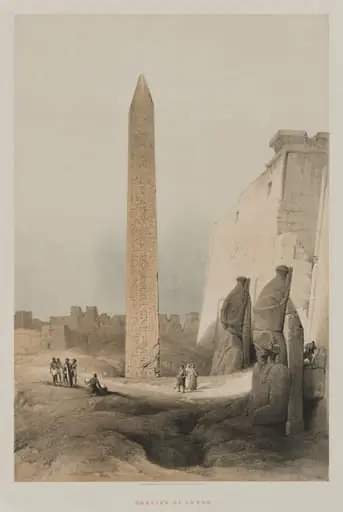 Egypt and Nubia, Volume I: Luxor
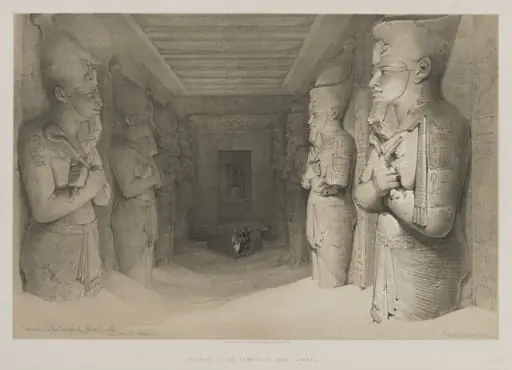 Egypt and Nubia, Volume I: Interior of the Temple of Aboo-Simbel
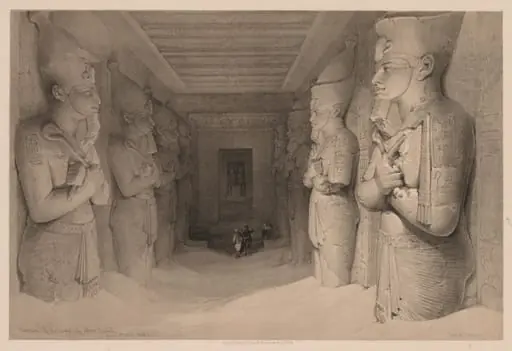 Egypt and Nubia: Volume I - No. 14, Interior of the Temple Aboo Simbel
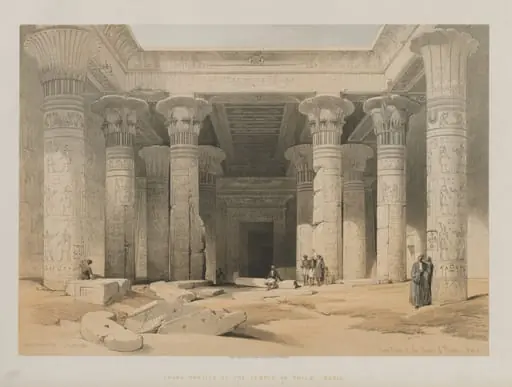 Egypt and Nubia, Volume I: Grand Portico of the Temple of Philae, Nubia
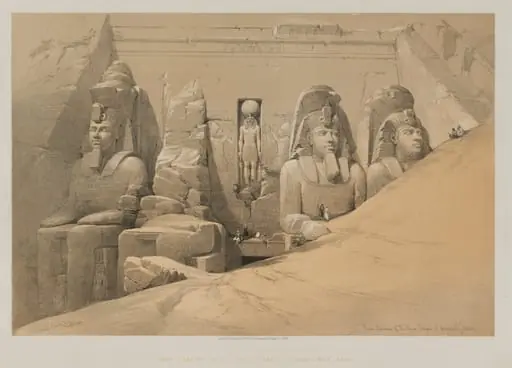 Egypt and Nubia, Volume II: Front Elevation of the Great Temple of Aboo Simbel, Nubia
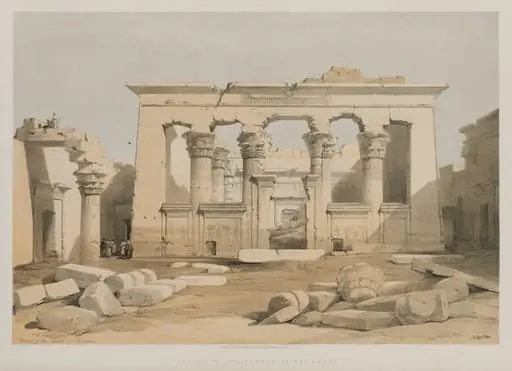 Egypt and Nubia, Volume I: Portico of the Temple of Kalabshe
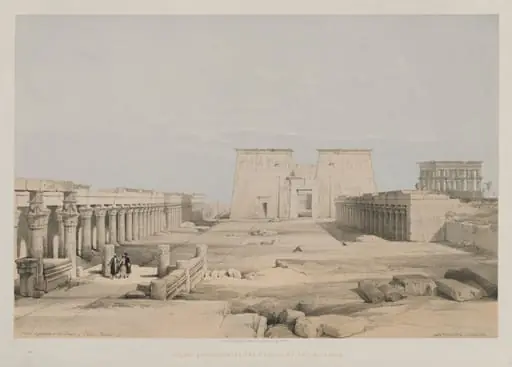 Egypt and Nubia, Volume I: Grand Approach to the Temple of Philae, Nubia
 Egypt and Nubia, Volume I: Temple at Esneh
 Egypt and Nubia, Volume I: View from Under the Portico of the Temple of Edfou, Upper Egypt