Artwork
Egypt and Nubia: Volume I - No. 1, No. 2, Remains of the Portico of the Temple of Kom Ombo
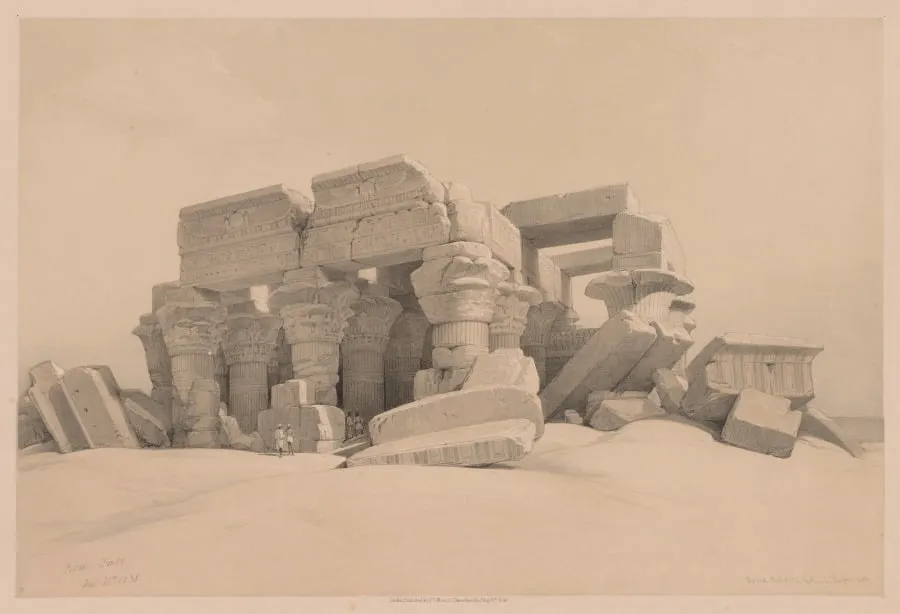
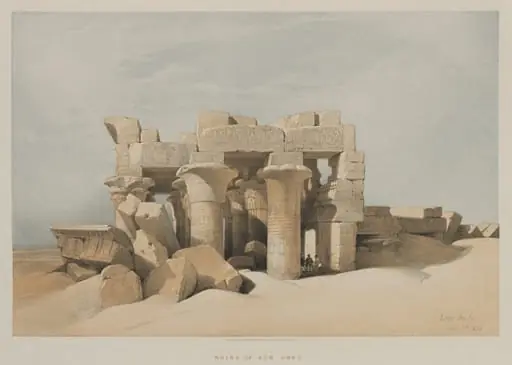
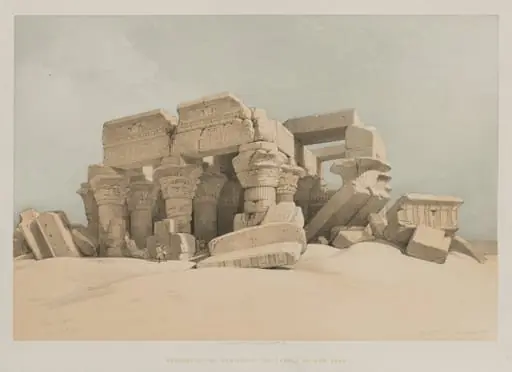
Egypt and Nubia: Volume I - No. 1, No. 2, Remains of the Portico of the Temple of Kom Ombo is a print by the Romanticist artist Louis Haghe. It dates from 1838 and is held in the collection of the Cleveland Museum of Art.
About this work
Overview
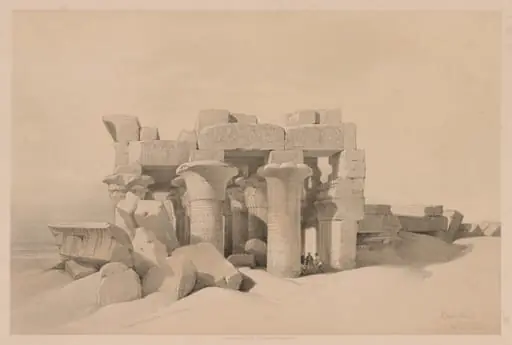
Louis Haghe’s 1838 lithograph records the remains of the portico at the Temple of Kom Ombo in Egypt. Part of a larger series on Egyptian and Nubian monuments, the print presents the fragmented stonework of the ruined entrance, emphasizing the weathered columns and decorative fragments that still survive in the desert landscape.
Subject & Meaning
The image focuses on the disassembled elements of the temple’s portico—broken blocks, carved heads, and column fragments—arranged amid a light‑colored sand. By depicting the ruins without embellishment, Haghe underscores the passage of time and the archaeological value of the surviving architectural details.
Technique & Style
Executed in lithography, a medium that Haghe mastered through his partnership in the Day & Hagge firm, the print employs a restrained palette of grays and beiges. The technique allows fine rendering of stone texture and the subtle gradations of light across the desert floor, conveying both the materiality of the ruins and their atmospheric setting.
History & Provenance
Created in 1838, the work formed part of an early Victorian effort to document Egyptian and Nubian sites for a European audience. The lithograph now belongs to the collection of the Cleveland Museum of Art, where it is preserved as an example of 19th‑century archaeological illustration.
Artist & collection
Artist
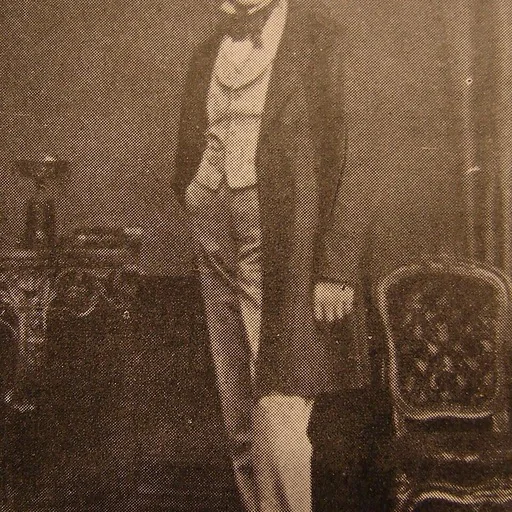
Louis Haghe (17 March 1806 – 9 March 1885) was a lithographer and watercolourist from the Netherlands and then the United Kingdom.

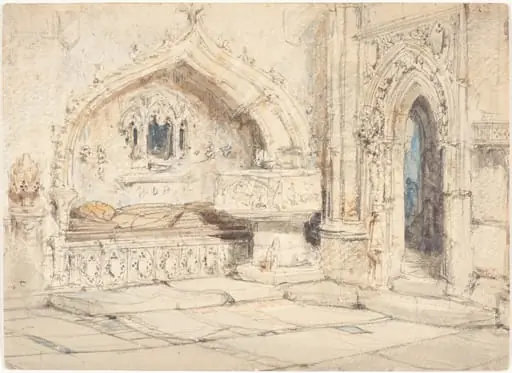 Interior of a Church with a Wall Tomb and Medieval Font
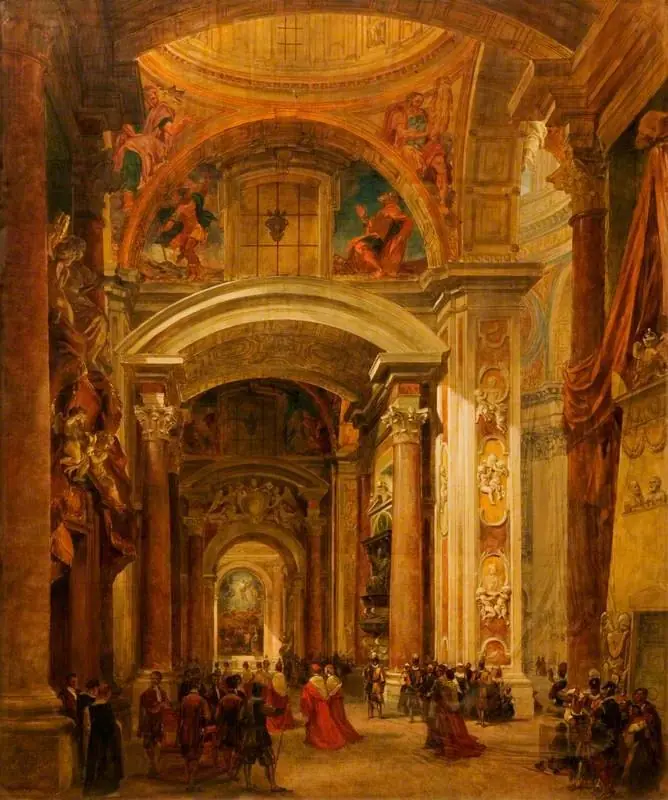 Interior of St Peter's, Rome
 The Corridor, Brewer's Hall, Antwerp
 Monument of the Cardinald D'Amboise in Rouen Cathedral
 The Quay at Suez
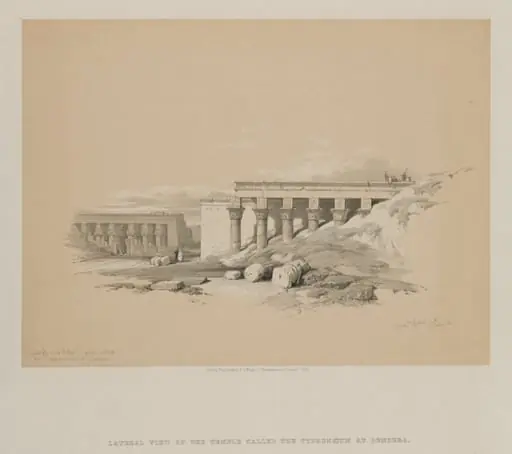 Egypt and Nubia, Volume II: Lateral View of the Temple called The Typhonoeum at Dendera
 Egypt and Nubia, Volume I: Thebes
 Egypt and Nubia, Volume I: Luxor
 Egypt and Nubia: Volume II - No. 42, Ruins of Kom Ombo
 Egypt and Nubia, Volume I: Kom-Ombo
 Egypt and Nubia, Volume II: Kom-Ombo
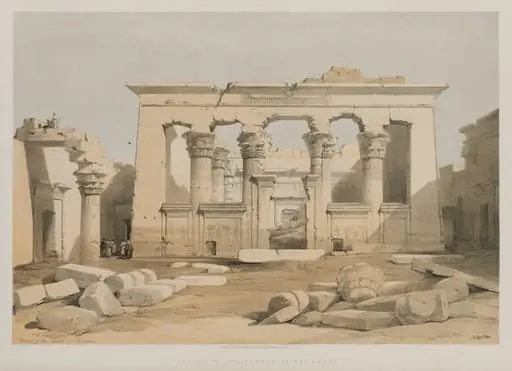 Egypt and Nubia, Volume I: Portico of the Temple of Kalabshe
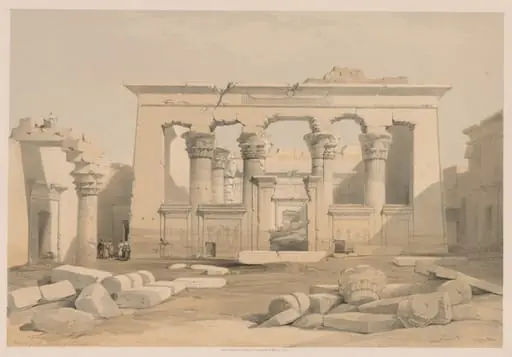 Egypt and Nubia: Volume I - No. 28, Portico of the Temple of Kalabshi
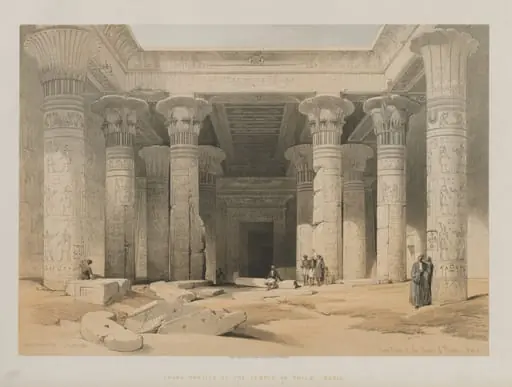 Egypt and Nubia, Volume I: Grand Portico of the Temple of Philae, Nubia
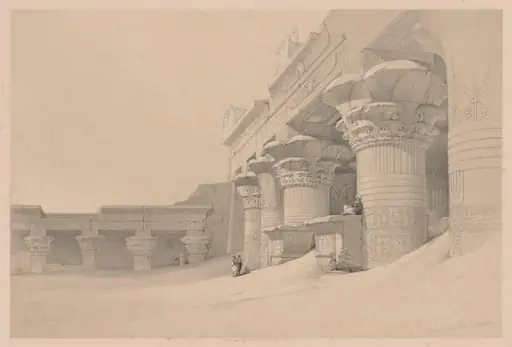 Egypt and Nubia: Volume I - No. 10, Edfou
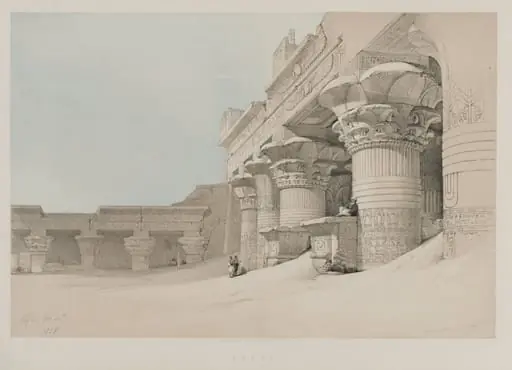 Egypt and Nubia, Volume II: Edfou
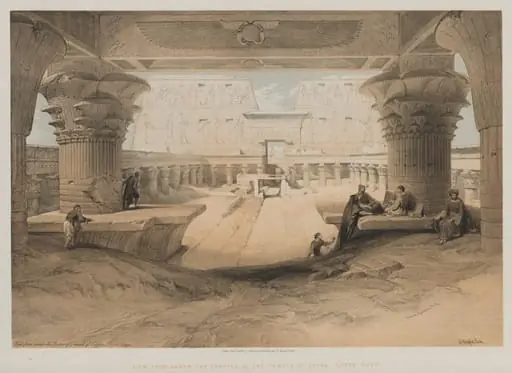 Egypt and Nubia, Volume I: View from Under the Portico of the Temple of Edfou, Upper Egypt
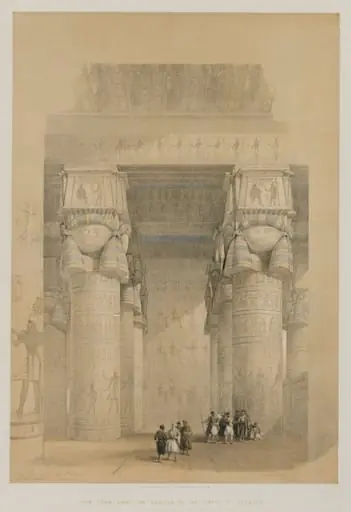 Egypt and Nubia, Volume II: View from Under the Portico of the Temple of Dendera
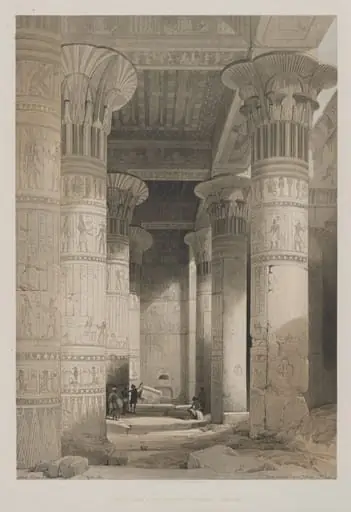 Egypt and Nubia, Volume I: View Under the Grand Portico of the Temple, Philae
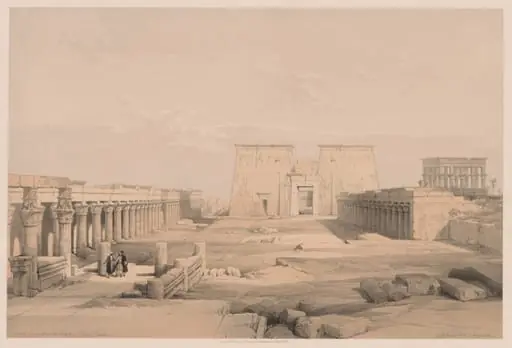 Egypt and Nubia: Volume I - No. 42, Grand Approach to the Temple of Philae, Nubia