Artwork
Egypt and Nubia, Volume II: Edfou
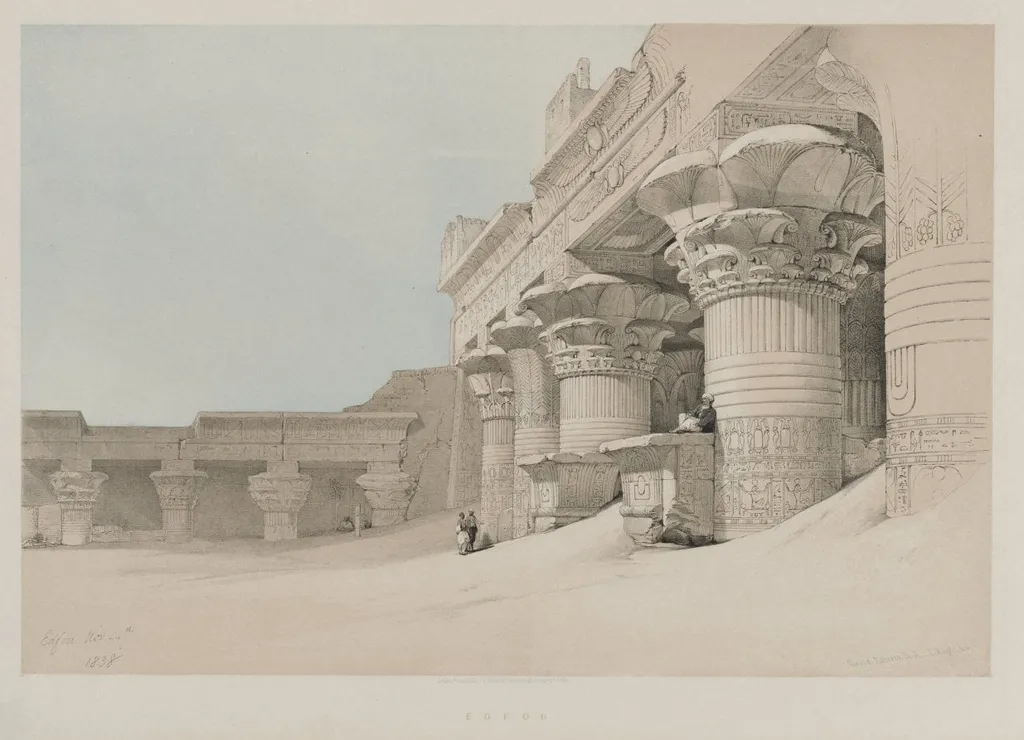
Egypt and Nubia, Volume II: Edfou is a print by the Romanticist artist Louis Haghe. It dates from 1846 and is held in the collection of the Cleveland Museum of Art.
About this work
Overview
Haghe, a British artist of Belgian descent, specialized in lithography and collaborated with the firm Day & Haghe to produce detailed topographical prints.
Created in 1846 by Louis Haghe, this lithograph is part of the second volume of a documented survey of Egyptian and Nubian monuments. Haghe, a British artist of Belgian descent, specialized in lithography and collaborated with the firm Day & Haghe to produce detailed topographical prints. The work emerged during a period of heightened European interest in antiquities, driven by archaeological exploration and colonial expansion.
Subject & Meaning
The image depicts the Temple of Edfu, one of Egypt’s best-preserved ancient sites, rendered with attention to its architectural grandeur. Tall, fluted columns and carved reliefs dominate the composition, while two diminutive figures near the entrance provide scale and emphasize the monument’s enduring presence. The scene conveys neither narrative nor myth, but rather a documentary intent: to record the physical remains of a civilization long past.
Technique & Style
Haghe employed lithography to achieve fine detail and tonal nuance, capturing weathered stonework and intricate hieroglyphic carvings with precision. His background in watercolor informed the delicate handling of light and texture, lending the print a sense of atmospheric realism. The composition is carefully structured, prioritizing architectural accuracy over dramatic effect, aligning with 19th-century conventions of archaeological illustration.
History & Provenance
The print was produced as part of a multi-volume publication commissioned to catalog ancient sites along the Nile. Haghe’s collaboration with Day & Haghe ensured wide distribution across European institutions and private collections. While specific ownership history prior to museum acquisition is not documented, such works were commonly collected by scholars, travelers, and cultural institutions seeking to preserve visual records of distant antiquities.
Context
This work reflects the broader 19th-century trend of European expeditions to document Egypt’s ruins, spurred by Napoleon’s campaign and the decipherment of hieroglyphs. Artists like Haghe served as visual recorders, translating archaeological findings into accessible formats for audiences unfamiliar with the region. Their efforts contributed to the rise of Egyptology as a scholarly discipline and shaped Western perceptions of ancient Egypt.
Legacy
Haghe’s prints remain valuable as historical documents, preserving architectural details that may have since deteriorated. Though superseded by photography, his lithographs represent a critical transitional phase in the documentation of cultural heritage. They continue to inform museum displays and academic study, offering insight into how 19th-century observers interpreted and valued ancient monuments.
Artist & collection
Artist
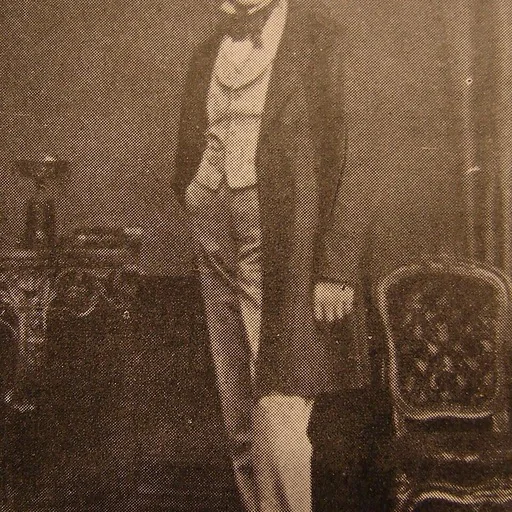
Louis Haghe (17 March 1806 – 9 March 1885) was a lithographer and watercolourist from the Netherlands and then the United Kingdom.

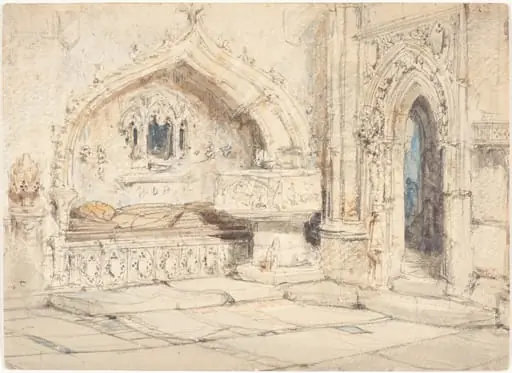 Interior of a Church with a Wall Tomb and Medieval Font
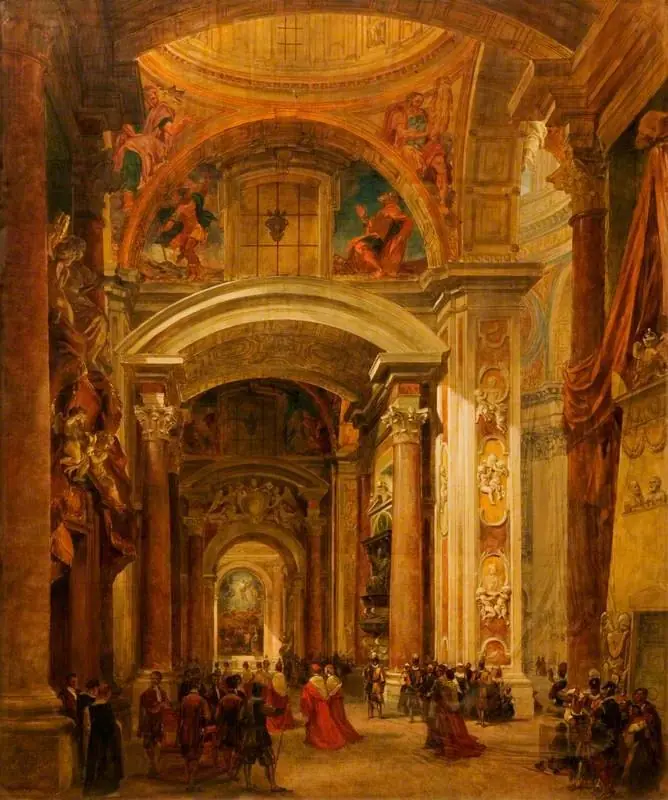 Interior of St Peter's, Rome
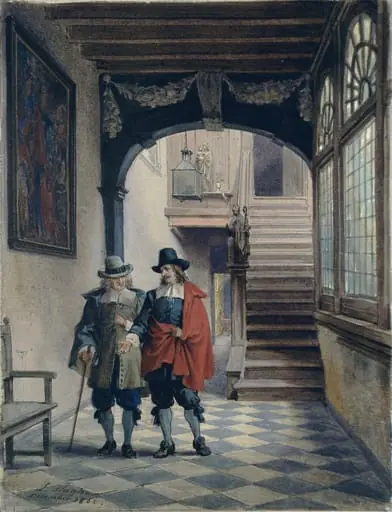 The Corridor, Brewer's Hall, Antwerp
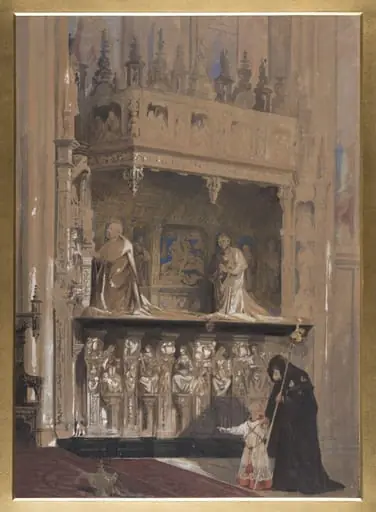 Monument of the Cardinald D'Amboise in Rouen Cathedral
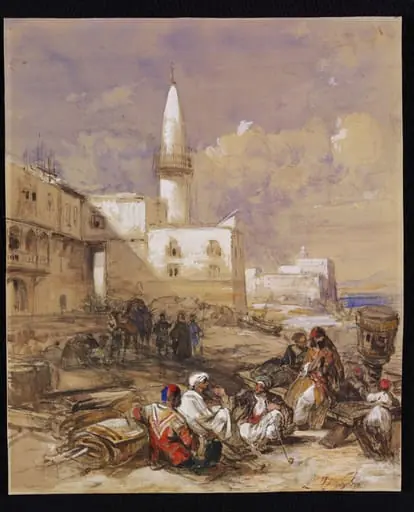 The Quay at Suez
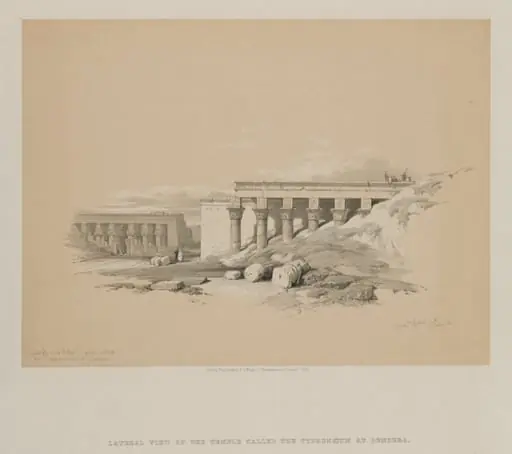 Egypt and Nubia, Volume II: Lateral View of the Temple called The Typhonoeum at Dendera
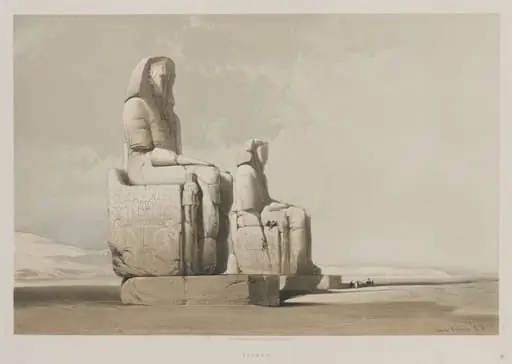 Egypt and Nubia, Volume I: Thebes
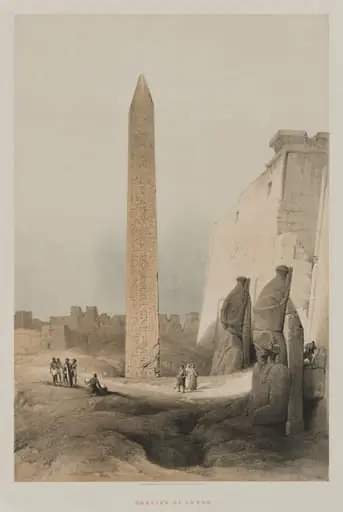 Egypt and Nubia, Volume I: Luxor
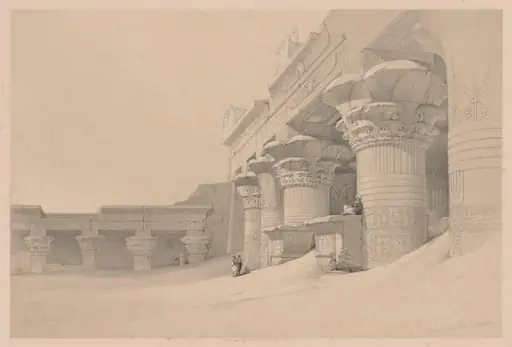 Egypt and Nubia: Volume I - No. 10, Edfou
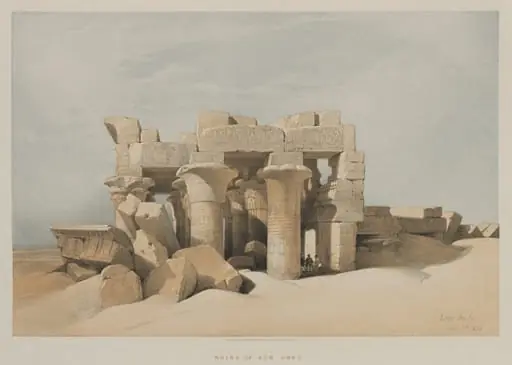 Egypt and Nubia, Volume I: Kom-Ombo
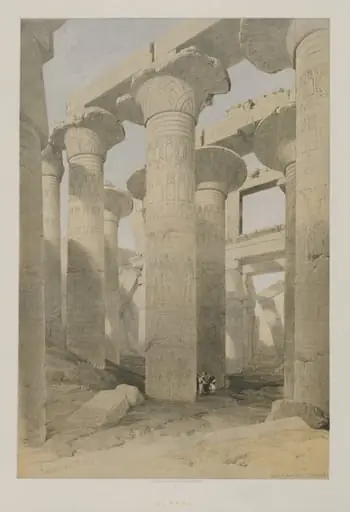 Egypt and Nubia, Volume II: Karnac
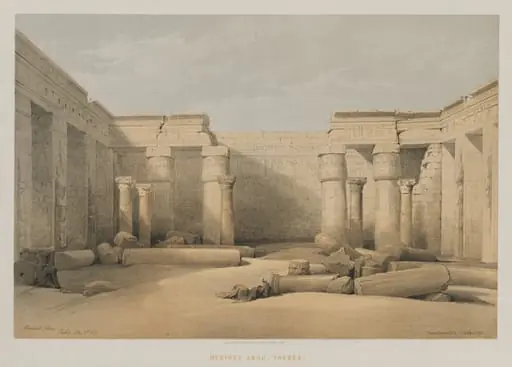 Egypt and Nubia, Volume II: Medinet Abou, Thebes
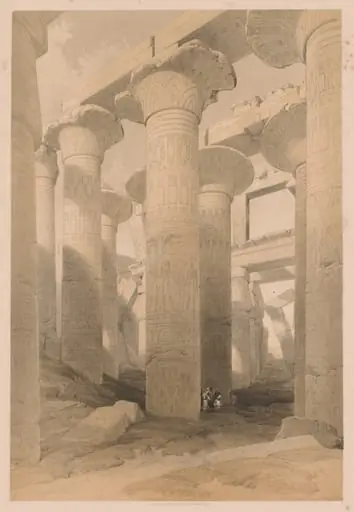 Egypt and Nubia: Volume II - No. 14, Karnak
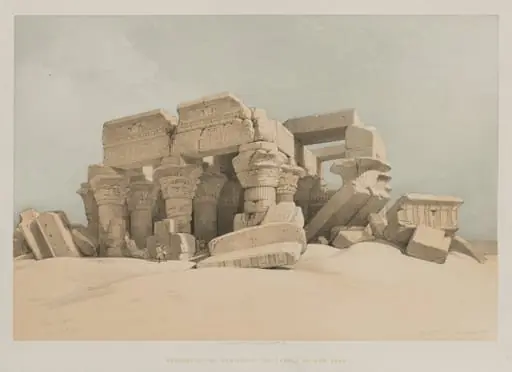 Egypt and Nubia, Volume II: Kom-Ombo
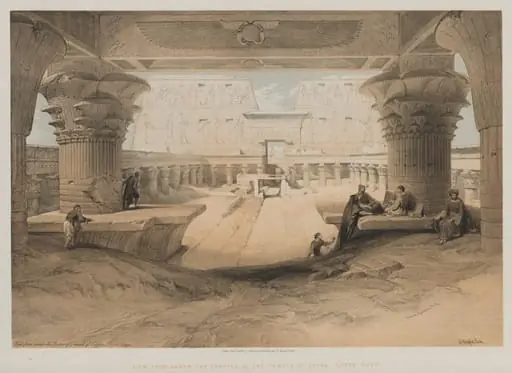 Egypt and Nubia, Volume I: View from Under the Portico of the Temple of Edfou, Upper Egypt
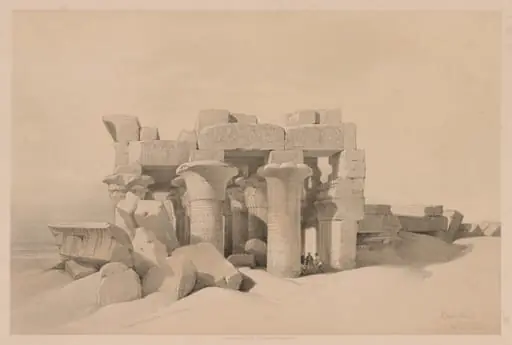 Egypt and Nubia: Volume II - No. 42, Ruins of Kom Ombo
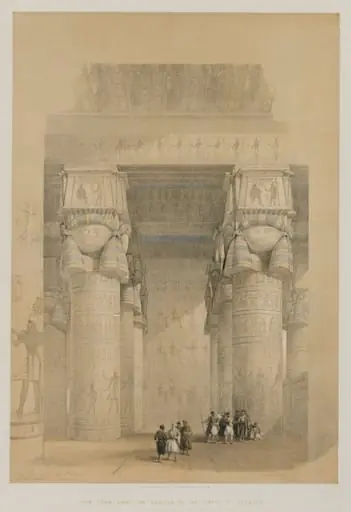 Egypt and Nubia, Volume II: View from Under the Portico of the Temple of Dendera