Artwork
Egypt and Nubia, Volume II: Ruins - Temple on the Island of Biggeh, Nubia
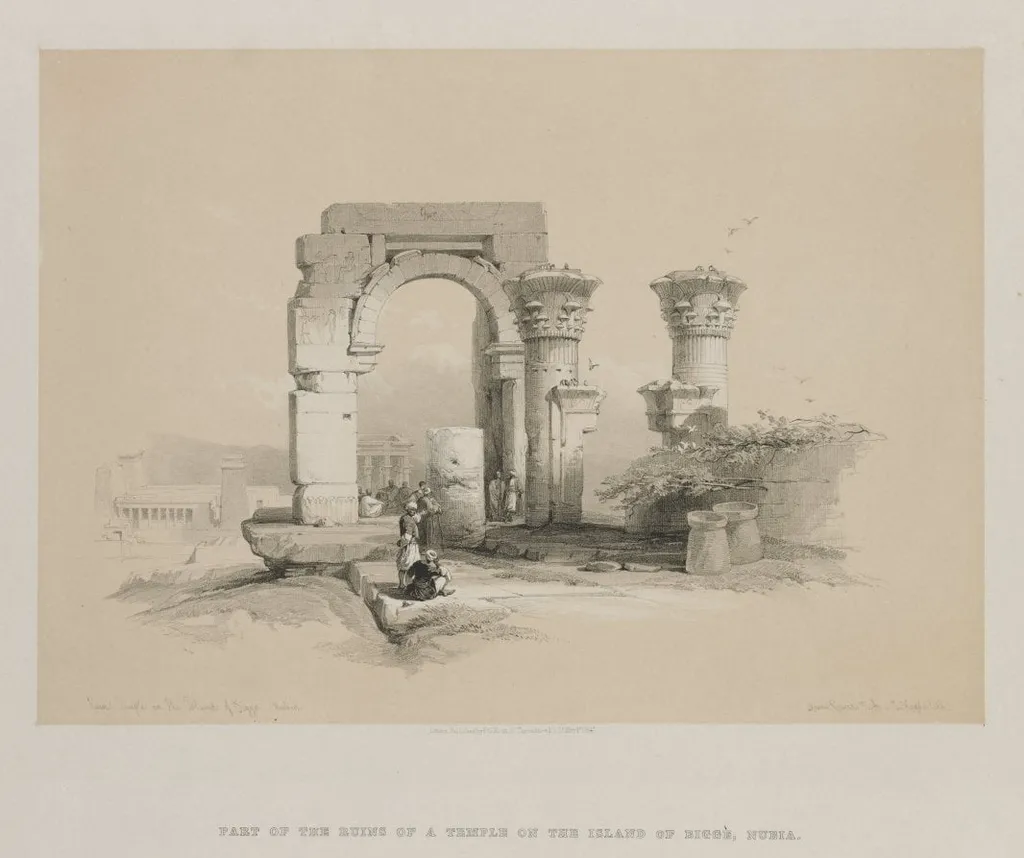
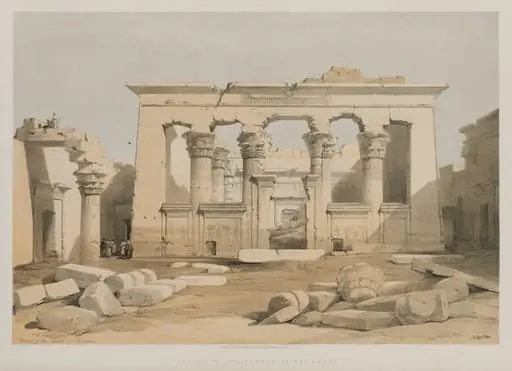
Egypt and Nubia, Volume II: Ruins - Temple on the Island of Biggeh, Nubia is a print by the Romanticist artist Louis Haghe. It dates from 1847 and is held in the collection of the Cleveland Museum of Art. This 1847 lithographic print portrays the remains of a temple situated on the island of Biggeh in Nubia, now within Sudan’s borders.
About this work
Overview
This 1847 lithographic print portrays the remains of a temple situated on the island of Biggeh in Nubia, now within Sudan’s borders.
This 1847 lithographic print portrays the remains of a temple situated on the island of Biggeh in Nubia, now within Sudan’s borders. The composition captures fragmented stonework, two standing columns with elaborately carved capitals, and a partially collapsed archway, all set against a shallow pool where a small boat drifts. Figures in loose garments wander among the ruins, emphasizing the site’s historic atmosphere.
Subject & Meaning
The image records the physical decay of an ancient sanctuary, highlighting the juxtaposition of monumental architecture and the encroaching natural environment. The presence of contemporary travelers suggests ongoing interest in the region’s archaeological heritage during the mid‑19th century, while the tranquil water and modest vegetation hint at the island’s enduring ecological context.
Technique & Style
Executed by lithographer Louis Haghe, the work combines precise line work with subtle tonal washes characteristic of early Victorian printmaking. Haghe’s training in watercolor informs the delicate shading of stone surfaces and water, while the lithographic process allows for fine detail in the carved column capitals and the rendering of distant figures.
History & Provenance
Created as part of the series "Egypt and Nubia, Volume II: Ruins," the print was produced by the London firm Day & Haghe, which Haghe co‑founded. The series aimed to document notable Egyptian and Nubian monuments for a European audience, reflecting the period’s burgeoning interest in Egyptology and travel literature.
Context
The island of Biggeh lies in the Nile’s Nubian stretch, an area that attracted explorers and scholars during the 19th‑century surge of archaeological investigation. Haghe’s depiction aligns with contemporary efforts to record and disseminate visual information about remote sites before the advent of photography, contributing to Western knowledge of Nubian architecture.
Artist & collection
Artist
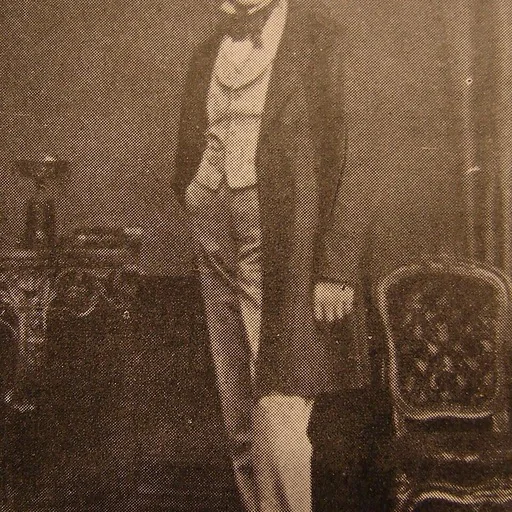
Louis Haghe (17 March 1806 – 9 March 1885) was a lithographer and watercolourist from the Netherlands and then the United Kingdom.

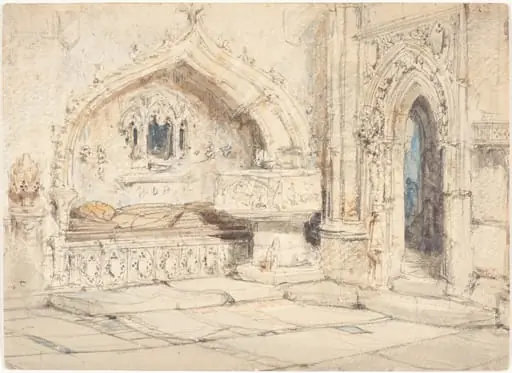 Interior of a Church with a Wall Tomb and Medieval Font
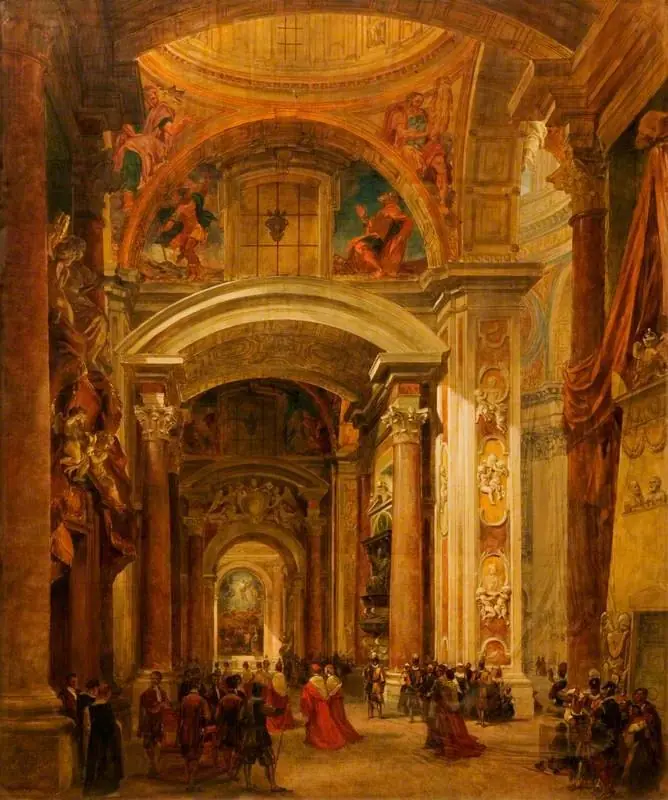 Interior of St Peter's, Rome
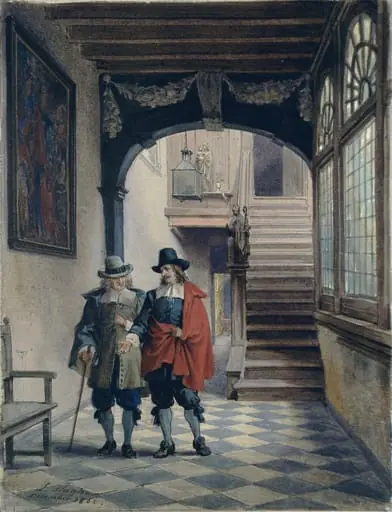 The Corridor, Brewer's Hall, Antwerp
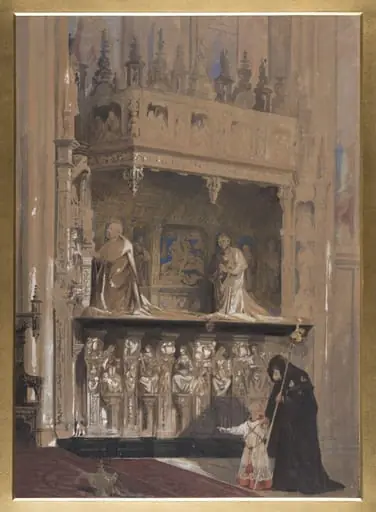 Monument of the Cardinald D'Amboise in Rouen Cathedral
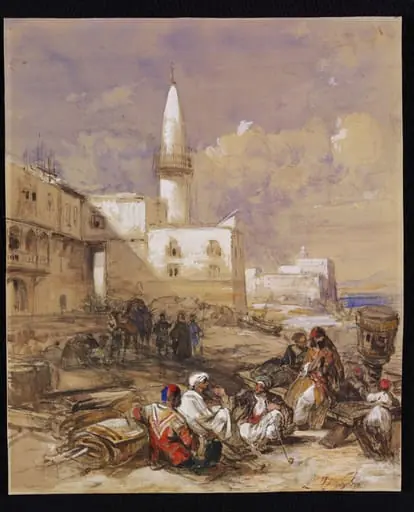 The Quay at Suez
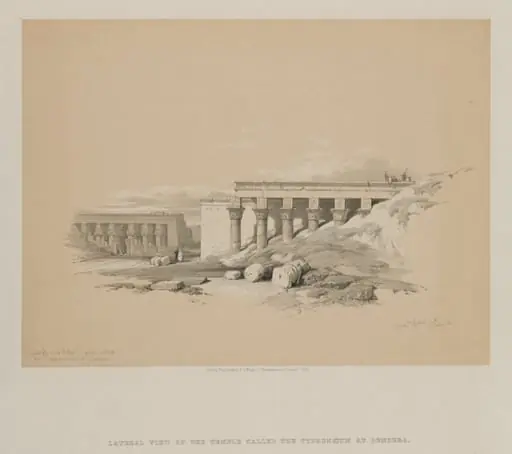 Egypt and Nubia, Volume II: Lateral View of the Temple called The Typhonoeum at Dendera
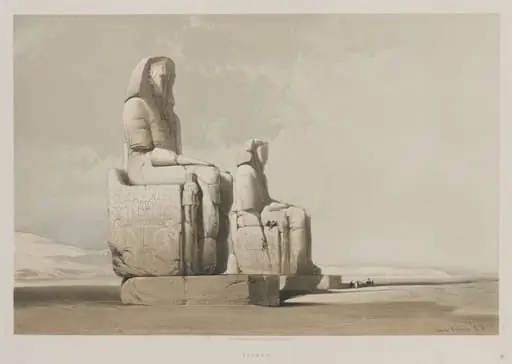 Egypt and Nubia, Volume I: Thebes
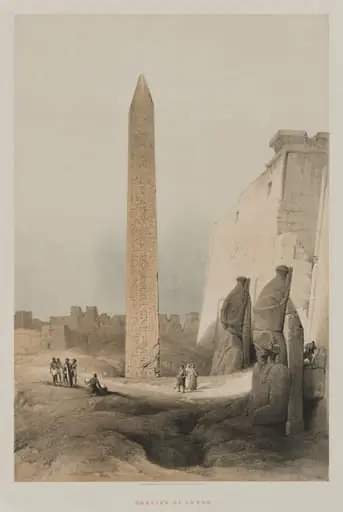 Egypt and Nubia, Volume I: Luxor
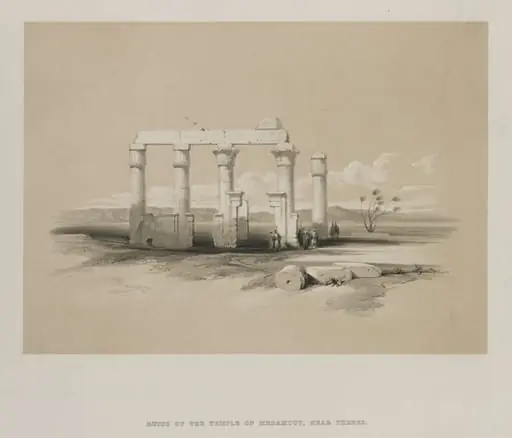 Egypt and Nubia, Volume II: Ruins of the Temple of Madamoud, at Thebes
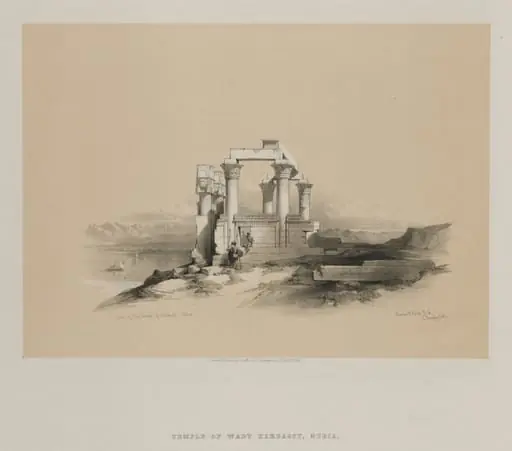 Egypt and Nubia, Volume II: Ruins of the Temple of Kardeseh, Nubia
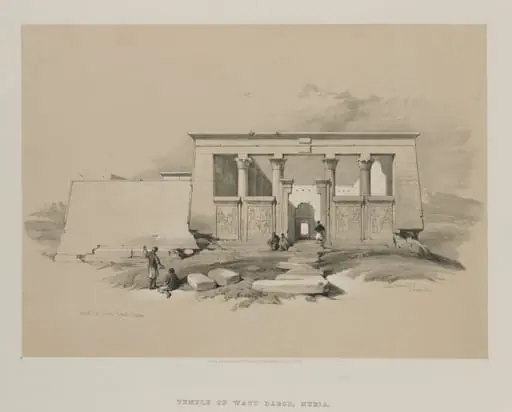 Egypt and Nubia, Volume II: Temple at Wady Dabod, Nubia
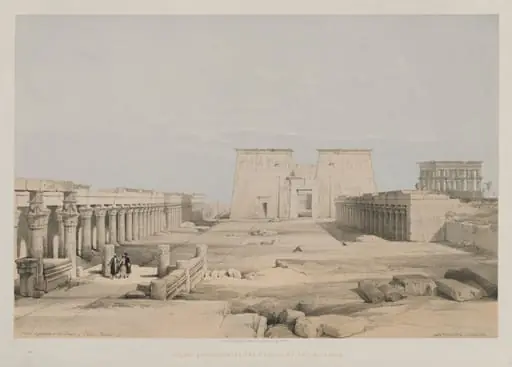 Egypt and Nubia, Volume I: Grand Approach to the Temple of Philae, Nubia
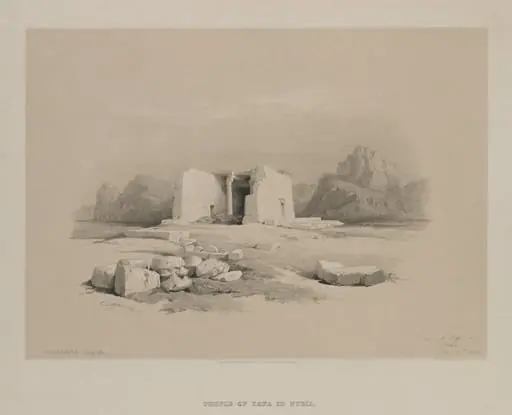 Egypt and Nubia, Volume I: Temple at Tafa in Nubia
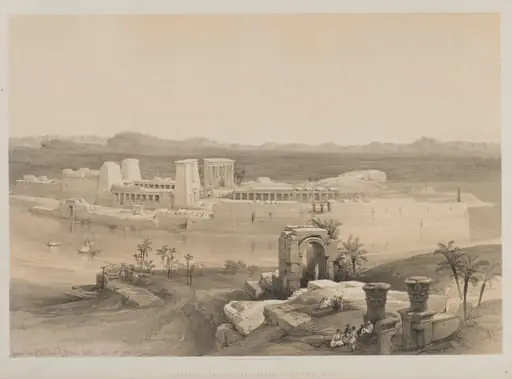 Egypt and Nubia, Volume I: General View of the Island of Philae, Nubia
 Egypt and Nubia, Volume I: Portico of the Temple of Kalabshe