Artwork
Tomb of De Merode's Family, Gheel
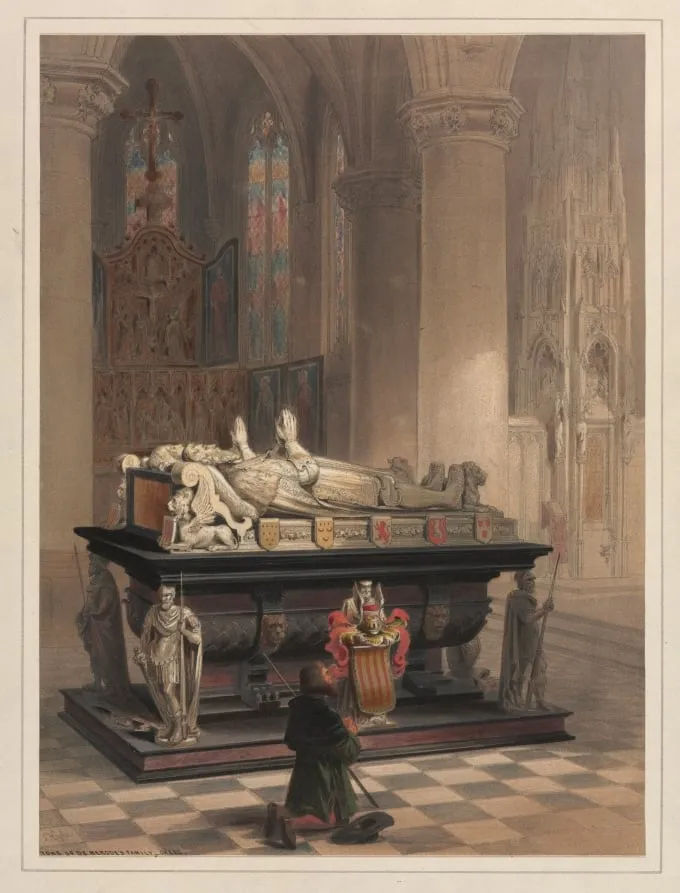
Tomb of De Merode's Family, Gheel is a print by Louis Haghe. It dates from 1855 and is held in the collection of the Cleveland Museum of Art.
About this work
Overview
Louis Haghe, a Dutch-born artist active in Britain, produced this print around 1855 as part of his work in lithography. He co-founded the London firm Day & Haghe, known for high-quality topographical prints. The piece captures a specific funerary monument in Gheel, Belgium, rendered with precision and atmospheric detail, reflecting Haghe’s transition from watercolor to printmaking.
Subject & Meaning
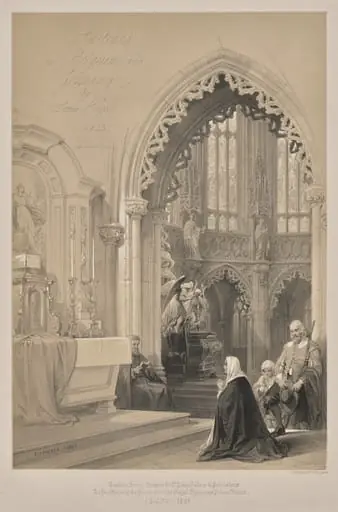
A kneeling figure in green, possibly a clergyman or family member, holds a staff, reinforcing the ritual nature of the space.
The print centers on the tomb of the De Merode family, featuring a recumbent marble effigy of a knight in prayerful repose. Surrounding the tomb are heraldic symbols and saintly figures, emphasizing lineage and piety. A kneeling figure in green, possibly a clergyman or family member, holds a staff, reinforcing the ritual nature of the space. The scene conveys quiet devotion and the enduring presence of noble memory within sacred architecture.
Technique & Style
Haghe employed lithographic methods to achieve fine tonal gradations and intricate detail. The composition uses controlled light and shadow to highlight the marble effigy and carved ornamentation, while the stained-glass windows cast colored illumination across the stone floor. The rendering balances architectural accuracy with a subdued, reverent mood, characteristic of 19th-century topographical prints.
History & Provenance
The work originates from Haghe’s series documenting European monuments and ecclesiastical sites. Likely commissioned or published as part of a travel-oriented print collection, it reflects mid-19th-century European interest in historical preservation and regional heritage. The print was produced in London, where Haghe’s firm catered to collectors and institutions seeking accurate visual records of continental architecture.
Context
In the 1850s, lithography became a primary medium for documenting architecture and antiquities, especially in religious settings. Gheel, known for its medieval churches and veneration of Saint Dymphna, attracted artists and antiquarians. Haghe’s depiction aligns with broader efforts to preserve visual records of sacred spaces amid industrialization and changing religious practices in Europe.
Legacy
Haghe’s prints, including this one, remain valuable as historical documents of 19th-century ecclesiastical art and architecture. Though not widely exhibited today, his work contributed to the standardization of topographical accuracy in print media. The piece exemplifies how lithography served both aesthetic and archival purposes in an era before photography became dominant.
Artist & collection
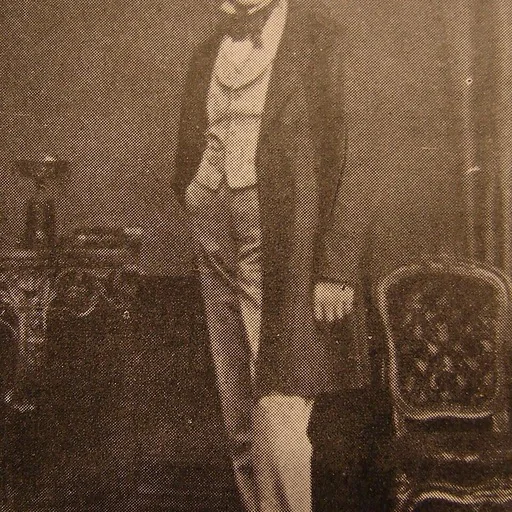
Artist
Louis Haghe (17 March 1806 – 9 March 1885) was a lithographer and watercolourist from the Netherlands and then the United Kingdom.

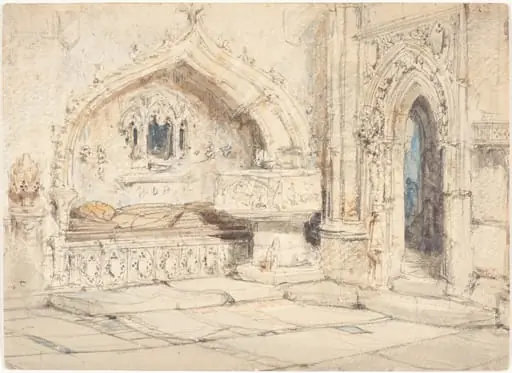 Interior of a Church with a Wall Tomb and Medieval Font
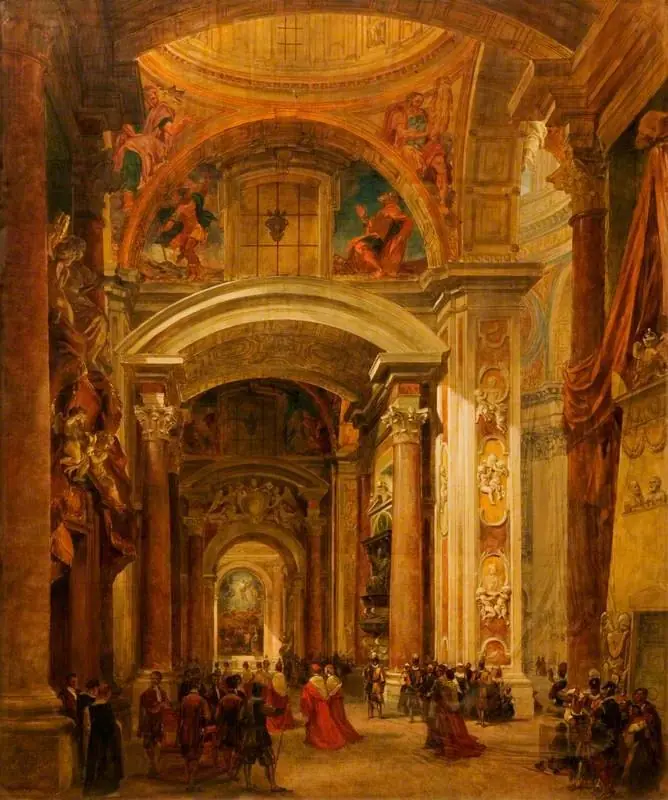 Interior of St Peter's, Rome
 The Corridor, Brewer's Hall, Antwerp
 Monument of the Cardinald D'Amboise in Rouen Cathedral
 The Quay at Suez
 Egypt and Nubia, Volume II: Lateral View of the Temple called The Typhonoeum at Dendera
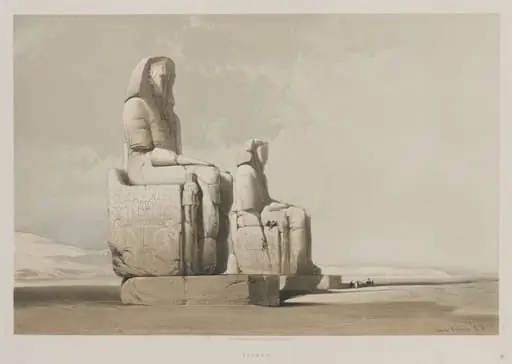 Egypt and Nubia, Volume I: Thebes
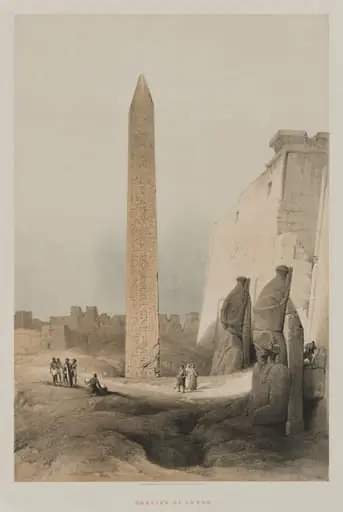 Egypt and Nubia, Volume I: Luxor
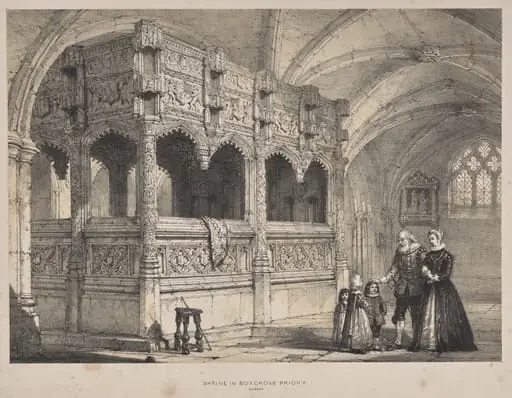 Architecture of the Middle Ages: Shrine of the Countess de la Warre in Boxgrove Priory, Sussex
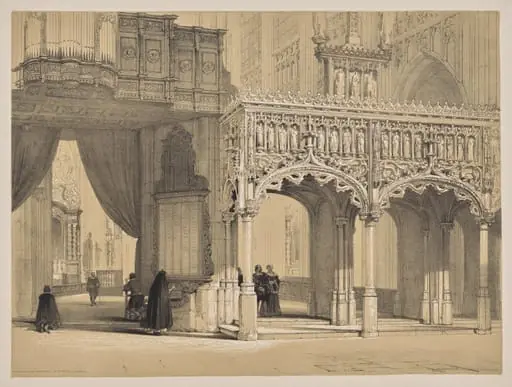 Sketches in Belgium and Germany, First Series, Screen in the Cathedral of St. Peter, Louvain
 Sketches in Belgium and Germany, Second Series: No. 1 - Title Page - St. Jacques, Liege
 Architecture of the Middle Ages: Bishop Fox's Chantry, Winchester Cathedral
 Tomb of the Crofts family at Chipping Norton church, Oxfordshire
 Tombeau de Marguerite de Bourbon. Église de Brou (Tomb of Marguerite de Bourbon, Church at Brou)
 Sketches in Belgium and Germany, Second Series: No. 26 - Tomb of Rubens, St. Jacques, Antwerp
 Sketches in Belgium and Germany, Second Series: No. 20 - Portail, Church of St. Peter, Louvain
 Architecture of the Middle Ages: In Arundel Church, Sussex
 The supposed tomb of Thomas Fiennes, in Herstmonceux Church, Sussex, looking south-east from the North Chapel
 Sketches in Belgium and Germany, First Series, The Holy Well in the Cathedral of Ratisbon
 Sketches in Belgium and Germany, First Series, Tomb of Maximilian 1st, Innsbruck