Artwork
Architecture of the Middle Ages: In Arundel Church, Sussex
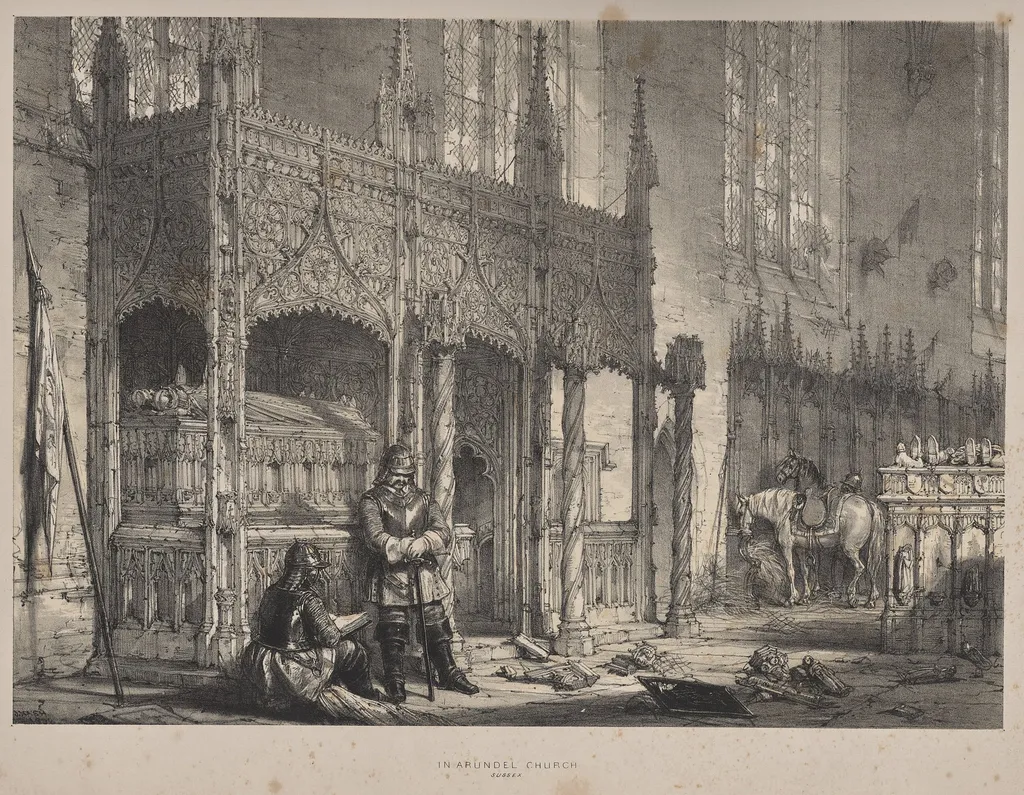
Architecture of the Middle Ages: In Arundel Church, Sussex is a print by the Romanticist artist Joseph Nash. It dates from 1832 and is held in the collection of the Cleveland Museum of Art.
About this work
Overview
Architecture of the Middle Ages: In Arundel Church, Sussex is a 1832 watercolour by Joseph Nash, depicting the interior of Arundel Church in Sussex, highlighting its Gothic architectural features.
Subject & Meaning
The work contrasts the worn, plain interior of the church with the intricately carved Gothic window, subtly commenting on the preservation of medieval heritage. Two figures in refined attire are shown amidst the decay, one engaged with a book, the other leaning on a staff, underscoring a sense of contemplation or documentation amidst neglect.
Technique & Style
Executed in meticulous black and white, the piece showcases Nash's meticulous attention to architectural detail, characteristic of 19th-century artistic practices focused on recording historical buildings. The detailed rendering of the window's carvings and the textured, cluttered floor demonstrate Nash's skill in capturing contrast and texture through monochrome.
History & Provenance
Created in 1832, this watercolour is an early example of Nash's dedication to medieval architecture, later fully expressed in his *Mansions of England in the Olden Time*. The current location of the piece is not specified in the provided information.
Context
Reflecting the 19th-century interest in preserving historical architectural records, Nash's work aligns with a broader artistic movement to document medieval structures before potential alteration or decay.
Legacy
While the piece's direct legacy is not detailed, it contributes to Nash's overall body of work that influenced the documentation and appreciation of medieval English architecture.
Artist & collection
Artist
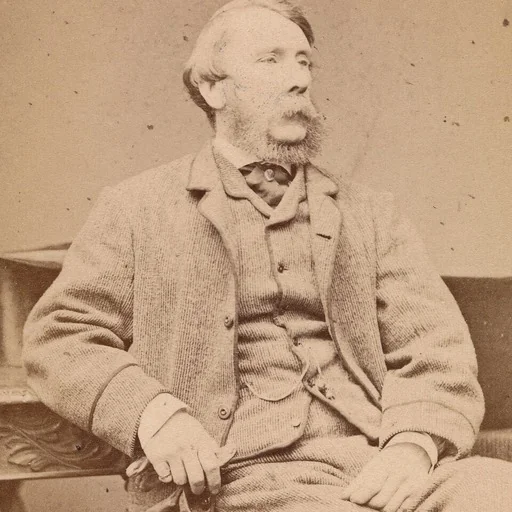
Joseph Nash (17 December 1809 – 19 December 1878) was an English watercolour painter and lithographer, specialising in historical buildings. His major work was the 4-volume Mansions of England in the Olden Time, published from 1839–49.

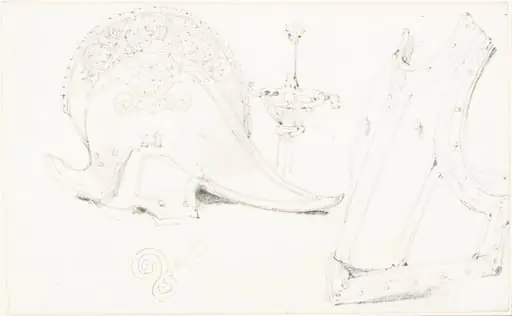 Study of a Helmet, Breastplate, and Rapier
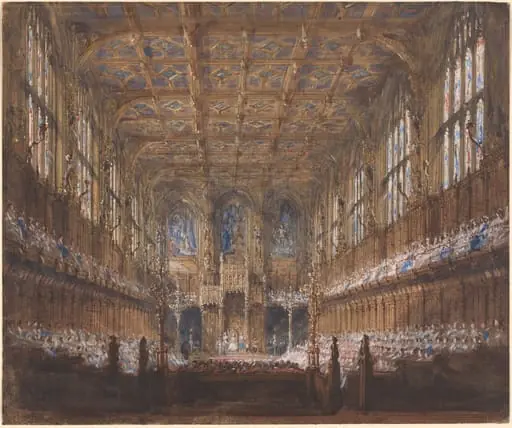 The State Opening of Parliament in the Rebuilt House of Lords
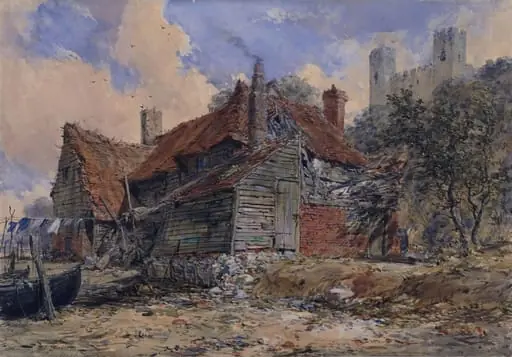 Rochester
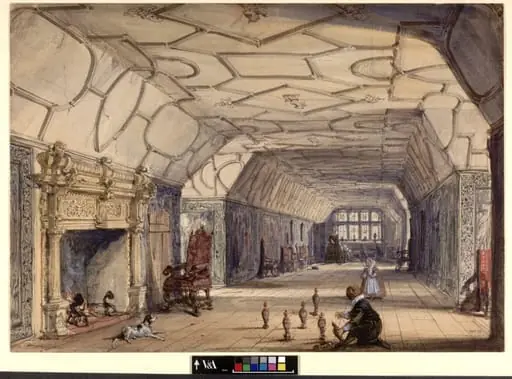 The gallery at Knole House, near Sevenoaks
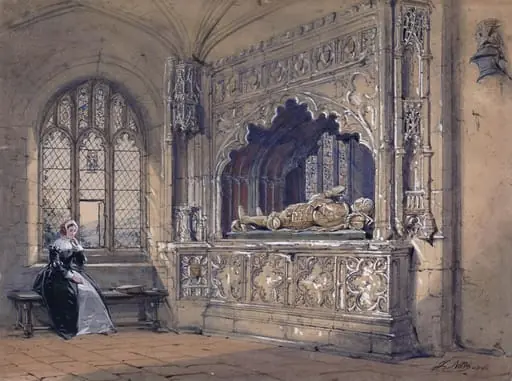 The supposed tomb of Thomas Fiennes, in Herstmonceux Church, Sussex, looking south-east from the North Chapel
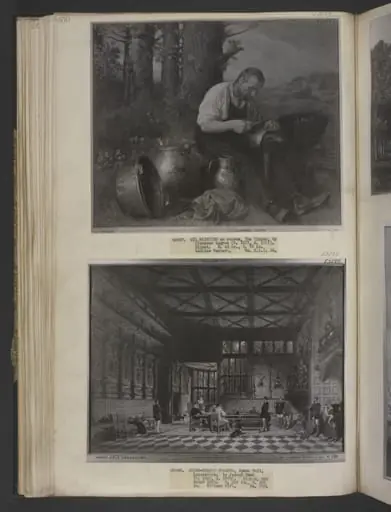 Speke Hall, Lancashire
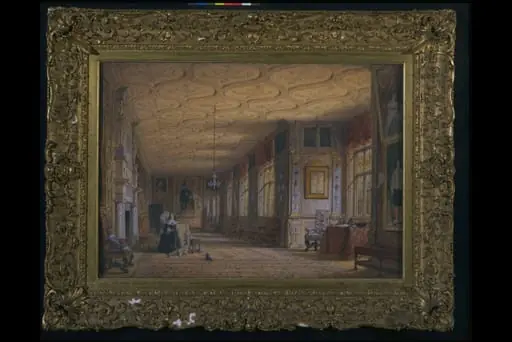 The Cartoon Gallery at Knole
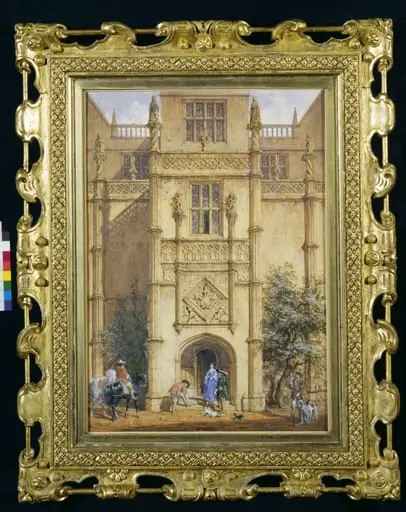 The Porch at Montacute House, Somerset
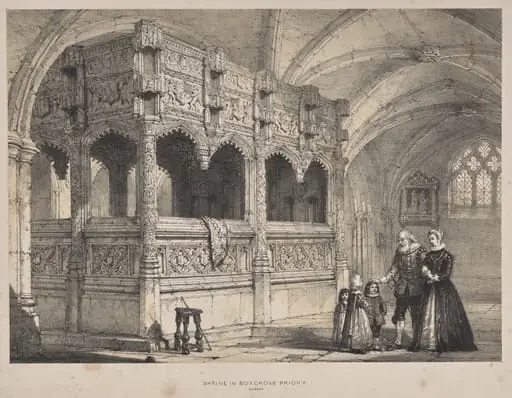 Architecture of the Middle Ages: Shrine of the Countess de la Warre in Boxgrove Priory, Sussex
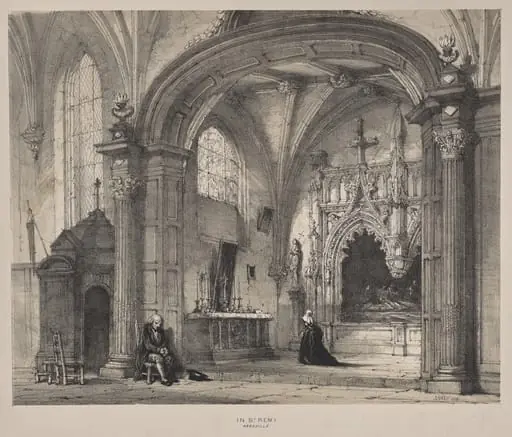 Architecture of the Middle Ages: In St. Remi, Abbeville
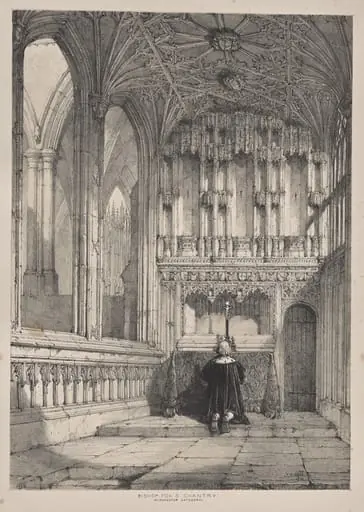 Architecture of the Middle Ages: Bishop Fox's Chantry, Winchester Cathedral
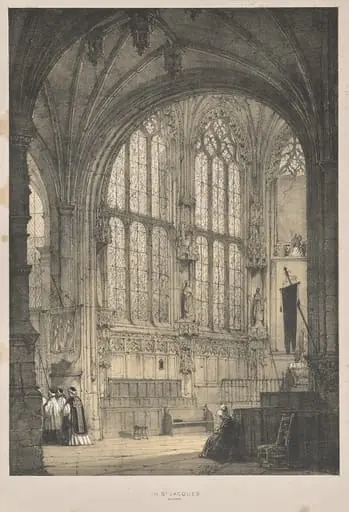 Architecture of the Middle Ages: In St. Jacques, Dieppe, East End, Interior
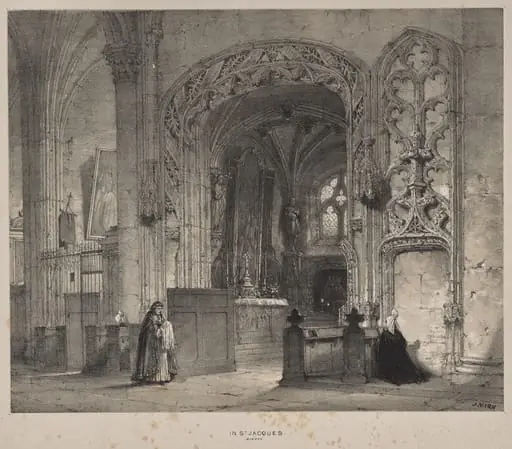 Architecture of the Middle Ages: Chapel in St. Jacques, Dieppe
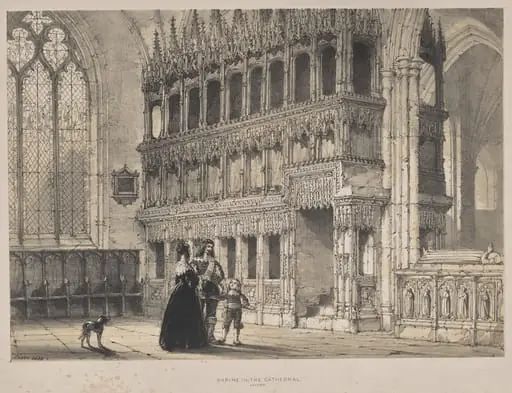 Architecture of the Middle Ages: Shrine of St. Fridswode, Cathedral, Oxford
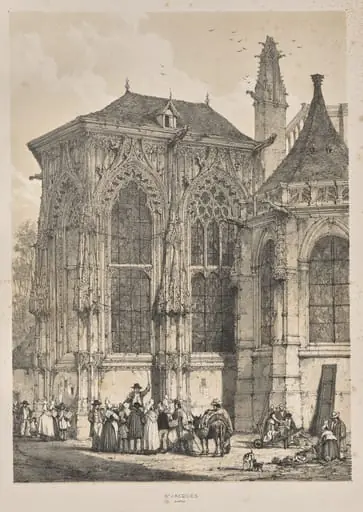 Architecture of the Middle Ages: St. Jacques, Dieppe, East End, Exterior
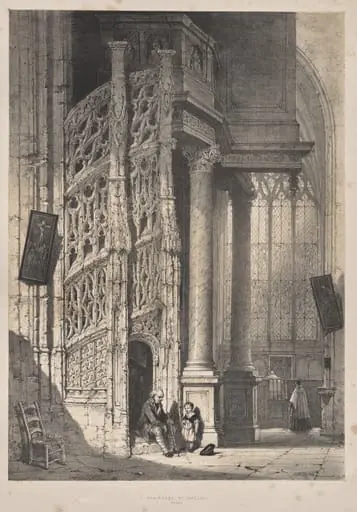 Architecture of the Middle Ages: Staircase, St. Maclou, Rouen
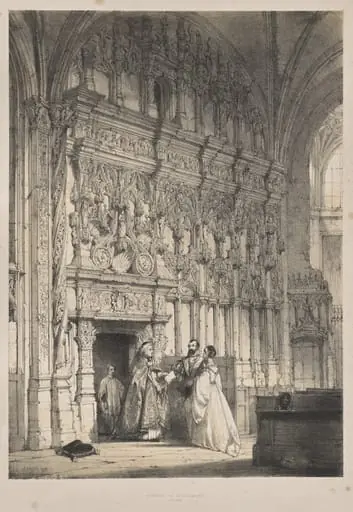 Architecture of the Middle Ages: Screen in St. Jacques, Dieppe
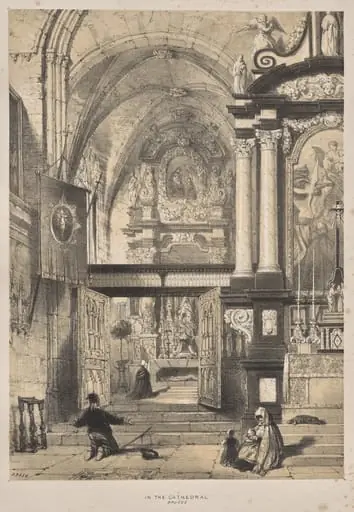 Architecture of the Middle Ages: In the Cathedral, Bruges
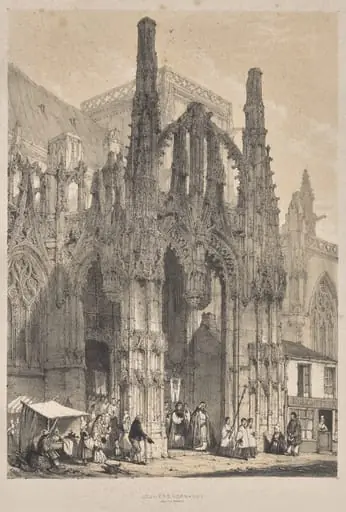 Architecture of the Middle Ages: Louviers, Normandy, South Porch
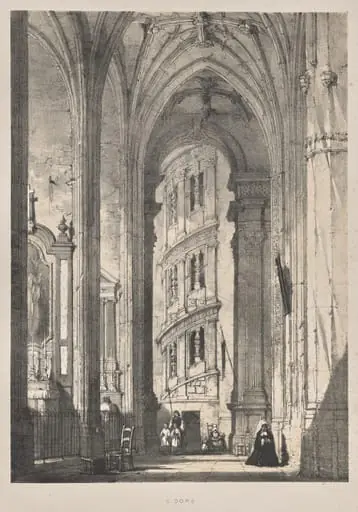 Architecture of the Middle Ages: Church of St. Gisors, Interior