Artwork
Sophie Crouzet
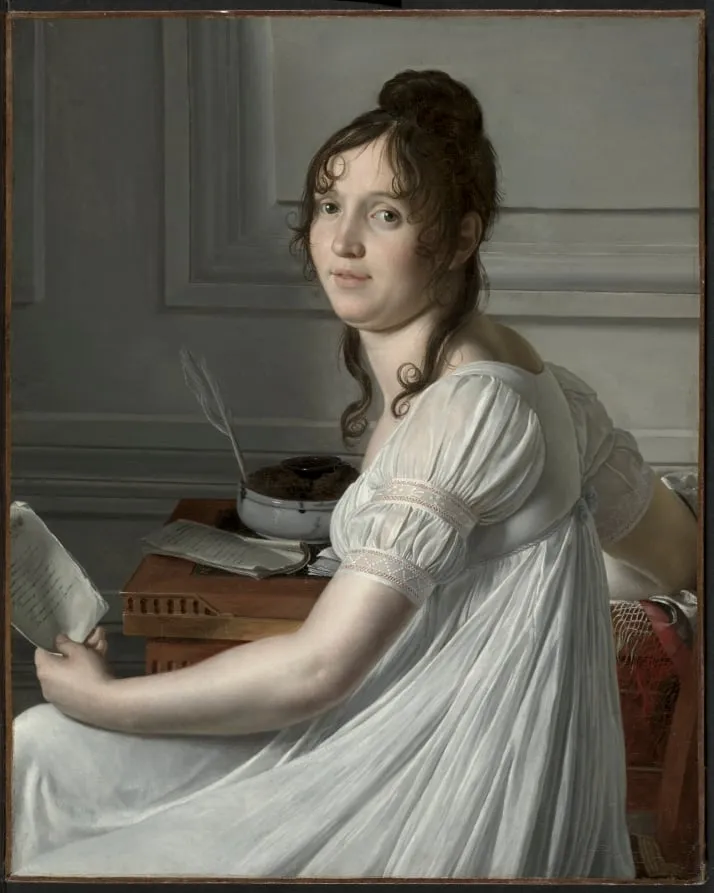
Sophie Crouzet is an unspecified painting by the Biedermeier artist Louis Hersent. It dates from 1801 and is held in the collection of the Cleveland Museum of Art. The portrait presents a young woman seated in gentle illumination, her attire a sheer white muslin that drapes fluidly over her form.
About this work
To see how other artists painted fashion as rebellion, look up *subject: france, late 18th-early 19th century, mod euro*.
A young woman sits in soft light, her sheer white dress flowing like water. The fabric clings to her body, almost see-through, with thin straps and a simple belt.
This dress isn’t just pretty—it’s a quiet protest. After the French Revolution, women wore sheer muslin to show they rejected the old, fancy styles of the rich. The fabric was light, cheap, and easy to wash, but it also made a point: simplicity was now a virtue.
To see how other artists painted fashion as rebellion, look up *subject: france, late 18th-early 19th century, mod euro*.
Overview
The portrait presents a young woman seated in gentle illumination, her attire a sheer white muslin that drapes fluidly over her form. The garment’s translucency and simple cut draw attention to the sitter’s modesty while hinting at broader social currents of the late eighteenth century.
Subject & Meaning
The dress deliberately references ancient Roman dress, yet its plain white muslin aligns with a shift toward unadorned English fashions that favored restraint over the earlier, more ornate styles. In the revolutionary climate of post‑1789 France, such simplicity in clothing became a visual statement of political alignment, signaling a rejection of aristocratic excess.
Technique & Style
Rendered with a delicate handling of light, the artist captures the fabric’s near‑transparent quality, allowing the material to appear both weightless and intimately attached to the figure. The restrained palette and smooth brushwork emphasize the garment’s texture rather than decorative detail, reinforcing the theme of modesty.
History & Provenance
The sitter, Sophie Crouzet, belonged to a family actively involved in revolutionary activities. Her choice of a sheer muslin dress reflects the personal and familial commitment to the new republican ideals that emerged after the French Revolution, where clothing served as a subtle yet potent marker of allegiance.
Context
During the early 1790s, French women increasingly adopted light, washable muslin as an alternative to the costly, heavily embroidered attire of the ancien régime. This sartorial shift was part of a broader cultural movement that equated simplicity with virtue and political sincerity.
Artist & collection


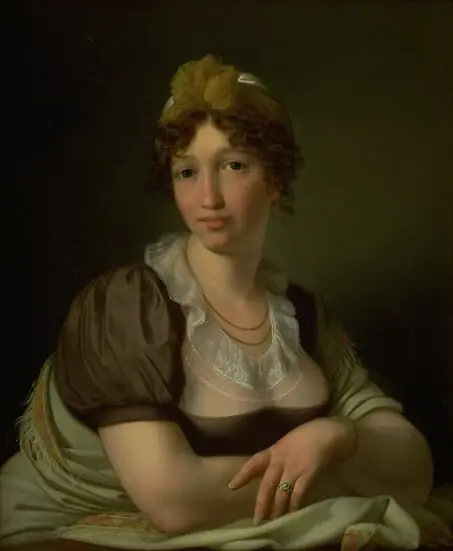 Mrs. Grønland
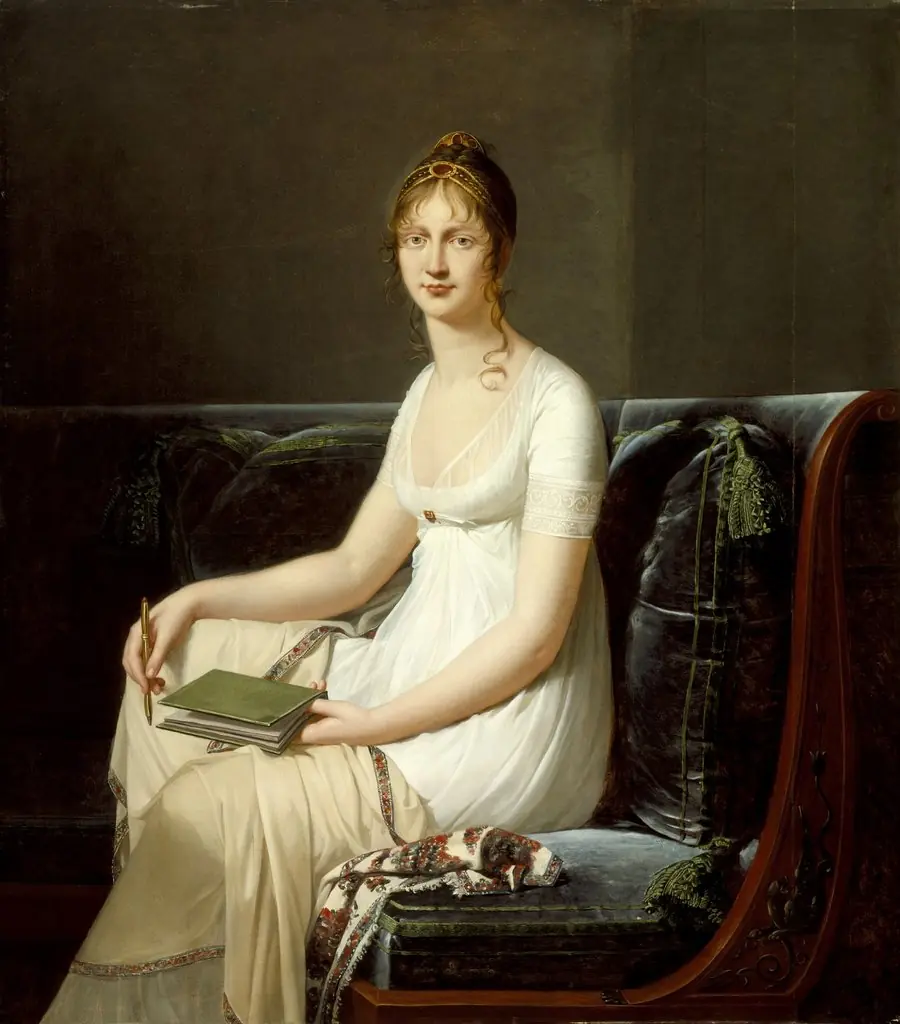 Portrait of a Woman Holding a Pencil and a Drawing Book
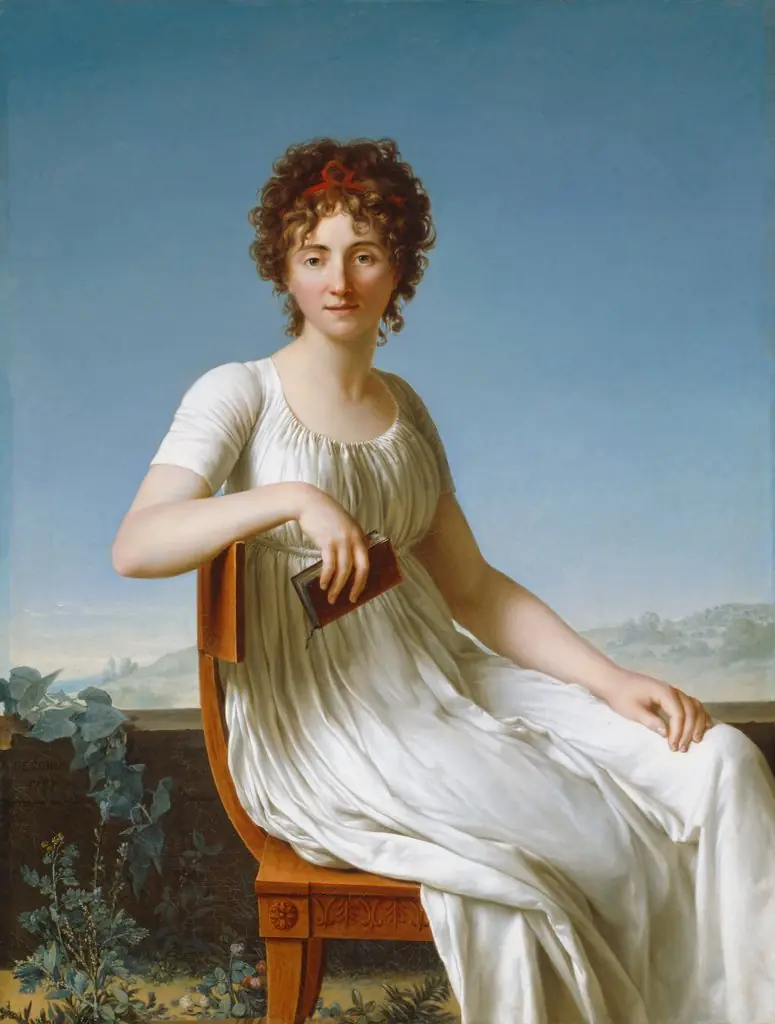 Portrait of Constance Pipelet
 Portrait of Constance Pipelet
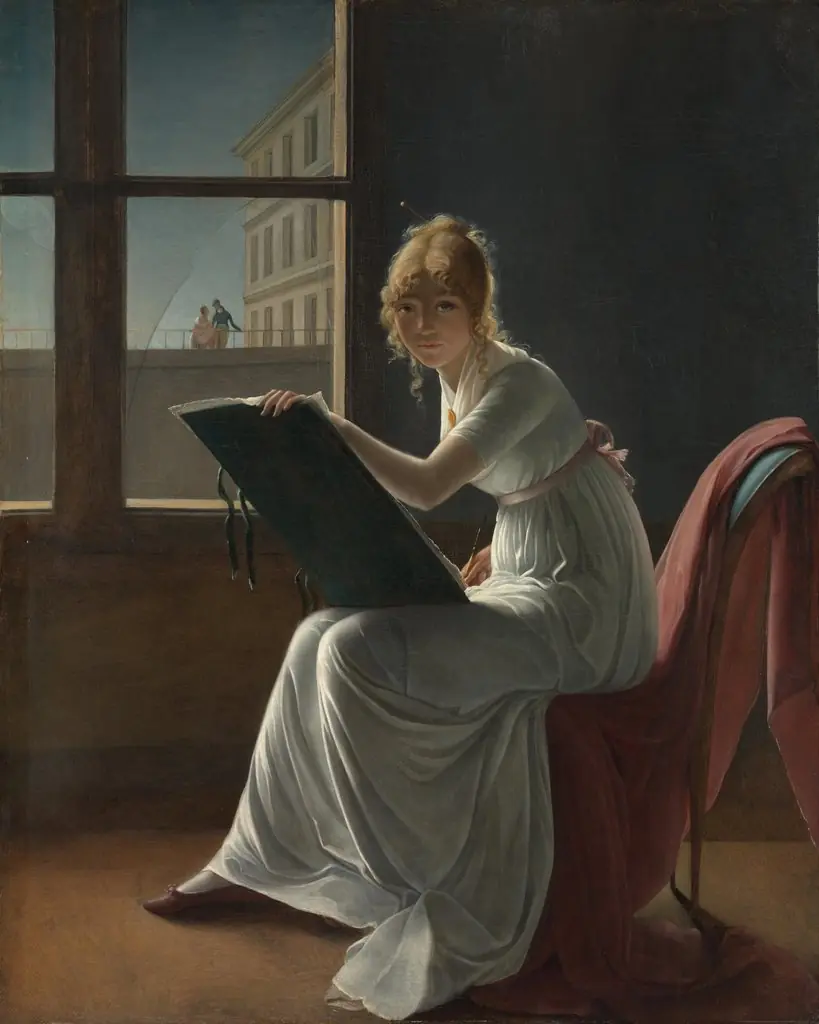 Portrait of Charlotte du Val d'Ognes
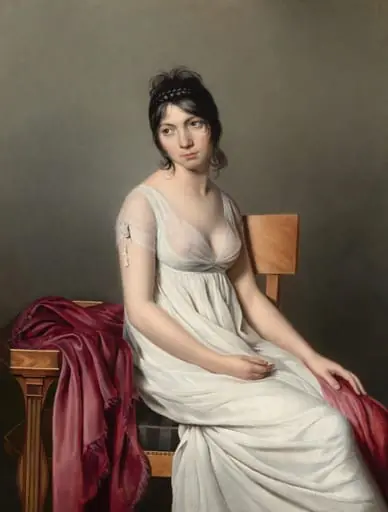 Portrait of a Young Woman in White
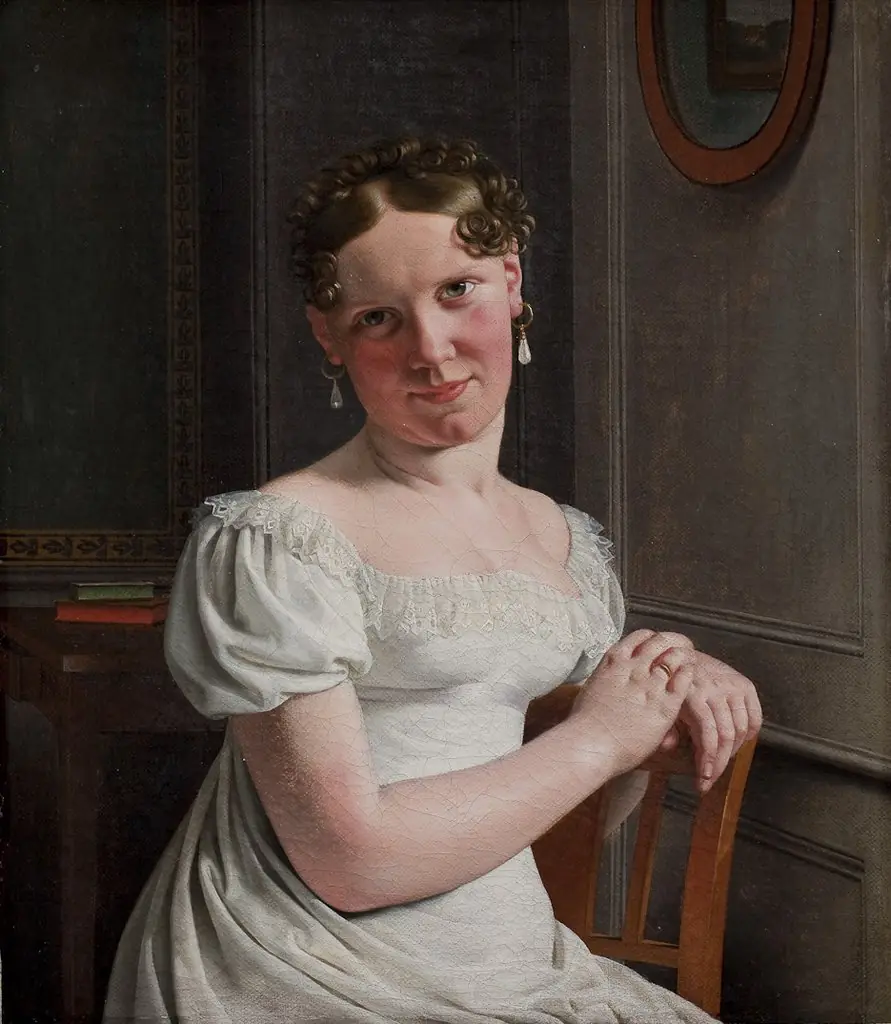 Julie Eckersberg, née Juel, the Artist's Second Wife
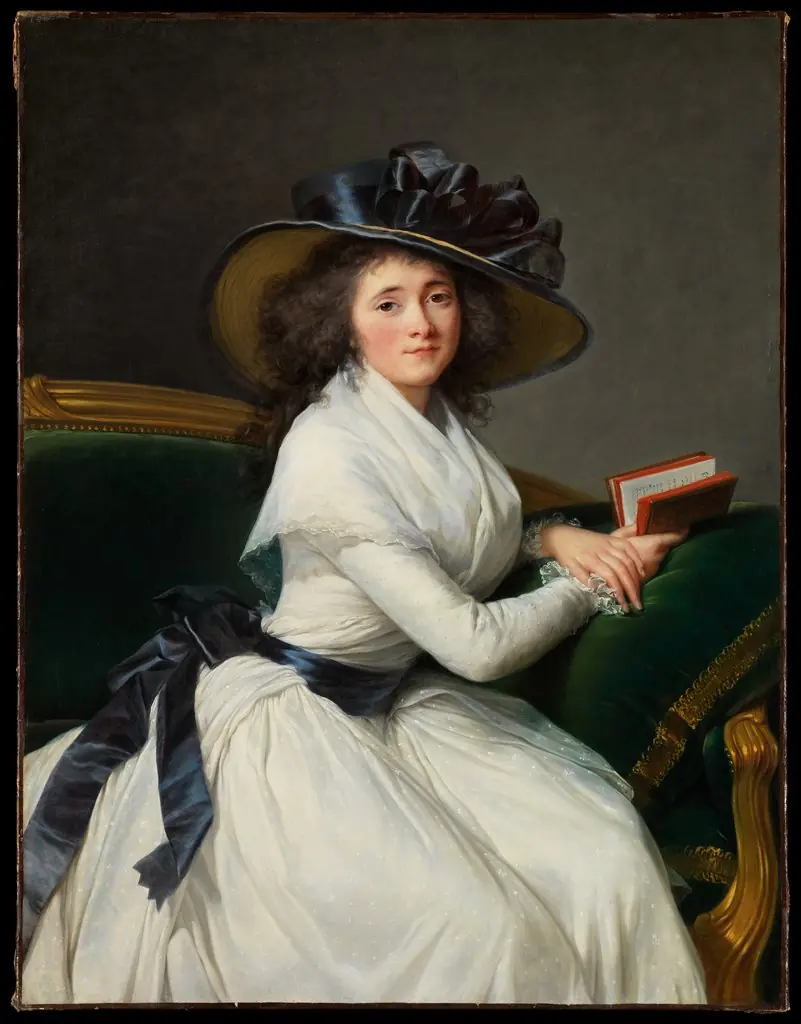 Comtesse de la Châtre (Marie Charlotte Louise Perrette Aglaé Bontemps, 1762–1848)
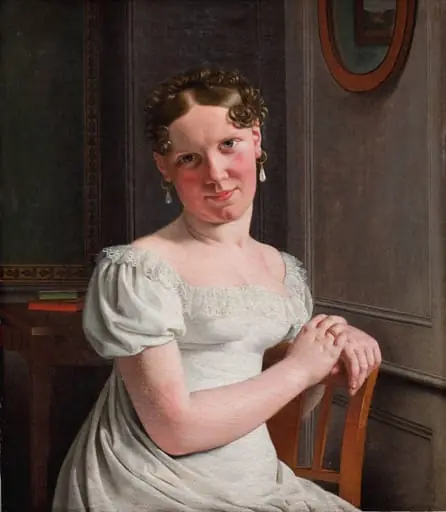 Julie Eckersberg, née Juel, the Artist's Second Wife
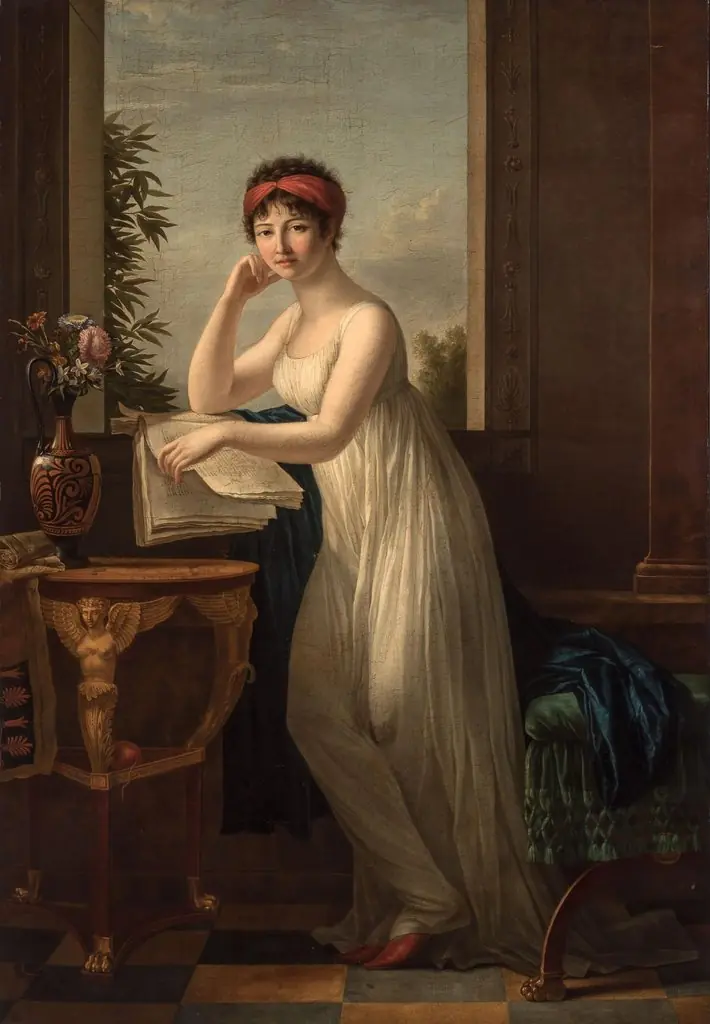 A Young Woman Leaning on the Edge of a Window
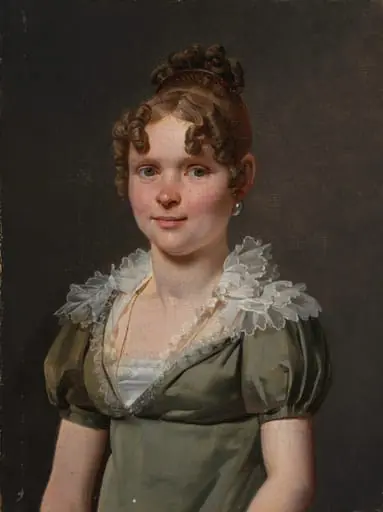 Madame Nicolas Louis Faret
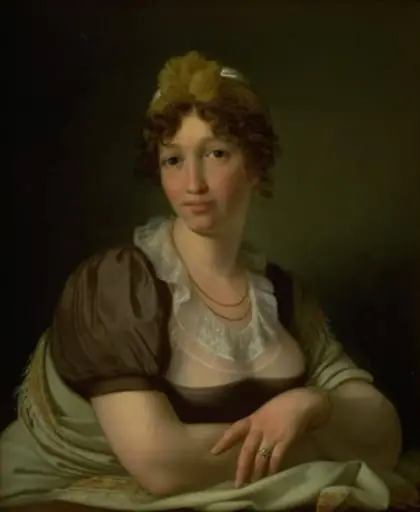 Mrs. Grønland