Artwork
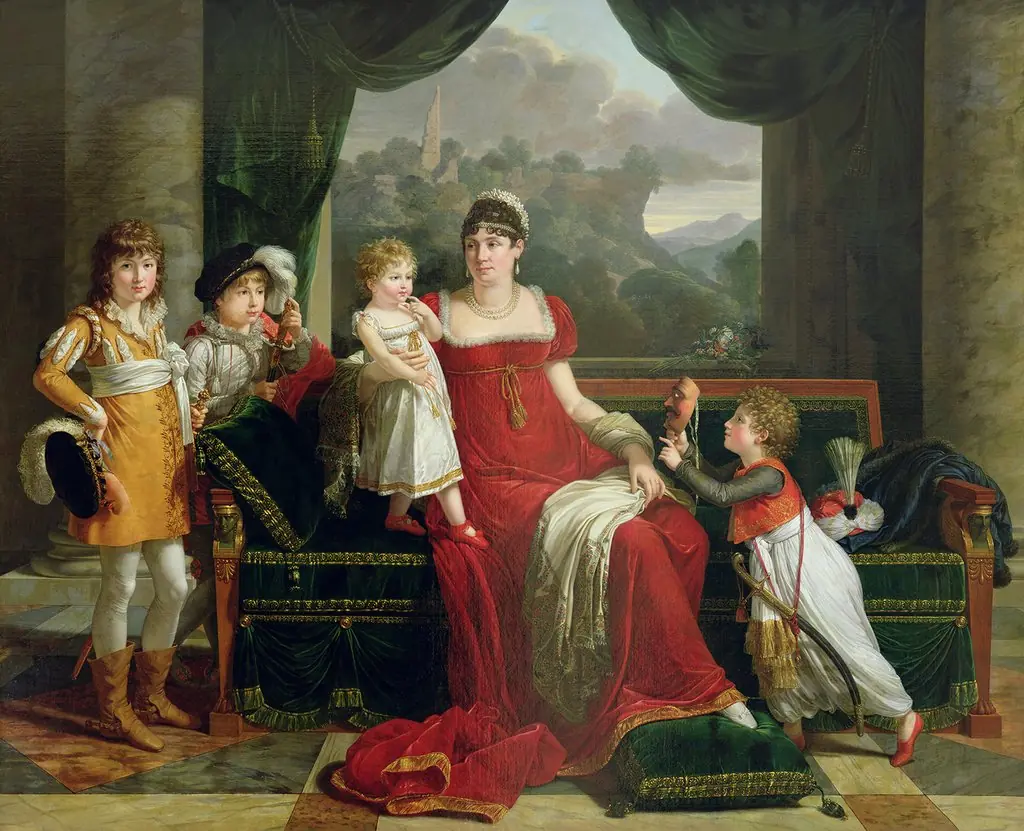
Marie Amélie, Duchess of Orléans with her son the Duke of Chartres
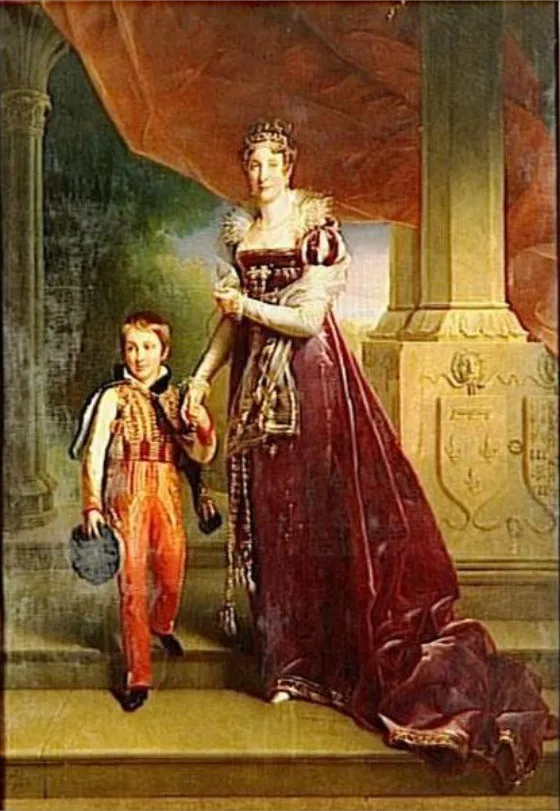
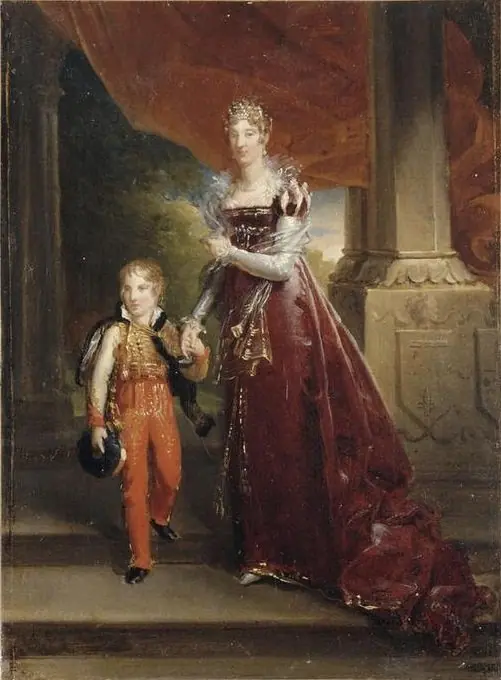
Marie Amélie, Duchess of Orléans with her son the Duke of Chartres is an oil painting by Louis-Joseph Noyal. It is held in the collection of the Palace of Versailles.
About this work
Overview
The work belongs to the collection of the Palace of Versailles and reflects the domestic elegance of the French royal family during the July Monarchy.
Painted around 1850 by Louis-Joseph Noyal, this oil portrait captures Marie Amélie, Duchess of Orléans, and her son, the Duke of Chartres, in a formal interior setting. The work belongs to the collection of the Palace of Versailles and reflects the domestic elegance of the French royal family during the July Monarchy. The composition centers on the maternal bond between the two figures, rendered with attention to texture and spatial depth.
Subject & Meaning
The painting portrays Marie Amélie, wife of King Louis-Philippe, alongside her eldest son, who was heir to the throne. Their close physical connection—her hand gently holding his—emphasizes familial duty and continuity within the Orléans line. The dignified setting and their attire suggest not only personal affection but also the public role of royalty as symbols of stability and lineage during a turbulent political era.
Technique & Style
Noyal employs chiaroscuro to model the figures with subtle gradations of light, enhancing their three-dimensionality against the richly textured backdrop. The Duchess’s dark red gown, adorned with intricate patterning, contrasts with the boy’s lighter orange costume and flowing cape, creating visual harmony. The detailed rendering of fabrics and architectural elements—columns, drapery—demonstrates a refined academic approach rooted in 19th-century portraiture traditions.
History & Provenance
Commissioned during the reign of Louis-Philippe, the painting entered the royal collection at Versailles shortly after its completion. It remained in state custody through subsequent political changes, preserving its association with the Orléans family. Its presence in the palace underscores its role as an official record of royal identity, rather than a private keepsake.
Context
Created in the final decade of the July Monarchy, the portrait reflects an era when the French monarchy sought to project legitimacy through imagery of domestic virtue. Unlike earlier Bourbon court portraits, this work avoids overt symbolism, instead emphasizing quiet intimacy. The setting, though grand, feels personal, aligning with the Orléans family’s cultivated image of accessible royalty.
Legacy
The painting endures as a documented representation of the Orléans dynasty’s final years before the 1848 revolution. While not widely exhibited beyond Versailles, it contributes to scholarly understanding of how royal families used portraiture to reinforce familial and political continuity. Its preservation highlights the institutional commitment to maintaining visual records of France’s non-Bourbon monarchy.
Artist & collection

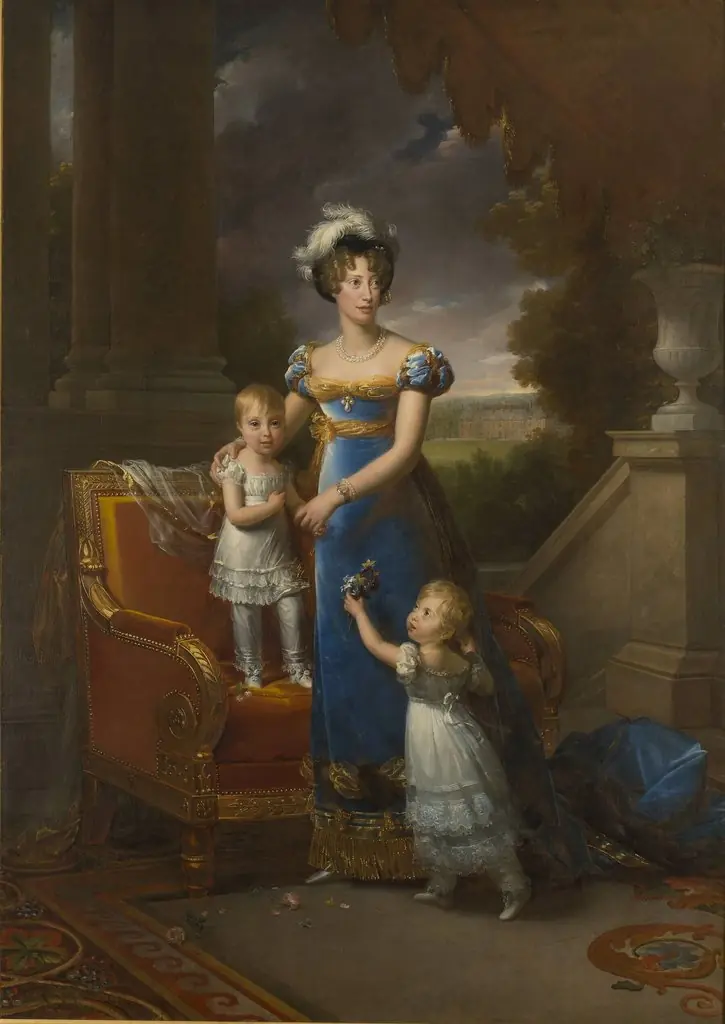 The Duchess of Berry and her Children
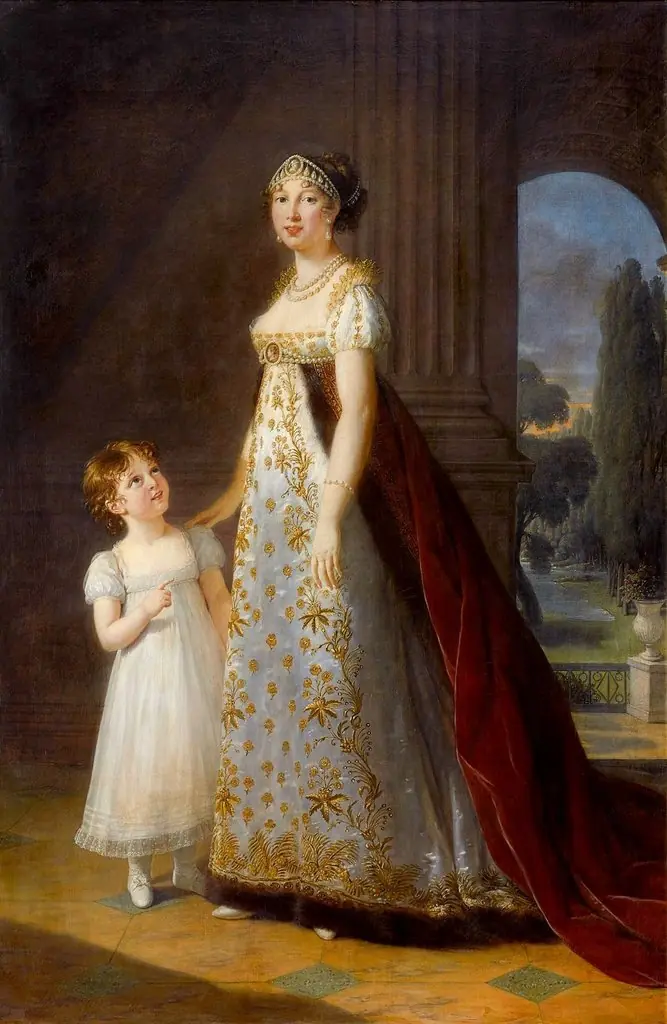 Caroline Murat with her daughter Letizia
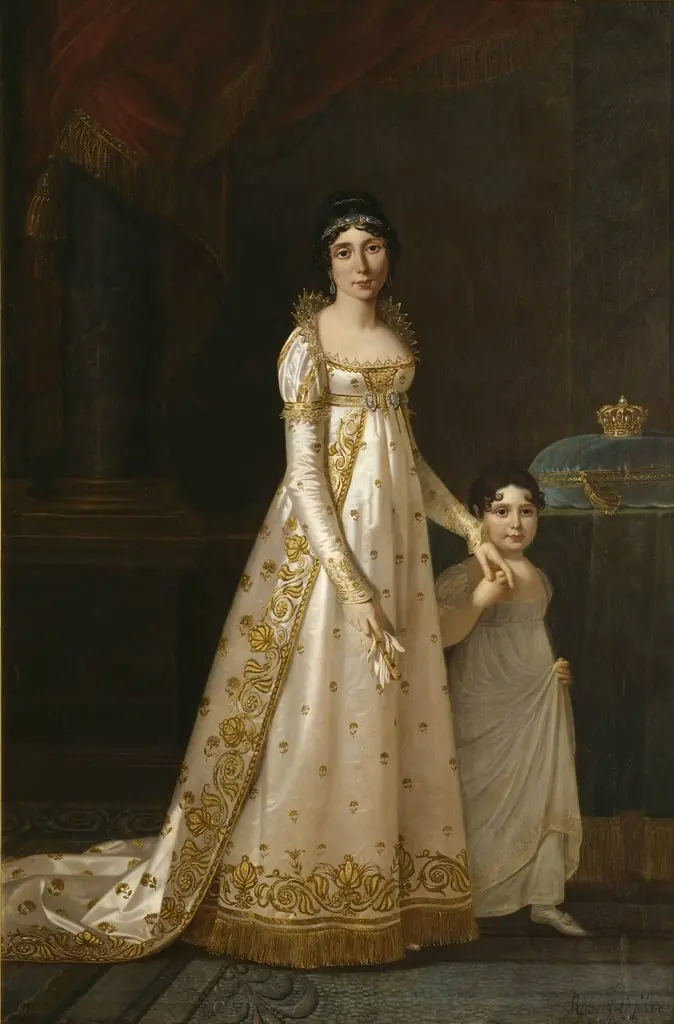 Marie-Julie Clary, Queen of Naples (1777-1845)
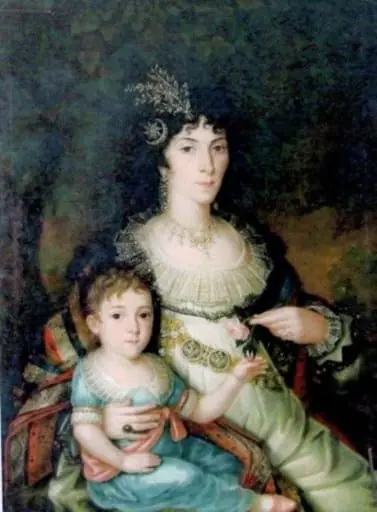 Vorniceasa Smaranda Manu
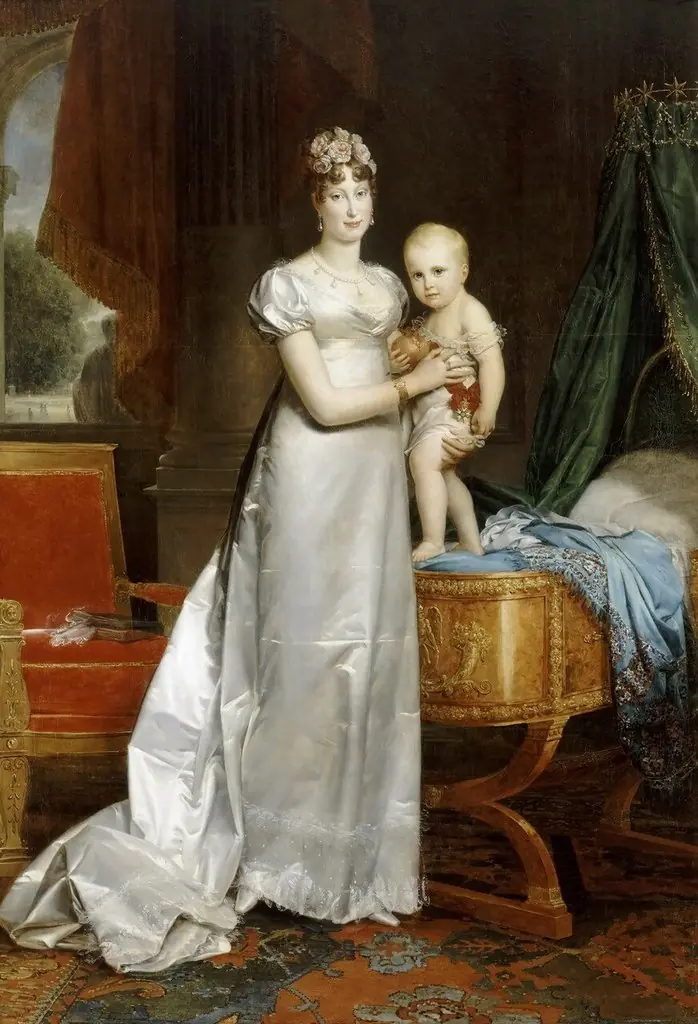 Marie-Louise, Empress of the French, and the Roi de Rome
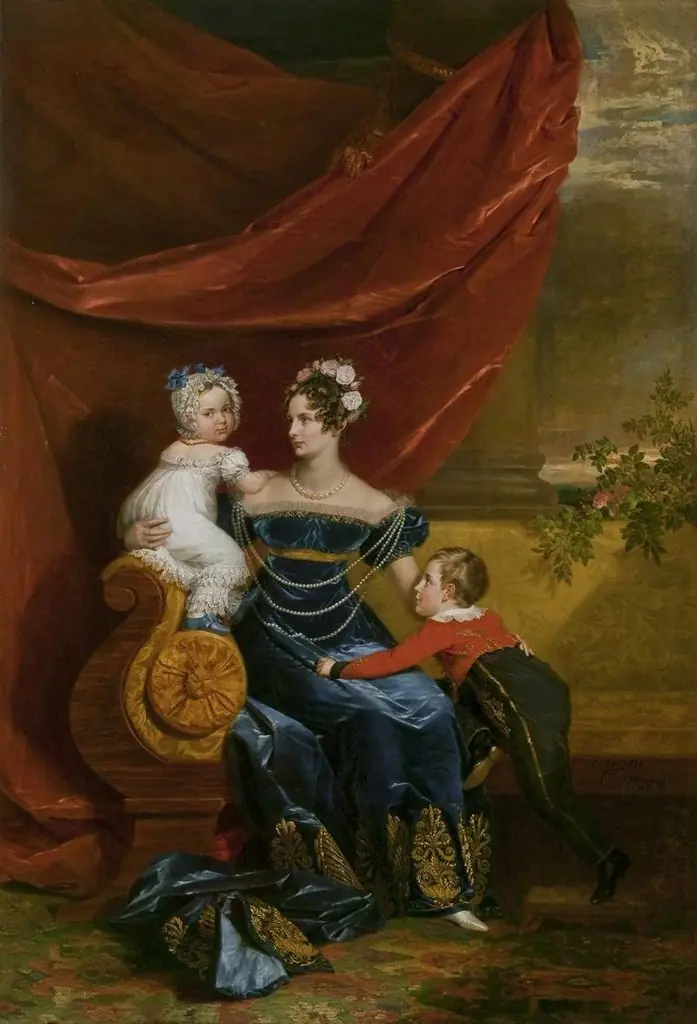 Portrait of Grand Duchess Alexandra Fiodorovna with Children
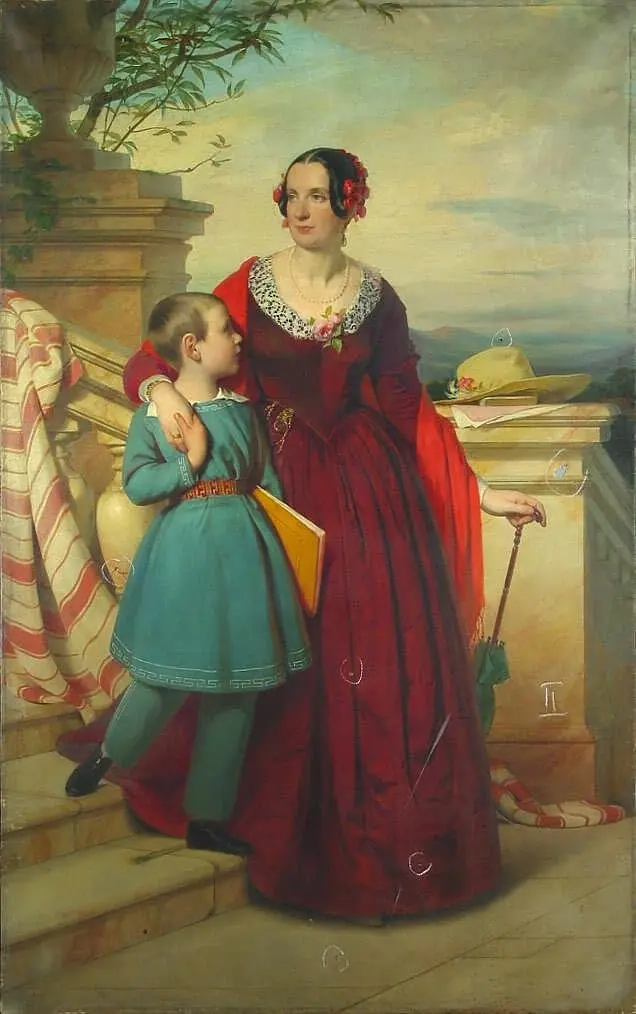 Portrait of I.V. Durnovo with Her Son
 Portrait de la générale Clarke avec ses quatre enfants