Artwork
The Ascension and the Incredulity of Saint Thomas (sketch for the decoration of the chapel at Chatsworth)
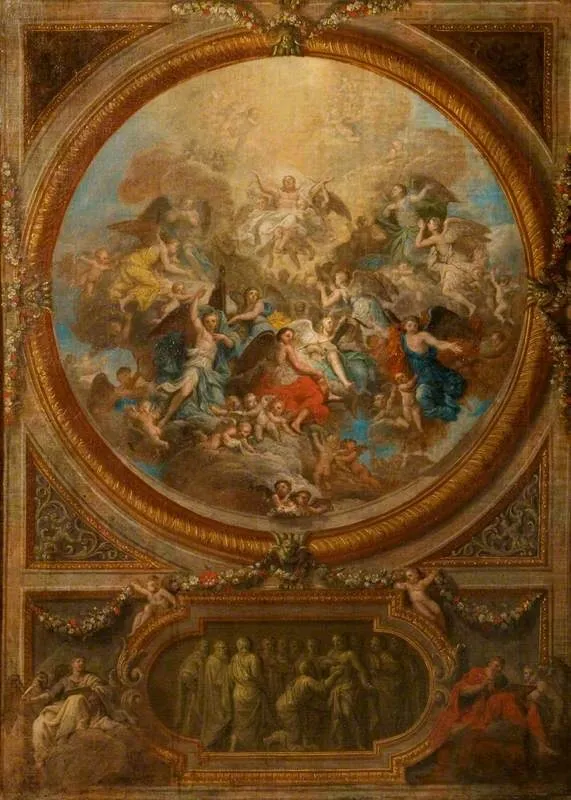
The Ascension and the Incredulity of Saint Thomas (sketch for the decoration of the chapel at Chatsworth) is an oil painting by the Barbizon school artist Louis Laguerre. It dates from 1695 and is held in the collection of the Victoria and Albert Museum.
About this work
Overview
Louis Laguerre’s 1695 oil sketch, titled *The Ascension and the Incredulity of Saint Thomas*, was produced as a preparatory design for the decorative scheme of the chapel at Chatsworth. The work is part of the Victoria and Albert Museum’s collection and illustrates a biblical moment in which Christ rises above a gathering of witnesses.
Subject & Meaning
The composition captures two intertwined New Testament episodes: the heavenly ascent of Christ and the skeptical reaction of Thomas, who doubts the resurrection until he sees the wounds. Figures below gaze upward, their gestures conveying both reverence and uncertainty, while angels hover in the clouds, underscoring the divine nature of the event.
Technique & Style
Laguerre employs a restrained palette of browns and beiges, allowing the dramatic chiaroscuro to dominate the visual impact. Light streams from the upper heavens, illuminating the central figure and casting a warm glow across the surrounding clouds, while deeper shadows give the scene a three‑dimensional quality characteristic of late‑Baroque theatricality.
History & Provenance
Originally conceived as a sketch for the Chatsworth chapel commission, the painting remained in the artist’s studio before entering the collection of the Victoria and Albert Museum, where it is currently on public display. Its survival offers insight into Laguerre’s preparatory process for large‑scale ecclesiastical projects.
Context
Created during the height of the English Baroque period, the work reflects the period’s taste for grand religious narratives rendered with dramatic lighting. Laguerre, a French-born painter active in England, frequently supplied designs for aristocratic patrons, integrating continental stylistic influences with local devotional requirements.
Artist & collection

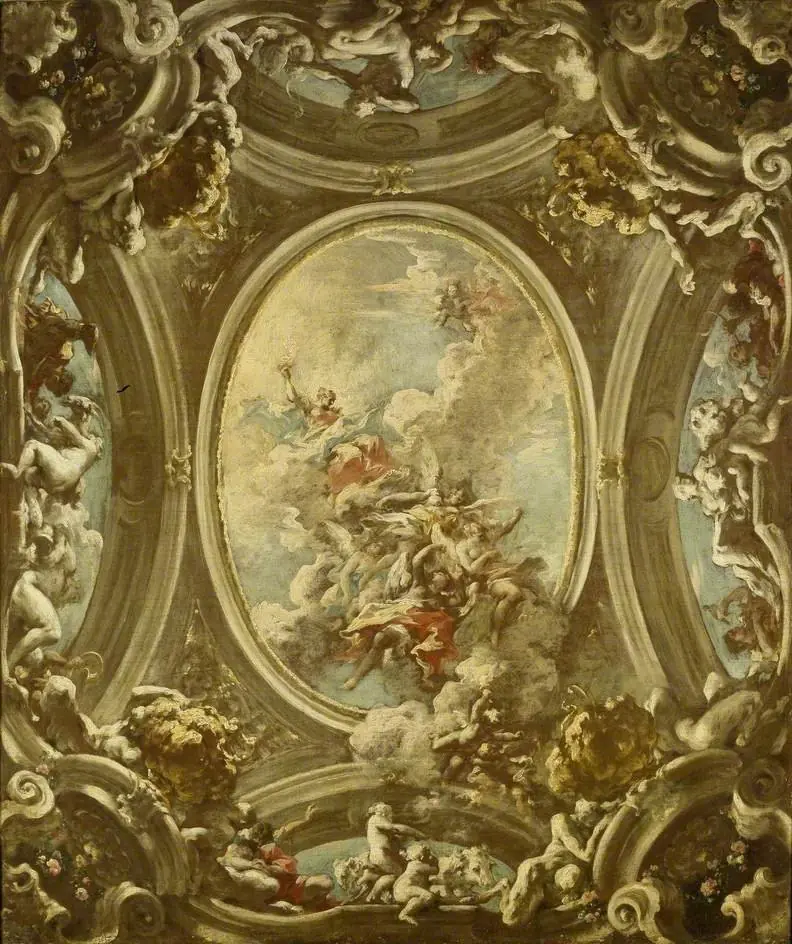 An Allegory of Dawn
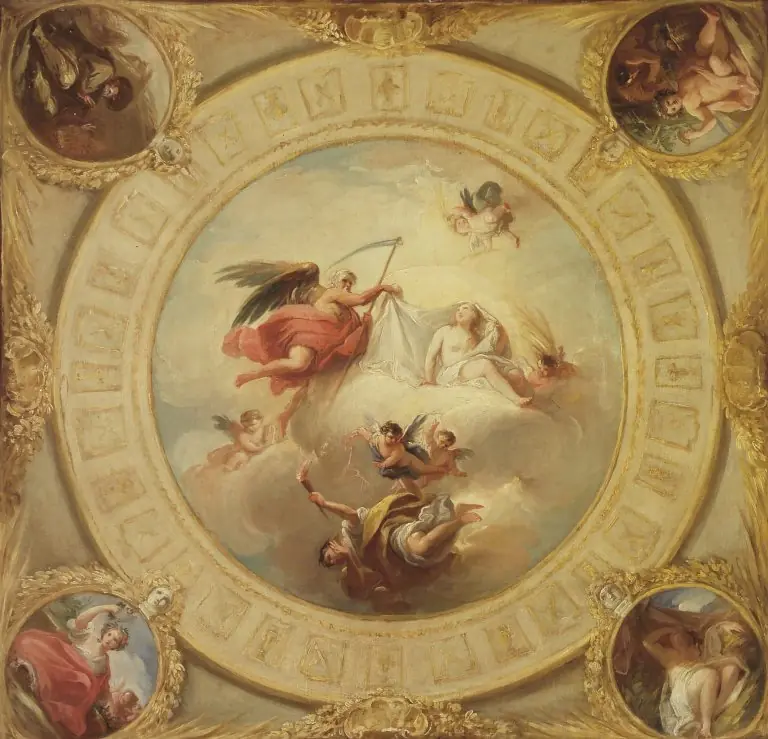 Time Discovering Truth, sketch
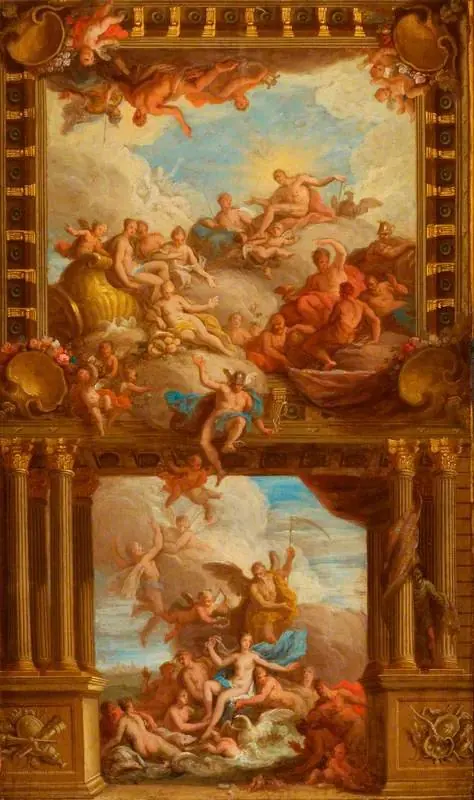 The Birth of Venus, and the Gods of Olympus (sketch for a wall and ceiling decoration)
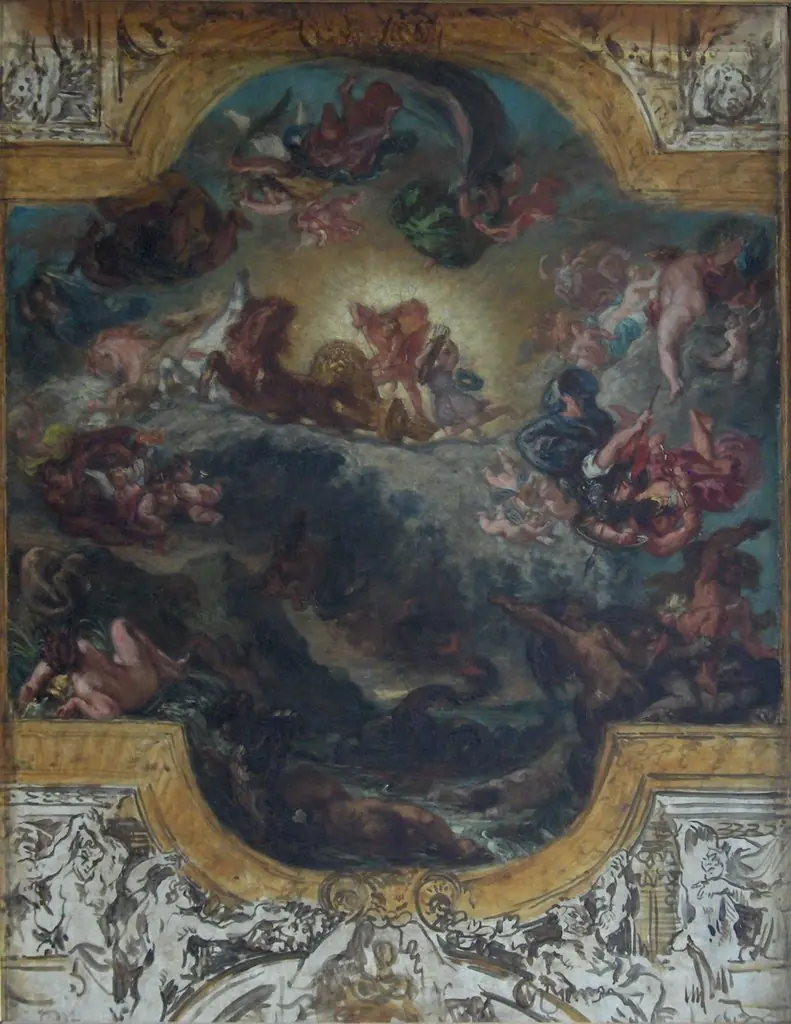 Apollo, victor of the snake Python
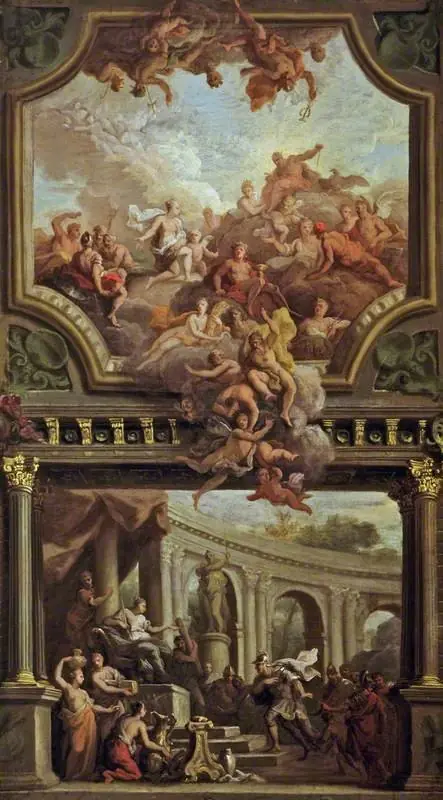 Aeneas before Dido, and Venus Supplicating Jupiter (sketch for a wall and ceiling decoration)
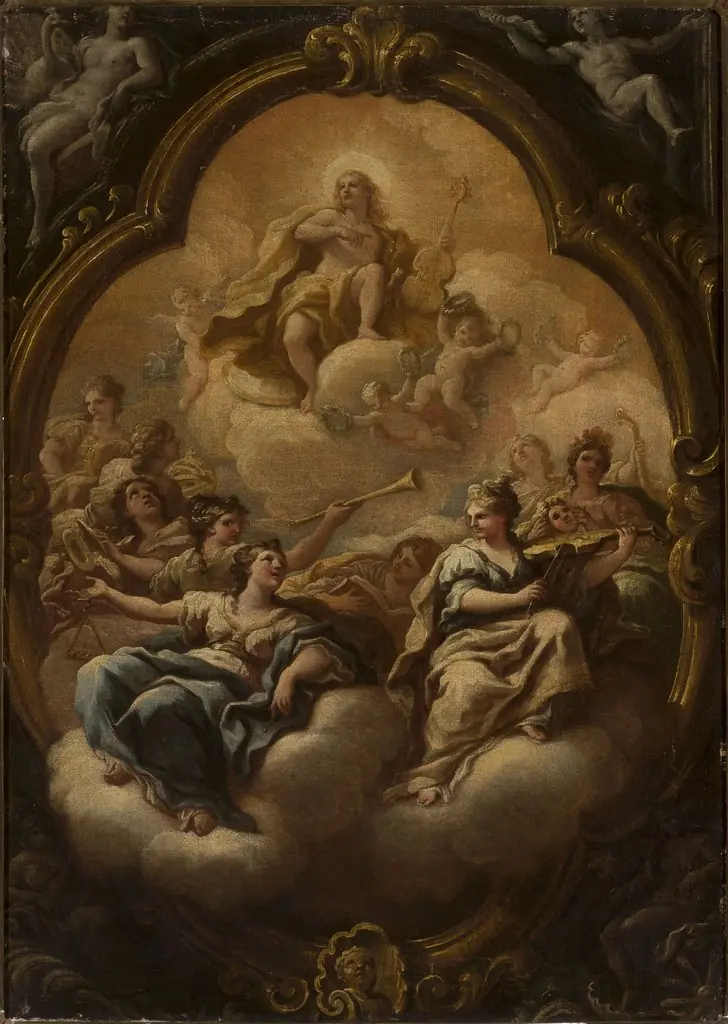 Apollo and Muses
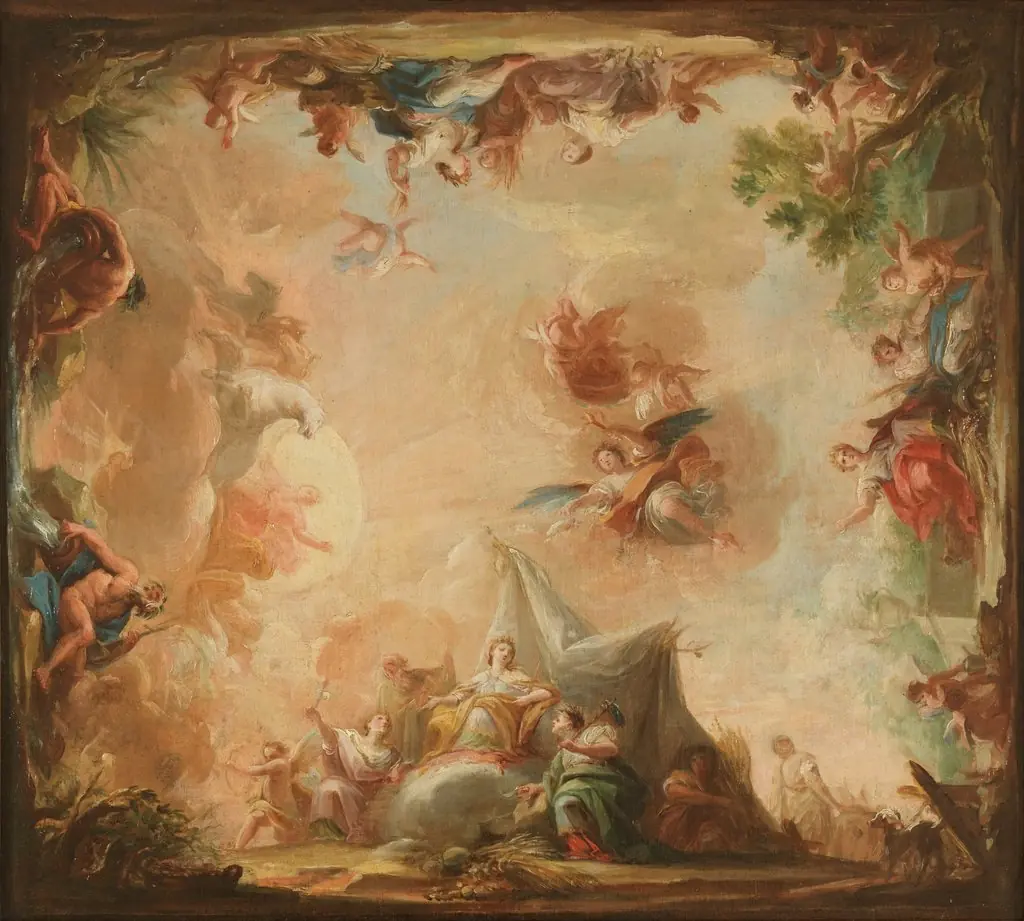 The Goddess Cybele offering her Produce to the Earth
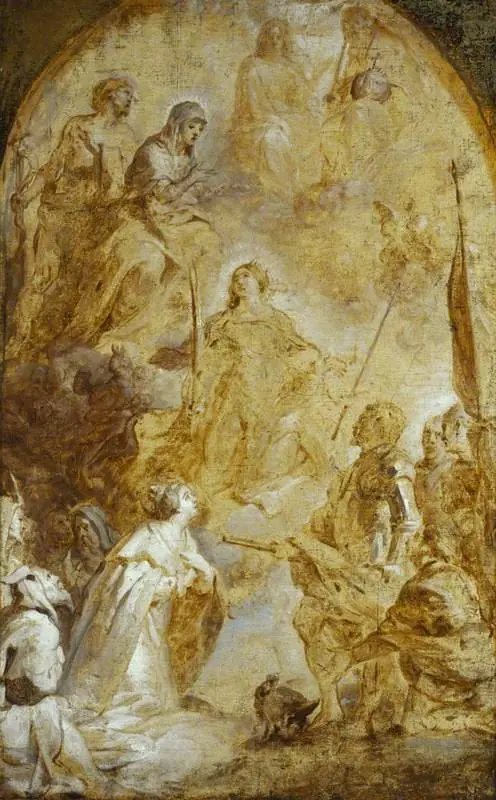 The Ascension of Saint Catherine
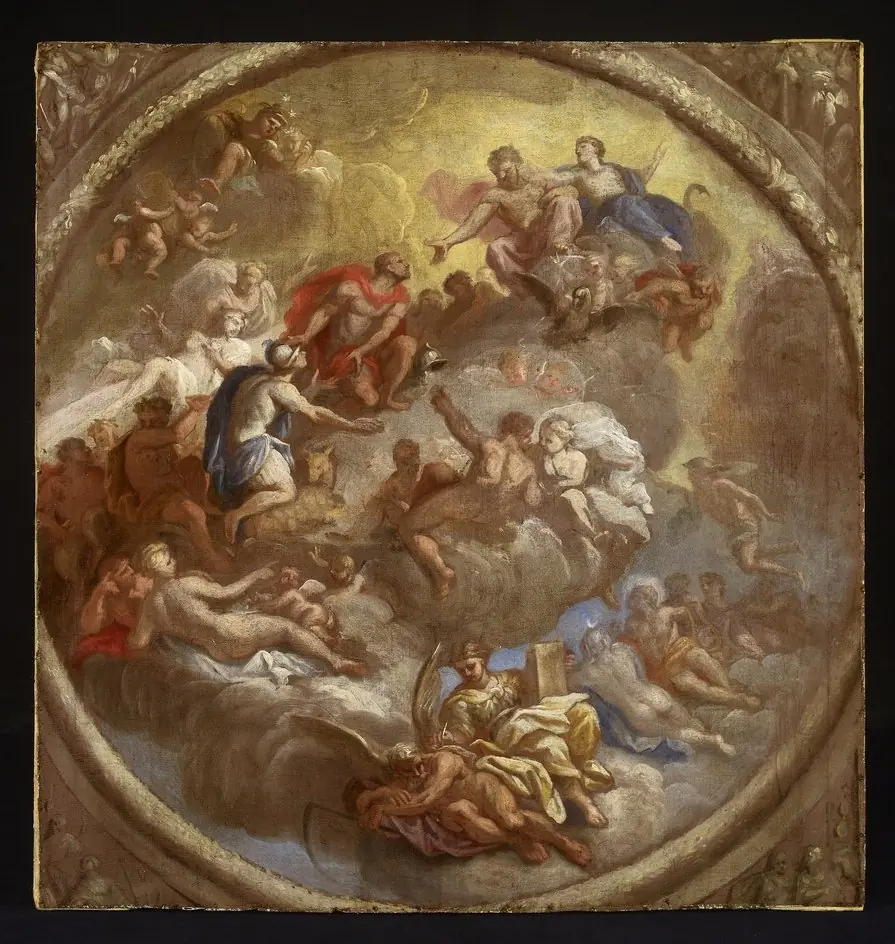 Sketch for a Ceiling Design
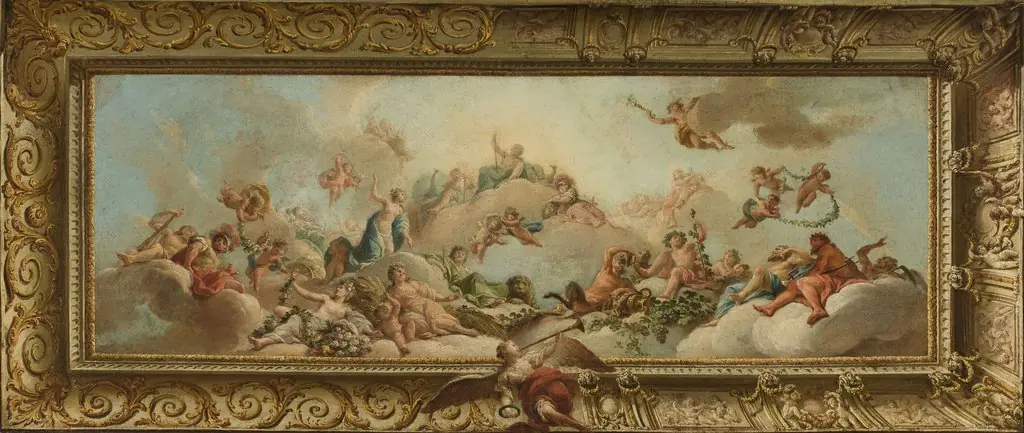 Greeting of Venus at Mount Olympus
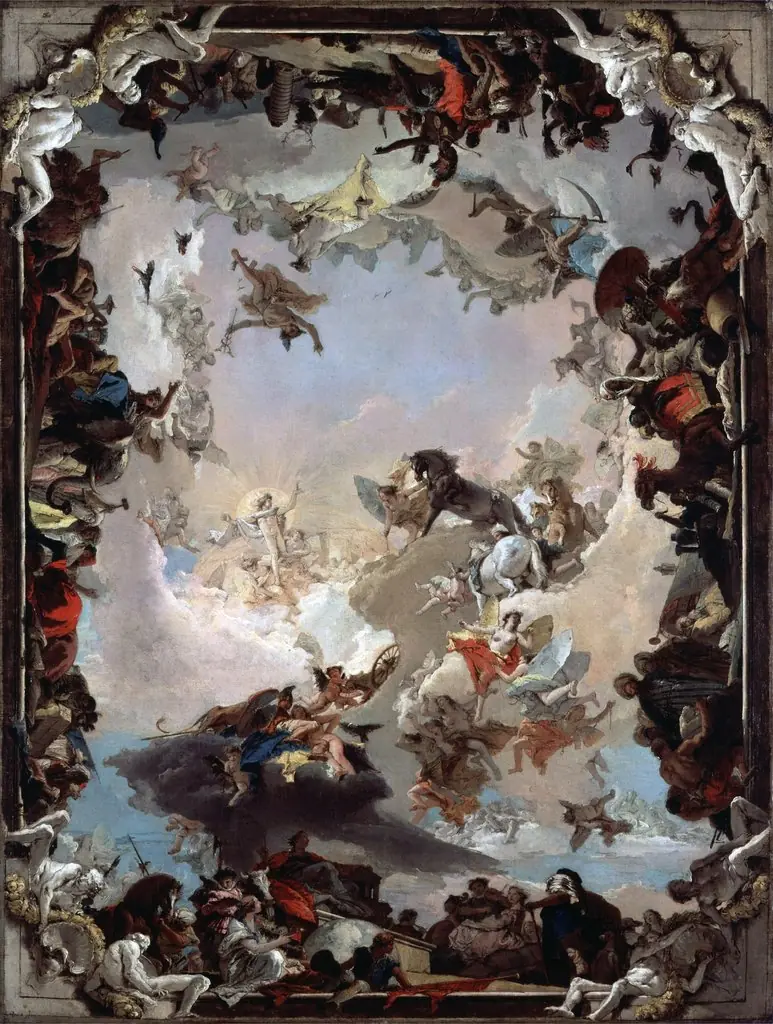 Allegory of the Planets and Continents
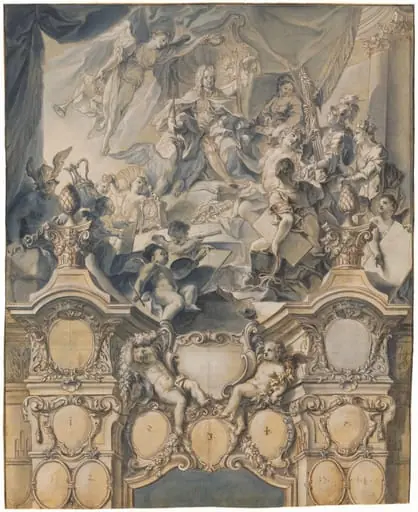 The Arts and Powers Pay Homage to Emperor Charles VI