Artwork
The Milk Woman
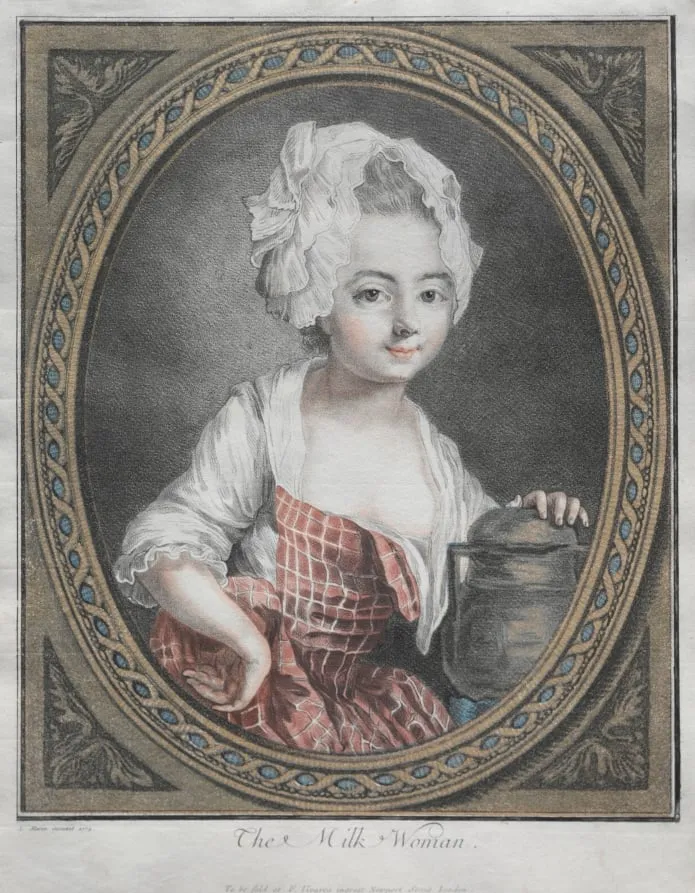
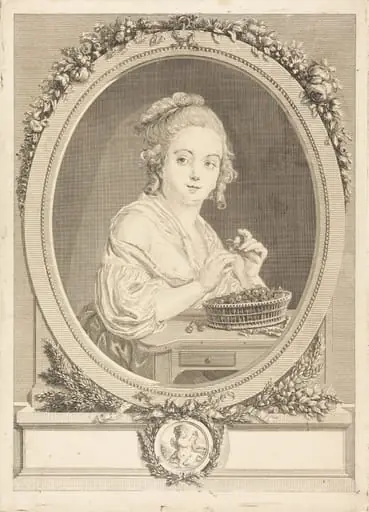
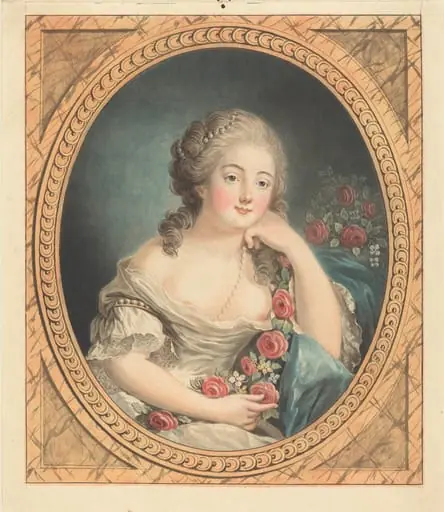
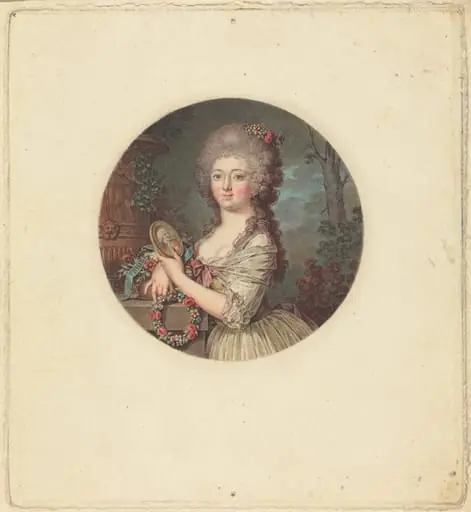
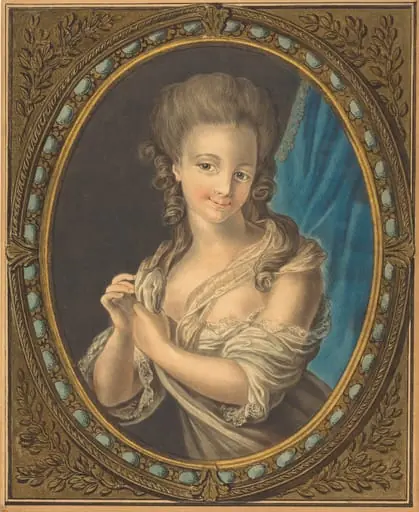
The Milk Woman is a print by the Romanticist artist Louis-Marin Bonnet. It dates from 1774 and is held in the collection of the Cleveland Museum of Art.
About this work
Overview
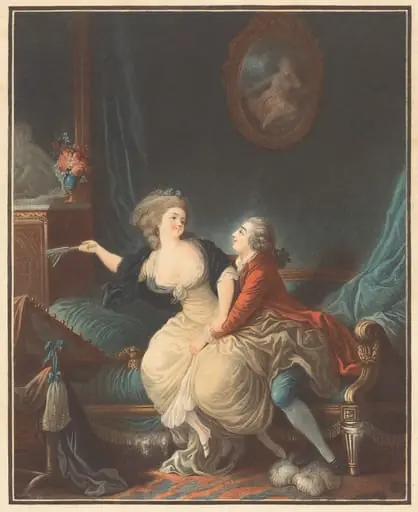
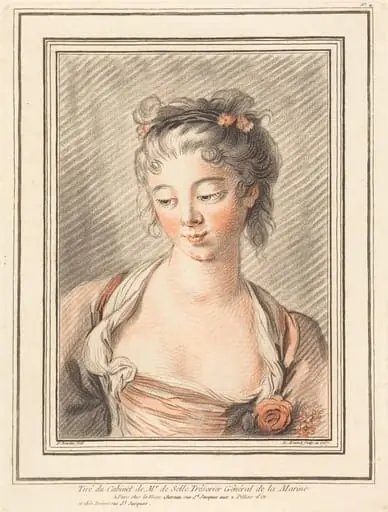
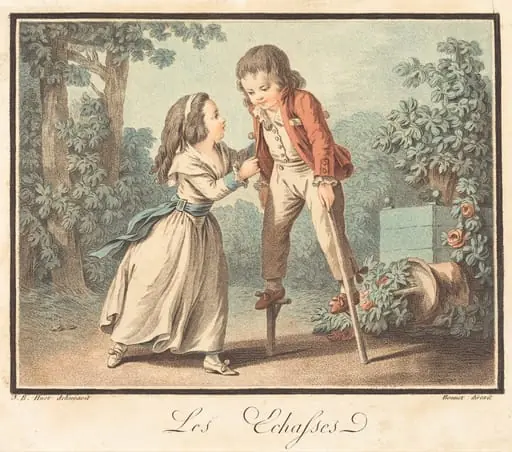
Louis-Marin Bonnet produced this print as part of a series experimenting with color printing techniques inspired by optical principles.
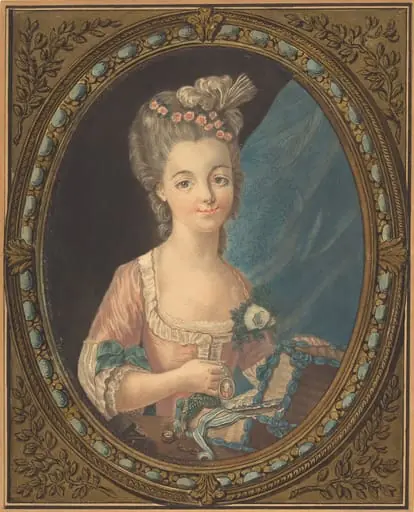
Louis-Marin Bonnet produced this print as part of a series experimenting with color printing techniques inspired by optical principles. Rather than painting, he built the image through layered ink applications to replicate the softness of pastels. His innovation allowed mass-produced prints to mimic the delicate aesthetics of rare miniature paintings, appealing to collectors seeking refined domestic scenes without the high cost of original works.
Subject & Meaning
The scene depicts a woman in a white cap gently pouring milk into a bowl, capturing a quiet, unremarkable moment of daily labor. The composition avoids narrative drama, focusing instead on stillness and routine. This quietude aligns with 18th-century tastes for intimate, domestic imagery, reflecting a cultural appreciation for the dignity of ordinary life rather than grand historical or mythological themes.
Technique & Style
Bonnet employed a multi-block printing method, carefully aligning colored inks to achieve subtle gradations and soft edges reminiscent of pastel drawings. He enhanced the illusion of handcrafted artistry by adding simulated gold leaf frames, printed directly onto the paper. The result mimicked the luminous surfaces of miniatures, while the precision of layering avoided the harsh lines typical of conventional printmaking of the period.
History & Provenance
To circumvent French restrictions on the use of gold in decorative arts, Bonnet marketed his prints as English imports through his shop, Au Magasin Anglois. He used English titles, a fabricated London address, and the pseudonym L. Marin to reinforce the illusion. These deceptive practices allowed him to bypass sumptuary laws while capitalizing on the French elite’s preference for English goods, turning commercial strategy into an artistic subterfuge.
Context
In late 18th-century France, sumptuary laws limited gold usage to preserve economic stability and reinforce social hierarchy. Meanwhile, collectors prized pastels and miniatures for their tactile delicacy. Bonnet’s prints responded to this demand by offering an affordable, law-compliant alternative. His work reflects a broader trend of artists adapting technical innovation to navigate regulatory constraints and shifting market preferences.
Legacy
Bonnet’s methods influenced later developments in color printing by demonstrating how optical precision and layered ink could approximate hand-drawn effects. Though his deception was eventually exposed, his technical achievements contributed to the evolution of printmaking as a medium capable of nuanced color reproduction. His work remains a case study in the intersection of art, commerce, and regulation in pre-revolutionary France.
Artist & collection