Artwork
La bonne petite soeur
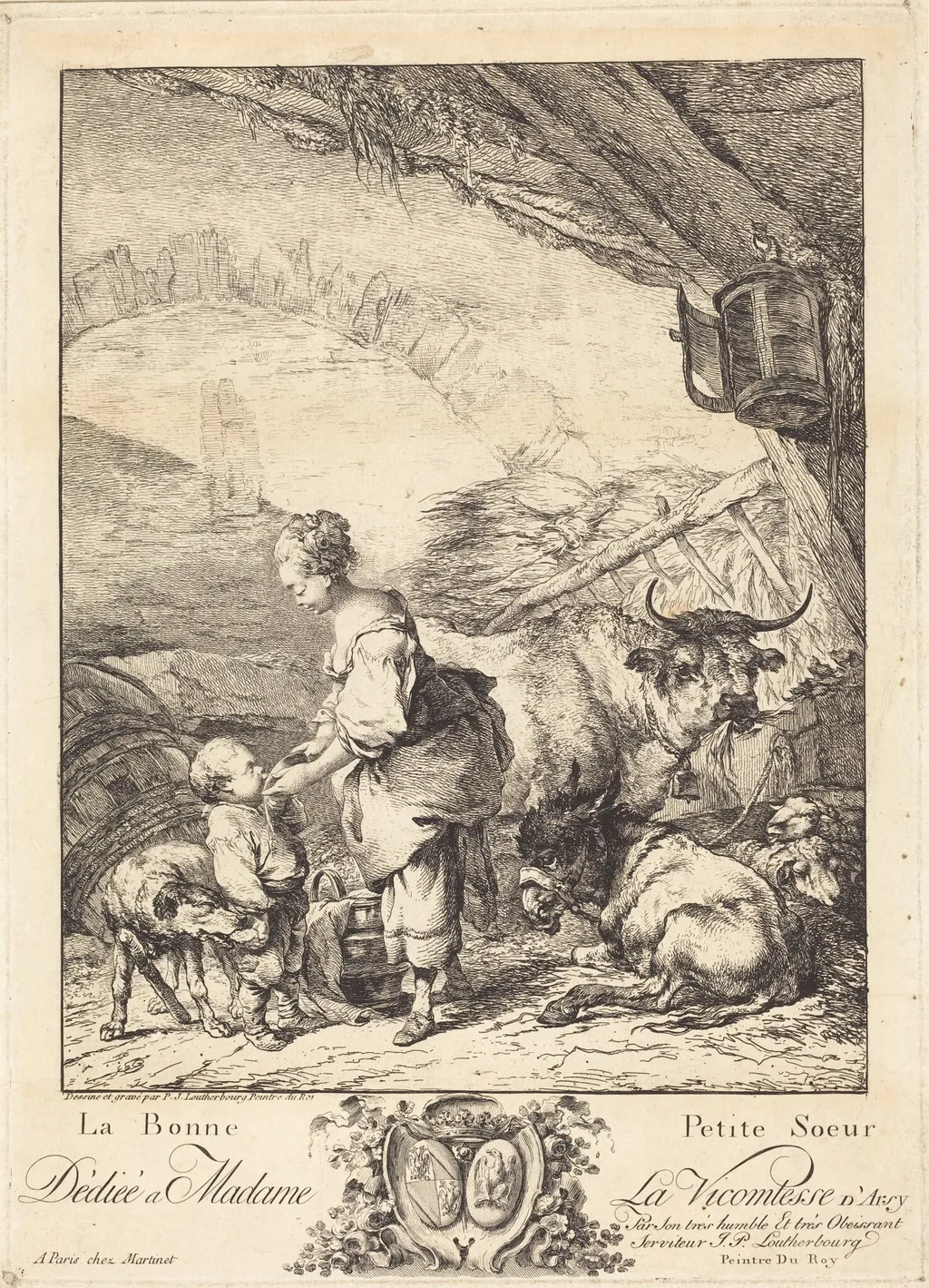
La bonne petite soeur is an ink print by the Baroque artist Philippe Jacques de Loutherbourg II. It dates from 1776 and is held in the collection of the National Gallery of Art.
About this work
Overview
Loutherbourg signed the plate with the title 'Peintre du Roy,' reflecting his official position as painter to the British monarch.
La bonne petite soeur is an 1776 etching by Philippe Jacques de Loutherbourg II, a French artist active in Britain. The work belongs to a series of prints capturing rural life, rendered with fine linear detail characteristic of etching. Loutherbourg signed the plate with the title 'Peintre du Roy,' reflecting his official position as painter to the British monarch. The image presents a quiet moment of pastoral labor, emphasizing simplicity and quiet responsibility.
Subject & Meaning
The scene depicts a young woman guiding a child as they tend a small flock of sheep across a rugged, windswept terrain. The title, 'The Good Little Sister,' suggests a narrative of familial duty and gentle care, with the older girl assuming a protective role. The presence of a solitary bull on a distant hill and the turbulent sky reinforce a sense of nature’s indifference, contrasting with the quiet resilience of the figures.
Technique & Style
Loutherbourg employed etching to achieve fine, controlled lines that define the wind’s movement through swirling strokes in the sky and the texture of the rocky ground. The figures are rendered with minimal detail, focusing on posture and gesture rather than facial expression. The contrast between the delicate, linear rendering of the sheep and the bold, energetic marks of the landscape reflects a deliberate balance between observation and expressive abstraction.
History & Provenance
Created in 1776, the print was made during Loutherbourg’s tenure as court painter to King George III. It was likely produced for a broader audience, as etchings were more accessible than oil paintings. While specific early ownership records are sparse, the work aligns with a trend in late 18th-century British print culture that idealized rural labor as morally uplifting and nationally representative.
Context
In the 1770s, British art increasingly turned to scenes of rural life as a counterpoint to urban industrialization. Loutherbourg’s etching fits within this movement, drawing on Enlightenment ideals of virtue found in simplicity. Though he was known for theatrical landscapes and battle scenes, this work reveals his engagement with quieter, domesticated nature — a reflection of contemporary literary and philosophical interests in innocence and duty.
Legacy
La bonne petite soeur remains a modest but telling example of how printmaking extended artistic themes beyond elite patronage. While not widely reproduced in later centuries, it contributes to understanding Loutherbourg’s range and the role of etching in documenting everyday life. The work’s quiet dignity anticipates 19th-century realist depictions of rural labor, though without the overt social commentary that would follow.
Artist & collection

Artist
Philippe Jacques de Loutherbourg II
Philippe Jacques de Loutherbourg II (1740–1812) was an artist.

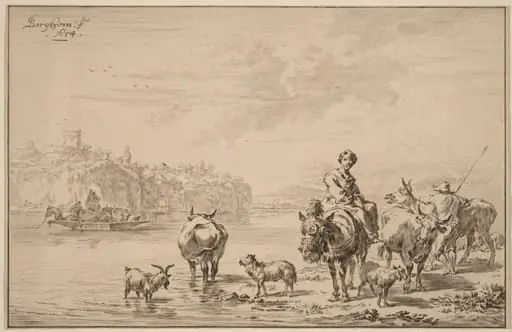 Woman Seated on a Mule
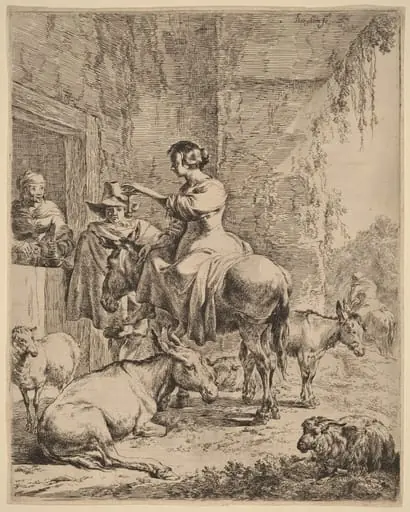 The Rest before the Inn
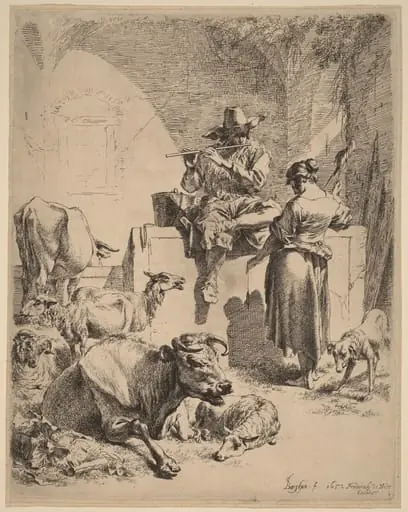 The Shepherd Seated on a Fountain and the Spinner
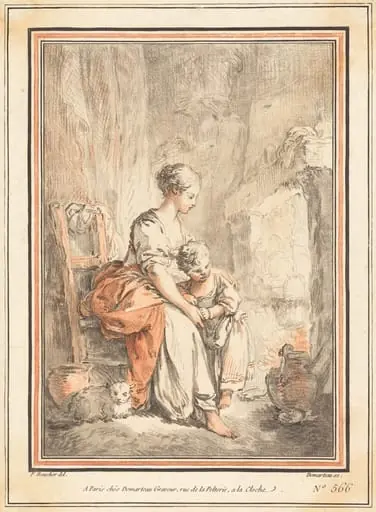 Woman and Child before a Fireplace
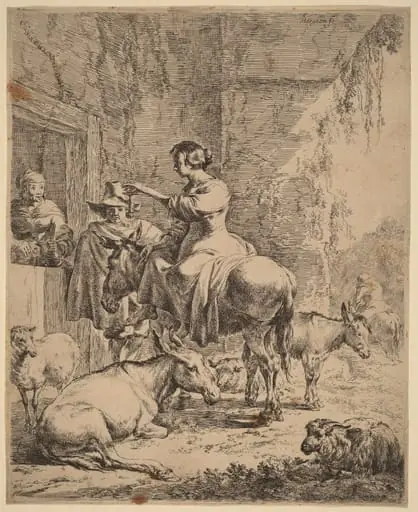 The Rest before the Inn
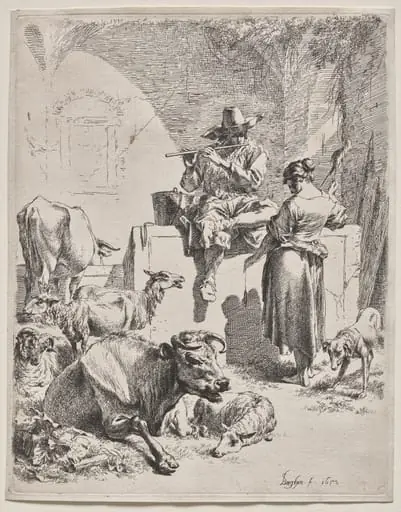 The Piping Shepherd
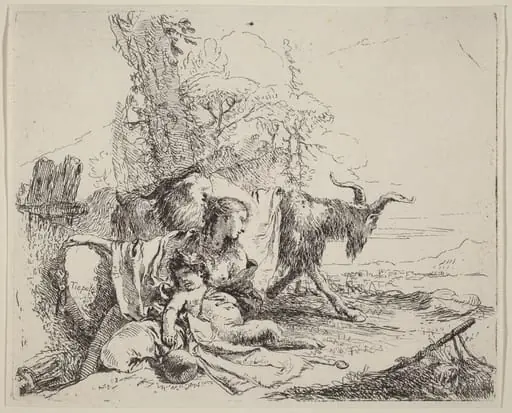 Woman, Satyr Child, and Goat in a Landscape
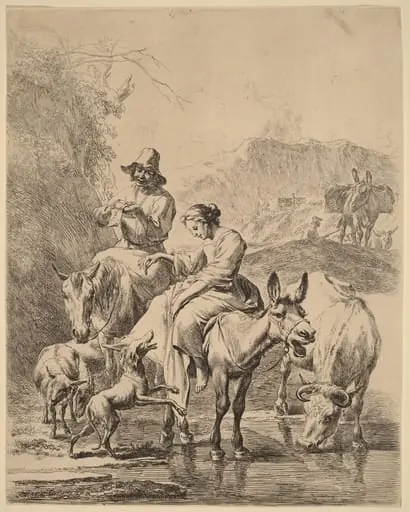 Shepherdess on a Donkey
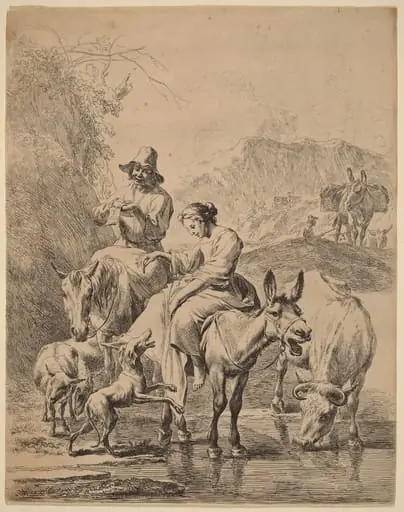 Shepherdess on a Donkey
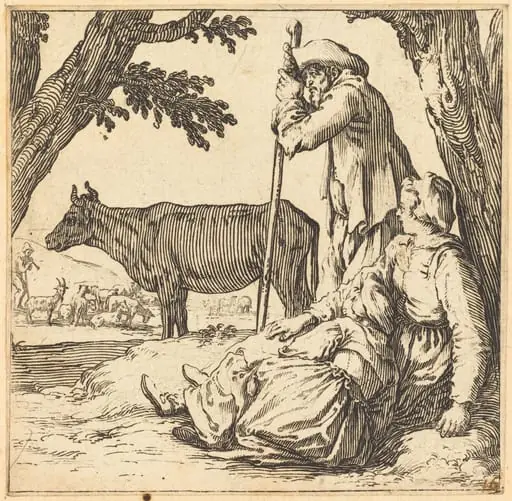 Peasant Couple with Cow
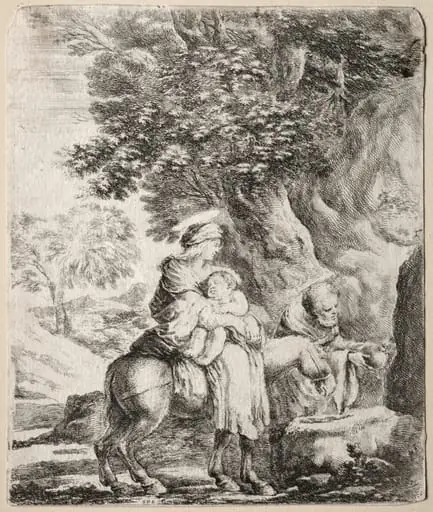 Flight into Egypt
 Les Nourrices (The Nurses)